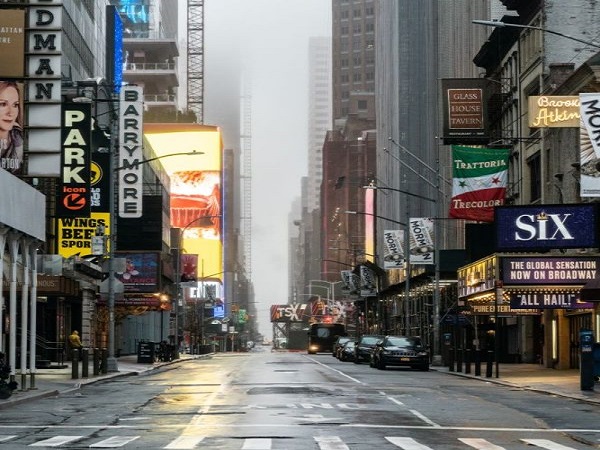
What Will Your Rights Under Lockdown Be?

We will never forget COVID-19. The year 2020 still has a powerful hurricane season, an economic vacuum and a presidential election to get through. We are far from out of the woods.

In all transparency, April 5th was the first day we saw a decline in daily cases, since the beginning of this thing. Many of you have been concerned that the lockdown would come to cities, based on a rash of infections and the inability of American citizens to comply to slow down infection.

Unfortunately we are not yet through with the wrath of the virus. There will be new cases in the tens of thousands each day for weeks. Most troubling is the fact that we will then be forced to face the economic effects of this virus.

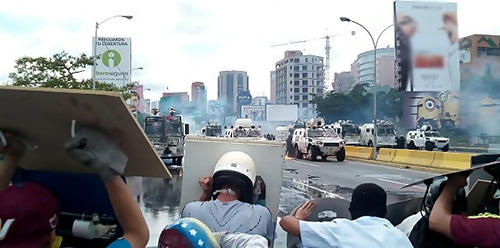
Civil unrest in cities is a much more likely scenario for a serious lockdown. Sick people, unemployment approaching 6 million, political discourse, fear and struggle could break our cities down.

Problems with Lockdown

While the idea of Martial Law has incited fear, inspiration and filled the pages of many prepper novels, the reality is it’s a numbers game. It’s a numbers game that the 300+ million citizens of the United States have the edge in.

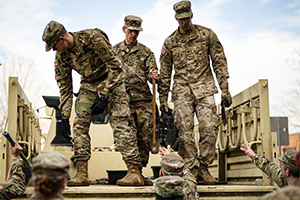
This massive population and the way it is spread out would make it impossible to lockdown the entire nation. That said, major population centers could certainly see tanks rolling down the streets and a militaristic presence.

What Will Your Rights Under Lockdown Be?

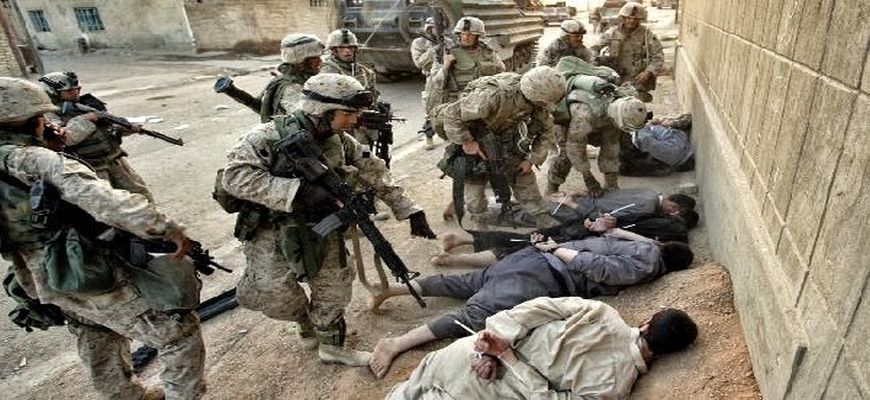
The National Guard has been deployed en mass in New York City and while they are playing a crucial roll in recovery, what could happen if the city devolves into chaos?

Who would be there to take that control back? What would be the upper limits of their power?

The ensuing chaos of a few will undoubtedly affect the many. If you are in a big city, you can expect many of your rights to go missing during a serious lockdown.

America has never seen a real lockdown that was enforced. For the most part, we have had glimpses of such events after the Boston Marathon Bombing and Hurricane Katrina, Katrina being the closest thing to a mandatory enforced lockdown.

A Hypothetical Federal Lockdown in a Major City

We have basically been suggested out of our rights in the face of this pandemic. Many of us understand that in the short term this is for the greater good. However, the American people are quickly becoming agitated with this idea of state-imposed restrictions.

Much of this has to do with our income and our routines being affected for nearly a month now. Without income and the small pittance that the government is sending out in checks, many are falling deeper into economic despair. Many have lost jobs and we were an erratic society going into this thing.

There is a reason blocks of stores are being boarded up in New York City. Those shop owners know what comes next. They understand that this could get violent in a hurry. So, what would a lockdown do to your rights?

#1. Curfew

Curfew is one of the restrictions on your rights that has already been put in place by some states. If you aren’t out for essential things, you could be fined in places like Boston. This is just the beginning. In a true lockdown situation breaking curfew could have serious consequences.

The youth are tasked with sticking to a curfew, because they have a track record of breaking laws or becoming victims in these hours of the night. Of course, you have a history of rebellion all your own and our governments know that.

#2. Real Quarantine

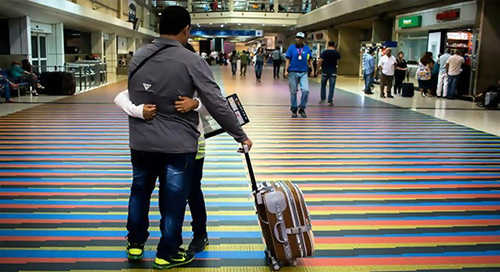
Self-quarantine is an interesting concept. As of this moment, you get to stay in your home and enjoy your creature comforts while getting better. If things get out of hand and transmissions continue to increase, we will see real quarantine where people are taken away from their homes.

This terrifying situation can be brutal on a family and on the psyche of Americans in general. In a true lockdown, quarantine will not be about staying home and getting your family sick.

#3. Eyes on You

What Will Your Rights Under Lockdown Be?

Perhaps the very worst of the lockdown would come in the form of a next level surveillance.

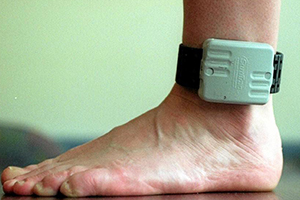
Currently, places like Kentucky are going as far as placing ankle bracelets on people who break their COVID-19 quarantine. This is happening to sick people only.

Others are tracking people using their cellphones. This heightened state of surveillance would only get worse. It would be used to enforce your curfew and your daily activity could also be called into question.

#4. Search and Seizure

We have caught wind of illegal search and seizure from the government already. Don’t forget this remark from just a couple of weeks ago:

“We’re talking about people hoarding these goods and materials on an industrial scale for the purpose of manipulating the market and ultimately deriving windfall profits… If you have a big supply of toilet paper in your house, this is not something you have to worry about. But if you are sitting on a warehouse with surgical masks, you will be hearing a knock on your door.”

At this moment it’s PPE that the government has deemed essential. If the food supply is affected by the illness and people cannot get food, would they consider all that extra food you have essential?

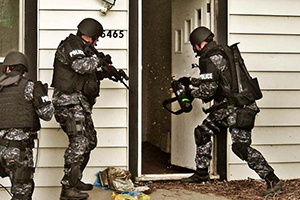
Your rights to your property are but an agreement. If men with guns come to your door to take those 5-gallon buckets of stored grains, well there won’t be much you can do. It’s not to say it will happen, but if it does you don’t have a lot of options.

#5. As Far as Firearms Go

What Will Your Rights Under Lockdown Be?

The confiscation of firearms is something that most localities would not undertake, even in a serious lockdown. I could see smaller problem areas put through something like a gun confiscation.

Honestly, it would probably be easier to ship the people away from their guns, than it would be to go into homes and take them.

Still, second amendment rights, like buying new guns or having access to ammo, have already been taken away in many states by considering these things nonessential. Even more sinister is the quiet legislation being written and passed, while we are all dealing with this virus. Here in VA there is a proposed 35% tax on all gun sales and 50% tax on ammo!

So, what will your rights in a lockdown be? In one word: Limited.

COVID-19 and social distancing are the perfect opportunity to gobble up massive amounts of power. With all that power in the hands of the state and federal governments, your rights will be at risk. If they can disguise these restrictions as something we all must do for the ‘greater good’, many will comply.

Americans are suffering right now, not from the virus. They are watching their lives come apart without an income and the mental struggle of isolation. It’s easy to forget that your rights are being trampled. We just assume the government will lift restrictions, but what if they don’t? Will they let us go back to our routines?

What about re-infection? What about civil unrest? What if they tighten restrictions?

We must all watch our representatives over the next few months. There has never been a moment, in recent history, where the rights of free man all over the world have been in such jeopardy.

Remember the words of Lord Acton: “Power tends to corrupt and absolute power corrupts absolutely.”

Reflections on Farm Living in Times of Social-Distancing, Disease and Panic-Buying- In times of plenty, when the global economy is running smoothly, few people will take the time to contemplate the advantages of an agrarian lifestyle

When humanity made the great transition from the countryside to the city, something priceless was arguably lost in the bargain. That was man’s prized independence, secured by the fruit of his physical labor under conditions that were oftentimes less than idyllic.

In times of plenty, when the global economy is running smoothly, few people will take the time to contemplate the advantages of an agrarian lifestyle. In fact, even when things go belly-up there still won’t be much reflection on the subject since most of us have little or no experience with life outside of the maddening metropolis. Thus, suffice it to say there won’t be any great migration for the countryside, even as our urban areas descend into cauldrons of rage and despair amid a global pandemic.

Yet where better to put into practice ‘social distancing’ then on a farm, where wide open spaces keeps neighbors, not to mention viral diseases, naturally at bay? And while we’re at it, just try and imagine a group of farmers inside of a supermarket resorting to fists over two-ply toilet paper or the last can of baked beans. Ironic how an attachment to the land creates a natural dignity and self-respect in people that so many ‘cultured’ urban dwellers seem to lack.

Thomas Jefferson, in ‘Notes on the State of Virginia’, wrote, perhaps with slight exaggeration, that “[T]hose who labour in the earth are the chosen people of God, if ever he had a chosen people, whose breasts he has made his peculiar deposit for substantial and genuine virtue.” Perhaps the more cynical truth of the matter is that when men and women are forced to produce their livelihood from the sweat and blood of their brow there is simply less time for mischief.

Although this author has spent most of his life sequestered in big cities, I do have fond childhood memories of visiting a great uncle who lived on 100 acres of sprawling farmland in the backwoods of Blairsville, Pennsylvania. It was during those occasional visits when I came to the realization that there was a world far removed from the supermarkets and fast food franchises of modern society. In addition to farming, my uncle and his neighbors were able to sustain themselves through hunting, trapping and fishing. These ‘backwards’ country folk were also learned in the art of canning food and preserving meat for long-term storage. This was often done through the widespread use of root cellars, underground storage spaces popular with our grandparents whose experience from two world wars and one great depression made them acutely aware about the importance of being prepared for absolutely anything. Although farm life is no walk in the park, and requires tremendous toil, it can make the supermarket, hyper-stores and mega-malls resemble insane asylums at lunchtime by comparison.

Today, with the coronavirus pandemic threatening to uproot our lives far greater than even the attacks of 9/11, it would seem that the self-reliance and rugged individualism of our grandparents may come back into style with a vengeance. Even before our present emergency, there was increasing interest in homesteads, prepping, and rural ‘bug out locations’ (BOL), plots of land where people could retreat from the overcrowded cities in times of unrest.

Now, with governments attempting to exert greater security measures in an effort to contain the spread of the virus, life in the major urban areas may change in ways impossible to imagine at the moment. And as we already know, nothing is more permanent than the temporary. Under such circumstances, the idea of owning a small piece of land – a dacha, as the Russians call it – has never seemed more attractive and necessary. As the ongoing coronavirus pandemic has shown, it would be a mistake to think that the supermarkets – vulnerable as they are to panicked crowds of hungry people – will always be able to feed everyone in times of crisis. It’s time to re-think our connection to the land and become at least somewhat emancipated from the corporate cornucopia before the next crisis becomes our last.

We’ve all seen the grocery stores and how food and other items are flying off the shelves: 12 Foods to Stock Up On Before it’s Too Late

We’ve all seen the grocery stores and how food and other items are flying off the shelves. It’s clear that people are panicking and grabbing everything they can, sparking runs on things like toilet paper.

This is apparently not going to stop anytime soon, as it appears that many of the same people are returning to the store over and over again, hoarding things, rather than just buying what they need for the foreseeable future.

I think it’s important to note that these people are considerably different than preppers in that they are panic buying, rather than building a well-reasoned stockpile.

There’s also a lot of them doing it at the same time, rather than doing it over a long period of time, gradually building their stockpile.

It is this rush to buy, which is causing the current shortages.

Things quickly reached a point where the panic was fueling itself. People who went to the store for a few basic necessities saw what was happening and started buying, motivated by the empty shelves they were seeing.

We must keep in mind that there is no shortage of food or even toilet paper. The apparent shortage has come about because of this panic buying.

The supply chain is being stretched beyond the breaking point, as truckers are working overtime to rush the product to the store’s shelves and make up for the buying frenzy that’s going on.

Buy Strategically

If there’s anything you need, that you don’t already have, the early morning, when the stores first open, is the time to get it.

Many stores have shortened their hours so that they can use the night shift to clean and restock. So the shelves are the most full they’re going to be first thing in the morning, before the rush hits. Of course, that rush starts hitting as soon as they open the doors.

While the president has called for a two-week lockdown, on the advice of the CDC, chances are that that time frame will be extended.

Some self-proclaimed “experts” are claiming that the lockdown will extend as far as June. But these are all guesses, as the president and his closest advisors don’t know what they’re going to do yet.

They’re waiting to see what results in the current lockdown has and then from there try to project what will happen if they continue the lockdown and what will happen if they don’t.

With that in mind, it only makes sense to increase your stockpile, if you don’t already have enough.

That raises the question of “What should you be stockpiling?” There’s no question that this crisis is different than those we have all prepared for.

So does it make sense to follow those rules? Or are there new rules which apply to this situation?

The answer to that is actually rather simple. While the current pandemic is very similar to a number of other disaster scenarios we’ve all talked about, there is one overriding difference that affects everything… we have electric power. So our refrigerated and frozen food isn’t going to go bad.

What Will You Need?

With that out of the way, what foods should you be stockpiling? I’m going to limit myself to just food items here, as I think we all know we need hand sanitizer and rubbing alcohol.

Many of the grocery chains and big box stores are limiting the purchase of a long list of items that they are currently running shortages on.

This means that part of our buying strategy is going to have to be to make sure we buy those items when we can; banking them for the day when we can’t get them but need them. We don’t need to go overboard with that, but we want to make sure that we have what we need.

Personally, my wife and I have decided that we are not going to add to the problem by buying more than what we need.

While I could buy six months’ worth of food, I’m not. I’m limiting myself to what I need to get through the next month or two. But we are constantly reevaluating the situation and may make adjustments to that, as we see necessary.

  • Meat, Poultry & Fish – Protein is an essential macronutrient, which we get primarily from animals. Buy what you can and freeze it. I prefer buying the large “family packs” when I can and then repackaging them for freezing
  • Fresh Fruits & Vegetables – Stick with hardy ones, which won’t go bad in the refrigerator. Apples last longer than bananas; cabbage and celery last longer than lettuce
  • Rice Cakes – Bread is flying off the shelves, but I’ve seen rice cakes every time I went to the store. They’re a good substitute for that bread, once you get used to them
  • Soup Base & Bouillon – You can make anything into a soup, which is especially useful when you have picky eaters who don’t like leftovers
  • Oatmeal – makes for a heartier breakfast and doesn’t go stale as breakfast cereal does
  • Dried Fruit – That hasn’t flown off the shelves, although canned has. The dried is just as good for snacking, cooking or desert
  • Frozen Vegetables – Probably a staple in your family’s diet
  • Pasta & Rice – Good staples which are getting hard to find
  • Dried Beans – Depending on how much a part they play in your normal diet. If you don’t normally eat them, you really don’t need to start for this crisis
  • Canned Vegetables & Fruit – If you already have these in your stockpile, there’s no need; but if you don’t have them, they’re a great backup to your fresher food choices.
  • Milk & Eggs – Get them while you can. Milk won’t keep long, but eggs will. With everyone at home, you’ll probably go through more.
  • Powdered Milk – Most people don’t like powdered milk, but it can be used for cooking, especially baking. It can also be used to extend your milk supply, mixing it half and half with whole milk to improve the flavor.

What Not to Stockpile

There are a few items I wouldn’t bother stockpiling, more than your normal usage:

  • Water – If you have a water filtration system, you don’t need to be stockpiling water
  • Junk Food – This might be an ideal opportunity to get your family to eat a little healthier. Just make sure you have something available for snacks
  • Frozen Breakfast Items – It’s not hard to cook these yourself, so why bother?
  • Frozen Bread Items – They’re awfully expensive for what you get
  • Frozen Pizza – I’d rather support my local small businesses and buy pizza from a pizzeria
  • Food Already in Your Stockpile – If you already have things in your food stockpile, there’s no reason to buy more now. This is what you’ve been stockpiling them for. Leave what’s there for the people who didn’t think ahead.

Whatever you do, take the time to think it through. You and have had the luxury of time to mentally prepare for a crisis, unlike the rest of the people out there.

We don’t need to panic and we don’t need to follow the herd instinct. Rather, we’re the ones marching to the beat of a different drum; that of the prepared.

The Government Can Take Your Property From You Without Your Consent (Even If They Are Paying You For It) Then You Don’t Really Have A Right To Own Private Property At All. And You’re Truly Not Free.

There is no version of eminent domain that coincides with liberty. On the contrary, the two ideas are antithetical to each other. As a champion of liberty, John Locke stated in his Second Treatise of Civil Government, “For I have truly no Property in that, which another can by right take from me, when he pleases against my Consent.”

In other words, if the government can take your property from you without your consent — even if they are paying you for it — then you don’t really have a right to own private property at all.

The deeper debate about whether the idea of private property still exists at all in a country where property taxes, construction regulations, and other limitations are demanded is one best saved for its own discussion. For now, we’ll stick with the commonly held assumption that private property does exist.

Under that assumption, we can move a few years forward from Locke’s writings and quote the Fourth Amendment to the United States Constitution, a part of what we know as the Bill of Rights, which states that “The right of the people to be secure in their persons, houses, papers, and effects, against unreasonable … seizures, shall not be violated”.

However, the very next amendment goes on to say that “private property” shall not be taken for “public use” without “just compensation.” Therefore, the idea of eminent domain is Constitutional, even if it still seems antithetical to liberty.

Leaving any argument about personal liberty or the foundations of our country aside, a much older idea from a much higher Authority lays plain the wrongfulness of eminent domain: Thou shalt not steal.

Despite any philosophical reasoning, eminent domain remains the law of the land. The essence of the outrageous but accepted practice is that a government — federal, state or local body — may confiscate land from individuals who legally own it, usually compensating them with at least the current market value of the property, for public needs.

In some cases, it is even more outrageous: The land is given over to private developers for various reasons. The justifications are always that the confiscation is for the greater good of the public. The original landowner has no legal recourse against the actions. That doesn’t sound like the land of the free, does it?

Recent examples from Memphis, St. Louis and North Carolina clearly show that the threat of eminent domain is alive and well in America.

Memphis

A privately owned mall in a suburb of Memphis, Tennessee, called Raleigh has had issues with crime and gangs over recent years. The city began plans to demolish part of the mall and make it a “town center” last year, including moving a police precinct and a library branch onto the land.

The owners of the mall said that they hadn’t been contacted by the city about the plans, and they refuse to sell part of the property to the city. Now the city has begun eminent domain proceedings to take the property from them. The reason is supposedly because of the crime issues. The question is: If the police can’t keep an area safe without seizing property, should residents of Memphis expect new police precincts to start popping up in every neighborhood area with a crime problem – and land in those areas seized, too?

St. Louis

St. Louis, Missouri, is considering using eminent domain to oust both a private developer and individual homeowners from a swath of property in order to retain the National Geospatial-Intelligence Agency’s facility within city borders. The agency, which provides mapping and satellite support for the military, employs 3,000 people and brings in an estimated $2.4 million in annual earnings taxes, although it is exempt from property taxes because it is operated by the federal government.

The agency is moving because it needs a bigger facility, but the area the city wants used is partly occupied. Although there is a lot of abandoned and demolished space in the area, there are still several long-time homeowners who refuse to give up their land and move. The remaining property is owned by a private developer, who has pledged not to use eminent domain against the remaining residents.

In response, the city is proposing using eminent domain against both the homeowners and the developer. Their tax revenue losses apparently outweigh the property rights of the land owners.

North Carolina

The North Carolina House passed a bill on Feb. 10 that would prevent government from using eminent domain to seize property and then sell it to a private developer. Only “public use” cases would be allowed. The problem: The same measure has passed the house on at least four other occasions in the past, only to be shut down in the state Senate each time.

At least this measure attempts to rein in the expansion of eminent domain’s scope, returning it to the description given in the Fifth Amendment’s language. Someone with a high level of cynicism might even argue that the measure is anti-private sector by cutting all private parties out of the picture and keeping all of the benefits in government hands.

The eminent domain playground is one we would do best to only play in when absolutely necessary, because the path forward is well-known. The destruction and abolition of private property is one of Marx’s 10 planks of Communism espoused in the Communist Manifesto. Turning over seized private property to a business friendly with the government is a staple of fascism. Either way, individual liberty and rights are sacrificed in the name of the “public good.”

The Transformation Of America And The Destruction Of Our Personal Liberties Are Well Under Way

It is no longer some conspiracy theorists fantasy. The transformation of America and the destruction of our personal liberties are well under way. It was orchestrated for decades behind closed doors. Now the doors are opening and America is being overthrown in the light of day. For those who get it, read on. For those who choose otherwise, please step aside as there is much to be done.

“We have to save the free market system by abandoning the free market system” – George W. Bush 2008. Oh really? And where are we today? Trillions upon trillions of dollars in debt with increased unemployment approaching the great depression levels. The economies, global financial systems and currencies around the world are collapsing. Washington takes its marching orders from the architects of chaos as empire America is being driven to its knees. And since you are still reading this, we must agree on some level that this is not happening by accident but by deliberate, calculated design. Let’s take a closer look. We will begin this journey by going back to 1913.

During a SHTF situation, pain could become an annoyance for some, but unbearable for others.

If doctors are scarce and medicine becomes even scarcer, this one little weed, found all over North America and similar to morphine, could be a saving grace.

A group of private international bankers owning approximately 25% of the world’s wealth took over the issuing power of the U.S. currency. Since then, the U.S. dollar has lost over 95% of its purchasing power. Baron Rothschild (one of the original architects of chaos) said this, “Give me control over a nations currency and I care not who makes the laws”. Thomas Jefferson, in the following quote, shares his views with us. “I believe that banking institutions are more dangerous to our liberties than standing armies. If the American people ever allow private banks to control the issue of their currency, first by inflation, then by deflation, the banks and corporations that will grow up around [the banks] will deprive the people of all property until their children wake-up homeless on the continent their fathers conquered. The issuing power should be taken from the banks and restored to the people, to whom it properly belongs”.

According to the International Monetary Fund (IMF) back in 2009, if the government debt load climbs above 90% of GDP, economic growth slows so much that growth is no longer a viable solution for reducing that debt, The United States will not be able to pay down the debt and by their actions, have chosen to monetize the debt which will lead the U.S. into a hyperinflation. Right now is at 149%. Estimates back then for a total economic collapse were 2016-2017. Are you prepared?

One of the smartest guys I ever had the pleasure of meeting, Claude set-up a UNIQUE SYSTEM that changed his life forever.

I already tried it myself and let me tell… you I was completely blown away… His surprising tactics could make your life easier and give you the peace of mind you deserve.

As economic conditions and political corruption ramp up, social unrest will increase. As this occurs the government counters by increasing Draconian measures that restrict the political rights and civil liberties of its citizens.

With “Free Speech Zones” and a push for the “Fairness Doctrine”, our freedom of speech is under attack. We have become a society under surveillance as our every move is monitored, stored and categorized. The policies being implemented to complete the long sought after goal of global governance, has brought the United Sates to a Socialist/Marxist government as the architects of chaos complete the final phase of creating their “New World Order” by removing America as its greatest obstacle. The mission is nearly complete with much of the ten planks of the communist manifesto already in place here in America. Look…you decide.

The 10 PLANKS stated in the Communist Manifesto
and some of their American counterparts

1. Abolition of private property and the application of all rents of land to public purposes. Americans do these with actions such as the 14th Amendment of the U.S. Constitution (1868), and various zoning, school & property taxes. Also the Bureau of Land Management (Zoning laws are the first step to government property ownership)

2. A heavy progressive or graduated income tax. Americans know this as misapplication of the 16th Amendment of the U.S. Constitution, 1913, The Social Security Act of 1936. Joint House Resolution 192 of 1933; and various State “income” taxes. We call it “paying your fair share”.

3. Abolition of all rights of inheritance. Americans call it Federal & State estate Tax (1916); or reformed Probate Laws, and limited inheritance via arbitrary inheritance tax statutes.

4. Confiscation of the property of all emigrants and rebels. Americans call it government seizures, tax liens, Public “law” 99-570 (1986); Executive order 11490, sections 1205, 2002 which gives private land to the Department of Urban Development; the imprisonment of “terrorists” and those who speak out or write against the “government” (1997 Crime/Terrorist Bill); or the IRS confiscation of property without due process. Asset forfeiture laws are used by DEA, IRS, ATF
etc…).

5. Centralization of credit in the hands of the state, by means of a national bank with State capital and an exclusive monopoly. Americans call it the Federal Reserve which is a privately-owned credit/debt system allowed by the Federal Reserve act of 1913. All local banks are members of the Fed system, and are regulated by the Federal Deposit Insurance Corporation (FDIC) another privately-owned corporation. The Federal Reserve Banks issue Fiat Paper Money and practice economically destructive fractional reserve banking.

6. Centralization of the means of communications and transportation in the hands of the State. Americans call it the Federal Communications Commission (FCC) and Department of Transportation (DOT) mandated through the ICC act of 1887, the Commissions Act of 1934, The Interstate Commerce Commission established in 1938, The Federal Aviation Administration, Federal Communications Commission, and Executive orders 11490, 10999, as well as State mandated driver’s licenses and Department of Transportation regulations.

7. Extension of factories and instruments of production owned by the state, the bringing into cultivation of waste lands, and the improvement of the soil generally in accordance with a common plan. Americans call it corporate capacity, The Desert Entry Act and The Department of Agriculture… Thus read “controlled or subsidized” rather than “owned”… This is easily seen in these as well as the Department of Commerce and Labor, Department of Interior, the Environmental Protection Agency, Bureau of Land Management, Bureau of Reclamation, Bureau of Mines, National
Park Service, and the IRS control of business through corporate regulations.

8. Equal liability of all to labor. Establishment of industrial armies, especially for agriculture. Americans call it Minimum Wage and slave labor like dealing with our Most Favored Nation trade partner; i.e. Communist China. We see it in practice via the Social Security Administration and The Department of Labor. The National debt and inflation caused by the communal bank has caused the need for a two “income” family. Woman in the workplace since the 1920’s, the 19th amendment of
the U.S. Constitution, the Civil Rights Act of 1964, assorted Socialist Unions, affirmative action, the Federal Public Works Program and of course Executive order 11000.

9. Combination of agriculture with manufacturing industries, gradual abolition of the
distinction between town and country, by a more equitable distribution of population over the country. Americans call it the Planning Reorganization act of 1949 , zoning (Title 17 1910-1990) and Super Corporate Farms, as well as Executive orders 11647, 11731 (ten regions) and Public “law” 89-136. These provide for forced relocations and forced sterilization programs, like in China.

10. Free education for all children in public schools. Abolition of children’s factory labor in its present form. Combination of education with industrial production. Americans are being taxed to support what we call ‘public’ schools, but are actually “government force-tax-funded schools” Even private schools are government regulated. The purpose is to train the young to work for the communal debt system. We also call it the Department of Education, the NEA and Outcome Based “Education”. These are used so that all children can be indoctrinated and inculcated with the government propaganda, like “majority rules”, and “pay your fair share”. Ronald Reagan on
Socialism – “Socialism only works in two places: Heaven where they don’t need it and hell where they already have it.”

So the transformation of America and the destruction of our personal liberties are well under way. Perhaps you already knew all of this but have become apathetic, overwhelmed or complacent? Well that is just the result that the architects of chaos want to achieve. This does not have to happen. Simply say “not on my watch”. This is not above your pay grade. Freedom as we know is never free. We must fight for what’s right, this is our home. How does one prepare? What is the battle plan?
How do we survive and then reinstate Constitutional Government?

The Four Pillars

1. Pray to God. Your spiritual preparedness is of the utmost importance. For those of us of faith, pray to God for guidance, wisdom and protection.

2. Protect your wealth.
 Your personal freedom is tied to your economic freedom. There are ways to preserve wealth and purchasing power. This will not happen by accident. There are action steps that you can and should be applying today. Get educated. Stay informed and take proactive measures now before it’s too late!

3. Protect your life. Survival will not happen by accident as we progress through the challenging times ahead. Take precautionary and protective measures to sustain and safeguard your life and the lives of your loved ones.

4. Political activism. Study the Constitution. Get involved in the political process. Vet and vote. Join and support groups who are doing the same. Elect leaders, citizen candidates that will reinstate, protect, defend and adhere to the Constitution of the United States. Never give up. Take your country back. The “Second American Revolution” is here.

Preparedness Hacks: Once a nuke is heading your way, you might think that there isn’t much left to do, but you would be wrong!

Because we will show you America’s natural nuclear bunkers that are also EMP proof. When the sirens start wailing, all you need to do is pick the closest one to your home, where you can take cover before it hits.

The Government Can Take Your Property From You Without Your Consent (Even If They Are Paying You For It) Then You Don’t Really Have A Right To Own Private Property At All. And You’re Truly Not Free.

There is no version of eminent domain that coincides with liberty. On the contrary, the two ideas are antithetical to each other. As a champion of liberty, John Locke stated in his Second Treatise of Civil Government, “For I have truly no Property in that, which another can by right take from me, when he pleases against my Consent.”

In other words, if the government can take your property from you without your consent — even if they are paying you for it — then you don’t really have a right to own private property at all.

During a SHTF situation, pain could become an annoyance for some, but unbearable for others.

If doctors are scarce and medicine becomes even scarcer, this one little weed, found all over North America and similar to morphine, could be a saving grace.

The deeper debate about whether the idea of private property still exists at all in a country where property taxes, construction regulations, and other limitations are demanded is one best saved for its own discussion. For now, we’ll stick with the commonly held assumption that private property does exist.

Under that assumption, we can move a few years forward from Locke’s writings and quote the Fourth Amendment to the United States Constitution, a part of what we know as the Bill of Rights, which states that “The right of the people to be secure in their persons, houses, papers, and effects, against unreasonable … seizures, shall not be violated”.

However, the very next amendment goes on to say that “private property” shall not be taken for “public use” without “just compensation.” Therefore, the idea of eminent domain is Constitutional, even if it still seems antithetical to liberty.

Leaving any argument about personal liberty or the foundations of our country aside, a much older idea from a much higher Authority lays plain the wrongfulness of eminent domain: Thou shalt not steal.

Despite any philosophical reasoning, eminent domain remains the law of the land. The essence of the outrageous but accepted practice is that a government — federal, state or local body — may confiscate land from individuals who legally own it, usually compensating them with at least the current market value of the property, for public needs.

In some cases, it is even more outrageous: The land is given over to private developers for various reasons. The justifications are always that the confiscation is for the greater good of the public. The original landowner has no legal recourse against the actions. That doesn’t sound like the land of the free, does it?

Recent examples from Memphis, St. Louis and North Carolina clearly show that the threat of eminent domain is alive and well in America.

Memphis

A privately owned mall in a suburb of Memphis, Tennessee, called Raleigh has had issues with crime and gangs over recent years. The city began plans to demolish part of the mall and make it a “town center” last year, including moving a police precinct and a library branch onto the land.

The owners of the mall said that they hadn’t been contacted by the city about the plans, and they refuse to sell part of the property to the city. Now the city has begun eminent domain proceedings to take the property from them. The reason is supposedly because of the crime issues. The question is: If the police can’t keep an area safe without seizing property, should residents of Memphis expect new police precincts to start popping up in every neighborhood area with a crime problem – and land in those areas seized, too?

St. Louis

St. Louis, Missouri, is considering using eminent domain to oust both a private developer and individual homeowners from a swath of property in order to retain the National Geospatial-Intelligence Agency’s facility within city borders. The agency, which provides mapping and satellite support for the military, employs 3,000 people and brings in an estimated $2.4 million in annual earnings taxes, although it is exempt from property taxes because it is operated by the federal government.

The agency is moving because it needs a bigger facility, but the area the city wants used is partly occupied. Although there is a lot of abandoned and demolished space in the area, there are still several long-time homeowners who refuse to give up their land and move. The remaining property is owned by a private developer, who has pledged not to use eminent domain against the remaining residents.

In response, the city is proposing using eminent domain against both the homeowners and the developer. Their tax revenue losses apparently outweigh the property rights of the land owners.

North Carolina

The North Carolina House passed a bill on Feb. 10 that would prevent government from using eminent domain to seize property and then sell it to a private developer. Only “public use” cases would be allowed. The problem: The same measure has passed the house on at least four other occasions in the past, only to be shut down in the state Senate each time.

At least this measure attempts to rein in the expansion of eminent domain’s scope, returning it to the description given in the Fifth Amendment’s language. Someone with a high level of cynicism might even argue that the measure is anti-private sector by cutting all private parties out of the picture and keeping all of the benefits in government hands.

The eminent domain playground is one we would do best to only play in when absolutely necessary, because the path forward is well-known. The destruction and abolition of private property is one of Marx’s 10 planks of Communism espoused in the Communist Manifesto. Turning over seized private property to a business friendly with the government is a staple of fascism. Either way, individual liberty and rights are sacrificed in the name of the “public good.”

Preparedness Hacks: Once a nuke is heading your way, you might think that there isn’t much left to do, but you would be wrong!

Because we will show you America’s natural nuclear bunkers that are also EMP proof. When the sirens start wailing, all you need to do is pick the closest one to your home, where you can take cover before it hits.

The Transformation Of America And The Destruction Of Our Personal Liberties Are Well Under Way

It is no longer some conspiracy theorists fantasy. The transformation of America and the destruction of our personal liberties are well under way. It was orchestrated for decades behind closed doors. Now the doors are opening and America is being overthrown in the light of day. For those who get it, read on. For those who choose otherwise, please step aside as there is much to be done.

“We have to save the free market system by abandoning the free market system” – George W. Bush 2008. Oh really? And where are we today? Trillions upon trillions of dollars in debt with increased unemployment approaching the great depression levels. The economies, global financial systems and currencies around the world are collapsing. Washington takes its marching orders from the architects of chaos as empire America is being driven to its knees. And since you are still reading this, we must agree on some level that this is not happening by accident but by deliberate, calculated design. Let’s take a closer look. We will begin this journey by going back to 1913.

A group of private international bankers owning approximately 25% of the world’s wealth took over the issuing power of the U.S. currency. Since then, the U.S. dollar has lost over 95% of its purchasing power. Baron Rothschild (one of the original architects of chaos) said this, “Give me control over a nations currency and I care not who makes the laws”. Thomas Jefferson, in the following quote, shares his views with us. “I believe that banking institutions are more dangerous to our liberties than standing armies. If the American people ever allow private banks to control the issue of their currency, first by inflation, then by deflation, the banks and corporations that will grow up around [the banks] will deprive the people of all property until their children wake-up homeless on the continent their fathers conquered. The issuing power should be taken from the banks and restored to the people, to whom it properly belongs”.

According to the International Monetary Fund (IMF) back in 2009, if the government debt load climbs above 90% of GDP, economic growth slows so much that growth is no longer a viable solution for reducing that debt, The United States will not be able to pay down the debt and by their actions, have chosen to monetize the debt which will lead the U.S. into a hyperinflation. Right now is at 149%. Estimates back then for a total economic collapse were 2016-2017. Are you prepared?

One of the smartest guys I ever had the pleasure of meeting, Claude set-up a UNIQUE SYSTEM that changed his life forever.

I already tried it myself and let me tell… you I was completely blown away… His surprising tactics could make your life easier and give you the peace of mind you deserve.

As economic conditions and political corruption ramp up, social unrest will increase. As this occurs the government counters by increasing Draconian measures that restrict the political rights and civil liberties of its citizens.

With “Free Speech Zones” and a push for the “Fairness Doctrine”, our freedom of speech is under attack. We have become a society under surveillance as our every move is monitored, stored and categorized. The policies being implemented to complete the long sought after goal of global governance, has brought the United Sates to a Socialist/Marxist government as the architects of chaos complete the final phase of creating their “New World Order” by removing America as its greatest obstacle. The mission is nearly complete with much of the ten planks of the communist manifesto already in place here in America. Look…you decide.

The 10 PLANKS stated in the Communist Manifesto
and some of their American counterparts

1. Abolition of private property and the application of all rents of land to public purposes. Americans do these with actions such as the 14th Amendment of the U.S. Constitution (1868), and various zoning, school & property taxes. Also the Bureau of Land Management (Zoning laws are the first step to government property ownership)

2. A heavy progressive or graduated income tax. Americans know this as misapplication of the 16th Amendment of the U.S. Constitution, 1913, The Social Security Act of 1936. Joint House Resolution 192 of 1933; and various State “income” taxes. We call it “paying your fair share”.

3. Abolition of all rights of inheritance. Americans call it Federal & State estate Tax (1916); or reformed Probate Laws, and limited inheritance via arbitrary inheritance tax statutes.

4. Confiscation of the property of all emigrants and rebels. Americans call it government seizures, tax liens, Public “law” 99-570 (1986); Executive order 11490, sections 1205, 2002 which gives private land to the Department of Urban Development; the imprisonment of “terrorists” and those who speak out or write against the “government” (1997 Crime/Terrorist Bill); or the IRS confiscation of property without due process. Asset forfeiture laws are used by DEA, IRS, ATF
etc…).

5. Centralization of credit in the hands of the state, by means of a national bank with State capital and an exclusive monopoly. Americans call it the Federal Reserve which is a privately-owned credit/debt system allowed by the Federal Reserve act of 1913. All local banks are members of the Fed system, and are regulated by the Federal Deposit Insurance Corporation (FDIC) another privately-owned corporation. The Federal Reserve Banks issue Fiat Paper Money and practice economically destructive fractional reserve banking.

6. Centralization of the means of communications and transportation in the hands of the State. Americans call it the Federal Communications Commission (FCC) and Department of Transportation (DOT) mandated through the ICC act of 1887, the Commissions Act of 1934, The Interstate Commerce Commission established in 1938, The Federal Aviation Administration, Federal Communications Commission, and Executive orders 11490, 10999, as well as State mandated driver’s licenses and Department of Transportation regulations.

7. Extension of factories and instruments of production owned by the state, the bringing into cultivation of waste lands, and the improvement of the soil generally in accordance with a common plan. Americans call it corporate capacity, The Desert Entry Act and The Department of Agriculture… Thus read “controlled or subsidized” rather than “owned”… This is easily seen in these as well as the Department of Commerce and Labor, Department of Interior, the Environmental Protection Agency, Bureau of Land Management, Bureau of Reclamation, Bureau of Mines, National
Park Service, and the IRS control of business through corporate regulations.

8. Equal liability of all to labor. Establishment of industrial armies, especially for agriculture. Americans call it Minimum Wage and slave labor like dealing with our Most Favored Nation trade partner; i.e. Communist China. We see it in practice via the Social Security Administration and The Department of Labor. The National debt and inflation caused by the communal bank has caused the need for a two “income” family. Woman in the workplace since the 1920’s, the 19th amendment of
the U.S. Constitution, the Civil Rights Act of 1964, assorted Socialist Unions, affirmative action, the Federal Public Works Program and of course Executive order 11000.

9. Combination of agriculture with manufacturing industries, gradual abolition of the
distinction between town and country, by a more equitable distribution of population over the country. Americans call it the Planning Reorganization act of 1949 , zoning (Title 17 1910-1990) and Super Corporate Farms, as well as Executive orders 11647, 11731 (ten regions) and Public “law” 89-136. These provide for forced relocations and forced sterilization programs, like in China.

10. Free education for all children in public schools. Abolition of children’s factory labor in its present form. Combination of education with industrial production. Americans are being taxed to support what we call ‘public’ schools, but are actually “government force-tax-funded schools” Even private schools are government regulated. The purpose is to train the young to work for the communal debt system. We also call it the Department of Education, the NEA and Outcome Based “Education”. These are used so that all children can be indoctrinated and inculcated with the government propaganda, like “majority rules”, and “pay your fair share”. Ronald Reagan on
Socialism – “Socialism only works in two places: Heaven where they don’t need it and hell where they already have it.”

So the transformation of America and the destruction of our personal liberties are well under way. Perhaps you already knew all of this but have become apathetic, overwhelmed or complacent? Well that is just the result that the architects of chaos want to achieve. This does not have to happen. Simply say “not on my watch”. This is not above your pay grade. Freedom as we know is never free. We must fight for what’s right, this is our home. How does one prepare? What is the battle plan?
How do we survive and then reinstate Constitutional Government?

The Four Pillars

1. Pray to God. Your spiritual preparedness is of the utmost importance. For those of us of faith, pray to God for guidance, wisdom and protection.

2. Protect your wealth.
 Your personal freedom is tied to your economic freedom. There are ways to preserve wealth and purchasing power. This will not happen by accident. There are action steps that you can and should be applying today. Get educated. Stay informed and take proactive measures now before it’s too late!

3. Protect your life. Survival will not happen by accident as we progress through the challenging times ahead. Take precautionary and protective measures to sustain and safeguard your life and the lives of your loved ones.

4. Political activism. Study the Constitution. Get involved in the political process. Vet and vote. Join and support groups who are doing the same. Elect leaders, citizen candidates that will reinstate, protect, defend and adhere to the Constitution of the United States. Never give up. Take your country back. The “Second American Revolution” is here.

The Government Can Take Your Property From You Without Your Consent (Even If They Are Paying You For It) Then You Don’t Really Have A Right To Own Private Property At All. And You’re Truly Not Free.

There is no version of eminent domain that coincides with liberty. On the contrary, the two ideas are antithetical to each other. As a champion of liberty, John Locke stated in his Second Treatise of Civil Government, “For I have truly no Property in that, which another can by right take from me, when he pleases against my Consent.”

In other words, if the government can take your property from you without your consent — even if they are paying you for it — then you don’t really have a right to own private property at all.

The deeper debate about whether the idea of private property still exists at all in a country where property taxes, construction regulations, and other limitations are demanded is one best saved for its own discussion. For now, we’ll stick with the commonly held assumption that private property does exist.

Under that assumption, we can move a few years forward from Locke’s writings and quote the Fourth Amendment to the United States Constitution, a part of what we know as the Bill of Rights, which states that “The right of the people to be secure in their persons, houses, papers, and effects, against unreasonable … seizures, shall not be violated”.

However, the very next amendment goes on to say that “private property” shall not be taken for “public use” without “just compensation.” Therefore, the idea of eminent domain is Constitutional, even if it still seems antithetical to liberty.

Leaving any argument about personal liberty or the foundations of our country aside, a much older idea from a much higher Authority lays plain the wrongfulness of eminent domain: Thou shalt not steal.

Despite any philosophical reasoning, eminent domain remains the law of the land. The essence of the outrageous but accepted practice is that a government — federal, state or local body — may confiscate land from individuals who legally own it, usually compensating them with at least the current market value of the property, for public needs.

In some cases, it is even more outrageous: The land is given over to private developers for various reasons. The justifications are always that the confiscation is for the greater good of the public. The original landowner has no legal recourse against the actions. That doesn’t sound like the land of the free, does it?

Recent examples from Memphis, St. Louis and North Carolina clearly show that the threat of eminent domain is alive and well in America.

Memphis

A privately owned mall in a suburb of Memphis, Tennessee, called Raleigh has had issues with crime and gangs over recent years. The city began plans to demolish part of the mall and make it a “town center” last year, including moving a police precinct and a library branch onto the land.

The owners of the mall said that they hadn’t been contacted by the city about the plans, and they refuse to sell part of the property to the city. Now the city has begun eminent domain proceedings to take the property from them. The reason is supposedly because of the crime issues. The question is: If the police can’t keep an area safe without seizing property, should residents of Memphis expect new police precincts to start popping up in every neighborhood area with a crime problem – and land in those areas seized, too?

St. Louis

St. Louis, Missouri, is considering using eminent domain to oust both a private developer and individual homeowners from a swath of property in order to retain the National Geospatial-Intelligence Agency’s facility within city borders. The agency, which provides mapping and satellite support for the military, employs 3,000 people and brings in an estimated $2.4 million in annual earnings taxes, although it is exempt from property taxes because it is operated by the federal government.

The agency is moving because it needs a bigger facility, but the area the city wants used is partly occupied. Although there is a lot of abandoned and demolished space in the area, there are still several long-time homeowners who refuse to give up their land and move. The remaining property is owned by a private developer, who has pledged not to use eminent domain against the remaining residents.

In response, the city is proposing using eminent domain against both the homeowners and the developer. Their tax revenue losses apparently outweigh the property rights of the land owners.

North Carolina

The North Carolina House passed a bill on Feb. 10 that would prevent government from using eminent domain to seize property and then sell it to a private developer. Only “public use” cases would be allowed. The problem: The same measure has passed the house on at least four other occasions in the past, only to be shut down in the state Senate each time.

At least this measure attempts to rein in the expansion of eminent domain’s scope, returning it to the description given in the Fifth Amendment’s language. Someone with a high level of cynicism might even argue that the measure is anti-private sector by cutting all private parties out of the picture and keeping all of the benefits in government hands.

The eminent domain playground is one we would do best to only play in when absolutely necessary, because the path forward is well-known. The destruction and abolition of private property is one of Marx’s 10 planks of Communism espoused in the Communist Manifesto. Turning over seized private property to a business friendly with the government is a staple of fascism. Either way, individual liberty and rights are sacrificed in the name of the “public good.”

Urban survival has its own set of challenges- 12 Urban Survival Mistakes You Need to Avoid

Urban survival has its own set of challenges. You have limited space to stockpile or grow your own food, nosy neighbors, gangs, burglars and all kinds of people who will not hesitate to hurt you for some cash, a gun or even a loaf of bread.

Today I want to talk to you about some of the biggest survival mistakes urban preppers make. The good news is that most of them are very easy to fix and don’t cost you a penny. I don’t like spending too much money (primarily because I don’t have it) so, in time, I learned to hunt for the things that are the cheap and useful.

#1. Talking too loud inside your own home

Urban walls have more ears than suburban or rural ones, that’s for sure. Right when you’re telling your spouse to get a few extra cans of pink salmon (one of the canned foods with the longest shelf life, by the way), your neighbor happens to pass by and hears everything. Your cover is blown.

You should be extra weary when talking inside your own home and that goes double post-collapse. In fact, if no one knew you’re inside your apartment after it hits, that would be ideal. You’ll need to whisper, you might even need to tiptoe and you’re definitely gonna want to take your crying baby in the most soundproof room of the house.

#2. Not stockpiling water when it happens

As soon as you hear that something’s wrong… that a blackout, a hurricane or any kind of disaster is threatening your city, as long as you’re not bugging out, one of the first things you should do is turn on the bathtub and kitchen sink faucets to gather as much water as humanly possible before it runs out.

You will need the extra water for cooking, washing up, doing laundry, cleaning wounds etc… without having to leave your apartment and expose yourself to what’s happening outside.

#3. Not having any means of purifying water

If you’re bugging in, who knows what kind of water you’ll be forced to drink. Maybe it’s from the snow that paralyzed the entire city. Maybe it’s from a pond or a pool nearby. Heck, even the tap water you stockpiled might get contaminated in time.

You need to have at least a couple of ways to purify it… A LifeStraw or a black Berkey water filter should do the trick but you’ll also want to think about boiling it if you can.

#4 Bragging about your preps

Hunger is a dangerous decision maker. It will turn society upside down and the ones who have food into victims.

Your best option is NOT to defend your food / supplies. But to conceal them.

And this would be too late if 2 weeks ago you bragged about your preps to one of your neighbor while chit-chatting.

#5. Not focusing on your skills

When you live in a tiny apartment, you’re gonna have to compensate your lack of stockpiles with skills. Knowing where to find food and water, escaping a riot or being a very good driver are just a few of the things you need to master.

#6. Bugging out too late

When I was only 4, I survived the Romanian revolution of 1989. My dad was deployed in one of the countries’ hotspots). My mom didn’t think twice: we and our close neighbors quickly bugged out to a low key location nearby until it was safe to come back. Fortunately, nothing happened to our apartment but… it could have… and that’s enough reason to abandon it.

Recent events in Ukraine and the Middle East are showing us how entire families are trapped inside cities and end up dead simply because they didn’t bug out when they were supposed to. The question you really need to ask yourself is this: is my home more important than my life?

#7. Being out of shape

Since the chances of an urban bug-in are significantly less than suburban or rural bug-ins, city dwellers need to be in shape if they’re going to avoid riots and thugs and get out of their cities. While rural preppers have at least 2-3 firearms, a fortified home and food to last them a few years, city dwellers have none of that and they are forced to compensate by improving their skills.

Get into shape just a little bit by practicing the so-called functional fitness, were you focus not just on strength but also on stamina, endurance, flexibility and explosiveness. With all the gyms in your city, surely you can find time between your job and your family to work out a couple of times a week. If not, you can still train at home with nothing more than your bodyweight and a pair of dumbbells. Plus, a lot of this “functional fitness” requires you to walk, run, swim or do other aerobic and anaerobic activities you might enjoy.

#8. Neglecting your pets

pet saving

You would think pets are irrelevant when disaster strikes because you’ll have more important things to worry about. Not necessarily true.

First, it’s hard to abandon a 5 years old companion. Second, a dog (for example) may save your life.

And pets are going to bring you a lot of joy post-collapse when you won’t have smartphones and the Internet.  They’re also going to play a crucial role by helping family members who are in shock or traumatized.

I’m not saying you need a one year stockpile of dog food but a mini bug out bag is not hard to assemble. It’s the least you can do to guarantee that Lucky is going to make it to protect you from bad guys and give you early warning systems of impending dangers.

#9. Not knowing how to escape a riot

To make matters worse, a lot of people stick around and watch the fighting, like it’s a wrestling game or something. They never think they can end up in the middle of the action in seconds. You need be able to escape if you’re caught in the middle of a riot, to be able to find shelter if getting home is impossible, what to do if you’re hit by tear gas and much, much more.

At the very least, you should never stand out from the crowd. Move in the same direction as the rioters, stay close to the walls and hide in the shadows of buildings if it’s night time. If everyone’s running, you need to run too. If everyone’s moving at a slow pace, you need to do the same. If someone’s picking on you asking for money, it’s probably best to comply.

#10. Not having a bug out location

I hope that by now is clear that, when disaster strikes, you’ll probably be on the move. But going to your aunt in another city might prove just as dangerous. Events such as the Ferguson riots and the Baltimore unrest showed us that anger can spread from city to city quicker than wildfire.

What you need a bug-out location either in a really small town or in the wilderness, preferably less than 100 miles away so you can still get to it on foot if you’re gonna have to abandon your vehicle on the way there.

Tip: consider the train tracks for bugging out. Few people are gonna think of using them and they might just take you right to your BOL.

#11. Not knowing your city by heart (and the SHORTCUTS)

traffic jam katrina

New Orleans – just a few hours before Katrina – everybody headed for the highway. (Picture)

Houston – just a few hour before Rita – everybody headed for the highway.

In almost any disaster, a lot of people will head for the highway. Inevitably this will lead to traffic congestion. You don’t want to be trapped between cars. So one of the things that you should have in mind is to be there first, before heal breaks loose. Knowing the streets and especially the not very well known SHORTCUTS will give you a plus!

Tip: In New Orleans – Motorists were able to flee the city in a matter of minutes.

#12. Not having enough fuel in your tank

Well, if you get caught in a traffic jam while trying to leave the city, you’ll need a lot more fuel than usually. In the picture from Katrina (above) you can see cars on the side of the road. Well that’s what happens if you make this mistake.

Well, those were my tips. I could have added a lot more to the list but I decided to stick to those that I believe to be important. If you’re interested in more tips, check out this article I wrote on my blog a while back.

11 Things You Need to Have Ready for when the Power Grid Fails- Many have talked about the loss of the grid as returning us to living like the 1800s, but it’s not… it’s worse

It finally happens and you hear it… or rather, you don’t hear it. You don’t hear anything at all. Everything just seems so quiet. Must have been how things were, before all the cars and machinery entered our lives. Things just seem to have come to a stop, like the power grid went out. Oh wait, the power grid did go out. Now, what do we do?

The loss of the grid, whether through an EMP attack, terrorism or cyberwarfare is the nightmare scenario – everything we depend on coming to a complete stop. If ever there was a difficult survival scenario for us to face, this is it. Modern society is so dependent on electrical power to operate, that the loss of the grid would leave most people at a loss for what to do.

Many have talked about the loss of the grid as returning us to living like the 1800s, but it’s not… it’s worse. At least our ancestors who lived back in the 1800s knew how to do without all the things that we’ll be doing without. We won’t. We will have to depend on ourselves and our own resourcefulness for the most basic of necessities. Things that our infrastructure now provide for us, will no longer exist, unless we can reproduce them ourselves. That’s just what we’ll have to do if we want to survive.

So, here’s my “top ten” list of things we will need to have ready, so that we can meet our own needs, when society no longer can meet them for us.

#1. The first thing we’d better concern ourselves with is heating our homes. Of all the things that could kill us in a grid-down scenario, the fastest and easiest killer is hypothermia. Without electricity, it doesn’t matter what source of heating we’re used to using… it will be out. We’ll need something else.

For most of us, this means heating with wood; using a fireplace or wood-burning stove. Of the two, the wood-burning stove will provide us with the most heat. It’s also easier to install. But the big question is fuel. How much firewood do you have? Where can you get more? How can you haul it home?


#2. Without electricity, we won’t have a municipal water system, with fresh, clean water delivered right to our homes. While it might run for a day or two, until the gas for the generator is used up and the water in the tanks runs out; but that’s about it. After that, we’re either going to have to haul water from a nearby river or lake, or we’re going to have to harvest it from rainwater or a well.

No matter how much water you have stockpiled, you can be sure it’s not enough. Even a swimming pool full of water will only last so long. You’re going to need more than that. So it’s best to be ready to harvest your water right from nature, preferably on your own property.


#3. In a post-disaster world, you’ll have to assume that all water is suspect. That means drinking only water that you have purified. While you can use unpurified water for a lot of things, you can’t ingest it in any way. That means purifying enough water for drinking, cooking and washing the dishes at a minimum.

Most people count on filtration for water purification. There’s nothing wrong with that. There are a number of excellent water filters on the market. But what are you going to do, when you run out of filters? You’ll need something else, in addition to that filtration system, to make sure that you can continue to have clean water to drink.


#4. Most of us cook over either electric or gas stoves. Even so, the gas stoves depend on electricity as well. While most gas pumping stations generate their own electricity to run their pumps, chances are that they will shut down as well. Even if they don’t shut down automatically from the loss of electric power, they will probably be shut down by the operators, as a safety measure.

This will mean that we are left without our most common method of cooking food. The most likely replacement, once again, will be wood, with people turning to barbecue grills or fire pits to cook in. Another option is using solar power for cooking, with some sort of solar oven.


#5. The beginning of prepping for most people is to build a stockpile of food. That’s something that just never seems to end. No matter how much you have, there’s always a desire to reach the next level, increasing your preparedness just a little bit more.

Don’t forget to have some off-site caches of food as well, in case you are forced to abandon your home. you never know what might cause you to need to bug out and you might not be able to take it all with you.

Of course, food isn’t the only thing you need to stockpile, it’s just the most obvious. You’re going to need everything from fuel to sewing needles. So, even if you start with food, be ready to expand your thinking, adding everything else you’re going to need.


#6. No matter how big your food stockpile is, it will eventually run out. That’s why many preppers are turning to grow their own food at home. even if you have a huge stockpile to use, growing your own will allow you to extend that stockpile out, surviving longer.

In the case of some of those disastrous causes of the grid going down, there’s a good chance that it will take over a decade to bring things back online again. With that being the case, it’s unlikely that your food stockpile will be enough, no matter how big it is. Whether or not you survive will depend a lot on your ability to grow enough food to meet your needs.


#7. If you’re going to be growing all that food, you’re going to need to preserve it as well. Food preservation probably started with our ancestors trying to survive the most common disaster of all… Old Man Winter. Without the ability to hunt or gather, the only food that those ancestors had to keep them alive through the winter was whatever they had harvested and dried.

Today, we have a number of food preservation techniques available to choose from. But you’d better learn how to do those, as well as stockpiling the necessary supplies. Don’t skimp on the salt, as that is needed for just about every method of preserving food.


#8. One of the trickier areas we have to be ready to take care of is our own health. While doctors and other health care professionals won’t just disappear, there will be severe shortages of the supplies they use. If you don’t have your own, you might just be out of luck.

But don’t just depend on having those supplies, you’d better have a pretty good idea of how to use them, as well. Without electrical power, you won’t be able to just go to the corner station and fill up your car’s tank. So you might not be able to get to wherever any doctors are anyway. In that case, critical things, like first-aid will become of prime importance.


#9. While waste disposal isn’t a glamorous part of survival, it is a necessary one. Human waste is one of the ways that disease travels around. Without the ability to quarantine it or dispose of it, your body’s own waste could become one of the most toxic things you deal with. Digging an outhouse isn’t all that high tech a solution, but it’s one that takes time, muscle and tools. It’s nice to have some lime on hand as well.

Of course, that’s not the only kind of waste you’re going to be dealing with, just the most dangerous. What about packaging from the food and other supplies you’ll be using? You’ll need to have some way of dealing with that too, in order to keep it from taking over and showing everyone how well you’re stocked. Even if that means nothing more than burning it, you will still have to deal with the cans and the ashes from that fire.


#10. Lighting isn’t as much a need as it is a convenience. You could just do everything during daylight and then go to sleep when the sun goes down. However, we are accustomed to having more hours in the day to use, because of lighting our homes. Having some way of doing that, after the power goes out, will give you more usable time for your many survival tasks.

I’m a firm believer in flashlights, but I also recognize their limitations. Once your battery supply runs out, those fancy tactical flashlights and headlamps won’t do you the least bit of good. You’ll need to revert to something simpler, like candles and oil lamps. Do you have any way of making more oil?


#11. With everything listed above, chances are that you’re eventually going to attract the attention of those people who aren’t prepared. When that happens, you can count on them knocking on your door, asking you for help. Whether or not you help them is up to you, but the reality is that you can’t feed the world.

Turning people away is only a temporary solution. They’ll be back, trying again. If you keep refusing help to them, they’ll eventually come prepared to take it; and take your life as well, if that’s what’s necessary to get what you have. You’ve got to be ready for that eventuality, just like everything else.

Home defense is more than just buying guns and ammo. You’ve got to make your home defensible, essentially turning it into a fortress, preferably without doing so in an obvious way. You’ll also need a defensive plan, that you’ve practiced so that you know what to do when the time comes.

That’s my list, and it’s really just the basics. I can think of a lot of other things I’d add, like the ability to make and repair your own tools. But those aren’t the basic needs; they’re more like additional useful skills for long-term survival and rebuilding society. What would you add to this list?