This article is not for the faint of heart, but there is an important point to it that needs to be the central focus. The focus is simple: We are a nation founded by citizen-soldiers who did not win freedom or liberty playing Yahtzee. They won it by fighting. When the time comes, the citizens of this country will need to fight again. If you don’t believe that, then you don’t believe that there is nothing new under the sun…and you don’t believe that what happened before will happen again.
I have written many articles on a wide variety of subjects from woodcutting to weightlifting, from herbal remedies to first aid. Many times, I wished to go into greater detail regarding subjects of a military nature or pertinent to combat, but I am limited by the amount I can write: books can be written on the subjects, and we’re trying to introduce readers to concepts. These will get you started…if you do something with them after reading them.
It is what you do with these concepts and articles that will determine how successful they will be in your employ.
That being said, there will be a time to fight. I want to emphasize a concept known in the Army as “Violence of Action.” This covers precise, measured action…not a berserk, uncontrolled frenzy…but a purposed delivering of the most hurtful response you can muster in a home defense.
Your culture…our culture…is based on authoritarian rules of conformity that (at times) instigate complacency during an emergency. “Wait on the authorities,” or “call the police,” or that ambiguous “someone will take care of it.” No. That “someone,” when the SHTF, will be you. Successful actions depend on a good follow-through.
All of the articles I have written on physical conditioning, weight training and basics on combat both with a weapon and unarmed…. all of these are your “basics” to build off. I have suggested different works to read to learn about the warrior mentality and ethos. Why? Why all of this preparation and development of the warrior mentality?
Because it is the warrior mentality that you will need to make it through, and protect you and yours.
Let’s cover a few concepts that can further your preparations…thoughts to consider.
You are going to be faced with a deliberate decision: to act or not to act when it hits the fan. This may take several forms: escape from a large city or suburb and fleeing to somewhere out of a target zone…with dangers along the way.
In a SHTF situation, the resultant frenzy that begins 24-48 hours later (or even sooner) may force you to fight…and “Marquis of Queensbury Rules” will not be honored by those storming your house and front lawn.
Fight or Flight: you must weigh the threats and see which are viable…that you will have to confront immediately, or that it is best to withdraw from. Discretion is the better part of valor.
Are you “finger-drilling it,” or is it for real? Are you ready…really prepared physically, mentally, and yes, spiritually…to act? On behalf of you and your family? There: it’s the next door neighbor trying to jimmy your back door open with a crowbar, and his two sons with rifles behind him. Are you ready for them? Or are you going to “offer some of them your canned jellies, preserves, and fruity treats” from your larder?
“Finger Drilling” is a term we had in the Special Forces Medical Course. One of the instructors was a skinny black guy who had served in Vietnam named Mr. R.V. Johnson. He was a stickler for taking real pulses and really assessing the patient in a primary survey…not just playing the scenario with taking a “fake” pulse or seeing clear breathing when the patient was told to simulate sonorous breath sounds. “Finger Drilling” was just going through the motions.
Are you going through the motions, or are you really preparing for what you’ll have to do…fight to protect your home and family?
Take action on your training program…of marksmanship, of hand-to-hand combat, of physical conditioning. Take the action now. Train with the heavy bag, train with family members. Resolve yourself to carry out the defense of your family…in a controlled, purposed manner…with the violence of action and follow-through. No finger drilling. Resolve yourself to prepare.
Resolve yourself to fight, and when you do? Resolve yourself to win. Mentally preparing yourself to face the challenge is just as big a part of it as the actual engagement is. Review all of your materials, find a good instructor or training partner and get to work. We’re getting “long in the tooth,” and winter is getting ready to arrive in a short time. Utilize every task of physical labor to prepare you physically and mentally. We have a fight coming in the United States. It won’t be in a foreign land on CNN. It will be in our backyards and at our front doors. Now is the time to prepare…so that you can fight that good fight well…and win.
The death of George Floyd at the hands of a Minneapolis police officer in May 2020 triggered massive protests across the country. Though the protests are unified in calling for widespread changes in how policing works in America, there is disagreement on what those changes should be. Some protestors are calling for aggressive police reforms. Others, like Black Lives Matter as an organization, demand complete defunding and disbanding of police departments.
Among conservatives, this disagreement manifests differently. The question plaguing conservatives is whether the whole policing system is broken or whether there are a few “bad apples” among police departments who are exploiting a basically functional system.
In the wake of Floyd’s death, this distinction is pointless. It no longer matters if statistics or studies parse out to reveal racism in policing, because society is more than statistics. The nationwide agony and anger of millions of black Americans—agony that knows no class or geographic barriers—is evidence enough. The fact that millions of American citizens do not trust their law enforcement system to represent them, to respect them, to protect them, and to grant them the assumption of innocence is, in itself, a systemic problem. Conservatives must do better at acknowledging this as a prerequisite to proposals for police reform. In fact, one of the basic principles of conservatism—skepticism about the perfectibility of human society—requires us to be open to the possibility of systemic injustice and creative about addressing it.
♦♦♦
Some of conservatives’ reluctance to acknowledge systemic problems with our nation’s law enforcement structures is temperamental. Conservatives are, by nature, reluctant to enact widespread change without plenty of evidence that such change is necessary. We tend to see revolutionary change, like something as dramatic as reforming our entire police system, as inviting disaster, and we prefer incremental changes whenever possible.
On top of this, conservatives have a deep respect for law and order—a respect that comes from our implicit belief that without civilizing structures in place, human beings and human societies incline towards chaos. Christianity refers to this inclination as original sin. Conservatives, religious or not, see this inclination towards chaos as the most basic political reality, one that requires civilization and civilizing institutions like law enforcement to counterbalance it.
So for conservatives, calls for radical change to our nation’s police system are uncomfortable on multiple levels. We are temperamentally skeptical of quick, dramatic change, and we are aware of the human capacity for chaos in the absence of civilizing structures. Hence the tenacity of the “bad apples” theory: if there are just a few corrupting individuals within a relatively sound system, conservatives want to deal with those individuals and not burn down the whole system.
Heather MacDonald is perhaps the most prominent advocate of the “bad apples” theory. In an op-ed in the Wall Street Journal on June 2, she pushes for punishing officers who use excessive force but says that there is “no evidence of widespread racial bias” among police departments. MacDonald relies heavily on statistics to demonstrate that “white officers are no more likely than black or Hispanic officers to shoot black civilians”. She references a study by Proceedings of the National Academy of Sciences, published in July 2019, whose authors “find no evidence of anti-Black or anti-Hispanic disparities across shootings, and White officers are not more likely to shoot minority civilians than non-White officers.” From this, MacDonald goes on to argue that the system of American policing is not itself broken, and isolated reforms to identify and deal with occasional “bad apples” should be enough to solve the problem.
MacDonald is not new to this conversation; she has been writing about racism and the police for years. The main thrust of her argument is that black civilians are shot more often by police officers than white civilians because, as she said at a forum, “Police go where people are being victimized and that means, unfortunately, police spend more time in black neighborhoods,” since the crime rate is higher in those neighborhoods.
MacDonald references many statistics in her writings to support her arguments. Some of these statistics point to a systemic problem in themselves. For example, the study includes this section:
…26% of civilians killed by police shootings in 2015 were Black…even though Black civilians comprise only 12% of the US population. According to this 12% benchmark, more Black civilians are fatally shot than we would expect, indicating disparity. News organizations and researchers using this method find robust evidence of anti-Black disparity in fatal shootings.
However, using population as a benchmark makes the strong assumption that White and Black civilians have equal exposure to situations that result in [fatal officer-involved shootings].
The first paragraph of this quote contains some of the statistics that Black Lives Matter and other advocates of defunding the police point to for support: the percentage of black civilians killed by police officers is more than double the percentage of black Americans in the population. That indicates that black Americans are much more likely than white Americans to be shot by police. But the study continues, saying that comparing the percentages like this is misleading because this comparison assumes that white and black Americans are equally likely to be in situations where the police become involved. In reality, the study continues, black Americans are much more likely to be involved in situations where they could be shot by a cop.
In other words, when we control for violent situations, the statistics indicate that cops are no more likely to shoot black Americans than white Americans. But society is more than statistics. The reality that crime rates are so consistently higher in black neighborhoods that it statistically doubles black Americans’ odds of being shot by police is itself a systemic problem, one that needs more than small reforms in police departments to address.
This leads to another pertinent statistic: according to Dr. Roland Fryer, a professor of economics at Harvard, black Americans are more than fifty times as likely as white Americans to experience non-lethal force at the hands of police. Non-lethal force includes things like a police officer forcing someone against a wall, using handcuffs, drawing a weapon, pushing someone to the ground, using pepper spray, or striking with a baton. Fryer found that during the use of the highly controversial stop-and-frisk policy in New York City, nearly 59 percent of individuals stopped were black—even though blacks comprised only 25.5 percent of New Yorkers at the time.
And, perhaps most telling of Fryer’s findings is that even in incidents when officers report that civilians were compliant and no one is arrested, black Americans are over 20 percent more likely to experience force. In other words, even when black Americans do everything right in a police encounter, the statistics show that they are considerably more likely to be handcuffed, threatened with a weapon, or even pepper sprayed or struck with a baton.
Senator Tim Scott, a black Republican, gave a speech in June 2020 in which he recounted some of his own frightening experiences with police officers. He shared that during one year as an elected official, he had been pulled over seven times while driving—and in some of those instances he was doing nothing wrong. In one instance, he was pulled over at four in the afternoon simply because a police officer thought that the car he was driving may have been stolen. He shares the story of a former staffer, a black man who drove a Chrysler 300 and was pulled over so many times for no reason that he eventually sold the car and bought something more innocuous.
Within in the justice system, black and white Americans again have radically different experiences. Black men convicted of a crime face prison sentences approximately twenty percent longer than the sentences of white men with similar records. While white and black Americans have similar drug usage rates, black Americans are imprisoned nearly six times more often than whites for drug usage. The NAACP reports that one-third of black men can expect to spent time in jail, in comparison to just one in seventeen white men.
Children who experience parental imprisonment are nine percentage points more likely to struggle in school and to have emotional difficulties—and black children are twice as likely to experience having a parent in prison than white children. Adults who experienced parental imprisonment as children are more likely to abuse drugs and alcohol, to not seek medical care until the situation becomes an emergency, to have more than ten sexual partners and higher risk of sexually transmitted infections, to be obese, or to exchange sex for money. Some of these behaviors are themselves crimes, leading to a cycle of incarceration that disproportionally affects black children.
In schools, black students face far higher rates of ticketing and arrests than white students. In Denver public schools during the 2018-19 school year, 29 percent of referrals to law enforcement involved black students, even though only 13 percent of students in the district are black. From 2014 to 2019, black students experienced 87 percent of tickets and arrests in Denver schools.
♦♦♦
The story of black Americans and police brutality is far more complex than a single statistic. There is a decades—perhaps centuries—long narrative of blacks encountering unjust treatment at the hands of law enforcement, treatment that has contributed to a cycle of trauma, arrest, and incarceration.
With this being the case, the truth is that just one brutal murder of a black American by a cop can reveal a whole side of our society that statistics may not. For many black Americans, from high school students to a United States senator, there is already plenty of day-to-day evidence that police do not view them as equals. So when a video like the one of George Floyd’s murder emerges, it only confirms what they already suspect.
That video of Derek Chauvin kneeling on George Floyd’s neck is terrible to watch, both because of its brutality and because of the horrific casualness in Chauvin’s posture and his expression. It is as if Chauvin does not believe he is dealing with a human being.
And Chauvin is not alone. After the murder of Elijah McClain by a cop’s chokehold in Aurora, Colorado, the same cop took photos with several fellow police officers, reenacting and mocking his death. When the photos were circulated, one officer responded with the word “HaHa”.
These are only two examples of police officers treating black lives as trivial. In both of these instances, it took police departments far too long to punish these cops for their behavior. The “bad apple” theory says that these incidents are too isolated to demonstrate a systemic problem. But even a few occurrences like these are enough to create a systemic problem, because they communicate to an entire community that police are allowed to behave as if some lives are less valuable than others.
Police brutality exists in part because for decades, our society has tacitly accepted violence and lawlessness from law enforcement. This lawlessness affects white Americans, too; look, for example, at the shooting of Duncan Lemp, a white American who was shot while lying in his bed at home. Police used a three-month-old anonymous tip that Lemp was in possession of firearms to get a no-knock warrant (the same kind of warrant that led to the shooting of Breonna Taylor in Louisville). His pregnant girlfriend, who was in the bed as well, reports that the police never communicated with her or with Lemp before opening fire.
There are multiple reasons behind police brutality. The role of unions in police brutality cannot be understated. Unions make it very difficult for brutal cops to be charged, fired, or even held accountable for their actions. This perpetuates a cycle of violence, as aggressive cops find that they can do whatever they want without consequences. NPR reported that in communities where officers form unions and gain collective bargaining rights, there is usually a substantial increase in civilian killings.
There is also the idea of qualified immunity permits public officials—including police officers—who violate another American’s civil rights to go unpunished unless their exact behavior has been previously condemned by a court. A grotesque application of qualified immunity allowed police officers in California steal over $225,000 worth of cash and goods while executing a search warrant. As Jason Sullum writes in Reason, “Courts in other cases have approved qualified immunity for cops who allegedly shot people without cause, sicced a dog on a man who was surrendering, tased a driver who was stopped for failing to buckle his seat belt, and ordered a 17-year-old boy to disrobe and masturbate so they could take pictures of his erect penis.”
The power of unions and broken legal principles like qualified immunity protect brutal cops, who abuse their power disproportionately against black Americans and communities. Conservatives and liberals should be in complete agreement that a system that routinely permits this kind of behavior without punishment is in need of immediate, drastic reform.
♦♦♦
But despite all this, many conservatives remain reluctant make the kinds of changes needed. Dr. Anthony Bradley writes about this in a piece for the Acton Institute, where he warns that “many of the reform proposals as they currently read will not heal decades of immediate pain, trauma, and violence, not to mention centuries of social, economic, and educational failures in governmental policy.” He reminds conservatives that any effective police reforms will have to take into account the reality that black Americans have long been treated as if their lives are less valuable. Hence the instant rallying behind the cry, “Black Lives Matter.” The name would not have stuck had it not resonated with many people who have long felt that their lives do not matter—and do not matter specifically to law enforcement.
Dr. Bradley’s article is worth reading in its entirety to see his proposals for reform, which are based on “the seven guiding principles as delineated in the 2007 report titled, “The Chicago Principles of Post-Conflict Justice.” These principles require deep, transformative change—change that would be disruptive, uncomfortable, and probably messy. For example, Principle 5 says, “Cities should support official programs and initiatives to remember past victims of injustice, educate communities about past problems, and allow local families to properly grieve past tragedies.” This principle would require civic leaders to admit failures, publicly ask for forgiveness, and work for atonement, all of which is hard. But it is necessary.
These principles call for reform to begin on a local level because, as Bradley writes, “All policing is local policing.” He says:
Rebuilding trust between law enforcement and citizens will arrive only when local leaders enter a formal process of transitioning – one that transforms community distrust to community solidarity in order to serve the common good and reestablish the rule of law. Rebuilding trust is especially needed in those places where police have abused their power.
Rebuilding trust in the way Bradley calls for will require deep, painful changes. Principle 1 is simple in theory: “Cities should prosecute alleged perpetrators of police violence and brutality.” But in practice, putting this principle into action may often be arduous because of unions and legal structures protecting police brutality. The wounds are very deep, and the process of cleaning them out will not be easy. Surface reforms and a few new rules will not cut it. Entrenched systems of corruption like police unions and qualified immunity have to go, but the battle to remove those systems will be hard.
In many communities, these systems may be integrally bound up with law enforcement, and getting rid of these systems may mean starting over altogether. Only after this painful process can we go on to later principles like Principle 4, which lays out guidelines for creating just systems, and Principle 7, which articulates what communities with reformed law enforcement system will be able to do: “support the rule of law, restore public trust in policing, promote constitutional rights, and support good governance.”
♦♦♦
This belief that some lives are less valuable than others haunts American society in many guises. The most obvious is the pervasiveness of abortion, which says that the life of an unborn child does not matter. In order to uproot the evils of racist police violence, Americans must be willing to uproot the evil at its root.
Saying that there are just a few “bad apples” in a basically functioning system is not a path to healing and restoration. The reality is that becomes of past demonstrations of racism by law enforcement, many Americans can no longer trust this institution to treat them with justice. Conservatives should be on the front lines of demanding the changes that will give all Americans confidence that they are equal under the law.
Here’s the situation: some people want your stuff, or they just plain out want to kill you. Whatever the cause of the escalation might be, all you’ve got is a gun lying on the ground next to you. What shooting techniques and tactics would you use and how would you survive a gun fight?
So first, you’ve picked up the gun, pulled out the magazine and checked how many rounds you’ve got spare. This is all while rounds are flying over your head and bouncing off things around you. But they’re not hitting you because you’ve already ducked behind cover to figure out your tactics right?
Let’s just say that if there were a group of people firing at me, my first thought would be to get out of there as quickly as possible, regroup with some gun-savvy would-be John Wick volunteers and come back. One big tip that might help, in a gunfight, 3 on 1 is better than 1 on 3. So work with those odds and round up some friends who would be worthy of a gun fight and are up to scratch with these 14 things to remember to survive a shootout.
1. Have yourself a merry little sidearm pistol
Weapon fires weapon stops. This is a thing they teach to soldiers in initial weapons training. They teach this because guns are not like a weapon in Call of Duty, in a real gun battle they stop. You could fire one shot and the weapon might not automatically reload because you have a chunky piece of metal 5.56 jacket jammed in your ejection port.
Now while any good shooter might pull out the magazine, cock the weapon and give the gun a right old nudge and shake just to free up the jam, you’re not going to do that. In an immediate jam, you are going to sling that weapon (everyone should have a good adjustable sling) and whip out your pistol to keep firing.
You might have seen John Wick make his way through a soiree of larger weapons before working his way down to his pistol range, that’s because when you’re in the heat of a shootout, using your next loaded weapon is quicker than fixing a jammed gun, or doing a magazine change.
That pistol is your merry little backup present when the first one wasn’t good enough. It is loaded and ready to dump out the 15-30 rounds you might be carrying in your glock magazine.
In this case, you’d probably use this secondary weapon to work your way through a pistol fight while you find cover and get your boomstick back into the game.
For a demonstration on the quick sling of the primary to secondary weapon, we can look no further than to the training given to Keanu Reaves to become John Wick by Taran Tactical for this one:
2. Know where your ejection port is
While we all love the John Wick films and other great shooting movies, those films aren’t always that accurate. Especially when it comes to bullet casings. Every weapon has an ejection port. Out of that comes the bit of bullet that never leaves the barrel of a gun. It’s called a casing and it is damn hot.
The first reason you should know where your ejection port is would be in the case above where your weapon jams up. Most of the time it’s going to be a bullet that hasn’t been struck properly and has not fed into the gun correctly, you will see this stuff up in the ejection port. It is about this time that if you are only carrying one gun, you should know how to fix a weapon jam pretty quick.
The second reason, and one quickly learned by shooting beginners, is that some weapons have ejection ports that can fire hot bullet casings onto your skin causing a nice little bullet tattoo to be burnt into your skin. Generally, the ejection port is on the right side of the weapon, so when your would-be volunteer buddies in the gun fight are on your left you are going to get sprayed with burning hot bullet casings.
What should you do about this? Suck it up. They’re on your side and you’ve got bullets coming at you. But if you’re like this lady with a bullet casing down the top, you’re probably going to be burning.
3. I shoot, you run
If you are not shooting you should be running. Tell your buddies in the gun fight the same thing. Try to synchronize it. If you are retreating, one person shoots while the other runs, repeat this until you are in your abandoned building, bunker hideout.
This works the other way, in the attack. If you have sized the enemy as being reasonable for your capacity and you decide to attack, shoot in their direction while your buddy runs. Let’s hope he is smart enough to figure out he should do the same.
The process of your buddy shooting while you run is called ‘covering’. This is why you hear that great term, covering fire.
This gunfighting technique also referred to as ‘fire and movement’ and if you’ve been in the military you’d cringe just hearing these words as that is a lot of the combat practice in the field which turns to elements in urban training.
When you are making those shots, sure, rounds placed near an enemy’s position is going to keep them pinned behind cover, but make sure you control your breathing, which in turn helps with your aim. The military uses a method called Box Breathing for this. Learn it and use it as it is a great way to de-stress and take control of any given situation.
4. Keep your eyes on three things at the same time
While you are ducking, diving, and firing well-aimed shoots in your gunfight survival, there are three other things (I know, it’s a lot) that you should be paying attention to: the guys shooting at you, your buddy, and possible cover. These three things are the only things you should be looking at. You should be watching where your enemy is, where you last saw them or where they sound like they are shooting from. You should be watching this because when your buddy is moving, this is where you are shooting.
You should be watching your buddy and listening out for his gun. If he is shooting, you move, if you don’t hear any shots from him, that probably means his weapon is jammed or he is just plain useless. In some cases that uselessness can also cause a jam – be warned.
On top of this, you should always be looking for the next place you are going to move to. If you are in a retreat, this is basically putting solid things behind you, if you are attacking, this is stuff in front of you. Always be looking for covering spots. Why? Because the next point is why.
5. I’m up, he sees me, I’m down
This is what you say when you run. As soon as you take your first step you should say to yourself: “I’m up, he sees me, I’m down”. This is enough time to move, and not allow your enemy to take a steady aim and kill you. If you run longer than this, anyone with a sense of aim can take a quick sighting and put some metal your way and possibly land a hit. So don’t let it happen.
When the phrase says ‘down’ this doesn’t just refer to dropping to the ground, it is whatever you deem a safe place to fire from. If it is a wall or over the front of a car, use it as cover and shoot while your buddy moves.
You can see how these guys from Polenar Tactical work in unison to provide covering fire for their buddy running. Eventually, this would get you close enough to the enemy to grenade them, or get closer to get your buddy in a flank.
This phrase is something that is regularly repeated in initial combat training for a lot of the world’s forces. It is taught for the reason which is to keep you alive. But this will fail you if you don’t adhere to the next part, which is once you are down, move for an extra few meters. Why? Next point.
6. Don’t be a rabbit
Ever seen a rabbit in the grass? It bends down to eat, pops its head back up and bends down again. You give your friend a nudge in the arm and say “check out two meters left of that tree, there’s a rabbit”. And before you know it, the rabbit has popped his little head up in the exact same spot. Boom, if you were the rabbit you would be dead. The same will happen in a real gun fight.
In a shootout, if you see someone running you are going to aim at their last seen place and wait until they pop out to shoot them. So with the principle mentioned before, once you leave the visibility of your enemy whether it be behind a car, wall… or whatever, move and crawl a few meters before popping up to shoot. Make sure that movement is lateral to the enemy. Think of it as getting out of the X.
In an urban environment, this can only work so well as you might be behind a car or a single-spaced object with very little crawl distance. Make do with what you can but remember the idea of the rabbit popping up in the same place.
7. Be aggressive and quick
Let’s think about some animals at the top of the food chain. All of the ones that I can think of are aggressive and quick in their attack and you should be too despite whether you are attacking or retreating. Why? When you are covering fire you only have a certain amount of bullets to do so (You are hoping that we picked up a gun with a full mag when we found it at the start).
Taking a gun fight slow and steady will result in getting shot. Bullets move fast and you need to as well. If you are ever unfortuante enough to find yourself in the midst of a real gun fight the number one rule is to be aggressive, confident and quick.
Part of being aggressive is also being on the offensive. When it comes to surviving a gun fight, when you maintain the offensive with your buddy (hopefully more than one) you are overwhelming your enemy with so much precise force that they cannot handle the pressure and start making mistakes and panic. This puts you in control and control is the key to winning.
8. Plan like it’s the last thing you ever do
Yes, it could be the last thing you ever do. Getting shot is no field trip and it can result in a massive loss of blood and death. So what are you going to do? Well, you should already have your answer for that. Plan, plan, plan.
It could be anything from attacking with your buddy up until you can run a flank, or it could be to sit and fire a few shots in the enemy’s direction to probe and find out what sort of guns they have (let’s hope for your sake they don’t have mounted heavy belt-fed weapons). Whatever you do, have a plan and a backup one if that fails.
When it comes to gun fights, there are a huge amount of tactics that can be employed, they all depend largely on the area where you are fighting, such as urban gun fights in buildings, apartments and tight streets, or in the wilderness in forests, jungles or wide open planes. All of these have their setbacks, exposure points, and weaknesses. The only way to win a fight is to think logically and exploit those weaknesses against the other team.
I recently wrote a post about a tactical way of thinking using situational awareness. The theory of the OODA loop was developed by a military tactician and is something you should use to diagnose, dissect and win your gun fight. The OODA loop is explained in-depth in the post on situational awareness but for an overview, it stands for:
Observe your enemy
Orientate how they are acting and what you can do to counter and win that action
Make a Decision on the best course of action to take
Carry out the Action.
The loop then continues back into the observation phase.
9. Be fit for a gunfight
By this, we don’t mean you should start doing pushups in the middle of a two-way range. This is a preparatory thing and is a big part of prepping for when the sh-t hits the fan. Fitness is important in a gun fight for three main reasons:
It keeps you confident with a level-head and tactical thinking mindset
It gets you from point A to B quickly and efficiently
It allows you to make a steady aim after just sprinting for your life
If you are not fit, get started by working with high-impact interval training.
10. Get creative when looking for cover
Cover isn’t just a place to hide, it’s also a place to shoot rounds from to try and land a hit on your enemy as well as to suppress the enemy for your buddy to gain some ground. Part of this involves the flexibility and creativity that many special forces soldiers use in their field office. Chances are your gun fight is going to be in an urban environment which means you are going to have vehicles, houses, fences, garden hedges, windows and anything else at your disposal. Whatever you have got, use it.
Navy SEAL Rich Graham teaches various methods like this at his Tactical Carbine course. While this video was intentionally about muzzle awareness from a concealed position, you can see how he uses the tray of a truck as a covered firing position.
Remember that whichever position you find to fire from, make sure you can build a solid firing position to aim, control your breath and control your weapon so that you can make more accurate shots. These are simple military marksmanship principles and greatly improve your aim ability to end a firefight with a well-placed shot when coupled with breathing exercises taught to soldiers. For those that find they need to take time to line a good shot on the range, there are courses developed online such as the Spec Ops Shooting Course that teaches you how to shoot faster while still maintaining the same accuracy. When it comes down to it, shooting quick, and accurate is the most important shooting technique you can ever master.
You have probably heard something along the lines of “don’t bring a knife to a gunfight”, but that is completely wrong. A knife is a piece of equipment every tactical gun fighter should have on their kit for a number of reasons. One of them is that a knife something you can grab in close combat when everything else fails.
Remember how we said you should have a merry little sidearm? What if you have spent all of that ammunition getting to the enemy and it comes down to a test of strength between the two of you? No, that’s not going to happen. You’ve got a fixed-blade knife ready to use in combat.
What type of knife should you be using? That’s up to you, but as far as cool gear goes, you can’t go past the legendary US Marine Ka-Bar knife.
12. If you are entering a gunfight in a car, shoot, then get out and shoot some more
Cars are bullet magnets, and you are pretty well exposed if you are sitting in it (unless of course, you are in the US President’s Beast), so you are going to need to get out of that thing quickly. But while you are getting out, you could be sprayed with metal.
To leave a car in a gun fight (assuming it has stopped) you should:
Fire some shots at whoever is shooting at you (this will divert their attention from shooting you to ducking)
Open the door and hold it open with your foot (some doors have a kickback)
Lead with your gun out the door aiming at the enemy and fire shots while leaving the car
Position yourself so that the vehicle is in between yourself and the enemy
Here is a demonstration on executing a quick departure from a car under fire from Tactical Rifleman:
13. Don’t forget your chest rig
Okay, so if you are in a gun fight, chances are you were probably looking for one and did not run away at the first sign of a shot. This means you are a hardened individual ready to eat lead, shoot with precision, advance towards an enemy and make them quiver with fear from your dominant fighting skills.
All of this means you probably already have something like a Condor Recon Chest Rig and the sweet sidearm carrier the Condor Tornado Tactical Leg Holster. You are a dangerous gunfighter by the looks of it. And with this gear you can carry more magazines, have the smaller working space between the quick draw of your magazines to the loading port of your rifle and handgun and you can also fasten the previously mentioned US Marine Ka-Bar knife to the molle on the rig.
If you are are anything of a military buff, you have probably heard of the film Lone Survivor, the film adaptation of the amazing story of war hero Marcus Luttrel. The film’s immensely real adaptation of military tactics, weapons drills, and equipment was very real. In saying that, the specialist Rhodesian Recon Vest (RRV) chest rig the character wore in that film is also a very popular option for many military professionals and security workers.
14. Don’t get in one, but if you have to, win.
Remember how we mentioned the OODA loop in Number 8? Well if you can see an opportunity to de-escalate an issue then take it. Peace is a much better approach for all parties than exchanging fast and hot bullets.
If there is a peaceful option to take, then take it. But if there isn’t then god speed.
In writing this article, I also encourage anyone who is interested in weapons, in general, to promote gun safety to anyone you know who is about to touch a weapon otherwise you might end up being injured by one of these unsafe people. While this post might sound light, guns are no joke and are meant to be taken very serious when working with and around them.
I hope you enjoyed this post. Give it a share with the buddies you would expect to back you up in a fight!
A lot of the popularity of firearms is due to the fact that anyone can use them effectively, not only the strong and agile. The young, the old, men, women and child can take up firearms in defense of home and family and do so effectively.
Gun Control is a favorite tactic for many politicians on the left. It allows them to shift the blame from the person, whose worldviews and political party often aligns with theirs, to a simple tool they can ban. With an all Republican everything, you’d think we wouldn’t have to worry, but that’s far from true. These people seemingly always find a way to infiltrate politics and attempt to strip us of our God-given rights. So what do we do? How do we fight back if gun control legislation is proposed or passed?
#1. Learn How To Make Your Own
California is the beacon of cruddy gun control laws in the United States. They’ve gone above and beyond to reclassify your standard semi-automatic rifle into what they call an assault rifle. What we’ve seen is people and companies outsmarting the legislature at every turn. One of the most famous means was building your own gun. Specifically AR 15s. AR 15s are always on the chopping block, but even California couldn’t stop the signal.
With the advent of 80% lowers Californians were able to again build their own rifles within the law. The AR 15 is hardly the only weapon you can build. In fact, an enterprising patriot build can manufacture their own semi-auto Sten gun, Glocks, MAC 10/11s, AK rifles and more. The main issue is going to be acquiring the skills and tools needed to make these weapons. It takes a little mechanical skill and a lot of different tools.
It would be wise to start learning the insides and outsides of guns now. Learn to build them, acquire the tools, and fire up the Youtube machine. Here you’ll find as hard as they try they can’t stop the signal. You can build your own with a little practice, and it’s perfectly legal to do so. You aren’t just building guns, you are learning valuable skills regarding the construction and design of firearms that could be invaluable if things got really bad.
#2. Recognize the Gun Ban Matrix
One fact we’ve seen over and over again with anti-gunners is that they know absolutely nothing about guns. If the power these people had wasn’t so terrifying it would be hilarious. Every time they open their mouths about guns they say something incredibly stupid. They simply target guns that look scary and that’s it. That’s why the gun ban matrix exists. The gun ban matrix is a list of features and guns unlikely to be banned because anti-gunners are idiots and don’t understand firearms.
These are the guns you should consider investing in should sweeping legislation occur. In case the situations getting drastic and confiscation begins things may move too fast for people to react. In that event a neutered gun is better than no gun.
The first guns to go are going to be the traditional targets for anti-gunners, the AK 47s, the AR 15s, the Tavors, and the usual suspects. They may be banned by name, or by the features they share. A good alternative to these semi-auto rifles is the Ruger Mini 14 and Mini 30 series. They can be purchased in not so scary configurations.
Past the Mini 14 and Mini 30, there is the fixed magazine SKS rifle. It’s often left off ban lists, and it’s affordable and common. It’s limited to ten rounds, but with stripper clips, you can reload quite fast with practice.
Past this level we get into manually operated firearms, this includes pump-action shotguns, and lever and bolt action rifles. A good lever action rifle is a rapid firing gun and in the right caliber can hold up to 14 rounds. These guns are highly unlikely to be banned without a full constitutional amendment.
#3. Don’t Give A Single Inch
With the recent Las Vegas shooting there has been an increased interest in banning a firearm accessory known as a bump fire stock. These accessories are rather dumb and useless, and in no way did it make the shooter more lethal. Regardless of how dumb and useless they are there is no reason the firearms community should let them be banned without a fight. With the NRA even saying the ATF should reevaluate bump fire stocks.
This is how gun control starts, with tiny little cuts. We let them take one dumb accessory and next time they’ll push for something else, and they’ll keep pushing. Give them nothing, not a single inch. As gun rights advocates we have to defend what we have and go on the offensive. Fight back and take our God Given rights back.
#4. Push Back and Push Back Hard
If legislation gets passed regarding gun control, and I mean any legislation at all, we have to push back. The vast majority of gun owners are law abiding, tax paying, job having citizens who want nothing more than to live in peace. We all know actual gun control will do absolutely nothing to strip criminals of firearms, just good people who already obey the law.
If gun control happens as law abiding gun owners we have to flood the legislator’s offices with our demands. We have to protest, we have to write letters, we need to march on the capitals. In 2012 the gun community did an amazing job of coming together to resist any form of gun control. We need that same response to every law that passes, heck we need that reaction every gun control law that is even proposed.
We need to push at the local, state and federal level. Work every angle possible. We have to keep supporting companies that agree with our God-given rights, we have to join gun rights organizations of every kind. We literally have to put our money where our mouth is.
#5. Focus on the Small Politics as Much as the Large
It’s easy to forget the importance of local politics when it comes to federal gun control. Local and state politics can make all the difference. We saw Sheriff’s in states across the union step forward and say they would refuse to enforce federal gun control laws in their counties. We saw states and municipalities adopt laws that would act to nullify federal gun control laws.
If we can’t toss the anti-freedom and anti-gun bastards out of federal offices we can at least elect the right people at the local and state level to ensure the laws are useless.
Resist
As American citizens, we owe it to future generations to resist. Resist with every fiber we have. Resist gun control measures with everything we can. We need to prepare for the worst and always ready to resist.
Gun Control is a favorite tactic for many politicians on the left. It allows them to shift the blame from the person, whose worldviews and political party often aligns with theirs, to a simple tool they can ban. With an all Republican everything, you’d think we wouldn’t have to worry, but that’s far from true. These people seemingly always find a way to infiltrate politics and attempt to strip us of our God-given rights. So what do we do? How do we fight back if gun control legislation is proposed or passed?
#1. Learn How To Make Your Own
California is the beacon of cruddy gun control laws in the United States. They’ve gone above and beyond to reclassify your standard semi-automatic rifle into what they call an assault rifle. What we’ve seen is people and companies outsmarting the legislature at every turn. One of the most famous means was building your own gun. Specifically AR 15s. AR 15s are always on the chopping block, but even California couldn’t stop the signal.
With the advent of 80% lowers Californians were able to again build their own rifles within the law. The AR 15 is hardly the only weapon you can build. In fact, an enterprising patriot build can manufacture their own semi-auto Sten gun, Glocks, MAC 10/11s, AK rifles and more. The main issue is going to be acquiring the skills and tools needed to make these weapons. It takes a little mechanical skill and a lot of different tools.
It would be wise to start learning the insides and outsides of guns now. Learn to build them, acquire the tools, and fire up the Youtube machine. Here you’ll find as hard as they try they can’t stop the signal. You can build your own with a little practice, and it’s perfectly legal to do so. You aren’t just building guns, you are learning valuable skills regarding the construction and design of firearms that could be invaluable if things got really bad.
#2. Recognize the Gun Ban Matrix
One fact we’ve seen over and over again with anti-gunners is that they know absolutely nothing about guns. If the power these people had wasn’t so terrifying it would be hilarious. Every time they open their mouths about guns they say something incredibly stupid. They simply target guns that look scary and that’s it. That’s why the gun ban matrix exists. The gun ban matrix is a list of features and guns unlikely to be banned because anti-gunners are idiots and don’t understand firearms.
These are the guns you should consider investing in should sweeping legislation occur. In case the situations getting drastic and confiscation begins things may move too fast for people to react. In that event a neutered gun is better than no gun.
The first guns to go are going to be the traditional targets for anti-gunners, the AK 47s, the AR 15s, the Tavors, and the usual suspects. They may be banned by name, or by the features they share. A good alternative to these semi-auto rifles is the Ruger Mini 14 and Mini 30 series. They can be purchased in not so scary configurations.
Past the Mini 14 and Mini 30, there is the fixed magazine SKS rifle. It’s often left off ban lists, and it’s affordable and common. It’s limited to ten rounds, but with stripper clips, you can reload quite fast with practice.
Past this level we get into manually operated firearms, this includes pump-action shotguns, and lever and bolt action rifles. A good lever action rifle is a rapid firing gun and in the right caliber can hold up to 14 rounds. These guns are highly unlikely to be banned without a full constitutional amendment.
#3. Don’t Give A Single Inch
With the recent Las Vegas shooting there has been an increased interest in banning a firearm accessory known as a bump fire stock. These accessories are rather dumb and useless, and in no way did it make the shooter more lethal. Regardless of how dumb and useless they are there is no reason the firearms community should let them be banned without a fight. With the NRA even saying the ATF should reevaluate bump fire stocks.
This is how gun control starts, with tiny little cuts. We let them take one dumb accessory and next time they’ll push for something else, and they’ll keep pushing. Give them nothing, not a single inch. As gun rights advocates we have to defend what we have and go on the offensive. Fight back and take our God Given rights back.
#4. Push Back and Push Back Hard
If legislation gets passed regarding gun control, and I mean any legislation at all, we have to push back. The vast majority of gun owners are law abiding, tax paying, job having citizens who want nothing more than to live in peace. We all know actual gun control will do absolutely nothing to strip criminals of firearms, just good people who already obey the law.
If gun control happens as law abiding gun owners we have to flood the legislator’s offices with our demands. We have to protest, we have to write letters, we need to march on the capitals. In 2012 the gun community did an amazing job of coming together to resist any form of gun control. We need that same response to every law that passes, heck we need that reaction every gun control law that is even proposed.
We need to push at the local, state and federal level. Work every angle possible. We have to keep supporting companies that agree with our God-given rights, we have to join gun rights organizations of every kind. We literally have to put our money where our mouth is.
#5. Focus on the Small Politics as Much as the Large
It’s easy to forget the importance of local politics when it comes to federal gun control. Local and state politics can make all the difference. We saw Sheriff’s in states across the union step forward and say they would refuse to enforce federal gun control laws in their counties. We saw states and municipalities adopt laws that would act to nullify federal gun control laws.
If we can’t toss the anti-freedom and anti-gun bastards out of federal offices we can at least elect the right people at the local and state level to ensure the laws are useless.
Resist
As American citizens, we owe it to future generations to resist. Resist with every fiber we have. Resist gun control measures with everything we can. We need to prepare for the worst and always ready to resist.
Gun Control is a favorite tactic for many politicians on the left. It allows them to shift the blame from the person, whose worldviews and political party often aligns with theirs, to a simple tool they can ban. With an all Republican everything, you’d think we wouldn’t have to worry, but that’s far from true. These people seemingly always find a way to infiltrate politics and attempt to strip us of our God-given rights. So what do we do? How do we fight back if gun control legislation is proposed or passed?
#1. Learn How To Make Your Own
California is the beacon of cruddy gun control laws in the United States. They’ve gone above and beyond to reclassify your standard semi-automatic rifle into what they call an assault rifle. What we’ve seen is people and companies outsmarting the legislature at every turn. One of the most famous means was building your own gun. Specifically AR 15s. AR 15s are always on the chopping block, but even California couldn’t stop the signal.
With the advent of 80% lowers Californians were able to again build their own rifles within the law. The AR 15 is hardly the only weapon you can build. In fact, an enterprising patriot build can manufacture their own semi-auto Sten gun, Glocks, MAC 10/11s, AK rifles and more. The main issue is going to be acquiring the skills and tools needed to make these weapons. It takes a little mechanical skill and a lot of different tools.
It would be wise to start learning the insides and outsides of guns now. Learn to build them, acquire the tools, and fire up the Youtube machine. Here you’ll find as hard as they try they can’t stop the signal. You can build your own with a little practice, and it’s perfectly legal to do so. You aren’t just building guns, you are learning valuable skills regarding the construction and design of firearms that could be invaluable if things got really bad.
#2. Recognize the Gun Ban Matrix
One fact we’ve seen over and over again with anti-gunners is that they know absolutely nothing about guns. If the power these people had wasn’t so terrifying it would be hilarious. Every time they open their mouths about guns they say something incredibly stupid. They simply target guns that look scary and that’s it. That’s why the gun ban matrix exists. The gun ban matrix is a list of features and guns unlikely to be banned because anti-gunners are idiots and don’t understand firearms.
These are the guns you should consider investing in should sweeping legislation occur. In case the situations getting drastic and confiscation begins things may move too fast for people to react. In that event a neutered gun is better than no gun.
The first guns to go are going to be the traditional targets for anti-gunners, the AK 47s, the AR 15s, the Tavors, and the usual suspects. They may be banned by name, or by the features they share. A good alternative to these semi-auto rifles is the Ruger Mini 14 and Mini 30 series. They can be purchased in not so scary configurations.
Past the Mini 14 and Mini 30, there is the fixed magazine SKS rifle. It’s often left off ban lists, and it’s affordable and common. It’s limited to ten rounds, but with stripper clips, you can reload quite fast with practice.
Past this level we get into manually operated firearms, this includes pump-action shotguns, and lever and bolt action rifles. A good lever action rifle is a rapid firing gun and in the right caliber can hold up to 14 rounds. These guns are highly unlikely to be banned without a full constitutional amendment.
#3. Don’t Give A Single Inch
With the recent Las Vegas shooting there has been an increased interest in banning a firearm accessory known as a bump fire stock. These accessories are rather dumb and useless, and in no way did it make the shooter more lethal. Regardless of how dumb and useless they are there is no reason the firearms community should let them be banned without a fight. With the NRA even saying the ATF should reevaluate bump fire stocks.
This is how gun control starts, with tiny little cuts. We let them take one dumb accessory and next time they’ll push for something else, and they’ll keep pushing. Give them nothing, not a single inch. As gun rights advocates we have to defend what we have and go on the offensive. Fight back and take our God Given rights back.
#4. Push Back and Push Back Hard
If legislation gets passed regarding gun control, and I mean any legislation at all, we have to push back. The vast majority of gun owners are law abiding, tax paying, job having citizens who want nothing more than to live in peace. We all know actual gun control will do absolutely nothing to strip criminals of firearms, just good people who already obey the law.
If gun control happens as law abiding gun owners we have to flood the legislator’s offices with our demands. We have to protest, we have to write letters, we need to march on the capitals. In 2012 the gun community did an amazing job of coming together to resist any form of gun control. We need that same response to every law that passes, heck we need that reaction every gun control law that is even proposed.
We need to push at the local, state and federal level. Work every angle possible. We have to keep supporting companies that agree with our God-given rights, we have to join gun rights organizations of every kind. We literally have to put our money where our mouth is.
#5. Focus on the Small Politics as Much as the Large
It’s easy to forget the importance of local politics when it comes to federal gun control. Local and state politics can make all the difference. We saw Sheriff’s in states across the union step forward and say they would refuse to enforce federal gun control laws in their counties. We saw states and municipalities adopt laws that would act to nullify federal gun control laws.
If we can’t toss the anti-freedom and anti-gun bastards out of federal offices we can at least elect the right people at the local and state level to ensure the laws are useless.
Resist
As American citizens, we owe it to future generations to resist. Resist with every fiber we have. Resist gun control measures with everything we can. We need to prepare for the worst and always ready to resist.
Over decades, if not centuries, the US dollar has been the world’s leading currency. The central banks all over the world hold an enormous part of their investments in the US currency, while some private companies use it for international transactions. With this, the trade in US treasury has boosts the American economy and greases the wheels to the global financial system.
But, many experts predicted a tipping point will come that would cause the dollar to collapse, thus lead to a global economic problem. In this scenario, many investors would rush to other currencies to run off further losses. This would mean a breakdown of the national economy. The aftermath of this scenario could likely lead to a dollar collapse.
What is Dollar Collapse?
Full of sudden currency collapses have happened in history. A dollar collapse is characterized to a long-term depression in economic activity, increased poverty and a disruption of the social order. One of the primary roots of any collapse is the lack of confidence in the stability or efficacy of money to serve as an effective store of value or medium of exchange.
The main sign of a dollar collapse is when the value of US dollar drops. There are some conceivable scenarios that could cause a sudden crisis for the dollar. When there is a great threat of high inflation and high debt, in which rising consumer prices force the government to raise interest rates.
If the US entered a steep recession without dragging the rest of the world with it, anyone who holds dollar-denominated assets might sell them at any cost that includes foreign governments and no one wants to buy them, worst would leave the dollar. Thus, anytime, everyone should prepare for the worst, but you can prepare for a dollar collapse through these economic indicators.
Will the U.S. Dollar Collapse?
The collapse of the US dollar remains ambiguous until now. Several articles and websites urge us to prepare for the coming recession, but are the preconditions of a dollar collapse have been occurring? Foreign exporters do not want a dollar collapse because it would likely create a worldwide panic that frets the global economy.
Even if the United States had to default some debt obligations, there is a little indication that the world would let the dollar collapse and risk possible depression. But the collapse on Wall Street has been alarming and the US government must have a choice whether to default on the national debt or destroy the dollar.
If US dollar collapse happens, it might come to pass. No one would predict it. That’s because the signs of forthcoming failure are difficult to see. It is imperative for the government to take a necessary intervention to bring an economy back from collapse. Yet, this can often be slow to remedy the problem.
Three Triggers of a Dollar Collapse
US Currency is weakening
When US dollar weakens, it suggests an adverse financial effect. A weaker currency would encourage exports and make imports inflated. This would mean decreasing a nation’s trade deficit over time. Every business will have a certain degree of effect depending on the increased price of goods and services.
A weak dollar can boost the gross domestic product during an economic recession. Because exported goods cost less, foreign buyers buy them in greater amounts. It can also result in higher inflation expectations and higher commodity prices. Furthermore, it could lead the Federal Reserve to react and tighten monetary policy.
The emergence of China and Europe Economy
China ranks first among the major foreign holders of treasury securities in the US. If China’s economy continues to grow at the current rates, they will surpass the United States as the largest global market by 2020. The largest world economy drives the most investor interest. In this scenario, there would be a massive demand for Chinese Yuan currency. Investors would sell US dollars to buy the Yuan, causing a big sell-off.
The next most popular currency after the dollar is the euro, base from the International Monetary Fund (IMF) data. But it comprises less than 30% of central bank reserves. The Eurozone debt crisis weakened the euro as a practical global currency.
The emergence of major foreign holders of US treasuries is a potential factor to a dollar collapse. Nonetheless, the US dollar must be quite resilient to bar this kind of occurrence.
The Risk of Growing Government Debt & Central Banks
Base from the data, the outstanding US public debt from March 2017 to March 2018 is rising. The debt stood at around 21.09 trillion U.S. dollars as of March 2018 and forecast the gross federal debt of the United States for fiscal years until 2028 . Public debt, also known as national and governmental debt, is the debt owed by the nations’ central government. A government debt is an indirect debt of the countries’ taxpayers which the US government budget continues to run at a deficit and is increasing at alarming rates.
According to the Federal Reserve and U.S. Department of Treasury,
foreign countries costs over trillion dollars of debts like China (about $1.17 trillion) and Japan (about $ 1.06 trillion) held the highest percentages as of January 2018. It appears that central banks will do its power to save the situation, but remember that central banks can also lose control. This situation would be very demanding for the government with high debt loads.
Six Ways That Will Prepare and Protect You from a Dollar Collapse
A dollar collapse suggests an economic plight. It is akin to deep recession that scarcity and shortage of resources would occur. One must prepare for the worst scenario and to respond to this kind of uncertainty, you must be mobile. Here are few ways to prepare and protect yourself and survive a dollar collapse.
1. Prepare your Finances and Start being Smart with your Money Now.
One of the most important things you can do when it comes to financial preparedness is to put together a smart savings plan . If things go bad, having a plan of action will help increase your chances of surviving the chaos.
· You start with cutting all unnecessary expenses and spend that money to pay down your debt. The possibility of losing your home to debt collectors is a very real prospect.
· An Emergency Fund is a potential aid to prepare for financial troubles. It will give you stress-free during hard times. It can provide you with a fund to buy last minute supplies once things start to go bad.
· Remember to always have a cash on hand. When things go wrong, there is a very real possibility that the banks may freeze your accounts. It’s important to have cash that is accessible, either from a savings account or a cash box in your home. This can drift you over in an emergency until you can access money in your emergency fund.
2. Create a stockpile of Survival Essentials
Now is the perfect time to buy long-term supplies that you will need to survive in the future.
· Start stockpiling food and long-term supplies. In any type of crisis, especially during a collapse, food, water and long-lasting consumables are essential and indispensable. You will likely see main supply chain shortages and problems, making these types of supplies one of your most important pre-collapse concerns.
· Put together a supply of first-aid & medical supplies on hand. Once you create a kit, in the event of a collapse, you may not be able to shop for these supplies, so t’s important to have them on hand.
· Make sure you have all of the necessary supplies for survival . Include personal items such as medications for yourself and members of your family. Check the kit to make sure nobody has used any of the supplies. Also, check the end dates and replace expired items.
3. Secure your Home
· To prepare for a dollar collapse is to choose your shelter type. A separate shelter is designed to survive from natural disasters or man-made weapons or attacks. During this kind of crisis, power systems may fail and robbers and scavengers may threaten your home. Take precautions to protect yourself and your home.
· Another thing is to create two sources of electricity. One source could be solar. Hook it up to your home and then run the system underground. The second source might be an underground generator. You will use this in the event of a total loss of power. Keep your energy sources hidden underground to protect them.
· Consider purchasing self-defense tools . Self-defense tools are generally harmless. They are used to prevent an attack by rendering the invader futile. You can use everyday objects, such as baseball bats or gears. Other tools you may buy like pepper spray, hand-held stun guns, Taser devices or Sonic alarms.
· Set an alarm system in your home. Home alert alarm systems are easy and inexpensive to install and maintain. Wireless security systems notify you if a trespasser is approaching your home. Hidden cameras allow you to see internal and exterior areas in your home where a trespasser may be present.
One of the prevalent risks you’re going to face during dollar collapse is the threat posed by people. Learn everything you can about self-defense. When things go bad, you are going to need a way to protect yourself and those you love, your home.
4. Prepare your Family
· Make sure that every member of the family is mindful of the situation. To prepare for a dollar collapse, you need have to guarantee that your whole family is ready with your preparations. This means informing them in honest terms what is about to happen and telling them what they should be doing. It is important that everyone takes the situation . Otherwise, they will not be mentally prepared in the event that collapse happens.
· Each family member must be informed of the steps you have taken to prepare your finances, essential supplies, food, and shelter. Instruct them on doing the same.
· Every member should understand the relationship between inflation and economic growth. Explain to them the adverse impact of a dollar collapse on your family’s socio-economic life.
· Consider including other family members, neighbors, or a community group in your preparations. Make sure that these are people who are reliable and will put to work for the benefit of the group.
5. Equip your Mind
Even more important than supplies, is survival knowledge and awareness. Knowledge is the key to your survival, and now is the time to get plenty. During any kind of crisis and survival, including a dollar collapse, knowledge is going to be your most powerful ally.
· Read books on survival and preparedness, then start collecting information on how to live a more independent lifestyle.
· Do your own research and don’t rely on government spun stories, or crafted in the media; you need to do your own research too. Check the reliability of the information you get to prepare for the collapse.
6. Expect a Financial Crisis
The major risk you are going to face in a dollar collapse is the downturn of your finances. It is important to be ready beforehand on what to do and what not to do on your financial systems.
· Check and track the price of commercial commodities. Changes in the prices of commodities affect the country’s economy and the value of the US dollar. An increase in commodity prices is associated with an increase in inflation. Increased inflation correlates with economic growth. But, if commodity prices drop, inflation slows, which indicates an economic decline.
· Take note of the financial markets. Big ups and downs in the markets are a red flag signaling a general decline.
· Watch the oil prices. When oil prices increase, the Gross Domestic Product (GDP) goes up too. Remember that the fluctuation of oil prices has a macroeconomic impact. If it is increasing, then the value of goods and services also increases.
What Life Will Be Like After A Dollar Collapse?
Everybody else could tell that a dollar collapse would be coming. A sudden dollar collapse would create global economic depression. It would allow the US government to come up with a currency system and a kind of economic strategies to avoid grave consequences.
· Demand for Treasury’s would drop, and interest rates would go up. US import prices would skyrocket, causing inflation.
· Irregular public services like school system experience frequent strikes that shut them down, power issues and outages become more frequent.
· Unemployment would worsen and more people will experience job loss or layoffs. More people are displaced and finding a job will become almost impossible.
· An increase in criminal activity will definitely happen. People will become desperate to feed themselves and their families and more people will be more willing to cross the line into criminal activity to get what they need.
· Lots of people will lose access to their healthcare when they lose their jobs. Healthcare appointments may become more difficult to schedule and it may take longer to get in to see a doctor because more people are getting sick and need care.
· You can expect increased incidents of domestic violence as family relationships are strained and crack under the stress of poor living conditions.
A dollar collapse is a real threat with far-reaching repercussions. While it is inevitable, there are advance preparations that individuals and their families can make, at the very least, protect themselves from the event triggers. Stay informed on top of the global economy. You can be safe in a dollar collapse if you follow the ways that protect you from an economic crisis.
Many Prepper and survivalist web sites contain an abundance of material about the likelihood of gun confiscation in the aftermath of a major disaster. The general premise is that government agencies and/or military units will be going door to door after a declaration of martial law to forcibly deprive you of weapons and ammunition. You resist – you die, or end up in a prison cell on the back side of some undocumented FEMA camp in the middle of nowhere; or so the theory goes.
Unfortunately, the distinction between local or regional disasters, such as a hurricane or earthquake, and a wider SHTF or “end of the world as we know it” event, are rarely made. In any historic disaster that you can name, government has always continued to function at both the state and federal levels. A varied collection of mostly nameless bureaucratic agencies have always been able to respond to a recognized need. The degree to which they were timely in their response, or even effective, is not an issue. The point is that a constituted and functional government (the people who you think you elected), were responding to a recognized need because they had a political motivation or statutory obligation to do so.
Most frequently cited in Prepper articles is the warning that gun confiscation is an inevitable consequence of a declaration of martial law. In the case of Hurricane Katrina, law enforcement personnel were, in fact, going door to door to confiscate firearms. There were numerous highly qualified Search and Rescue teams that refused to go to New Orleans because they were not allowed to carry firearms for their own protection.
If the entire system were to suddenly go sideways, what is the probability of an enforceable martial law declaration, followed by gun confiscation? For example, if a solar coronal mass ejection (CME) event took out the entire national power grid could you realistically expect an army platoon to break through your front door in search of firearms, ammo and surplus food? I think not.
In order for martial law to be effective, you must first have a means of declaring it to the general populace. Second, you must have a means of enforcing it. The absence of either factor renders the declaration a moot point. Even without a means of communication, citizens will realize that a major catastrophe has happened. If there are no lights on at city hall, it won’t take a genius to figure out that civilization has gone south. Without a means of communication (TV, radio, Internet, posters on telephone poles, etc.) there is no way the general populace would know that martial law has been declared.
Second, if the command and control communications infrastructure has been disabled, government will have no ability to issue notifications or orders to law enforcement agencies (federal, state, county or local). By using the term “infrastructure,” I refer to computer based network communications, the ability to transmit communiqués via radio, the ability to contact and muster enforcement personnel, and essential coordination of resources. Stated a bit more directly, Fort Bliss will not dispatch a battalion of troops from the 1st Armored Division to Albuquerque, New Mexico (a distance of 225 air miles) to confiscate your firearms. They won’t be doing it in Humvees, M1-A1 tanks or Blackhawk helicopters. And they most assuredly won’t be on foot.
Finally, the enforcement of martial law (including gun confiscation) presupposes that county and local law enforcement personnel will be willing to carry it out on a national scale. It is one thing to suppress looters and arsonists, but requiring the military or state/county law enforcement to confiscate 350 million legally owned firearms is an entirely different proposition; especially if they are faced with determined resistance. Importantly, there are an increasing number of county sheriffs across the U.S. that have gone on record to refuse cooperation with federal initiatives that would lead to gun confiscation.
Doing house to house searches – whether vacant or occupied – is a very time-consuming and labor intensive process; not to mention the risks involved. Based on national averages, patrol officers number about 2 per 1,000 residents across the country. In rural communities, that number may be as low as one per thousand. In crime ravaged cities like Chicago, Washington DC and Baltimore, it can exceed four per thousand. When you consider housing and population density in urban areas, gun confiscation would be a daunting task to assign to any police force.
Excluding overseas deployments, the number of active duty Army and Marines in the contiguous U.S. is significantly less than 500,000. That is less than 1.5% of the entire population. The number of Army/Marine personnel that would be trained and equipped to deprive you of your personal defense weapons would actually be less than one per 10,000 population. Within a matter of days, every state-side military installation will be in the same situation that you will face: No gasoline, no diesel or jet fuel for vehicles or aircraft, no resupply for commissaries or mess halls, and no direction from the federal or state branches of government. They will be eating MREs for breakfast, lunch and dinner. If the grid is down for you, it will be down for them, too. If you don’t have fuel, or if the semiconductor circuits in your vehicle have been fried, do you think the military will escape a similar fate? You can think of it as an ‘equal opportunity’ form of calamity.
A More Probable Scenario
In my view, the disintegration of government and the abandonment of Constitutional rule of law would rapidly lead to a collapse of civil order. Without a functioning government, looting, arson and home invasions would erupt within hours – if not minutes – in major population centers. Any form of effective law enforcement (civil or military) would quickly evaporate. Instead, as the realization that civilization as we know it has come to an end, local communities and individuals would institute their own versions of martial law, but in a distinctly reverse manner.
The important distinction is that communities would be relying on citizen’s firearms to prevent being overwhelmed by refugees and looters. In other words, if you are inside the compound or town limits, and have possession of a firearm, you will be a defensive asset to the community. Moreover, local law enforcement will likely be aiding your collective defense. The enemy will be on the outside of the barricade.
In a total SHTF scenario, I believe that you are far more likely to be engaged in defending your family, property or survival community from raiders than you would be from government-backed confiscators of your weapons. The more tangible danger is from a still-functioning government that has abandoned Constitutional rule of law.
One of the scenarios we prepare for is the complete absence of any form of government, or at least the local governments we rely on to keep things quasi-normal. When the chaos is too great or the resources are overwhelmed due to illness, panic or scale of the issue, the systems we rely on now for support in bad times can disappear. Hospitals can become overcrowded and stop accepting patients. Police departments can be overwhelmed if crime is reported in too many areas or riots are taking the bulk of their staff. Fire Departments can be rendered obsolete if the water stops flowing or there are simply too many fires to put out.
Without law enforcement as a deterrent to crimes, desperate, opportunistic or even criminally motivated people take to the streets and chaos ensues. When this happens, you have anarchy. It’s just one of the many scenarios us preppers describe as SHTF. In some instances, anarchy like behavior is tolerated as in the 2015 riots in Baltimore where the mayor wanted to give protestors some “space” to destroy.
“IT’S A VERY DELICATE BALANCING ACT BECAUSE WHILE WE TRY TO MAKE SURE THAT THEY WERE PROTECTED FROM THE CARS AND THE OTHER THINGS THAT WERE GOING ON, WE ALSO GAVE THOSE WHO WISHED TO DESTROY SPACE TO DO THAT AS WELL, AND WE WORK VERY HARD TO KEEP THAT BALANCE AND TO PUT OURSELVES IN THE BEST POSITION TO DE-ESCALATE.” – BALTIMORE MAYOR STEPHANIE RAWLINGS-BLAKE
The Anarchy I am referring to today is not your usual (these days) run of the mill rioting over social injustices – perceived or real, hypocritical outrage from the outcome of a political race or made up issues people want to scream about (hoop earrings, really?). I am specifically talking about situations caused by internal or external triggers that instead of leaving police in a position to allow thugs “space to destroy”, they are incapable of stopping it even if they wanted to. When this happens, things get violent quickly and for the prepper caught in the wrong place, they can turn deadly. Have you considered what you would need to do if you found yourself in that type of situation?
Identifying the threat
Without going into the potentially boring details of what Mob Mentality is, (you can read about that here if you care to) I think most of us would agree that when angry people get together to protest, bad things can happen. If you disagree with that statement, this article isn’t for you and perhaps you should be attending a local meeting of people who just want to “Hug it Out”.
In a WROL environment, there will be no checking the crowds. There will be no barricade of police officers to keep them noisily contained to one section of town, the mob will be free to roam as they see fit. Targets that fall into their hands will be random and the mob will not self-regulate. All behavior will be deemed acceptable because the crowd chooses to go along with each other. Cars are overturned, windows smashed and shops set ablaze. Innocent bystanders are attacked and beaten either for some perceived slight or out of the sheer glee of getting away with acts the perpetrators know are wrong. They simply don’t care.
What could cause an anarchy situation in your town? Any one of hundreds of reasons probably, but I will throw out a few hypothetical scenarios for discussion.
Migrants have moved into an area causing confrontations with the locals. Women are raped and law enforcement does nothing to stop this from happening. Locals form to put a stop to this. Things escalate.
Hackers take down the EBT system preventing anyone from obtaining any benefits. Over 46 MILLION Americans are no longer able to purchase as much food. Fear and panic take over as entire population centers descend into chaos as people try to hoard as much food and steal items to sell for money.
EMP device detonation over the middle of the US completely eviscerates the electrical grid. Instantly we are taken back to the 1800’s in terms of technology. The only problem is we have none of the 1800’s know-how to survive.
Fanatics succeed in several major assassination attempts on political figures and accept responsibility immediately giving race retribution as their motivation. Race war is raging in the streets and people are forced to choose sides. Large cities are worst hit.
You have options
So, the scenarios could come from anywhere, but the potential exists in many ways for a complete breakdown of society. I mean, that is one of the major driving forces for prepping, correct? OK, so when it all goes to hell and the mobs are a few blocks away, what are your choices?
Run – The best way to avoid conflict is to never get involved in conflict in the first place. Large unruly mobs who are motivated or who simply have enough time will take down even the most hard-core prepper. You do not have enough guns. You won’t be able to kill them all before they get to you so your best bet is to run before they are even close.
But how will you know when the right time to act is? First you have to as a prepper be very in tune with your local surroundings. This takes situational awareness to the next level. Make sure you have at least a casual understanding of world, national and regional issues that are going on. Unless something like an EMP happens, things usually escalate. Ham Radio or even CB communications are great tools for keeping tabs on where violence is. A great police scanner and a good area map of your city will help you pinpoint exactly where trouble spots are if the police have any presence at all.
Situations like this are exactly why your bug out bags are so important and should be ready at all times. With minutes notice you can have everything you need packed in the family bug out mobile and your town in the rear-view mirror heading to a safer location.
Hide – Hiding is a riskier option but it is still possible especially if you have any type of hidden rooms. Mobs aren’t going to be methodically searching house to house and may be content thinking you already hightailed it out of dodge if they arrive to find your doors open and belongs strewn on the lawn already. You can make your home look as though it has already been picked over and if they can’t quickly find people or anything they want to take, may just keep moving on. This isn’t a Walking Dead situation where they have time to sit and chat.
Blend In – This is not the same as joining in, but it may look virtually similar and this brings a higher amount of risk potentially and would require the least adherence to any moral code you have. If you have no other options, you could join into the Anarchy. Put your balaclava on and take a few swings with a sledge-hammer at the shop door for credibility. One danger in this is that you could be forced into a situation where you could be party to causing injury to someone innocent and then, well. You are the mob – so you deserve no quarter.
Blending in for me would only work in a situation where you weren’t participating in any violence, but might be walking along with the crowd, chanting some of the same non-sense they are in order to move through an area safely. You join the throng from a side street pumping your fists and high-fiving everyone you meet. Carry on for a block or so and then exit out another side street to make your way out-of-town. You won’t be able to look like you are bugging out in this scenario though so the facility is of limited value I think and could only be used in the most extreme examples.
Could you fight?
Yes, you could, but I think you would die. Even if I had Seal Team 6 as my best friends and we were holed up in my house with about 10,000 rounds of ammo I would still think the better odds would be to get the hell out of there. You will be overrun, or burn out or a car could drive through the front door. Too many variables for the normal suburban prepper to adequately account for. Yes, the body count would be high on their side but I still think its a losing proposition. I certainly wouldn’t want to put my family at risk for those odds.
So much of what we prepare for is to be on our own in some sense to provide for our own safety. If we only had to worry about ourselves, survival would be less of an issue for most of us, but people are always going to be the greatest threat to our safety. Anarchy may be the worst expression of this threat absent an invading army. It’s best to plan now to avoid this type of situation as early as possible.
One of the scariest things that we can have happen to us, as a society, is a breakdown in social order. More than anything, that means a breakdown in law and order; essentially a time of anarchy, even if there is still a government in place.
The rioting following George Floyd’s death has put a number of municipalities, or parts of municipalities, in just this place. Police departments are being held back from doing their jobs to avoid confrontation, leaving the streets to those who are inciting the riots and destroying their cities.
Before I go any further, let me say that it has become increasingly clear that those who are initiating those riots are not the peaceful demonstrators, who are exercising their First Amendment rights. Rather, a number of mayors, governors and police chiefs have come forth, stating that they have clear evidence that the riots have been started by imported muscle, not by local demonstrators.
Nevertheless, these cities are in danger from the riots. There are those who are calling to move those riots out into the suburbs, because “that’s where the problem lives.” Whether they are calling for a racial civil war or not, it seems clear that those voices are pushing to further the violence, expanding it out into areas where their perceived “enemies” live and work.
At the same time, there have been a number of calls to “defund the police;” to the point where protesters in Washington, DC painted that on the street in front of the White House. It would be interesting to follow the money trail on that and see who is behind that movement, but that’s not my purpose here. My purpose is that you and I are ready to defend ourselves, our homes and our families, if those riots move into our neighborhoods.
Let’s Think it Through
Before discussing specific firearms that you might want to have on hand to deal with rioters, let’s talk a minute about the defensive strategy that we need to have in place, even if that is just in our own minds.
We must remember that people in that mob are essentially invisible to the law, in that it is hard to identify them and get a conviction; but you are someone they can identify, putting you at risk. On top of that, your actions will be held under public scrutiny, which is a much harsher judge than the law.
For our purposes, the best defense is one in which you never have to fire a shot. We must remember that the law only allows us to use deadly force in self-defense. That means that the courts have to agree, after the fact, that what we did was reasonable and necessary. If you shoot in today’s political and social atmosphere, you have to realize that you might be convicted, just to appease the mob, even if it was in self-defense.
With that in mind, one thing you want to do is to intimidate the mob, if you can, rather than shooting them. We’ve seen that happen recently, as store owners have stood guard at their places of business, well armed and ready to defend their livelihood. In most cases, the riots have passed those places by, and gone on to ravage other places of business.
If you are forced to fire a shot in order to defend home and family, you’re better off if you are able to merely wound the attackers, rather than killing them. This is a risky strategy, as a wounded assailant could still cause you great harm. But on the hand, it lessens the chances of ending up in jail.
You also want to consider ballistic body armor and even a helmet, to go with whatever gun you use. The mob can kill and often does. Even if they are unarmed, there is always the possibility of them beating someone to death. That ballistic armor can even be a help against that, spreading the force of blows and lessening the chance of them causing harm.
OK, Let’s Look at Some Specific Guns
Whenever it comes to “best” guns, everyone has their own opinion. That’s a given. What I’m after here is more to get you thinking about particular types of guns, rather than specific models. While all of the guns I’m going to mention are excellent firearms, I’m presenting them more as categories, rather than specific makes and models, even though I’m listing the makes and models too. I’m also going to talk a little about specific ammo loads, in cases where I feel it is applicable.
Kel-Tek KSG
If there was ever a gun that was designed for close-range firepower, I’d have to say it is the Kel-Tek KSG.
While there are other excellent shotguns on the market, which follow the design of the KSG, this is the original. It is a bullpup shotgun, with dual switchable magazines, giving it a total capacity of 14 + 1 rounds. Seven round of each of two types of rounds, plus whatever is carried in the chamber.
A typical load for the KSG would be 00 buckshot in one magazine and slugs in the other. That’s great for CQB, especially where breaching is necessary. But breaching is unlikely to be necessary in this case. Rather, you need the ability to defend yourself, perhaps without even killing anyone.
I would load that second barrel with a less-lethal round, like beanbags, rather than slugs. I’d also put something a bit smaller to replace 00 buckshot, such as #4 buckshot. That provides the option of starting out with something that can drive the crowd off, and then escalate firepower if needed. Even escalated, #4 buckshot is less deadly than 00 buckshot.
Mossberg 590M Shockwave
While the KSG is a great shotgun, it is a bit pricey. For those that can’t afford that, some other sort of a tactical shotgun would be great to have; something like the Mossberg 590M.
Mossberg has long been recognized as the standard for tactical shotguns. The 590M is a removable magazine-fed version of the very popular shockwave shotgun.
This removable magazine overcomes one of the biggest limitations for most shotguns, reload time. Rather than being forced to take the time to hand feed rounds into the loading chute to fill the internal magazine, you can slap a new magazine and keep going, just as you can with an AR-15 or semi-automatic pistol.
One modification I would make, to either this or the KSG, is to add a red dot sight. Most people consider shotguns to be a “point and shoot” weapon; but at the range you’ll probably be shooting, it would be good to have the ability to aim, allowing you to pick your target. You’re not going to have much shot spread and you want to make sure you can hit the right trouble maker.
Glock 21
After considerably ballistic testing, I’ve come to some definite conclusions about what pistol calibers are the best for certain circumstances. For most people, this argument comes down to 9mm vs. .45 ACP. Personally, I’m a fan of both, even though I see them as being useful for different things.
The .45 ACP round was originally developed for the US Army, who was having trouble with Moro tribesmen attacking them high on drugs. They needed a round that would have high energy transfer, increasing the chances of knocking down these tribesmen, even if they didn’t feel the hit. The .45 ACP gave them that and there really hasn’t been another round developed which matches this ability.
If we assume that any rioters will be high on at least adrenaline, if not more serious drugs, then we need this knockdown ability. The Glock 21 holds 10 rounds, three more than the 1911, which is why I’ve selected it. Glocks are also highly customizable, with lots of after-market parts available.
Springfield XDS
Such a time, when there is a chance of riots, coupled with reduced police protection, gives justification for concealed carry, if any were needed. There is always the possibility of being caught by that mob, away from home.
While I personally wouldn’t want to take on a mob with nothing more than a pistol, I’d much rather take them on with a pistol than with my bare hands.
My favorite concealed carry gun is the Springfield XDS, chambered in .45 caliber. I’ve carried other guns in the past and then settled on the XDS. Not only does it give me the knockdown power of the .45, but it does so in an easy to shoot, very reliable handgun, that’s fairly small for a .45. Mine is modified to have both tritium night sights and a laser sight, allowing me to use it any time anywhere.
The problem with this gun, as with any concealed carry gun, is magazine capacity. That’s especially true for a .45 caliber. Those fat bullets take up a lot of room, which translates to a small magazine capacity. I compensate for this by carrying two 7-round magazines, in addition to the 5 round magazine that’s in the pistol. Twenty rounds still isn’t enough to take on a mob, but hopefully it’s enough to scare them away, if nothing else.
AR-15
No matter what else you have, you should have an AR-15 as your backup gun. While I would not want to start shooting with that, due to the lethality of a rifle slug, I would want to have it leaning against the wall, loaded and ready, in case I needed a lot of firepower quickly. There are few civilian guns on the market, which can match the firepower that an AR-15 can offer us.
As for what particular AR-15 you should buy, I won’t even attempt to pick one. There are so many on the market, that it’s hard to pick out just one. Besides, my personal AR-15 is one that I’ve built myself, picking out the parts that I wanted. So I can’t tell you a brand.
More than anything, I’d say your optics are important. I’d be sure to have a red dot sight, as well as a powerful tactical light mounted on the rifle. That should take care of most circumstances. While infrared or night vision devices might be nice, you’ll lose important details in the image, so I’d probably avoid them.
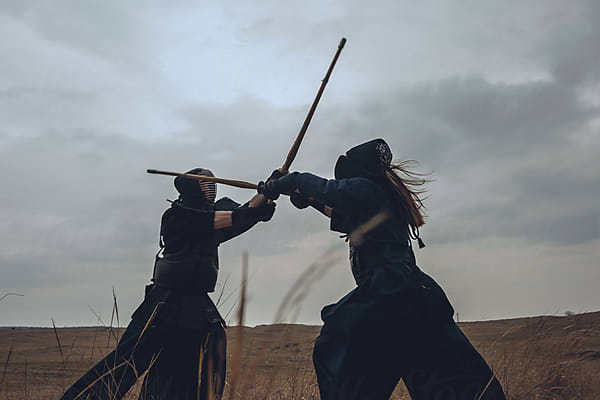
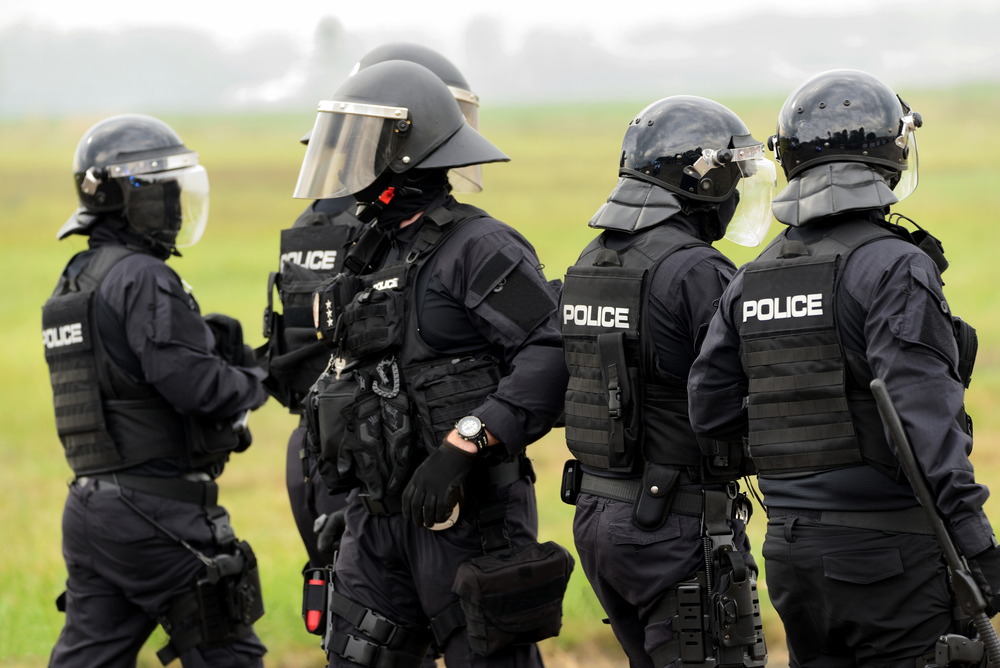
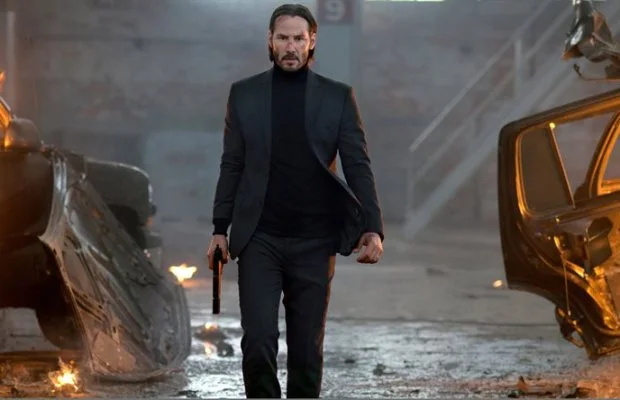


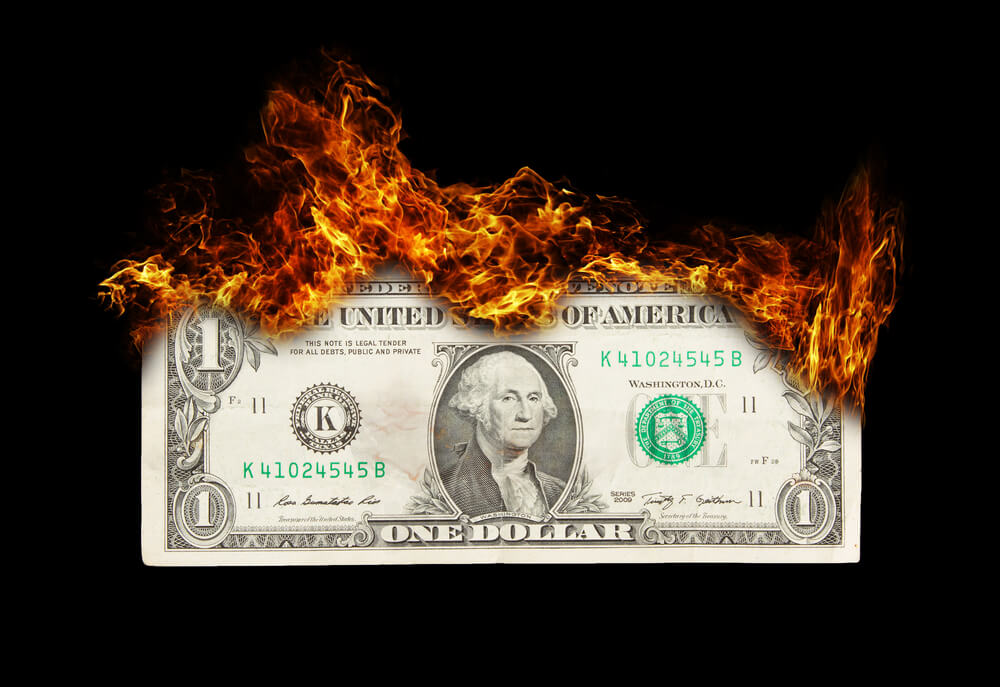
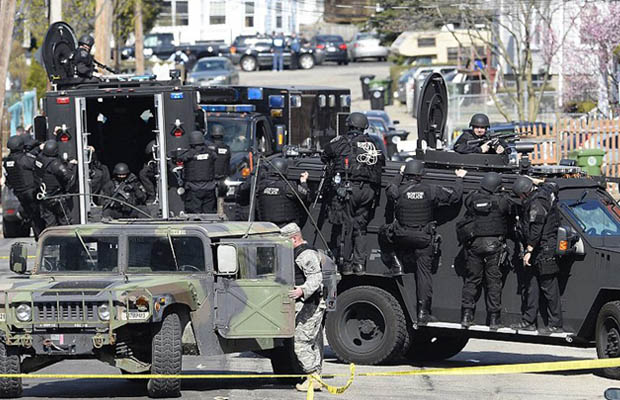


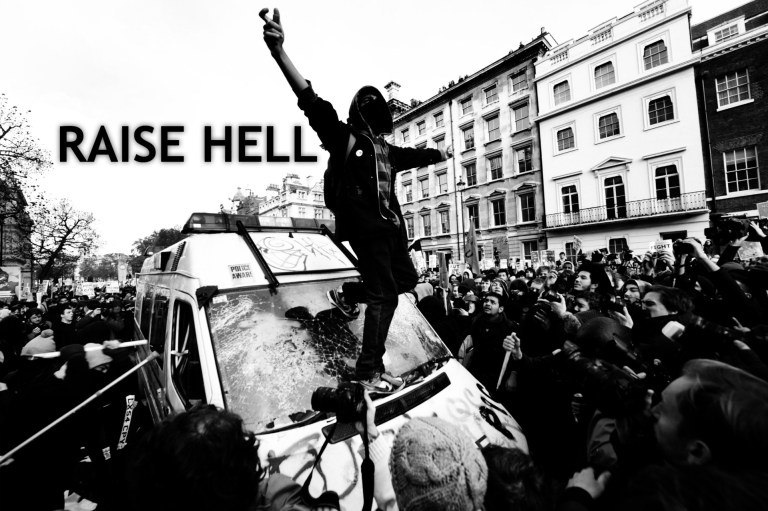


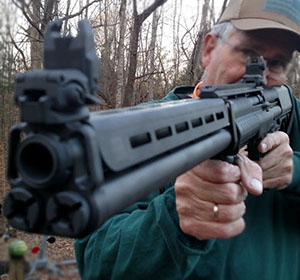
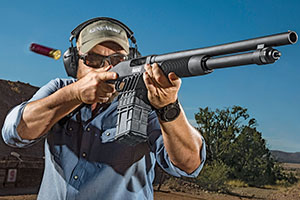
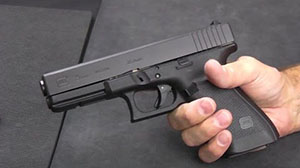
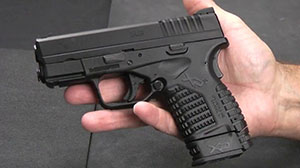
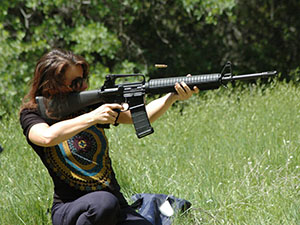
 Ultimate-Survival