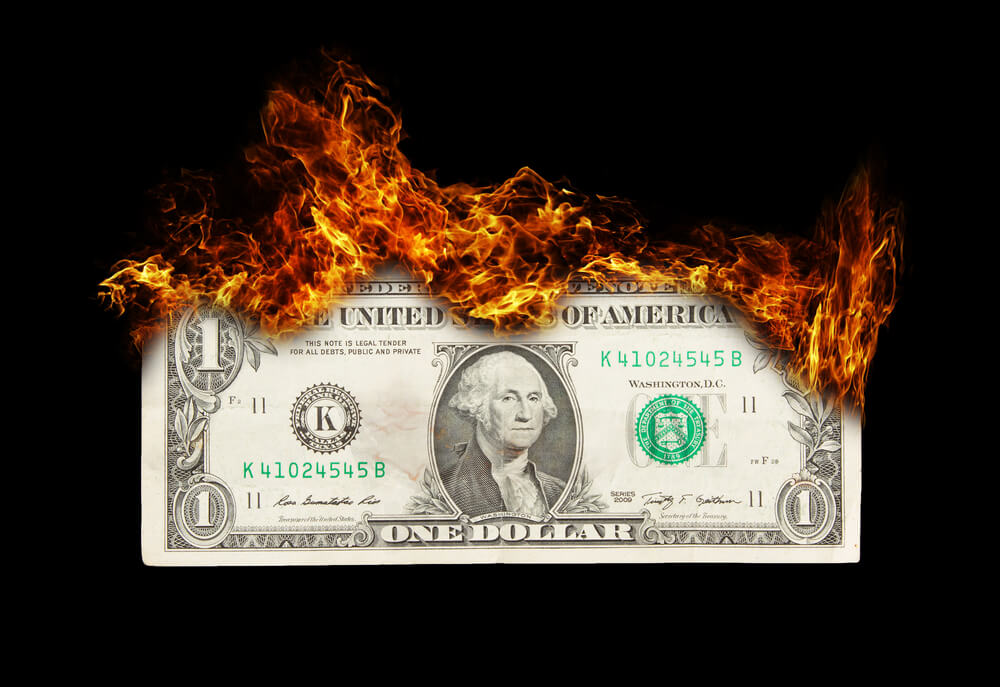
5 Essential Tips to Living Frugally and Preparing for What’s to Come

Prepper or not, learning about frugality is crucial. Preppers are mainly gearing up for the apocalypse, and the current COVID-19 pandemic a vindication of their years of preparation. Stockpiling weeks or months’ worth of supplies, investing in survivalist skills or bunkers, packing a get-home bag, and prepping to survive doomsday involve money one way or another.

How do you prudently and economically spend your money and be on top of your finances? Accordingly, this article tries to awaken the frugal in you through tips that are practical and pretty useful for day-to-day life and eventualities.

Frugal Tip No. 1: Amass Real-Life Skills

The do-it-yourself movement teaches you to be more hands-on in everyday matters. It also helps you to be careful about your funds; instead of buying a replacement or hiring services outright, examine if you can do the task yourself first.

Great Skills To Make Money

Here are some practical skills to help you save your dollars and your life if it comes to that:

  • Home cooking: you can save on delivery fees and choose the ingredients and quantity for allergy-free and healthy meals. During crucial times, being able to make something out of scraps and leftovers in the fridge is quintessential.
  • Planting or growing food: harvest vegetables and herbs fresh from your backyard to your table and spend less on groceries.
  • Sewing: buy fewer clothes, and make repairs or alterations to old ones.
  • Grooming: learning to cut your hair or that of your children and partner saves money and waiting times at the salon.
  • Doing household repairs: the basics of plumbing, carpentry, and home maintenance can go a long way to keep your house safe and in good shape. You’ll need these skills, even more, when you live off the grid and have only yourself to rely on.
  • Hunting and foraging/gathering: if you are out in the wild or when the food situation goes awry, you can turn to these skills to survive, just like the old times.

Frugal Tip No. 2: Track Your Expenses

Budgeting, saving, and spending are all connected. If you keep wondering where your wages ago, it’s time to keep track of them:

  • Pen and paper: with your planner, journal, or dedicated notebook, itemize every single thing you spent on for the day, and tally them at the end of the month. The challenge is to keep going at it and not miss a single day.
  • Spreadsheets: for on-the-go editing and access online, keep tabs of your daily expenses through Google Sheets and Office 365 Excel.
  • Apps: they are convenient and free (there may be in-app purchases). You can categorize expenses that make it easier to spot trends and purchases you can minimize or drop.

Frugal Tip No. 3: Get Out of Debt

It’s hard to set an emergency fund or double the money in your bank when you have debts to pay. One tip is to focus on the loan balance and pay it off as fast as what this couple did. If you can choose which to pay off first, prioritize the ones that have higher interest rates. Also, reach out to your banks/lenders for a realistic debt repayment plan.

Getting out of debts and staying free of them involve mindful decisions about purchases, the classic needs versus wants, and living within one’s means.

Frugal Tip No. 4: Start with Value

Dictionary definition aside, frugality has taken on different meanings to different people. One thing’s for sure, you can be frugal and pay more to get better value. Instead of going for the lowest-priced product, consider the quality and other attributes that make it a worthwhile purchase for you in the long run.

Going for value is somehow related to Robert Burton’s famous proverb, “penny wise, pound foolish.” Per the idiom, one is bent on making the most out of their pennies but is wasteful with large sums of money that whatever savings are offset.

Learn To Save Money

Frugal Tip No. 5: Raise Money for “Fun”

Being frugal doesn’t necessarily mean depriving yourself of nice things, especially if they are the buy-them-for-life kind. It’s also important to treat yourself every once in a while to avoid frugality fatigue, which happens when you are too caught up saving and feeling miserable about it.

Why not create a fund exclusively for those impulse or emotion-driven purchases? This “fun money” can come from your side gigs. One lucrative source of extra income is selling things online, from handcrafted items, old clothes, thrift finds, to travel photos.

Selling items you no longer need declutter your house and leads them to frugal customers who, like you, want bang for their buck. Even with little to no capital for inventory, you can start a business using a trusted platform.

Save and Prepare

It’s true: you can only do so much to prepare for what’s to come. But you have an advantage if you have resources at your disposal and know how to manage them wisely.

What’s your go-to frugal tip?

What the Government Can or Can’t Do Under Martial Law

The big M word in the survivalist and prepper world, Martial Law, is a very disturbing concept and one we have seen in small bouts here in America. In our lifetime we have never been closer to seeing true Martial Law crop up in cities across the nation.

We have hundreds of thousands of National Guard members in cities all over the country. Make no mistake about it, the National Guard is here to help. They have been helping with everything, from getting food and resources to people and setting up testing locations.

The question becomes: why and how would Martial Law hit big cities in the nation?

The Simple Martial Law Scenario

All over the country governors are relaxing restrictions. You may be in favor of that or you may not. Regardless, we are going to see an increase in cases of COVID-19 as people come together again. We cannot be sure the effect this will have.

What happens if the cases skyrocket and we see the government panic and pull the emergency break? What if we tumble into lockdown #2? We are already seeing people protesting to get things back to normal.

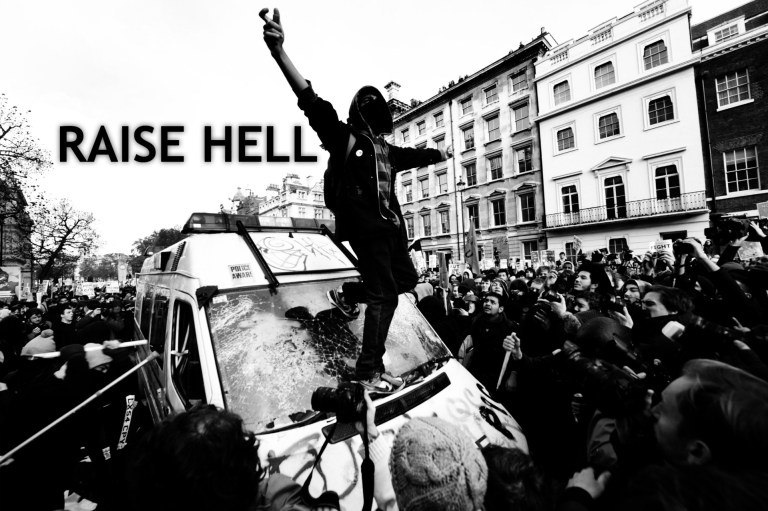
If we lockdown again and the average American cannot get back to work, there will be civil unrest like nothing we have seen in this nation. At this point violence will have to be suppressed. Welcome in Martial Law!

So, let’s look at what the government can or cannot do under martial law.

Firearms Confiscation

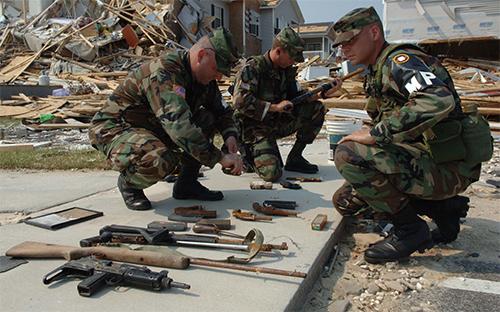
Firearms have been confiscated in this nation before. While it might seem improbable, if we are dealing with threats from civil unrest, you will see isolated incidences of gun confiscation.

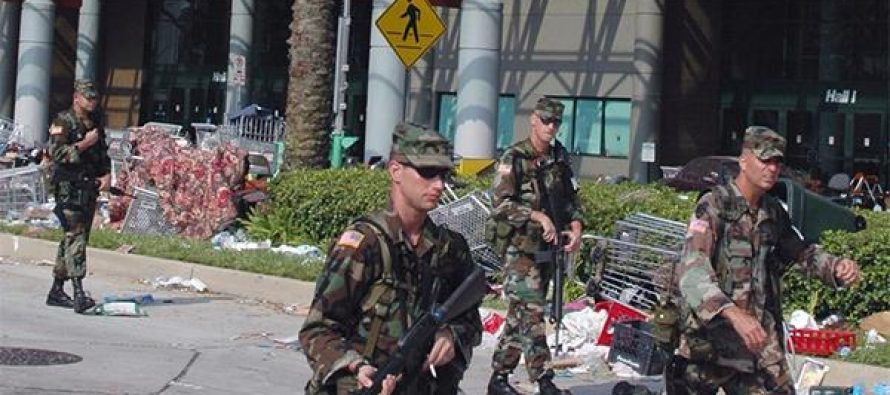
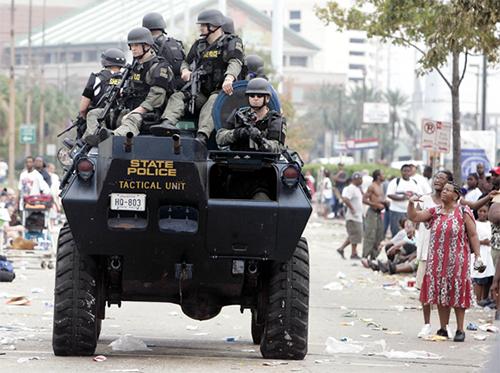
It only takes a little thinking to understand what a brittle bridge this is to cross, however, when you bring overwhelming force to a community most will surrender their weapons. We watched this happen following the devastation of Hurricane Katrina.

In fact, we have watched Mayors all over the nation lean on “emergency” legislation that limits the 2nd Amendment. Just take this “law” from New Orleans:

“Subject to the provisions of Act 275 of 2006 (Regular Session), the Emergency Authority is hereby empowered, if necessary, to suspend or limit the sale, dispensing, or transporting of alcoholic beverages, firearms, explosives, and combustibles.”

Curfew

This is one of those situations where many places, under emergency authority, have already created rules with curfew. From places like New Jersey, where you might expect it, to as far south as South Carolina, we have already seen curfews put in place.

It would make a stricter Martial Law style curfew easier to establish.

Restrictions on Free Speech

Unfortunately, thanks to our buddies at Google, we already have our speech restricted on almost every major level. Sure, you can go out to a bar and say most of what you want to say. However, the largest vehicles of mass communications are so regulated it’s embarrassing.

This is yet another example of how we have been primed for Martial Law. When you look at it from that angle, how hard would it be to level your ability to communicate and voice your opinions? If the internet goes dark, your cell signal shuts off and you cannot assemble, what do you have?

Removal of Personal Property

There is no doubt that the removal of personal property and even the removal of people from their own property is possible with Martial Law. In fact, executive orders to take PPE and other items from citizens have already been enacted.

Months ago, we had people from the administration threaten to take people’s goods if they were stockpiling hand sanitizer, toilet paper, masks, and other PPE. This had many preppers on alert.

Eliminate Your Right to a Speedy Trial

Even in Martial Law, you will be tried for crimes. Now, what you consider to be a CRIME might change drastically, however you will be tried. You will not be tried by a jury of your peers. Instead, the military will become judge, jury, and jailor.

As scary as that sounds you will still have a trial to decide your fate. This is not a guarantee but there is legal precedent that your 6th Amendment will be upheld. While President Lincoln suspended Habeas Corpus during the Civil war, Lambdon P. Milligan fought his military tribunal sentencing and the Supreme court ruled in his favor.

In 1866 the Supreme court ruled there could be no military trials for US citizens.

 Nationwide Martial Law

Despite the fantasy of a nationwide Martial Law, the resources do not exist to lockdown every American city. In fact, we couldn’t lockdown the major cities all at the same time. We are talking about tens of millions of people.

However, we could very well see sections of Boston, NYC, and Detroit, among others, face a Martial Law type presence.

I hope you have connected the dots while reading this article. Many of these “Emergency Acts” that have been enacted at the state and federal level have already stolen your liberty in writing. The government has built a framework for Martial Law and in some cities the violence has already started. Not to mention we have willingly walked into a world of censorship.

Pay close attention to positioning. The American military is great at positioning and I have to believe that much of what is happening in our nation is about positioning resource to cut down civil unrest due to this lockdown and, God forbid, successional lockdowns to come.

The fact is, we have given up tremendous amounts of power. Those who rule over us are fully prepared to send in the shock troops, if need be. It is time for America to be smart and get people back to work, safely. It’s time to isolate at risk populations.

Otherwise we will see Martial Law in cities across this nation and now you know what we stand to lose.

Trump Against the Government: Officials Conflicted Over Lying for the President

Once upon a time in the United States there was a consensus among national politicians that there were two areas where there should be a unified approach to policy. They were national security and foreign policy, both of which involved other nations, which made desirable a perception of unity on the part of the president and his cabinet, no matter who was in power. That meant that dissent from individual politicians should never rise to the level of pitting one party against another on the basic Establishment view of what was desirable in terms of U.S. national interests.

That viewpoint has survived at least somewhat intact to this day, even weathering the turmoil of Vietnam, but the apple cart has been somewhat upset by new players in the game, namely the various federal bureaucracies, to include law enforcement, intelligence and the Pentagon. The 2016 election demonstrated that the FBI and CIA in particular were willing to get involved in the game of who should be president, and in so doing they compromised major foreign policy and national security norms, which produced Russiagate as well as the wildly inflated current claims being leveled against China and Russia and even Iran looking ahead to elections in November.

As noted above, the Establishment view on foreign and national security policy was based on the principle that there must always be a united front when dealing with situations that are being closely watched by foreigners. If a cabinet secretary or the president says something relating to foreign or military affairs it should be the unified view of both the administration and the loyal opposition. Unfortunately, with President Donald Trump that unanimity has broken down, largely because the chief executive either refuses to or is incapable of staying on script. The most recent false step involved the origin of the corona virus, with the intelligence community stating that there was no evidence that the virus was “man made or genetically modified” in a lab followed by the president several hours later contradicting that view asserting that he had a “high degree of confidence” that the coronavirus originated in a laboratory in Wuhan, China based on secret information that he could not reveal.

There has also been reports that the Trump White House has in fact been pushing the intelligence community (IC) to “hunt for evidence” linking the virus to the Wuhan laboratory, suggesting that the entire China gambit is mostly political, to have a scapegoat available in case the troubled handling of the virus in the United States becomes a fiasco and therefore a political liability. This pressure apparently prompted an additional statement from the Office of the Director of National Intelligence saying: “The IC will continue to rigorously examine emerging information and intelligence to determine whether the outbreak began through contact with infected animals or if it was the result of an accident at a laboratory in Wuhan.”

Secretary of State Mike Pompeo, who has claimed without providing any details that there is “overwhelming evidence” that coronavirus came out of the Wuhan laboratory, is reportedly leading the push to demonize China. He and other administration officials have expressed their frustration over the C.I.A.’s apparent inability to come up with a definitive explanation for the outbreak’s origin. C.I.A. analysts have reportedly responded that there is no evidence to support any one theory with “high confidence” and they are afraid that any equivocating response will immediately be politicized. Some analysts noted that their close monitoring of communications regarding the Wuhan lab suggest that the Chinese government itself does not regard the lab as a source of the contagion.

To be sure, any intelligence community document directly blaming the Chinese government for the outbreak would have a devastating impact on bilateral relations for years to come, a consequence that Donald Trump apparently does not appreciate. And previous interactions initiated by Trump administration officials suggest that Washington might use its preferred weapon sanctions in an attempt to pressure other nations to also hold China accountable, which would multiply the damage.

Given what is at stake in light of the White House pressure to prove what might very well be unprovable, many in the intelligence community who actually value what they do and how they do it are noticeably annoyed and some have even looked for allies in Congress, where they have found support from the Pentagon over Administration decision making that is both Quixotic and heavily politicized.

House Armed Services Committee Chairman Adam Smith of Washington has responded to the concerns expressed to him by both the military and intelligence communities, admitting that he is “…worried about a culture developing” where many senior officials are now making decision not on the merits of the case but rather out of fear that they will upset the president if they do not choose correctly.

While the intelligence agencies are concerned over the fabrication of a false consensus over the coronavirus, similar to what occurred regarding Iraq’s alleged possession of weapons of mass destruction in 2002-3, the Defense Department is more concerned that fundamental mechanisms that have been in place since the Second World War are now under attack, including how the military maintains discipline and punishes officers and enlisted men who have deviated from established policies.

Appealing to his base of support, Trump has notoriously pardoned Chief Petty Officer Edward Gallagher, a Navy seal who was clearly guilty of murder in Afghanistan, and even met with him afterwards in the White House. Regarding Gallagher, Senate Armed Services Committee Democrat Jack Reed of Rhode Island said in a November that “The White House’s handling of this matter erodes the basic command structure of the military and the basic function of the Uniform Code of Military Justice.”

Trump is now meddling in the treatment of Navy Captain Brett Crozier, who was relieved of his command after he went public with complains about the spread of coronavirus on his ship. In early April the president said “I may just get involved.” In the military services such interference even has a name, “undue command influence.” Clearly, the White House is seeking to squeeze every bit of political advantage it can from the Crozier story.

Congressman Smith has also described the situation in a colorful fashion as “The president has made it clear as far as he is concerned the single most important attribute that anybody in the federal government can have is a willingness to kiss the president’s ass as often as possible” which “undermines your ability to be competent, to make decisions based on what is the right thing to do as opposed to what is going to feed the president’s limitless ego.”

To be sure, Donald Trump is not about to change and if he is re-elected one can only expect four more years of the same, but public confidence in government can only be maintained if there is at least some belief that decision making is a rational process. Trump has clearly turned that axiom on its head in his tendency to blame other parts of the government for what are manifestly his own failings. His characterization of senior officials, many of whom he himself appointed, as “losers” casts the entire government in a bad light. Whether the strategy of divide and conquer within one’s own administration will work out for Trump will certainly be decided in November.

Death Toll of Western Aggressive Wars in the Middle East to Coronavirus Worldwide: 5,000,000 to 220,000

Nobody knows how many people died as a result of the UK/US Coalition of Death led destruction of Iraq, Afghanistan, Libya and, by proxy, Syria and Yemen. Nobody even knows how many people western forces themselves killed directly. That is a huge number, but still under 10% of the total. To add to that you have to add those who died in subsequent conflict engendered by the forced dismantling of the state the West disapproved of. Some were killed by western proxies, some by anti-western forces, and some just by those reverting to ancient tribal hostility and battle for resources into which the country had been regressed by bombing.

You then have to add all those who died directly as a result of the destruction of national infrastructure. Iraq lost in the destruction 60% of its potable drinking water, 75% of its medical facilities and 80% of its electricity. This caused millions of deaths, as did displacement. We are only of course talking about deaths, not maiming. This very sober analysis from Salon makes a stab at 2.4 million for Iraqi deaths caused by the war.

The number of Iraqi casualties is not just a historical dispute, because the killing is still going on today. Since several major cities in Iraq and Syria fell to Islamic State in 2014, the U.S. has led the heaviest bombing campaign since the American War in Vietnam, dropping 105,000 bombs and missiles and reducing most of Mosul and other contested Iraqi and Syrian cities to rubble.

An Iraqi Kurdish intelligence report estimated that at least 40,000 civilians were killed in the bombardment of Mosul alone, with many more bodies still buried in the rubble. A recent project to remove rubble and recover bodies in just one neighborhood found 3,353 more bodies, of whom only 20% were identified as ISIS fighters and 80% as civilians. Another 11,000 people in Mosul are still reported missing by their families.

For a vivid illustration, here is a photo of Sirte, Libya, after it was kindly “liberated” by NATO aerial bombardment. NATO carried out 14,000 bombing sorties on Libya.

The neo-con drive to dominate the Middle East, in alliance with Saudi Arabia and Israel, has caused an apocalyptic level of death and destruction. It really is very difficult indeed to quantify the number of people killed as a direct result of the policy of “liberal intervention” in these countries. Bombing people into freedom has collateral damage. There are also the vast unintended consequences. The destruction of Afghanistan, Iraq, Libya and Syria launched a wave of refugee migration which led to politicial instability throughout Europe and contributed to, among many other consequences, Brexit.

For the purposes of argument, I am going to put an extremely conservative figure of 5 million on the number of people who died as a result of Western military intervention, direct or proxy, in the Middle East.

Now compare that to the worldwide death toll from coronavirus: 220,000. Let me say that again.
Western aggressive wars to coronavirus: 5,000,000 : 220,000.

Or put it another way. The total number of deaths from coronavirus in the UK so far is about half the number of civilians killed directly by the US military in the single city of Mosul.

Makes you think, doesn’t it? There are four horsemen of the apocalypse, and while of course I do not blame people for focusing on the one which is riding at them personally, do not forget the others. Coronavirus has not finished killing. But then nor have western wars.

The sight which I cannot stand is the mainstream media which cheered on the horseman of war as they argued for the invasion Iraq on the basis of lies – and still defend it as a “liberation” – who now pretend massive concern for human life. The hypocrites are disgusting.

I was wrong when I initially wrote about the coronavirus.

Before I detail where I was wrong, let me say where I believe I was right. Large general population sampling antibody studies are now just beginning to emerge, and I feel reasonably confident that I was in fact correct that the mortality rate of coronavirus is under 1%, and probably not too different from the 0.5% generally quoted for Hong Kong flu. The term “infection fatality rate” is now being used to describe this true mortality rate. The “infection fatality rate” is the percentage of those who get the disease who die.

These are very early days for whole population sampling antibody studies, and the true picture should become more plain over the next month or two. I must say I have found it alarmingly difficult to explain to people the rather simple concept that you cannot infer a mortality rate among everybody who catches the disease, from the results you get when by definition you have only been offering tests to the most acute cases presenting as needing serious treatment. Of course a fair proportion of the worst cases don’t make it through the disease. But there is a population of millions in the UK (and nobody has a serious idea how many) who have had the disease with no or mild symptoms, and who do not figure in the statistics.

The very large majority of people in the UK who have had coronavirus have never been tested. That is simply true. How many, nobody knows. That is also true.

I do not endorse the extrapolation from New York to the UK, in this Daily Mail piece, to try to calculate how many people may have had coronavirus in the UK. But buried in there is the best collection I can find anywhere of what sampling antibody studies are indicating for the “infection fatality rate” across various US and European locations, and there is a strong clustering under 1%. Now these are preliminary studies, though almost all from reputable institutions. Proper, large scale, antibody testing programmes to produce peer reviewed and authoritatively published studies are on the way, but not here yet. I repeat, though, that I think the infection mortality rate is somewhere below 1%.

Where I was wrong, was in not realising that what is different about this disease from a flu is that it is really very, very contagious. So a far higher percentage of the population get it, all at once. Over two seasons, only about 30% of the UK population got the Hong Kong flu. Unchecked, it seems this coronavirus can spread very much quicker than that. I do not know why, but it appears that it can. So the lockdown policies to prevent health services being overwhelmed are needed and do have my support.

I do not however support the level of alarmism and panic. Of course the disease is really appalling for those who get it badly. It is a painful, protracted and terrifying experience. But a similar level of scrutiny of extreme illnesses of other kinds would bring similar stories. I have had three brushes with death in my own life.

In 2003 I had multiple pulmonary emboli (bloodclots in both lungs), which left me in a coma for days, was incredibly painful and I understand very similar in terms of experience to the end phase of this coronavirus. In 1986 I was actually declared dead in a hospital in Kaduna, Northern Nigeria (salmonella paratyphoid B), and was woken up on a morgue trolley by a cockroach eating my nostril. In 1974 I had emergency surgery for peritonitis, and was in hospital for 5 weeks and then a convalescent home. Retailing the experience or images of any of these illnesses would be as capable or more of generating the terror being created by the detailed coverage of extreme cases of coronavirus.

Yes the coronavirus is horrible if you get it badly. Almost all severe disease is horrible and death very seldom consists of peacefully stopping breathing, despite Hollywood. I wonder if having lived so much in Africa has changed my attitude to death. We do not see death much in the UK. Did you know the British have a 350% higher propensity than the Italians to put their elderly into care homes? That is why the deaths in Italy were so much more visible, even though the truth is that the UK government is doing not significantly better, and quite probably worse, than the Italian government, at containing the virus. It is only now making a start at adding English care home deaths to the official statistics (Scotland has for weeks).

I do support lockdown, I do support every sensible precaution being taken because the virus is so contagious. I utterly deplore the vast quantities being spent on war, the $220 billion being squandered on Trident missiles while the most basic precautions stockpiling against the much more real threat of a pandemic were not undertaken, because Tories begrudged spending a few millions on the NHS. I get all of that and I repeat it. But we must not be panicked into believing that the threat is greater than it is. You have approximately a 99% chance, (still nobody knows for certain) of surviving this disease if you catch it. If you are under 60, your chance of death is almost certainly at worst 1 in 500 if you catch it. If you are older or like me have heart and lung issues, it looks a bit bleak. But we are not immortal, nor would I wish to be.

But remember this. Your odds of survival are massively better than were those of a civilian in a country that your country chose to invade in recent years. Did you, personally, do enough to try to stop that?

Remember, there are other horsemen.

It Took COVID To Expose The Fraud Of ‘American Exceptionalism’ (Our leaders were so preoccupied with remaking the world they failed to see that our country was falling apart around them.)

Has the time come to bury the conceit of American exceptionalism? In an article for the American edition of The Spectator, Quincy Institute President Andrew Bacevich concludes just that:

The coronavirus pandemic is a curse. It should also serve as an opportunity, Americans at long last realizing that they are not God’s agents. Out of suffering and loss, humility and self-awareness might emerge. We can only hope.

The heart of the American exceptionalism in question is American hubris. It is based on the assumption that we are better than the rest of the world, and that this superiority both entitles and obligates us to take on an outsized role in the world.

In our current foreign policy debates, the phrase “American exceptionalism” has served as a shorthand for justifying and celebrating U.S. dominance, and when necessary it has served as a blanket excuse for U.S. wrongdoing. Seongjong Song defined it in an 2015 article for The Korean Journal of International Studies this way: “American exceptionalism is the belief that the US is “qualitatively different” from all other nations.” In practice, that has meant that the U.S. does not consider itself to be bound by the same rules that apply to other states, and it reserves the right to interfere whenever and wherever it wishes.

American exceptionalism has been used in our political debates as an ideological purity test to determine whether certain political leaders are sufficiently supportive of an activist and interventionist foreign policy. The main purpose of invoking American exceptionalism in foreign policy debate has been to denigrate less hawkish policy views as unpatriotic and beyond the pale. The phrase was often used as a partisan cudgel in the previous decade as the Obama administration’s critics tried to cast doubt on the former president’s acceptance of this idea, but in the years since then it has become a rallying point for devotees of U.S. primacy regardless of party. There was an explosion in the use of the phrase in just the first few years of the 2010s compared with the previous decades. Song cited a study that showed this massive increase:

Exceptionalist discourse is on the rise in American politics. Terrence McCoy (2012) found that the term “American exceptionalism” appeared in US publications 457 times between 1980 and 2000, climbing to 2,558 times in the 2000s and 4,172 times in 2010-12.

The more that U.S. policies have proved “American exceptionalism” to be a pernicious myth at odds with reality, the more we have heard the phrase used to defend those policies. Republican hawks began the decade by accusing Obama of not believing in this “exceptionalism,” and some Democratic hawks closed it out by “reclaiming” the idea on behalf of their own discredited foreign policy vision. There may be differences in emphasis between the two camps, but there is a consensus that the U.S. has special rights and privileges that other nations cannot have. That has translated into waging unnecessary wars, assuming excessive overseas burdens, and trampling on the rights of other states, and all the while congratulating ourselves on how virtuous we are for doing all of it.

The contemporary version of American exceptionalism is tied up inextricably with the belief that the U.S. is the “indispensable nation.” According to this view, without U.S. “leadership” other countries will be unable or unwilling to respond to major international problems and threats. We have seen just how divorced from reality that belief is in just the last few months. There has been no meaningful U.S. leadership in response to the pandemic, but for the most part our allies have managed on their own fairly well. In the absence of U.S. “leadership,” many other countries have demonstrated that they haven’t really needed the U.S. Our “indispensability” is a story that we like to tell ourselves, but it isn’t true. Not only are we no longer indispensable, but as Micah Zenko pointed out many years ago, we never were.

It was 22 years ago when then-Secretary of State Madeleine Albright publicly declared the United States to be the “indispensable nation”: “If we have to use force, it is because we are America; we are the indispensable nation. We stand tall and we see further than other countries into the future, and we see the danger here to all of us.”

In a recent interview with The New York Times, Albright sounded much less sure of her old position: “There’s nothing in the definition of indispensable that says “alone.” It means that the United States needs to be engaged with its partners. And people’s backgrounds make a difference.” Albright’s original statement was an aggressive assertion that America was both extraordinarily powerful and unusually farsighted, and that legitimized the frequent U.S. recourse to using force.

After two decades of calamitous failures that have highlighted our weaknesses and foolishness, even she can’t muster up the old enthusiasm that she once had. No one could look back at the last 20 years of U.S. foreign policy and still honestly say that “we see further” into the future than others. Not only are we no better than other countries at anticipating and preparing for future dangers, but judging from the country’s lack of preparedness for a pandemic we are actually far behind many of the countries that we have presumed to “lead.” It is impossible to square our official self-congratulatory rhetoric with the reality of a government that is incapable of protecting its citizens from disaster.

The poor U.S. response to the pandemic has not only exposed many of the country’s serious faults, but it has also caused a crisis of faith in the prevailing mythology that American political leaders and pundits have been promoting for decades. This found expression most recently in a rather odd article in The New York Times last week. The framing of the story makes it into a lament for a collapsing ideology:

The pandemic sweeping the globe has done more than take lives and livelihoods from New Delhi to New York. It is shaking fundamental assumptions about American exceptionalism — the special role the United States played for decades after World War II as the reach of its values and power made it a global leader and example to the world.

The curious thing about this description is that it takes for granted that “fundamental assumptions about American exceptionalism” haven’t been thoroughly shaken long before now. The “special role” mentioned here was never going to last forever, and in some respects it was more imaginary than real. It was a period in our history that we should seek to understand and learn from, but we also need to recognize that it was transitory and already ended some time ago.

If American exceptionalism is now “on trial,” as another recent article put it, it is because it offered up a pleasing but false picture of how we relate to the rest of the world. Over the last two decades, we have seen that picture diverge more and more from real life. The false picture gives political leaders an excuse to take reckless and disastrous actions as long as they can spin them as being expressions of “who we are” as a country. At the same time, they remain blind to the country’s real vulnerabilities. It is a measure of how powerful the illusion of American exceptionalism is that it still has such a hold on so many people’s minds even now, but it has not been a harmless illusion.

While our leaders have been patting themselves on the back for the enlightened “leadership” that they imagine they are providing to the world, they have neglected the country’s urgent needs and allowed many parts of our system to fall into disrepair and ruin. They have also visited enormous destruction on many other countries in the name of “helping” them. The same hubris that has warped foreign policy decisions over the decades has encouraged a dangerous complacency about the problems in our own country. We can’t let that continue. Our leaders were so preoccupied with trying to remake other parts of the world that they failed to see that our country was falling apart all around them.

American exceptionalism has been the story that our leaders told us to excuse their neglect of America. It is a flattering story, but ultimately it is a vain one that distracts us from protecting our own country and people. We would do well if we put away this boastful fantasy and learned how to live like a normal nation.

Syrian resistance to the US occupation escalates- Health experts fear that COVID-19 could spread like wildfire across Syria, and US troop movements or rotations could help to spread the virus

US President Trump ordered a surprise withdrawal of US troops from Syria in October 2019; however, he bent to pressure from aides and Pentagon officials and soon reversed his decision. He then ordered about 500 US soldiers to occupy the Syrian oil fields to steal the oil, regardless of the violation of international law, or the reflection of state-sanctioned crime on the image of America.

As the US armored vehicles left Qamishli in October, the locals threw rocks and rotten vegetables at them. The US had ditched its local allies, in favor of oil revenues. ISIS was no longer an enemy, and the Kurdish militia was no longer a partner. Now, six months after the US pullout of the northeast of Syria, the US forces are confronted by angry locals, deadly attacks, and the COVID-19 virus.  It appears the days of the US illegal occupation of Syria are numbered.

Ryan Goodman, the co-editor of ‘Just Security’ and a former Pentagon legal adviser filed a request under the Freedom of Information Act for the number of military and civilian defense personnel assigned to Afghanistan, Iraq, and Syria because the Trump administration has stopped reporting them publically since December 2017.  He said, “Providing this information would be a show of respect for the American public, who ultimately must decide what sacrifices our country should make in sending troops into war.”

“The United States Government and all its institutions represent and are accountable to the American people,” wrote Chuck Hagel, former Secretary of Defense, in support of the requests.  Trump had made a campaign promise in 2016 to bring US troops home from Afghanistan and the Middle East but has failed to keep his promise to his supporters.   With the 2020 election fast approaching, those troop numbers are being guarded like ‘top-secret’ files.

According to the Pentagon, 3,500 active duty US military personnel have tested positive for COVID-19, with 85 hospitalized, and 2 deaths. The numbers jump to more than 5,700, with 25 deaths when you include civilian employees, contractors, and military dependents.

Health experts fear that COVID-19 could spread like wildfire across Syria, and US troop movements or rotations could help to spread the virus, as Iraq has a very large number of cases and there are US troops there as well.  Movement of US troops between Iraq and Syria could be lethal for Syrians as well as American soldiers.

The first reported death from COVID-19 in Syria occurred in Qamishli which is the same region some of the US troops are present. The Syrian Ministry of Health works closely with the WHO and has a central lab for testing in Damascus.  However, the northeast of Syria, and Qamishli in particular, are not under the direct control of the central Syrian government.  The northeast of Syria is in chaos, as Russian, Syrian, Turkish, Kurdish, and US forces are all present, but not all working together.  The rest of Syria is calm, stable, and prepared to face COVID-19.

“This epidemic is a way for Damascus to show that the Syrian state is efficient and all territories should be returned under its governance,” analyst Fabrice Balanche said.

The pandemic may contribute to the departure of US troops from Syria and Iraq, where the Iraqi Parliament called for US troop withdrawal.

The Russian Foreign Ministry spokeswoman, Maria Zakharova, said on April 23 there are reports of COVID-19 cases among the US troops in Syria, who are there illegally under international law.  “This means that Washington bears full responsibility for the civilian population and provision for their humanitarian needs on territories under its control east of the Euphrates and in the south near Al-Tanf, where the notorious Rukban camp for the internally displaced people is located,” she said.

Khirbet Ammu is an Arab village just east of Qamishli.  The Kurds, a minority in Syria, were the US partners on the fight against ISIS, but the local Arabs were not partners, and they are the majority in Syria. This village remained loyal to the Syrian government throughout the war years.  On February 12 a US military patrol got stuck in the mud, and another of their trucks had a flat tire. The US soldiers may have taken the wrong turn, down the wrong road, because they found themselves stuck and under fierce attack by armed residents shouting: “What do you want from our country? What is your business here?” One resident was killed, and another wounded when the US forces fired at the villagers.

Brett H. McGurk has served in senior national security positions under Bush, Obama, and Trump as the Special Presidential Envoy for the Global Coalition to Counter ISIL.  He commented on the Khirbet Ammu attack as an example of a deepening quagmire for US troops.

On March 23 a US military convoy was stopped at Hamo, a village near Qamishli, where the 11 vehicles were forced to turn around and find a different route.  The Syrian Arab Army, which is the only national army in Syria, was assisted by the locals in an act of resistance.

An officer in the US Army was reportedly killed on April 6 in the town of Al-Sur, near the village of al-Wasi’a, in the countryside of Deir Ez Zor, where the US troops were ordered by Trump to steal the oil.  Also reportedly killed in the ambush were two Kurdish militiamen, formerly partnered with the US. The deaths occurred during an ambush by locals on the foreign military convoy.

Joshua M. Landis is an expert on Syria, and was aware of the reported incident; however, his Twitter account had a post from the US military denying the death, and accusing the Saudi Arabian media ‘Al Hadath’ with spreading false information.

A former senior officer in the US-backed mercenary unit Maghaweir al-Thowra (MAT) deserted his unit in Syria on April 14.  Samir Ghannam al-Khidr deserted the Eastern Syrian desert along with his whole family and 26 armed men.  The convoy was subject to a video on social media, which showed 8 pickups, 1 truck, 11 small arms, including 5 M-16 rifles, 4 large-caliber machine guns, 5 grenade launchers, and 6-7 thousand rounds of ammunition.  All of the vehicles and weaponry were US military property. Al-Khidr left the illegal US base at Tanf, which is home to about 200 US soldiers, and about 100 mercenaries of MAT. Previous desertions occurred in early April.

Locals in the village of Abu Qasaibforced the US troops to turn their convoy around on April 16 and go back to their illegal base. It appears the local resistance to the military occupation of Syria is gaining momentum.

The US military was seen crossing illegally from Iraq into Syria at al-Walid, on their way to Hasakah on April 18.  The US convoy consisted of about 35 trucks, carrying military and logistical equipment to steal the oil reserves and loot other natural resources in Syria.

The US military convoy was attacked with stones on April 22, by locals in the village of Farafrah, near Qamishli, who had set up a road-block.  Men and boys chased the Americans on foot while shouting, “Go back to where you came from.”

On April 27, a US Hummer vehicle that carried American troops was attacked by locals in Deir Ez Zor.  The vehicle was later found completely burned, but it is not known what became of the troops who were being transported to the important oil fields of al-Omar and al-Tank, which are being occupied by the US military, on orders by Trump to steal the oil.  ‘Al Mayadeen’ media reported the names of one sailor and one soldier, with eye-witness information that the two Americans were kidnapped.

Is America Turning Into a Communist Country? What We Are Going to do When They Come For Our Freedom Of Speech And Our Freedom to Bear Arms?

Communism hit center stage with the Russian revolution, as first Vladimir Lenin and then Joseph Stalin remade Russia into the image created by Karl Marx. This didn’t affect us here in the USA much until World War II, when we were uncomfortable allies with Russia. Even then, there were those who saw communism as being the political savior for all mankind. But it wasn’t until World War II ended and the Cold War began, that we clearly saw the juxtaposition of capitalism versus communism in the world.

Ever since then, there have been those in this county who have been pushing for us to become one more socialist country in the world. They hold up socialism as the shining light, where all people are treated equally. The government exists only to make sure that happens.

During a SHTF situation, pain could become an annoyance for some, but unbearable for others.

If doctors are scarce and medicine becomes even scarcer, this one little weed, found all over North America and similar to morphine, could be a saving grace.

But even then, there is an elite in any communist government. Someone has to make the decisions about who gets what and those people always take care of themselves first. While socialism or even communism might be a great theory, it requires perfect people; and the world has always had a shortage of those.

Yet there are those in our political system, who still proclaim socialism as the way to go. They make it sound better by calling it “democratic socialism.” But all it takes is a look at other countries who have gone socialist to see what that means; you can vote it in, but you can’t vote it out.

Nevertheless, they try to make their political ideology look good by promising lots of freebies, not letting people know that they are going to have to pay exorbitant taxes to get those freebies. Rather, they claim that the rich, who don’t pay “their fair share” will pay them. Yet every time politicians talk about raising taxes on the rich, it is the middle class who feels the pinch, not the wealthy.

To the low-information voter, especially the low-income, low-information voter, this all sounds good. They get free health care, free birth control, free education, free phones, free food and free income, and someone else has to pay for it. What could be better?

Interestingly enough, over the last century, every socialist or communist government has gotten into power by proclaiming their concern for the poor. This gave them a large pool of low-information voters they could count on, so that they could get voted into office. They lied to their followers regularly, both about their own intentions and those of the opposing party. All that mattered was that they got into power. We could be seeing the same thing happening here.

So, is the United States on its way to becoming a communist country, as some would like?

As I look back over the last 50 years, I can see where we Americans have lost a lot of our freedoms. Every time the government expands, taking over another part of society, it does so at the cost of individual and state freedom. It doesn’t matter if we’re talking about the IRS or the EPA; they get their power by stealing our freedom.

In that sense, you can say that we are already on the road towards communism and have been so for quite some time. A major step towards getting us there was Obama’s signature healthcare law. Never intended to work, the Unaffordable Healthcare Act was merely supposed to be a stepping stone towards a single-payer healthcare system, which would allow the federal government to take full control of 17.9% of our economy.

Basically all that Obamacare has done for the country is raise the cost of health insurance and medical care. Yes, it did give some people who were previously denied health insurance coverage by insurance companies the legal right to buy insurance. Yet that could have been done at a much lower cost and without having to hire 30,000 new IRS agents, further bloating an already oppressive government agency, in the process.

Even regulatory agencies like the Department of Education can be seen to be pushing our country towards socialism and then communism. These agencies do nothing more than take the power to make decisions out of the hands of US citizens and our local governments. One of their main ways of doing this is by controlling tax dollars. Money passed out to state and local governments by these agencies always comes with a price; one of toeing the line on some regulation or other.

Part of the problem here is that once a government agency is established, it is all but impossible to shut it down. Take the EPA for example. It can be fairly argued that there was a need for the EPA, when it was founded by President Nixon in 1970. But since then, the majority of the work that the EPA originally did has been taken over by state governments, leaving the bloated federal bureaucracy in place to spend taxpayer money and create stifling regulations.

The new House of Representatives seems to be making a greater push for the government to take over other parts of our economy as well. Some representatives have even gone so far as to float the idea of taking over major corporations, “for the good of the people.” Should this actually happen, it will be the sign that our country is actively being taken over by a communistic government.

If we keep doing that, we’re going to find ourselves backed into a corner; actually several corners. The first corner will be the elimination of our First Amendment freedom of speech. The “PC Police” are already at work on this, using “political correctness” and “hate speech” to silence those who don’t agree with them.

Totalitarian authority can’t handle disagreement, so they have to criminalize that disagreement in order to silence it. Everyone will be forced to toe the party line, saying what they’re supposed to say, as if they believe it. They won’t be satisfied with us being quiet, but rather insist that we say things their way.

Once they’ve accomplished that, it will be easier for them to take the next big roadblock to communism out of the way, our Second Amendment rights. Totalitarian governments must always disarm the people, so that they can keep control. As Mao Zedong, the first communist leader of China said, “political power grows out of the barrel of a gun.”

Without guns, what can any of us do to stop anything the government wants to do? The Second Amendment was given to us for this purpose. If those in power are going to get the power that they want, they have to take it out of our hands. That’s why the gun grabbers always attacks the AR-15 rifle, rather than pistols or shotguns. You can’t fight a war with pistols; you need rifles for that. As long as we are armed with rifles, we are a danger to the totalitarian communist government they crave.

The real question boils down to what we are going to do when they come for our freedom of speech and our freedom to bear arms?

Preparedness Hacks: Once a nuke is heading your way, you might think that there isn’t much left to do, but you would be wrong!

Because we will show you America’s natural nuclear bunkers that are also EMP proof. When the sirens start wailing, all you need to do is pick the closest one to your home, where you can take cover before it hits.

How The State Will Strip You Of Your Rights When SHTF

Dealing with this subject has been quite difficult for me. Both the concept of the state stripping you of everything and the SHTF concept have as many backgrounds as diverse interpretations, so trying to approach this from a single point of view is a complicated task.

In my country, Venezuela, after 20 years of “revolution,” we have bottomed out and learned to live in situations we never imagined (so much so that I was able to write an article on survival techniques I never imagined myself using on daily basis).

How the State Will Strip You off Everything When the SHTF

It’s not that the governments before Hugo Chavez were much better. But there was a much more stable political and economic situation with access to the international market.In 1999, when Chávez’s government was instated, oil prices were the highest in Venezuela’s history. The newly born Communist policy in the country was hardly felt and had very few repercussions on the professional citizens who lived on a monthly salary.

That’s probably why those first few years didn’t really feel like something was taken away from us. In addition, the newly elected president had a 60% popular approval rating and promised endless opportunities for the neediest people.

One of the first economic policies was the implementation of exchange control, currently in effect. Any operation with foreign currency was managed by the state. Later came the control of the prices of basic products, which caused the disappearance of those items and initiated a black market that is also very much in force to this day.The real problem began in 2004 with the accelerated decrease in oil prices that translated into a lower income for the government. Remember that we are talking about an oil-reliant country.

The decay was soon seen in many aspects. There was no longer maintenance on public roads, and public services failed often until reaching the point of constant failures of electric service, even for days.

The public health situation is also getting worse and worse. As a health professional, I have seen this deterioration for the last 10 years.

During a SHTF situation, pain could become an annoyance for some, but unbearable for others.

If doctors are scarce and medicine becomes even scarcer, this one little weed, found all over North America and similar to morphine, could be a saving grace.

I am an oncologic breast surgeon. In Venezuela, breast cancer is the main cause of death from cancer in women. However, in the hospital where I work, the most important hospital in Caracas, there are no basic services for this issue. No chemotherapy, the radiotherapy equipment has been inoperative since 2015, and surgical procedures are suspended every week.

For me, as a doctor, it is frustrating not to be able to help my patients in any way. Just last week two breast cancer patients who were going to the operating room were suspended for the fourth time in a row. This time the anesthesia machine was failing.

The purchasing power of the Venezuelan citizen also decreased. It seemed to have happened from one day to the next, but if you look at the political situation since 1988, the decline took a long time; all that was left was to hit rock bottom.

Finding ourselves in extreme situations makes our defense system act in a primitive way. This means activating the fight or flight response at any time within any context—and yes, the state takes advantage of that.

The state will rip you off, but it doesn’t happen all of a sudden. There are a lot of logistics; it takes a long time to develop the kind of policy that makes citizens totally dependent on the state.

You start by losing something unimportant, like some kind of monetary bonus now given to you as government-run grocery store credits, and you end up losing your freedom and all kinds of rights, including freedom of speech and protest, but these issues are so extensive that they require an article of their own to explain them properly.

The state has taken charge, with great success I must say, and you are now living in fear of the so-called public authorities, meaning police and military police, since they serve as pro-government forces of repression.

Many of us have lost the incentive to go out and protest. We did it for more than 10 years. However, I have seen the evolution of the manifestations before and now.

I remember 2003 when repression was minimal, almost non-existent. Today many friends who still have the strength to continue have gotten gas masks in order to defend themselves from the hundreds of tear gas grenades used by the authorities that should be defending people.

In any public protest, savage repression is a constant. That violence is what we Venezuelans have become used to.When there is no public or social security, when the devaluation of the currency is occurring on a daily basis, and when you don’t know if the bakery on the corner is going to be broken into tomorrow, at that moment, the debacle has already occurred.

Defending oneself from these kinds of problems is as difficult as trying to explain them. Many have chosen to leave and seek a future in other countries. That way the state even strips you of your own country by causing you to become self-exiled.

I don’t blame them. We all have more than one family member or close friend who has been kidnapped or stolen from violently, and sadly, all we can say is “You should be thankful you weren’t killed”.

Personal security becomes a problem of epic proportions, to the extent that going out on the street is considered a risky activity—a risk to which, unfortunately, you have to get used to in order to live a normal life.Living in that state of continuous stress in which your rights are violated, in cities where, despite paying high taxes, everything seems to be in ruins, is part of that hopelessness that the state achieves in the individual.

Living in a place where a good monthly salary fora top executive, for example, does not reach $100 a month, is not easy, especially taking into consideration that a basic shopping list for a family of four can cost up to $140 monthly.

So the mismanagement of incompetent and corrupt civil servants results in the deep separation of three social classes: extreme poverty, which represents more than 80% of the population and is totally dependent on the government; the working middle class, which manages to subsist through one or two basic incomes plus the economic help of family members abroad; and those who do business with the government and can live in a very comfortable, ideal world that has nothing to do with reality.

Of course, there are exceptions to this, and some people have high incomes without being involved in dubious businesses.

It is sad to see how fourth-level professionals, trained in the country, must leave in order to provide for their families.

I know it is not a unique situation in the world—it has happened and will continue to happen—but it is very different to read about it than to see it sitting in the front row or even being the leading character.

Nowadays it is the common denominator, and more and more qualified professionals and technicians step into the international airport in search of a better quality of life.That’s why there is a whole generation that has no kind of roots in their country and only waits for the opportunity to leave.

I think the worst part of all this is the desolation sown in all of us. It seems to be an endless story, with the political disqualification of opposition leaders, political prisoners, and many more vexations.

Writing all this is not easy, but it makes me reflect. It is an exercise in introspection. Without a doubt, the state strips you of everything in its eagerness to stay in charge. That’s the way they do it.

There comes a point at which the only thing in your mind is to know if you will return home alive. Everything else is secondary. At that point, the state has already massacred you internally. You can never be the same again. I’m sure I am not.

Even if you are a person who is not involved in politics, an “apolitical” citizen, in this state of anarchy, you have to fix your position.

As Desmond Tutu said, “If you are neutral in situations of injustice, you have chosen the side of the oppressor.”

Preparedness Hacks: Once a nuke is heading your way, you might think that there isn’t much left to do, but you would be wrong!

Because we will show you America’s natural nuclear bunkers that are also EMP proof. When the sirens start wailing, all you need to do is pick the closest one to your home, where you can take cover before it hits.

What Will Your Rights Under Lockdown Be?

We will never forget COVID-19. The year 2020 still has a powerful hurricane season, an economic vacuum and a presidential election to get through. We are far from out of the woods.

In all transparency, April 5th was the first day we saw a decline in daily cases, since the beginning of this thing. Many of you have been concerned that the lockdown would come to cities, based on a rash of infections and the inability of American citizens to comply to slow down infection.

Unfortunately we are not yet through with the wrath of the virus. There will be new cases in the tens of thousands each day for weeks. Most troubling is the fact that we will then be forced to face the economic effects of this virus.

Civil unrest in cities is a much more likely scenario for a serious lockdown. Sick people, unemployment approaching 6 million, political discourse, fear and struggle could break our cities down.

Problems with Lockdown

While the idea of Martial Law has incited fear, inspiration and filled the pages of many prepper novels, the reality is it’s a numbers game. It’s a numbers game that the 300+ million citizens of the United States have the edge in.

This massive population and the way it is spread out would make it impossible to lockdown the entire nation. That said, major population centers could certainly see tanks rolling down the streets and a militaristic presence.

What Will Your Rights Under Lockdown Be?

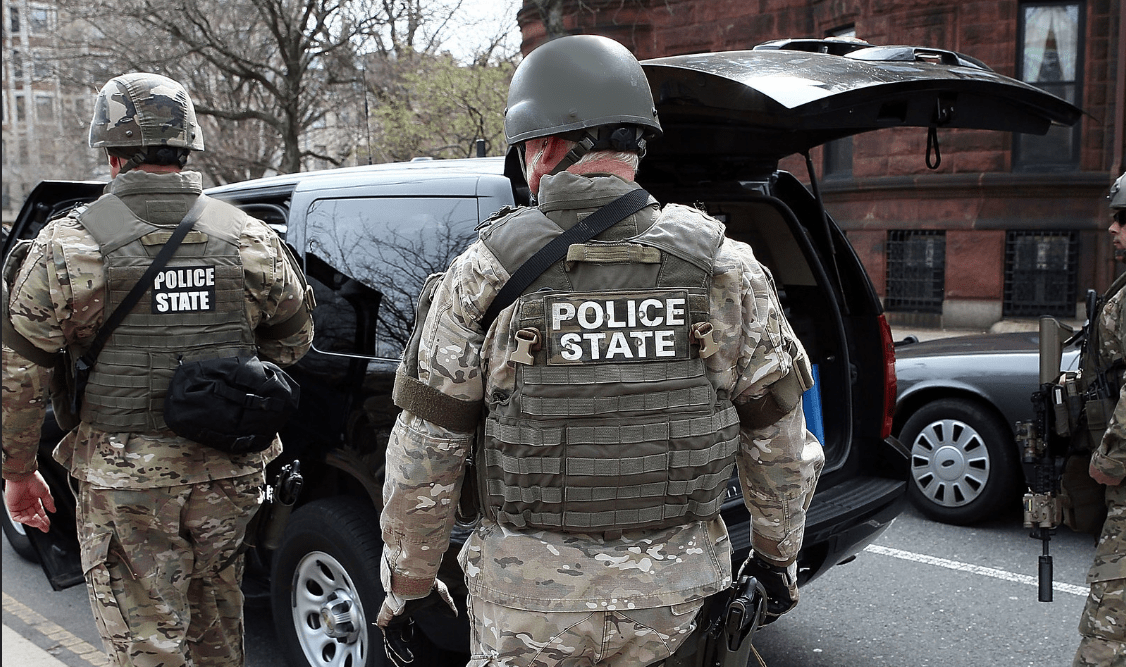
The National Guard has been deployed en mass in New York City and while they are playing a crucial roll in recovery, what could happen if the city devolves into chaos?

Who would be there to take that control back? What would be the upper limits of their power?

The ensuing chaos of a few will undoubtedly affect the many. If you are in a big city, you can expect many of your rights to go missing during a serious lockdown.

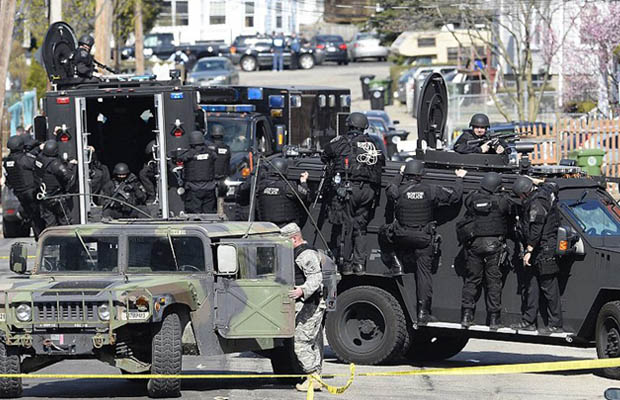
America has never seen a real lockdown that was enforced. For the most part, we have had glimpses of such events after the Boston Marathon Bombing and Hurricane Katrina, Katrina being the closest thing to a mandatory enforced lockdown.

A Hypothetical Federal Lockdown in a Major City

We have basically been suggested out of our rights in the face of this pandemic. Many of us understand that in the short term this is for the greater good. However, the American people are quickly becoming agitated with this idea of state-imposed restrictions.

Much of this has to do with our income and our routines being affected for nearly a month now. Without income and the small pittance that the government is sending out in checks, many are falling deeper into economic despair. Many have lost jobs and we were an erratic society going into this thing.

There is a reason blocks of stores are being boarded up in New York City. Those shop owners know what comes next. They understand that this could get violent in a hurry. So, what would a lockdown do to your rights?

#1. Curfew

Curfew is one of the restrictions on your rights that has already been put in place by some states. If you aren’t out for essential things, you could be fined in places like Boston. This is just the beginning. In a true lockdown situation breaking curfew could have serious consequences.

The youth are tasked with sticking to a curfew, because they have a track record of breaking laws or becoming victims in these hours of the night. Of course, you have a history of rebellion all your own and our governments know that.

#2. Real Quarantine

Self-quarantine is an interesting concept. As of this moment, you get to stay in your home and enjoy your creature comforts while getting better. If things get out of hand and transmissions continue to increase, we will see real quarantine where people are taken away from their homes.

This terrifying situation can be brutal on a family and on the psyche of Americans in general. In a true lockdown, quarantine will not be about staying home and getting your family sick.

#3. Eyes on You

What Will Your Rights Under Lockdown Be?

Perhaps the very worst of the lockdown would come in the form of a next level surveillance.

Currently, places like Kentucky are going as far as placing ankle bracelets on people who break their COVID-19 quarantine. This is happening to sick people only.

Others are tracking people using their cellphones. This heightened state of surveillance would only get worse. It would be used to enforce your curfew and your daily activity could also be called into question.

#4. Search and Seizure

We have caught wind of illegal search and seizure from the government already. Don’t forget this remark from just a couple of weeks ago:

“We’re talking about people hoarding these goods and materials on an industrial scale for the purpose of manipulating the market and ultimately deriving windfall profits… If you have a big supply of toilet paper in your house, this is not something you have to worry about. But if you are sitting on a warehouse with surgical masks, you will be hearing a knock on your door.”

At this moment it’s PPE that the government has deemed essential. If the food supply is affected by the illness and people cannot get food, would they consider all that extra food you have essential?

Your rights to your property are but an agreement. If men with guns come to your door to take those 5-gallon buckets of stored grains, well there won’t be much you can do. It’s not to say it will happen, but if it does you don’t have a lot of options.

#5. As Far as Firearms Go

What Will Your Rights Under Lockdown Be?

The confiscation of firearms is something that most localities would not undertake, even in a serious lockdown. I could see smaller problem areas put through something like a gun confiscation.

Honestly, it would probably be easier to ship the people away from their guns, than it would be to go into homes and take them.

Still, second amendment rights, like buying new guns or having access to ammo, have already been taken away in many states by considering these things nonessential. Even more sinister is the quiet legislation being written and passed, while we are all dealing with this virus. Here in VA there is a proposed 35% tax on all gun sales and 50% tax on ammo!

So, what will your rights in a lockdown be? In one word: Limited.

COVID-19 and social distancing are the perfect opportunity to gobble up massive amounts of power. With all that power in the hands of the state and federal governments, your rights will be at risk. If they can disguise these restrictions as something we all must do for the ‘greater good’, many will comply.

Americans are suffering right now, not from the virus. They are watching their lives come apart without an income and the mental struggle of isolation. It’s easy to forget that your rights are being trampled. We just assume the government will lift restrictions, but what if they don’t? Will they let us go back to our routines?

What about re-infection? What about civil unrest? What if they tighten restrictions?

We must all watch our representatives over the next few months. There has never been a moment, in recent history, where the rights of free man all over the world have been in such jeopardy.

Remember the words of Lord Acton: “Power tends to corrupt and absolute power corrupts absolutely.”

Reflections on Farm Living in Times of Social-Distancing, Disease and Panic-Buying- In times of plenty, when the global economy is running smoothly, few people will take the time to contemplate the advantages of an agrarian lifestyle

When humanity made the great transition from the countryside to the city, something priceless was arguably lost in the bargain. That was man’s prized independence, secured by the fruit of his physical labor under conditions that were oftentimes less than idyllic.

In times of plenty, when the global economy is running smoothly, few people will take the time to contemplate the advantages of an agrarian lifestyle. In fact, even when things go belly-up there still won’t be much reflection on the subject since most of us have little or no experience with life outside of the maddening metropolis. Thus, suffice it to say there won’t be any great migration for the countryside, even as our urban areas descend into cauldrons of rage and despair amid a global pandemic.

Yet where better to put into practice ‘social distancing’ then on a farm, where wide open spaces keeps neighbors, not to mention viral diseases, naturally at bay? And while we’re at it, just try and imagine a group of farmers inside of a supermarket resorting to fists over two-ply toilet paper or the last can of baked beans. Ironic how an attachment to the land creates a natural dignity and self-respect in people that so many ‘cultured’ urban dwellers seem to lack.

Thomas Jefferson, in ‘Notes on the State of Virginia’, wrote, perhaps with slight exaggeration, that “[T]hose who labour in the earth are the chosen people of God, if ever he had a chosen people, whose breasts he has made his peculiar deposit for substantial and genuine virtue.” Perhaps the more cynical truth of the matter is that when men and women are forced to produce their livelihood from the sweat and blood of their brow there is simply less time for mischief.

Although this author has spent most of his life sequestered in big cities, I do have fond childhood memories of visiting a great uncle who lived on 100 acres of sprawling farmland in the backwoods of Blairsville, Pennsylvania. It was during those occasional visits when I came to the realization that there was a world far removed from the supermarkets and fast food franchises of modern society. In addition to farming, my uncle and his neighbors were able to sustain themselves through hunting, trapping and fishing. These ‘backwards’ country folk were also learned in the art of canning food and preserving meat for long-term storage. This was often done through the widespread use of root cellars, underground storage spaces popular with our grandparents whose experience from two world wars and one great depression made them acutely aware about the importance of being prepared for absolutely anything. Although farm life is no walk in the park, and requires tremendous toil, it can make the supermarket, hyper-stores and mega-malls resemble insane asylums at lunchtime by comparison.

Today, with the coronavirus pandemic threatening to uproot our lives far greater than even the attacks of 9/11, it would seem that the self-reliance and rugged individualism of our grandparents may come back into style with a vengeance. Even before our present emergency, there was increasing interest in homesteads, prepping, and rural ‘bug out locations’ (BOL), plots of land where people could retreat from the overcrowded cities in times of unrest.

Now, with governments attempting to exert greater security measures in an effort to contain the spread of the virus, life in the major urban areas may change in ways impossible to imagine at the moment. And as we already know, nothing is more permanent than the temporary. Under such circumstances, the idea of owning a small piece of land – a dacha, as the Russians call it – has never seemed more attractive and necessary. As the ongoing coronavirus pandemic has shown, it would be a mistake to think that the supermarkets – vulnerable as they are to panicked crowds of hungry people – will always be able to feed everyone in times of crisis. It’s time to re-think our connection to the land and become at least somewhat emancipated from the corporate cornucopia before the next crisis becomes our last.