Be yourself; Everyone else is already taken.
— Oscar Wilde.
This is the first post on my new blog. I’m just getting this new blog going, so stay tuned for more. Subscribe below to get notified when I post new updates.
Be yourself; Everyone else is already taken.
— Oscar Wilde.
This is the first post on my new blog. I’m just getting this new blog going, so stay tuned for more. Subscribe below to get notified when I post new updates.
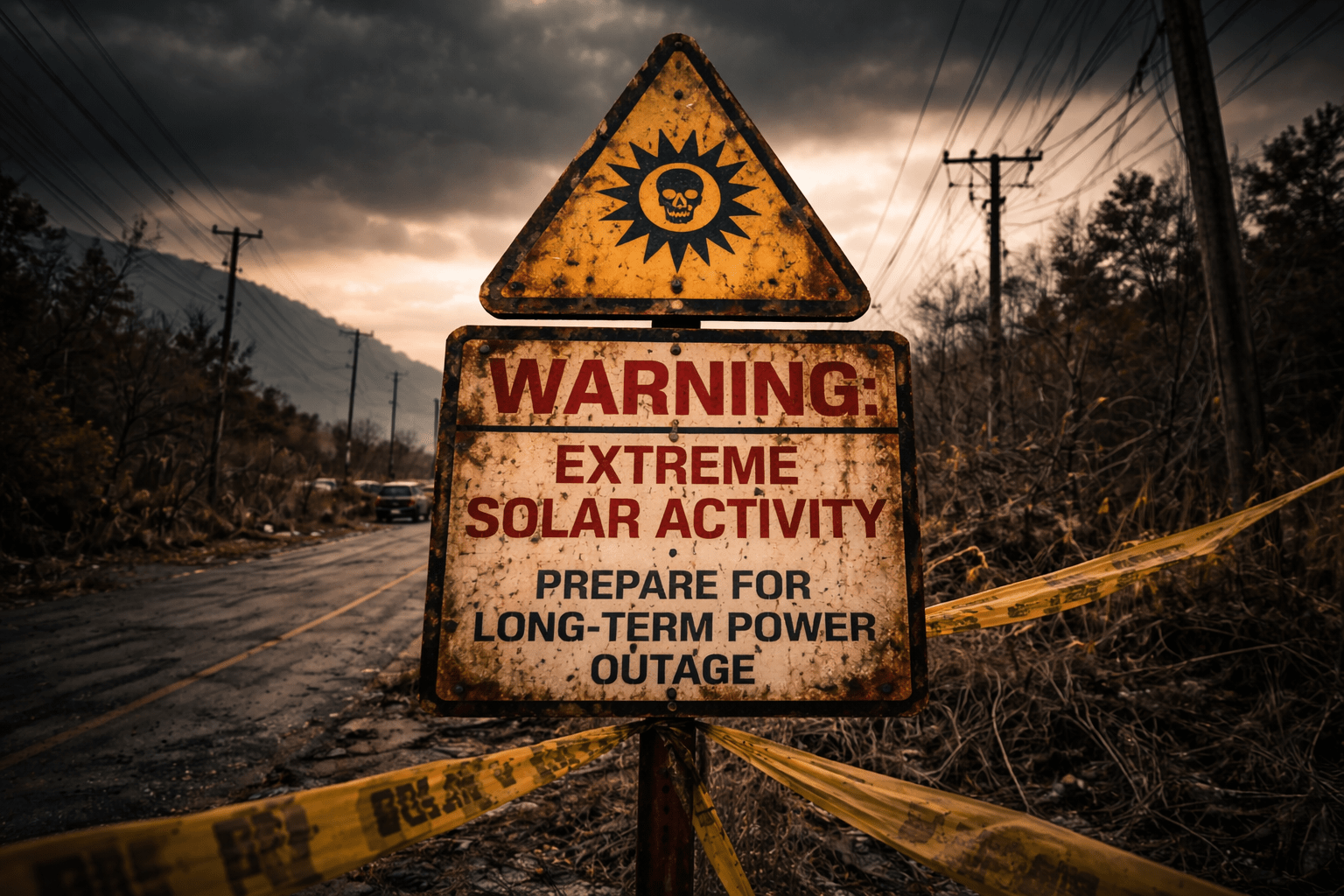

The following article is not intended as a prediction, nor as an alarmist reconstruction of an inevitable future. Rather, it represents an analytical synthesis of documented scientific knowledge, infrastructural assessment, and institutional modeling related to one of the least publicly discussed systemic risks: the impact of extreme solar activity on modern technological civilization. While certain elements of the narrative may appear speculative, they are grounded in historically verified phenomena, existing engineering constraints, and internal governmental analyses that have, over time, remained largely outside mainstream discourse.
The objective is twofold. First, to examine the material and systemic implications of a Carrington-scale geomagnetic event within the context of contemporary infrastructure. Second, to explore the informational asymmetry that surrounds such risks—specifically, the gap between institutional awareness and public engagement, a phenomenon described here as managed silence.
To ensure conceptual clarity and structural continuity, the analysis is organized into a sequence of ten interconnected thematic sections, each addressing a distinct but interdependent dimension of the scenario. These sections do not function as isolated observations; rather, they form a cumulative framework through which the broader implications of long-duration systemic disruption can be understood.
In contemporary discourse, large-scale disasters are typically framed as exceptions—events that interrupt, but do not fundamentally challenge, the continuity of modern systems. This framing is not merely descriptive; it is also reassuring. It implies that disruption, no matter how severe, remains temporary, manageable, and ultimately reversible.
However, this interpretive model begins to break down when applied to certain categories of risk—particularly those that operate at the intersection of natural phenomena and technological dependence. Among these, extreme solar activity occupies a uniquely complex position. Unlike many other threats, it is neither hypothetical nor unprecedented. It is historically documented, scientifically modeled, and institutionally analyzed. Yet despite this convergence of evidence, it remains largely absent from public consciousness.
This absence is not necessarily the result of deliberate concealment. Rather, it reflects a more nuanced dynamic in which certain forms of knowledge—especially those that imply systemic vulnerability on a civilizational scale—are difficult to translate into actionable public discourse. The result is a form of informational imbalance: a situation in which awareness exists within specialized domains, while broader societal understanding remains limited.
A particularly revealing example of this dynamic emerges from a document attributed to FEMA, dated December 2010. The report, titled Mitigation Strategies for FEMA Command, Control, and Communications During and After a Solar Superstorm, does not approach the subject as a distant possibility. Instead, it constructs a detailed operational scenario, grounded in known physical processes and current infrastructural realities.
Its conclusions extend beyond conventional disaster modeling. Among them is the projection that, under specific conditions, large portions of the electrical grid could remain nonfunctional for a period ranging from four to ten years.
Such a timeframe does not simply describe a prolonged outage. It implies a transition from disruption to transformation—a shift from temporary crisis to structural reconfiguration.
To understand how such a scenario becomes plausible, it is necessary to examine its components in sequence.

Any rigorous assessment of solar-induced systemic risk must begin with the Carrington Event of 1859, not as a historical curiosity, but as a foundational reference point. Observed by astronomer Richard Carrington, the event was characterized by an exceptionally powerful coronal mass ejection that reached Earth with unusual سرعة and intensity, compressing the magnetosphere and inducing widespread geomagnetic disturbances.
What makes this event particularly significant is not only its magnitude, but the clarity with which its effects were documented. Although technological infrastructure at the time was limited, the telegraph system provided a measurable interface between solar activity and human-built systems. Reports from the period describe electrical discharges along telegraph lines, spontaneous ignition of equipment, and instances in which messages continued to transmit even after power sources had been disconnected. These observations, while occurring within a relatively simple technological environment, established a critical principle: solar phenomena are capable of directly interacting with—and disrupting—electrical systems on a global scale.

Subsequent geomagnetic events, including the storm of 1921, reinforced this understanding, though under similarly constrained conditions. What distinguishes the present context is not the nature of the solar activity itself, but the degree to which modern civilization has become dependent on complex, interconnected electrical and electronic infrastructures. The transition from localized mechanical systems to globally integrated digital networks has fundamentally altered the scale of potential impact.
Within this framework, the recurrence of a Carrington-scale event is not treated as a speculative anomaly, but as a statistically plausible occurrence within known solar cycles. The central question, therefore, is not whether such an event can happen, but how its effects would propagate through contemporary systems.

The modern electrical grid is often perceived as a symbol of resilience—an engineered system designed to withstand fluctuations, redistribute load, and maintain continuous operation under varying conditions. However, this perception obscures a structural reality: the very complexity that enables efficiency also introduces points of systemic vulnerability.
At the center of this vulnerability lies the network of high-voltage transformers, which function as critical nodes within the processes of transmission and distribution. These components are uniquely susceptible to geomagnetically induced currents, which arise when solar disturbances interact with Earth’s magnetic field and generate low-frequency electrical flows through conductive materials, including power lines.
When such currents enter transformer systems, they can induce core saturation, leading to excessive heat generation, insulation degradation, and, in extreme cases, irreversible structural damage. Unlike smaller electrical components, these transformers are not standardized units that can be easily replaced. They are custom-engineered devices, often requiring extended manufacturing periods—typically between twelve and twenty-four months—under normal conditions.

This lack of standardization is compounded by several additional factors: limited global manufacturing capacity, logistical challenges associated with transportation and installation, and the absence of comprehensive strategic reserves. As a result, the simultaneous failure of a significant number of transformers would create a bottleneck in recovery efforts, independent of other systemic disruptions.
Within the FEMA scenario, these constraints converge into a critical outcome. The immediate effect of a severe geomagnetic storm is not merely a widespread outage, but a structural impairment of the grid’s core components. The longer-term implication is a prolonged inability to restore functionality, not due to a lack of intent or coordination, but due to the physical and logistical limitations inherent in the system itself.
It is within this context that the projected recovery timeline—extending from four to ten years—begins to acquire analytical credibility.

The failure of the electrical grid cannot be understood as an isolated event. In contemporary societies, energy functions as a foundational layer upon which multiple critical systems depend. As such, its disruption initiates a cascade of secondary failures that extend far beyond the energy sector itself.
Telecommunications infrastructure, for instance, relies on continuous power to sustain network operations, data processing, and signal transmission. While backup systems exist, they are typically designed for short-duration outages and are constrained by fuel availability and maintenance requirements. As these systems degrade, the capacity for coordination and information dissemination becomes increasingly limited.
Similarly, transportation networks depend on electrically powered systems for fuel distribution, traffic management, and logistical coordination. The interruption of these systems impedes both civilian mobility and emergency response capabilities. Food supply chains, which operate on highly optimized, just-in-time delivery models, begin to fracture as refrigeration fails, transportation slows, and inventory systems become inaccessible.

Healthcare systems, often considered among the most resilient, face their own limitations. Backup generators provide temporary continuity, but their operation is contingent upon fuel supply chains that are themselves vulnerable to disruption. Water treatment and distribution systems, dependent on continuous energy input, introduce additional layers of risk when they fail, particularly in terms of public health.
What emerges from this interconnected structure is a pattern of systemic amplification. The initial disruption does not remain confined; it propagates through networks of dependency, accelerating the degradation of the overall system. Each failure reduces the capacity to manage subsequent failures, creating a feedback loop that complicates recovery efforts and extends the duration of instability.
In this sense, the scenario outlined in the FEMA report is not defined solely by the triggering event, but by the architecture of the system it affects. The vulnerability is not located in a single component, but in the relationships between components.

The existence of detailed internal analyses concerning solar-induced systemic risk introduces a dimension that extends beyond technical vulnerability and into the domain of informational governance. The FEMA report, as previously discussed, does not emerge from speculative reasoning, but from structured institutional assessment. Its findings, therefore, are not anomalous; they are representative of a broader body of expert knowledge that circulates within specialized governmental and scientific environments.
What distinguishes this knowledge is not its content alone, but the manner in which it is distributed.
Despite addressing a risk with potentially transformative implications for modern society, the report did not become part of mainstream public discourse. It was neither actively disseminated nor integrated into widely accessible policy frameworks. Instead, it remained situated within a limited informational ecosystem—available in principle, yet effectively absent in practice.
This pattern suggests the presence of what may be described as strategic containment. Such containment does not necessarily imply intentional suppression. Rather, it reflects a structural condition in which certain categories of information—particularly those that challenge foundational assumptions about stability and continuity—are difficult to operationalize at the public level.

Several interrelated factors contribute to this dynamic. The scale of intervention required to meaningfully mitigate the identified risks is substantial, involving long-term infrastructure investment, regulatory coordination across multiple sectors, and, in many cases, international collaboration. Communicating the full extent of vulnerability without the simultaneous capacity to address it may produce uncertainty without resolution.
In addition, there are economic considerations. Public acknowledgment of systemic fragility at this scale has the potential to influence financial markets, insurance systems, and long-term investment strategies. The perception of stability, which underpins much of modern economic activity, becomes more difficult to sustain when confronted with scenarios that imply prolonged disruption.
Behavioral responses also play a role. Widespread awareness of a low-frequency but high-impact risk could lead to unpredictable forms of adaptation at the individual and collective levels—ranging from precautionary measures to more disruptive forms of reaction. In such contexts, the management of information becomes inseparable from the management of social stability.
The result is not a complete absence of knowledge, but a form of asymmetrical awareness. Within institutional frameworks, the risk is recognized, analyzed, and, to some extent, prepared for. Outside these frameworks, it remains peripheral—acknowledged in fragments, but rarely engaged with in its full systemic dimension.

In the immediate aftermath of a large-scale grid failure, the defining characteristic would not necessarily be chaos, but misinterpretation. Modern societies are conditioned by experience to understand disruptions as temporary deviations from a stable baseline. Power outages, even when widespread, are typically resolved within predictable timeframes. This historical pattern informs both individual expectations and institutional responses.
As a result, the early phase of a prolonged systemic disruption would likely be shaped by what can be described as temporal misperception—a divergence between the expected duration of the event and its actual persistence.
In practical terms, this misperception would manifest through a series of behaviors that appear rational within a short-term framework. Individuals would conserve resources under the assumption that supply systems will soon be restored. Institutions would activate contingency plans designed for limited-duration outages. Governments, operating with incomplete situational awareness, might issue reassurances based on standard recovery models.

During this phase, the absence of immediate clarity becomes a critical factor. Communication networks, already degraded by power loss, would limit the dissemination of accurate and comprehensive information. What remains is localized, fragmented knowledge—insufficient to convey the scale of the disruption or the constraints affecting recovery.
This temporal disconnect delays adaptation. Decisions that would be appropriate under conditions of long-term instability—such as resource redistribution, infrastructural reconfiguration, or behavioral adjustment—are postponed. The system continues to operate under assumptions that no longer apply.
By the time the persistence of the outage becomes evident, the situation has already evolved. Resources have been depleted under incorrect expectations. Opportunities for early intervention have narrowed. The system, in effect, transitions from disruption to degradation without a clear moment of recognition.
This phase is therefore not defined by visible collapse, but by a lag in perception—a period during which reality changes faster than the frameworks used to interpret it.

As disruption extends beyond initial expectations, the structural organization of society begins to shift in response to changing constraints. In highly interconnected systems, coordination is typically mediated through centralized infrastructures—digital communication networks, institutional hierarchies, and large-scale logistical frameworks. When these systems lose functionality, coordination does not disappear; it transforms.
The most immediate transformation is a shift toward locality.
Without reliable long-distance communication, decision-making becomes geographically bounded. Communities begin to operate within narrower spatial and informational limits, relying on direct interaction rather than mediated exchange. This localization introduces both adaptive capacity and structural fragmentation.
On one hand, localized systems can exhibit a form of resilience that centralized systems lack. Smaller groups are often capable of rapid adaptation, resource sharing, and informal governance. Social cohesion at the community level may facilitate cooperation, particularly in the early stages of adjustment. In such contexts, survival strategies emerge organically, shaped by immediate conditions rather than abstract planning.

On the other hand, the absence of broader coordination introduces significant disparities. Resource availability varies across regions, and without efficient distribution mechanisms, these differences become amplified. Communities with initial advantages—whether in terms of geography, infrastructure, or social organization—are better positioned to stabilize. Others may experience accelerated decline.
Over time, this divergence leads to the emergence of asymmetrical stability. Instead of a uniform national condition, a heterogeneous landscape develops, characterized by varying levels of functionality, security, and resource access. The concept of a unified system becomes increasingly abstract, replaced by a network of semi-autonomous local realities.
This process does not necessarily result in immediate conflict or disorder. Rather, it reflects a gradual reconfiguration of social structure under constraint. The mechanisms of coordination change, the scale of interaction contracts, and the balance between cooperation and competition evolves in response to material conditions.
In this sense, the disruption of infrastructure becomes a catalyst for the redefinition of social organization—not through deliberate design, but through adaptive necessity.

While infrastructural collapse and social reorganization are externally observable processes, the most profound transformations occur at the level of individual cognition. A prolonged disruption of systemic stability does not merely alter behavior; it gradually reshapes perception, expectation, and the underlying frameworks through which reality is interpreted.
In the initial stages of crisis, psychological responses are typically characterized by heightened alertness and a search for information. Individuals attempt to interpret unfolding events using pre-existing cognitive models, drawing upon past experiences in which disruptions were temporary and ultimately resolved. However, as the duration of instability extends and reliable information becomes increasingly scarce, these models begin to lose relevance.
A gradual shift takes place.
The temporal horizon contracts. Long-term planning—dependent on predictability and continuity—becomes increasingly difficult to sustain. Attention reorients toward immediate concerns: access to food, water, shelter, and basic security. This shift is not simply pragmatic; it reflects a deeper restructuring of cognitive priorities.
Over time, several patterns emerge. Conditions that would previously have been perceived as unacceptable begin to normalize, not through conscious acceptance, but through repeated exposure. Expectations adjust downward, redefining what constitutes adequacy or stability. Simultaneously, prolonged uncertainty generates a form of emotional fatigue, reducing the capacity for sustained engagement with complex or abstract concerns.
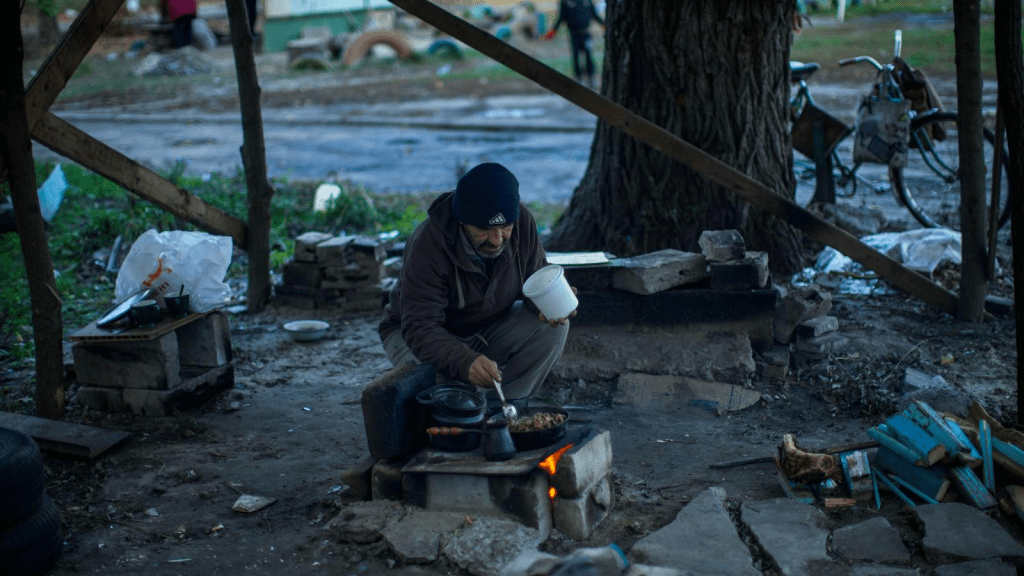
This process can be understood as the internalization of crisis. It does not require explicit acknowledgment or ideological alignment. Rather, it unfolds incrementally, as individuals adapt to constraints that persist beyond their initial expectations. The distinction between crisis and normality becomes increasingly ambiguous, not because conditions improve, but because perception adapts.
In this sense, the long-term impact of systemic disruption extends beyond material conditions. It reshapes the cognitive environment within which decisions are made, potentially influencing social dynamics, political behavior, and collective priorities in ways that are difficult to anticipate.

Although the FEMA scenario is primarily framed within a national context, the underlying phenomenon—extreme solar activity—is inherently global. A sufficiently intense geomagnetic event would affect multiple regions simultaneously, though not uniformly. The distribution of impact would be shaped by variations in infrastructure, technological dependence, and resource autonomy.
This uneven distribution introduces a set of geopolitical dynamics that extend beyond the immediate technical consequences.
Highly industrialized societies, characterized by dense and complex electrical networks, may experience the most severe disruptions. Their efficiency, built upon tightly integrated systems, becomes a source of vulnerability when those systems fail. In contrast, regions with lower levels of technological dependence may exhibit a degree of resilience, not because they are unaffected, but because their baseline functionality is less reliant on continuous electrical input.
The result is a form of asymmetrical impact, in which existing global hierarchies are temporarily destabilized.

International supply chains, already dependent on precise coordination and real-time communication, would fragment. Trade networks could reorganize along regional lines, reflecting the practical limitations of transportation and information exchange under constrained conditions. In the absence of reliable global coordination, governance structures may shift toward more inward-focused strategies, emphasizing domestic stability over international engagement.
This process does not necessarily lead to immediate conflict, but it does introduce a period of strategic uncertainty. Traditional measures of power—economic output, technological sophistication, military capability—may be redefined, at least temporarily, by a more fundamental criterion: the ability to maintain basic societal functions under conditions of systemic stress.
In this context, resilience becomes a form of influence.
The long-term implications of such a reordering depend on the duration of disruption and the capacity of different regions to adapt. However, even a temporary shift has the potential to alter perceptions, alliances, and strategic priorities in ways that persist beyond the immediate crisis.

The existence of detailed risk assessments naturally leads to a fundamental question: if the vulnerabilities are known, why have they not been fully addressed?
The answer lies not in a lack of awareness, but in the structural constraints associated with large-scale mitigation. Preparing for a scenario involving multi-year grid failure requires interventions that are technically complex, economically demanding, and politically challenging.
One of the primary obstacles is cost. Hardening electrical infrastructure against geomagnetic disturbances involves extensive modifications, including the installation of protective devices, redesign of transformer systems, and the development of alternative operational protocols. These measures require substantial investment, often without immediate or visible returns, given the low frequency of extreme solar events.
Technological limitations also play a role. While protective strategies exist, they are not universally applicable, and their integration into existing systems is not straightforward. Retrofitting infrastructure at scale introduces logistical challenges that extend beyond engineering considerations.

Political feasibility further complicates the issue. Infrastructure projects of this magnitude require long-term commitment, often spanning multiple administrative cycles. Maintaining continuity of policy and funding across such periods is inherently difficult, particularly when competing priorities demand attention.
As a result, mitigation efforts tend to be incremental rather than comprehensive. Improvements are made, vulnerabilities are reduced, but the underlying risk is not entirely eliminated. From an institutional perspective, this approach reflects a balancing of probabilities, costs, and strategic priorities.
However, it also implies the persistence of residual risk—a level of vulnerability that remains embedded within the system, not because it is unknown, but because it is difficult to fully resolve.

At the intersection of analysis and uncertainty lies the role of narrative. Documents such as the FEMA report represent an attempt to translate abstract scientific understanding into concrete operational scenarios. They bridge the gap between what is known in theory and what might unfold in practice.
Yet this translation has inherent limitations.
No model, regardless of its sophistication, can fully capture the lived experience of systemic disruption. The human, social, and psychological dimensions extend beyond quantifiable variables, introducing layers of complexity that resist precise prediction.

This gap creates a space in which narrative becomes essential—not as a substitute for analysis, but as a complementary framework. The way a scenario is described influences how it is perceived, and perception, in turn, shapes response.
If a risk is framed as distant or improbable, it is likely to be deprioritized. If it is framed as immediate and unavoidable, it may generate urgency but also resistance. The challenge lies in articulating scenarios that are both credible and actionable, without collapsing into either abstraction or alarmism.
The relative absence of detailed narratives concerning long-duration systemic failure is therefore significant. It suggests not only a gap in communication, but a broader hesitation to engage with possibilities that challenge deeply embedded assumptions about continuity, recovery, and control.
In this sense, the act of reconstruction—of thinking through the implications of such a scenario—is not merely analytical. It is also interpretive, shaping the boundaries of what is considered conceivable.

The analysis developed across these sections converges toward a central tension: the coexistence of knowledge and inaction within systems that are otherwise defined by complexity and adaptability. The threat posed by extreme solar activity is neither unknown nor entirely unexamined. It exists within a framework of scientific understanding and institutional awareness that acknowledges both its plausibility and its potential severity.
Yet this awareness does not translate into comprehensive mitigation.
Instead, it is distributed unevenly—concentrated within specialized domains, while remaining peripheral in broader societal consciousness. This distribution reflects not only practical constraints, but also deeper structural dynamics related to how complex societies process risks that challenge their foundational assumptions.
A solar superstorm, in this context, is not merely a natural event. It functions as a systemic stress test. It exposes the degree to which modern civilization depends on continuous, invisible infrastructures, and it reveals the limitations of frameworks that assume rapid recovery as a default condition.
The projected timeline of recovery—measured in years rather than days—marks a threshold beyond conventional disaster models. It suggests a transition from disruption to transformation, from temporary instability to structural reconfiguration.
What makes this scenario particularly significant is not its inevitability, but its position within the spectrum of possibility. It is neither certain nor implausible, neither immediate nor irrelevant. It occupies a conceptual space that is difficult to engage with precisely because it resists simplification.
The most important question, therefore, is not whether such an event will occur, but how societies relate to its possibility.
Whether the current balance between awareness and preparedness reflects a strategic equilibrium—or a reliance on continuity as an unexamined assumption.
In the absence of a definitive answer, what remains is a form of quiet uncertainty.
Not an urgent alarm, but a persistent undercurrent.
And perhaps that is the most unsettling aspect of all: not the prospect of collapse itself, but the recognition that its outlines may already be understood—while its implications remain only partially acknowledged.
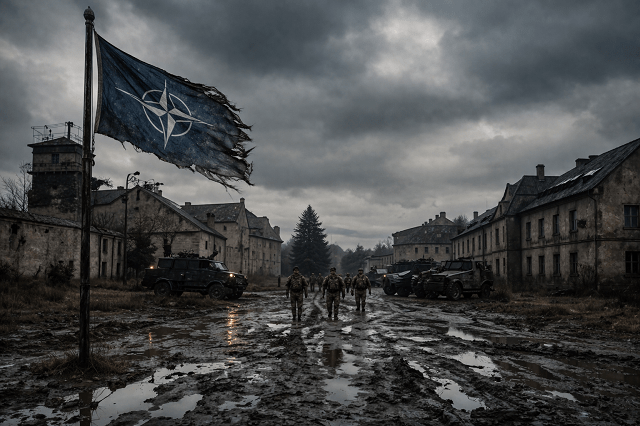
There’s a quiet misunderstanding in the American conversation—one that’s grown louder in recent years. It shows up in campaign speeches, viral posts, and late-night arguments: the idea that NATO is some kind of lopsided charity, a one-way pipeline where the United States pays and everyone else benefits.
It sounds simple. It sounds unfair. And it’s dangerously incomplete.
Because if the United States actually steps away from NATO, the fallout wouldn’t be abstract or distant. It would be immediate, structural, and far more expensive—strategically and economically—than most people are being told.
NATO isn’t a subscription you cancel. It’s an architecture—built slowly, layer by layer, since 1949. It binds together command systems, logistics networks, intelligence pipelines, and military doctrines across continents.
Right now, the U.S. still accounts for roughly two-thirds of total NATO defense spending, with an annual defense budget hovering around $850–900 billion in 2025–2026. That spending doesn’t just “protect Europe”—it buys influence, positioning, and control over how conflicts are managed before they spiral.
Pull out, and that influence doesn’t pause.
It evaporates.
The moment Washington signals an exit, European capitals wouldn’t panic—they would pivot.
Germany has already launched a €100 billion rearmament program. Poland is rapidly expanding one of the largest ground forces in Europe. France continues pushing for “strategic autonomy.” These aren’t hypotheticals—they’re already happening.
Without the U.S. at the center, those efforts accelerate and consolidate—but not around Washington.
New command structures would emerge. Joint procurement programs would expand. Intelligence-sharing would reorganize. And crucially, all of it would be designed to function without American dependence.
That’s not just Europe becoming stronger.
That’s America becoming less relevant.
The political pitch is simple: leave NATO, spend less.
Reality is less forgiving.
The United States has invested trillions of dollars over decades into European defense infrastructure—bases, logistics hubs, airfields, naval facilities, missile systems, and pre-positioned equipment. These aren’t temporary deployments. They are deeply embedded assets.
Annual costs to maintain U.S. forces in Europe are estimated between $30–50 billion. Expensive, yes.
But leaving doesn’t recover that money.
It strands it.
Closing or relocating forces could cost $50–100+ billion in the short term alone, as equipment is moved, bases are dismantled or transferred, and entire operational structures are rebuilt elsewhere.
And then comes the real twist: to maintain the same global reach without NATO, the U.S. would likely need to increase defense spending by $100–200 billion annually to replace shared capabilities with unilateral ones.
That’s not a saving.
That’s a permanent surcharge.
What most people never see is the invisible layer—the systems that make NATO function.
It’s not just troops and tanks. It’s:
Break that network, and you don’t just lose efficiency—you introduce friction, delay, and risk.
And in military terms, friction kills.
There’s also a quieter consequence: money flowing the other direction.
European NATO members are among the largest buyers of American defense equipment—fighter jets, missile systems, drones, and communications technology. These contracts sustain a major portion of the U.S. defense industry.
If NATO cohesion fractures, Europe will diversify.
More domestic production. More intra-European cooperation. More alternative suppliers.
Over time, that could mean tens of billions of dollars in lost U.S. defense exports annually, along with diminished leverage over allied militaries.
Perhaps the most underestimated cost is intelligence.
Through NATO and allied networks, the U.S. gains access to a vast web of surveillance, reconnaissance, and cyber intelligence across Europe and beyond. It’s a force multiplier—one that no single country can easily replicate.
Without it, America doesn’t go blind.
But it does lose depth, speed, and coverage.
Rebuilding that independently would take years—and cost tens of billions—while leaving gaps that adversaries would be quick to exploit.
This isn’t just about defense.
The U.S. and Europe share over $1 trillion in annual trade, making it one of the largest economic relationships in the world. Security stability underpins that relationship.
If Europe becomes more fragmented or uncertain:
These aren’t distant effects. They ripple directly into American businesses, jobs, and household costs.
Foreign policy doesn’t stay foreign for long.
And then comes the part history repeats without mercy: vacuums don’t stay empty.
If the U.S. pulls back, other powers won’t hesitate. They will test boundaries—politically, economically, digitally, and militarily. Not with dramatic invasions at first, but with pressure, probing, and incremental advantage.
That’s how influence shifts now.
Quietly. Relentlessly.
And if the balance tilts far enough, the U.S. doesn’t avoid confrontation.
It faces it later—under worse conditions, with fewer allies, and at a higher cost.
The debate over NATO withdrawal is often framed as strength versus weakness, independence versus entanglement.
But that framing misses the point.
NATO is not just a cost center.
It is a system that extends American power outward—economically, militarily, and politically—while distributing the burden across allies.
Dismantling it doesn’t simplify America’s role in the world.
It isolates it.
If the United States were to leave NATO, the consequences wouldn’t be theoretical:
This isn’t a reset.
It’s a rupture.
And by the time its full effects are felt, the systems that once held things together may no longer be there to rebuild.
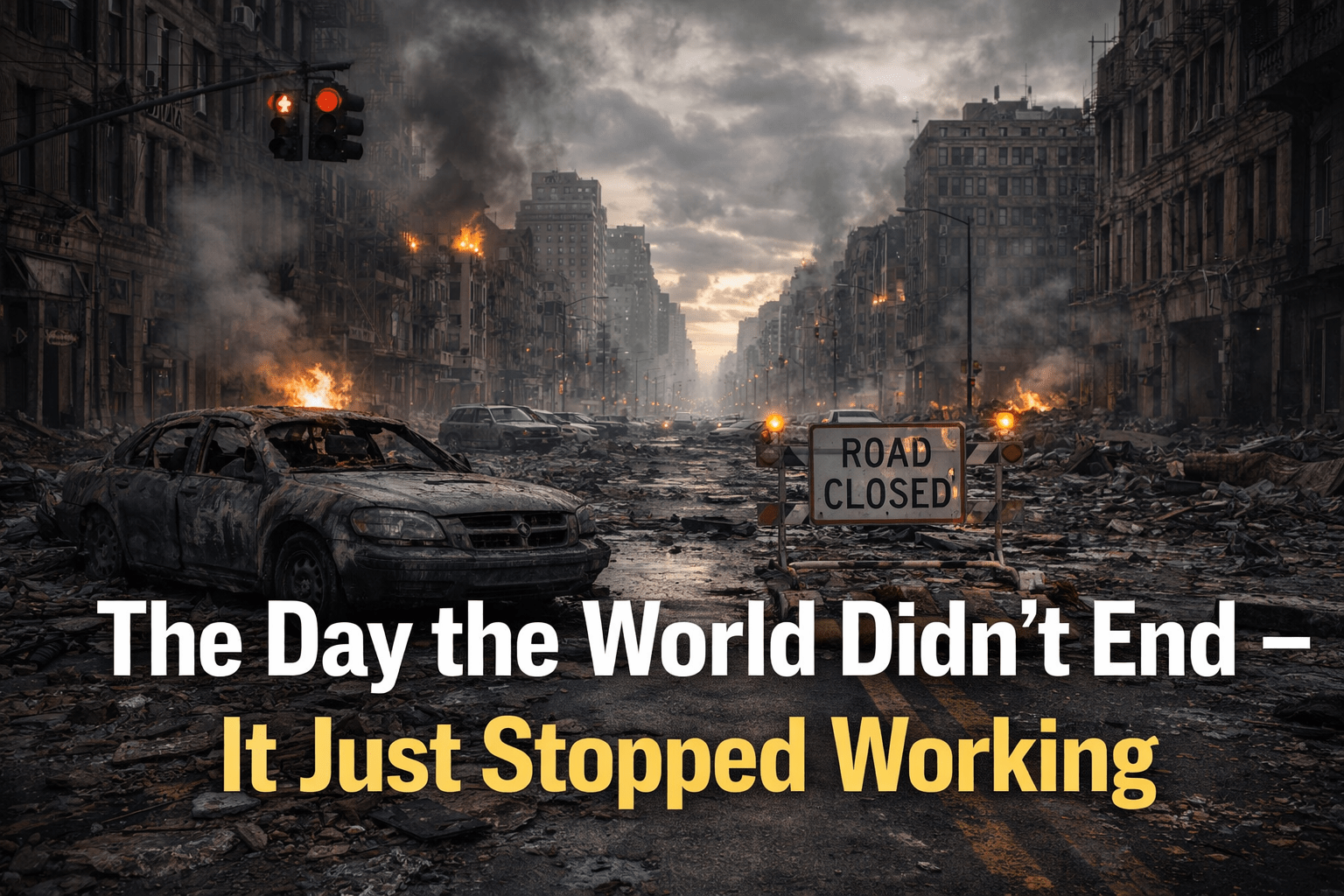
There is a particular kind of lie that modern civilization tells itself, not out of malice but out of necessity—the belief that certain endings are too large, too absolute, to truly happen. Nuclear war has quietly settled into that category, filed somewhere between historical trauma and speculative fiction, referenced in classrooms and documentaries, yet emotionally dismissed as something that belongs to another era. And yet, beneath this carefully maintained distance, the machinery of such a war has not only survived the passing decades but has evolved, refined, and embedded itself deeper into the structure of global power. It exists now not as a relic, but as an active system, calibrated and maintained with a precision that suggests not abandonment, but readiness.
What makes this reality unsettling is not simply the existence of nuclear weapons, but the normalization of their presence within geopolitical balance. Entire doctrines have been built around them, entire careers dedicated to their maintenance, entire strategies designed not to use them—but to ensure that, if used, they would end everything quickly enough to remain strategically “effective.” The language itself becomes a kind of quiet distortion, transforming annihilation into terminology that feels almost clinical. Words like deterrence, second-strike capability, escalation control—these are not just concepts, but psychological buffers, allowing societies to coexist with the knowledge that, at any given moment, the infrastructure for their own destruction is operational.
If one were to trace the opening moments of a modern nuclear war, what would stand out is not chaos, but speed—an almost unnatural compression of time that reduces decision-making to instinct, or something even less reliable. The systems in place today are not built for prolonged reflection; they are built for immediate interpretation and rapid response. Satellites orbiting the Earth continuously scan for thermal signatures, algorithms filter incoming data, and command structures stand ready to interpret signals that could determine the fate of entire populations within minutes.
In such a system, ambiguity becomes dangerous. A false alarm is not merely an error; it is a potential trigger. History has already provided glimpses of how close these systems have come to failure—moments when incoming signals were misinterpreted, when human hesitation prevented escalation, when the difference between existence and catastrophe rested on the judgment of a single individual choosing not to act. These incidents are often remembered as successes, evidence that the system works. But they can just as easily be interpreted as warnings, fragile anomalies in a structure that does not inherently favor caution.
What emerges from this architecture is something that feels less like control and more like momentum. The decision to launch is not made in isolation; it is shaped by doctrine, by expectation, by the fear that waiting even a few minutes could eliminate the possibility of response entirely. In this context, rationality becomes entangled with urgency, and the line between defensive action and irreversible escalation begins to blur.
The detonation of a nuclear weapon over a modern urban environment is often described in terms of blast radius and yield, but these measurements fail to capture the transformation that actually occurs. A city is not simply destroyed—it is fundamentally redefined in an instant. The structures that once provided order—buildings, roads, communication networks—are not just damaged, but stripped of their function, reduced to materials reacting to extreme energy.
At the center of the explosion, there is no experience, no perception, only disappearance. Further out, the event unfolds in layers: a flash that arrives before sound, intense enough to ignite surfaces and blind those who see it; a shockwave that compresses the air into a moving wall of pressure, collapsing structures and hurling debris with lethal force; and a surge of heat that transforms the environment into something closer to a furnace than a landscape. These are not sequential events in the way we typically understand time—they overlap, reinforce each other, and create conditions that overwhelm the senses before they can fully register what is happening.
Yet the most profound change is not immediate. It emerges in the moments that follow, when the city ceases to function as a system. Emergency services cannot respond because there is no infrastructure left to support them. Communication breaks down because the networks that sustain it are either destroyed or rendered useless. Survivors find themselves not in a damaged version of their previous environment, but in something entirely unfamiliar—a space where the rules that once governed movement, safety, and survival no longer apply.
It is tempting to imagine fire as a secondary consequence of nuclear detonation, a byproduct of the initial explosion. In reality, it becomes the dominant force, transforming localized destruction into something far more expansive and uncontrollable. When multiple fires ignite simultaneously across a dense urban landscape, they do not remain isolated. They merge, intensify, and begin to interact with the atmosphere itself, creating what is known as a firestorm—a phenomenon that behaves less like a collection of fires and more like a single, evolving system.
In such a system, heat rises rapidly, drawing in cooler air from the surrounding areas with increasing force. Winds accelerate, feeding the flames with oxygen while pulling debris, embers, and toxic gases into a circulating pattern that sustains and expands the fire. The temperature climbs to levels that not only destroy materials but alter them chemically, releasing compounds that further degrade air quality and reduce the chances of survival for anyone within the affected zone. Breathing becomes difficult, then impossible, not because of direct injury, but because the environment itself can no longer support life.
Modern cities, with their dense concentrations of synthetic materials, fuel sources, and interconnected structures, are particularly susceptible to this kind of transformation. What begins as a series of ignition points quickly evolves into a condition where the distinction between individual fires disappears, replaced by a continuous field of heat and motion that consumes everything within its reach.
Long after the fires have burned out and the immediate destruction has settled into silence, another form of damage continues to unfold—one that cannot be seen, smelled, or easily understood in the moment. Radiation introduces a different kind of time into the equation, stretching the consequences of the event far beyond its initial impact. It lingers in the environment, embedded in soil, carried by wind, absorbed into water sources, and ultimately into living organisms.
What makes radiation particularly insidious is the gap between exposure and effect. Individuals who appear unharmed in the immediate aftermath may begin to experience symptoms hours or days later, as the damage at the cellular level manifests in ways that are both painful and difficult to treat. Over longer periods, the impact becomes even more diffuse, increasing the likelihood of cancers, affecting reproductive health, and introducing genetic changes that can persist across generations.
This creates a form of uncertainty that complicates recovery. It is not always clear which areas are safe, which resources can be trusted, or how long the contamination will last. The environment itself becomes unpredictable, a space where the absence of visible danger does not guarantee safety, and where the process of rebuilding must contend with variables that cannot be easily controlled.
Perhaps the most profound shift occurs not at the level of cities or regions, but at the scale of the planet itself. The fires generated by multiple nuclear detonations would release vast quantities of soot and particulate matter into the upper atmosphere, where they could remain for extended periods, altering the way sunlight reaches the Earth’s surface. This is not merely a reduction in brightness; it is a disruption of the energy balance that drives climate systems.
As sunlight diminishes, temperatures drop, sometimes dramatically. Growing seasons shorten, crops fail, and the delicate timing that agriculture depends on begins to unravel. Rainfall patterns shift, sometimes unpredictably, creating conditions where some regions experience drought while others face excessive precipitation. The global food system, already dependent on precise coordination and stable conditions, struggles to adapt to these changes.
What makes this scenario particularly severe is its reach. Unlike the immediate effects of nuclear explosions, which are concentrated in specific locations, climate disruption extends across borders, affecting regions that may not have been directly involved in the conflict. The result is a form of shared vulnerability, where the consequences of localized decisions propagate outward, reshaping the conditions of life on a global scale.
Modern civilization is often described in terms of its visible achievements—cities, technology, infrastructure—but its true strength lies in the networks that connect these elements into a functioning whole. Energy systems distribute power across vast distances, communication networks enable instant exchange of information, and supply chains coordinate the movement of goods with remarkable efficiency. These systems are optimized for performance, but they are also highly sensitive to disruption.
A nuclear conflict would not need to destroy every component of these networks to render them ineffective. It would be enough to disrupt key nodes, creating imbalances that propagate through the system. The loss of satellites would impair navigation and communication, the destruction of major ports would interrupt trade, and damage to energy infrastructure would limit the ability to maintain even basic services. As these failures accumulate, the system begins to lose coherence, transitioning from a state of coordinated activity to one of fragmentation.
For individuals, this collapse may not appear as a single dramatic event, but as a gradual erosion of normality. Services become unreliable, resources become scarce, and the routines that once structured daily life begin to break down. In this environment, survival becomes less about immediate danger and more about adaptation to a world that no longer operates according to familiar rules.
Beyond the physical and systemic consequences lies a dimension that is harder to quantify but equally significant—the psychological impact of living through such a transformation. Human societies are built on expectations of continuity, on the assumption that tomorrow will resemble today closely enough to allow for planning, cooperation, and trust. A nuclear war would shatter these expectations almost instantly, replacing them with uncertainty on a scale that few individuals or institutions are equipped to manage.
In such conditions, behavior becomes difficult to predict. Some communities may respond with cooperation, pooling resources and supporting one another in an effort to rebuild. Others may fragment, driven by fear, scarcity, and the breakdown of trust in institutions. The outcome would likely vary across regions, shaped by cultural, social, and economic factors, but the overall effect would be a landscape of human responses that defy simple categorization.
What remains constant, however, is the sense of dislocation—the feeling that the world has shifted in a way that cannot be reversed, that the frameworks which once provided meaning and stability are no longer sufficient. This psychological threshold, once crossed, changes not only how individuals perceive their environment, but how they relate to each other and to the future itself.
It is often tempting to search for hidden causes behind events of great magnitude, to imagine that there must be a deliberate plan guiding them. In the case of nuclear war, the reality is both simpler and more unsettling. The risk does not arise from a single secret agenda, but from the interaction of systems, doctrines, and human decisions that, together, create conditions where catastrophic outcomes become possible.
The structure is inherently unstable in subtle ways. It relies on rapid decision-making, on technological systems that must function flawlessly, and on assumptions about human behavior that may not hold under extreme pressure. It is not designed to fail, but neither is it designed to guarantee safety under all circumstances. Instead, it exists in a state of tension, balanced between deterrence and escalation, where the margin for error is small and the consequences of that error are immense.
In this sense, the danger is not hidden. It is embedded in the very design of the system, in the choices that have been made over decades about how to manage power, risk, and uncertainty.
To ask how devastating a modern-day nuclear war would be is, ultimately, to confront a question that resists simple answers. The destruction of cities, the loss of life, the disruption of climate and systems—these can be described, modeled, and, to some extent, understood. But the deeper impact lies in the transformation that follows, in the shift from a world defined by stability and growth to one characterized by uncertainty and adaptation.
What remains is not merely a damaged version of the past, but a fundamentally altered reality, where survival depends not only on physical resilience, but on the ability to navigate a landscape that no longer conforms to familiar patterns. It is in this transformation that the true devastation becomes apparent—not only in what is lost, but in what can no longer be recovered.
And perhaps the most unsettling aspect of all is that this outcome does not require imagination. It requires only the continuation of systems that already exist, operating as they were designed, waiting—quietly, efficiently—for a moment that may never come, but for which everything is already prepared.
There is a particular kind of lie that modern civilization tells itself, not out of malice but out of necessity—the belief that certain endings are too large, too absolute, to truly happen. Nuclear war has quietly settled into that category, filed somewhere between historical trauma and speculative fiction, referenced in classrooms and documentaries, yet emotionally dismissed as something that belongs to another era. And yet, beneath this carefully maintained distance, the machinery of such a war has not only survived the passing decades but has evolved, refined, and embedded itself deeper into the structure of global power. It exists now not as a relic, but as an active system, calibrated and maintained with a precision that suggests not abandonment, but readiness.
What makes this reality unsettling is not simply the existence of nuclear weapons, but the normalization of their presence within geopolitical balance. Entire doctrines have been built around them, entire careers dedicated to their maintenance, entire strategies designed not to use them—but to ensure that, if used, they would end everything quickly enough to remain strategically “effective.” The language itself becomes a kind of quiet distortion, transforming annihilation into terminology that feels almost clinical. Words like deterrence, second-strike capability, escalation control—these are not just concepts, but psychological buffers, allowing societies to coexist with the knowledge that, at any given moment, the infrastructure for their own destruction is operational.
There is a story that circulates quietly in academic circles and military archives, often reduced to a footnote, rarely explored in its full psychological weight. It is the story of a night in 1983, when a Soviet early-warning system reported what appeared to be incoming American missiles. The data was clear, the signal consistent with an attack profile, the system functioning exactly as it had been designed to function. Protocol demanded escalation. Protocol demanded response.
And yet, the man responsible for interpreting that signal chose to hesitate.
His name was Stanislav Petrov, and what he did was not heroic in the conventional sense. He did not save the world through action, but through inaction—through doubt. He questioned the data, considered the possibility of error, and ultimately reported the alert as a false alarm, despite having no definitive proof. In doing so, he disrupted the chain of logic that could have led to retaliation.
What makes this story unsettling is not only how close the system came to failure, but how dependent it was on a single human decision that went against protocol. The system itself did not prevent catastrophe; it nearly enabled it. It was not designed to pause, to reflect, or to question its own outputs. It required a human being to introduce uncertainty into a process that was otherwise moving toward irreversible action.
This raises a question that is difficult to ignore: what happens in a system that becomes increasingly automated, increasingly optimized for speed, when there is no longer space for hesitation?
I once spoke with someone who had worked within the outer layers of such systems—not directly involved in launch decisions, but close enough to understand how they functioned in practice. He described it not as a system of control, but as a system of expectation. Everything within it was designed to anticipate the worst-case scenario, to assume that incoming signals represented genuine threats, to reduce ambiguity wherever possible.
“There is no room for optimism,” he told me, his voice carrying a weight that suggested experience rather than theory. “The system doesn’t ask what is likely. It asks what is possible—and then prepares for that.”
What stayed with me was not the technical detail, but the emotional tone. There was no sense of drama in the way he spoke, no overt fear, just a quiet acknowledgment of how the system reshapes the way people think. When you operate within a framework where the cost of being wrong is measured in millions of lives, caution begins to look like weakness, and hesitation becomes something to be minimized.
Over time, this creates a kind of psychological alignment, where individuals begin to internalize the logic of the system itself. Decisions are no longer experienced as moral dilemmas, but as procedural necessities. The question is not whether to act, but whether the conditions for action have been met.
Imagine, for a moment, not the explosion itself, but the seconds leading up to it—not from the perspective of satellites or command centers, but from within a city that has no knowledge of what is about to happen. The morning unfolds as it always does. Traffic moves, people check their phones, conversations begin and end in the ordinary rhythm of daily life. There is no visible warning, no gradual escalation that allows the mind to adjust.
Then, without transition, the world changes.
There is a flash that arrives faster than thought, a sudden intrusion of light so intense that it overwhelms the senses before it can be processed. For those closest to the center, there is no experience of the event, only absence. Further out, perception lags behind reality, creating a moment of confusion where the brain struggles to interpret what it is seeing. The shockwave follows, collapsing structures, shattering glass, and turning the environment into a field of moving debris.
But what is most striking is not the violence itself, but the disconnection—the way in which the event exists outside the framework of ordinary experience. There is no context for it, no immediate understanding. It does not feel like a continuation of the world, but like an interruption, something that does not belong to the same reality that existed moments before.
When the immediate effects subside, what remains is not simply destruction, but a kind of altered silence. It is not the quiet of peace, but the absence of systems that once generated noise—traffic, communication, the constant hum of infrastructure. In their place, there is a stillness that feels unnatural, as if the environment itself has paused.
Survivors, if they exist within this space, are confronted with a landscape that no longer aligns with memory. Landmarks are gone or unrecognizable, pathways are blocked, and the basic assumptions that guide movement—where to go, how to find help, what is safe—no longer apply. The mind attempts to reconstruct order from fragments, but the fragments do not fit together in a meaningful way.
It is in this phase that the true scale of the event begins to emerge, not through immediate comprehension, but through accumulation. Each failed attempt to restore normality, each realization that a system no longer functions, adds to a growing awareness that what has occurred is not temporary.
Perhaps the most disorienting aspect of a modern nuclear war would be the gradual realization that it is not confined to a single location. Information, when it becomes available, would reveal that multiple cities have been affected, that the event is not isolated but coordinated. The scale expands beyond the local, beyond the national, into something that feels planetary.
At this point, the concept of distance begins to lose meaning. It no longer matters how far one is from the initial explosions, because the consequences are no longer tied to proximity alone. Supply chains begin to fail, communication networks degrade, and the flow of information becomes inconsistent. What was once a connected world starts to fragment into isolated pockets of awareness.
This fragmentation creates a new kind of uncertainty, one that is not defined by immediate danger, but by the absence of reliable knowledge. People begin to operate on incomplete information, making decisions based on assumptions that may or may not be accurate. In such an environment, even rational actions can lead to unintended consequences.
As days turn into weeks, the effects extend beyond human systems into the environment itself. The sky begins to change in subtle ways—light becomes diffused, temperatures shift, and patterns that once felt stable start to behave unpredictably. These changes are not immediately dramatic, but they are persistent, gradually altering the conditions under which life operates.
Agriculture, which depends on relatively stable climate patterns, becomes increasingly unreliable. Crops fail not because of a single catastrophic event, but because the conditions required for their growth are no longer consistent. The impact is cumulative, spreading across regions and compounding over time.
What emerges is not a sudden collapse, but a slow degradation, a steady movement away from the conditions that made modern civilization possible. It is a process that lacks a clear endpoint, making it difficult to respond to, difficult to plan for, and difficult to reverse.
At some point, the narrative returns to a question that is both simple and deeply unsettling: how could something like this happen in a world that understands its consequences so well? The answer does not lie in ignorance, but in the structure of the systems that have been built over time.
These systems are not irrational. They are, in many ways, highly logical, designed to manage risk, to deter aggression, and to maintain stability. But they are also constrained by assumptions—about human behavior, about technological reliability, about the nature of conflict—that may not hold under all conditions. When those assumptions fail, the system does not necessarily adapt; it continues to operate according to its design.
This is what makes the possibility of nuclear war so difficult to fully grasp. It is not the result of chaos or unpredictability alone, but of order—of systems functioning as intended within parameters that do not account for every possibility.
In the end, devastation is not only about destruction. It is about transformation—about the shift from one set of conditions to another, from a world that is understood to one that is not. A modern nuclear war would not simply reduce cities to ruins; it would alter the frameworks through which reality itself is experienced.
The question, then, is not only how many would survive, or how much would be destroyed, but what kind of world would remain for those who do. A world where the past exists as memory, but no longer as a guide. A world where systems must be rebuilt without the certainty that they will function as before. A world where the line between recovery and adaptation becomes increasingly difficult to define.
And perhaps the most unsettling realization of all is that this world is not beyond our capacity to imagine. It exists, in fragments, in models, in historical precedents, in the quiet corners of strategic planning. It is not hidden.
It is simply… waiting.
If a modern nuclear war were to begin, it would not announce itself in a way that matches its significance. There would be no universal alarm, no synchronized awareness spreading across the planet in real time. Instead, the beginning would be uneven, almost indifferent, unfolding in fragments that only later connect into something coherent. In one part of the world, it might still be early morning, people moving through routines shaped by repetition and predictability, while in another, it would be night, cities dimly lit, reduced to quieter versions of themselves. Somewhere between these ordinary moments, a sequence of decisions would be made—brief, compressed, irreversible.
Inside command centers, the atmosphere would not resemble panic so much as intensity sharpened into focus. Data streams would converge, screens updating faster than the human eye can comfortably process, voices measured but carrying an urgency that does not need to be expressed loudly. The language used in such environments has already stripped away emotional weight; it is designed to function under pressure, to reduce complexity into actionable categories. Yet beneath that structure lies a simple and unbearable truth: the people present would know, almost immediately, that whatever happens next will not be contained.
And still, outside those rooms, life would continue for a few minutes more, unchanged.
The first detonations would not feel like part of a war. They would feel like a rupture in reality itself, an event so far outside normal experience that the mind initially rejects it as something else—an industrial accident, perhaps, or a natural disaster of unprecedented scale. The brightness alone would defy expectation, not just because of its intensity, but because of its suddenness, arriving without context, without warning, without any gradual build-up that allows for understanding.
For those far enough from the center to survive the initial seconds, perception would become unreliable. Sound would lag behind light, creating a delay that feels almost unnatural, as if cause and effect have been separated. The shockwave would arrive not as a single force, but as a sequence—pressure building, breaking, and then continuing in ways that the body struggles to interpret. Structures would fail not gracefully, but abruptly, collapsing inward or outward depending on forces that are no longer intuitive.
What follows is not a moment, but a transition. The world that existed minutes ago does not return.
In the immediate aftermath, one of the most critical elements of modern life—information—begins to degrade in ways that are both subtle and profound. Communication networks, already strained or partially destroyed, no longer provide a consistent picture of reality. Messages are delayed, incomplete, or contradictory. Some regions lose connectivity entirely, while others remain partially functional, creating pockets of awareness that do not align with each other.
This fragmentation has consequences that extend beyond confusion. Decisions begin to be made on the basis of incomplete or incorrect data, and coordination—whether at the level of governments or individuals—becomes increasingly difficult. Rumors fill the gaps left by missing information, spreading faster than verified facts, shaping perceptions in ways that may not correspond to reality.
In such an environment, the concept of a shared understanding begins to dissolve. There is no longer a single narrative of what is happening, only overlapping and often conflicting interpretations, each shaped by limited access to reliable information.
What many would perceive as a second wave of destruction would not necessarily come in the form of additional explosions, but in the realization that the initial events were not isolated. As more information becomes available—fragmented, delayed, but gradually accumulating—it becomes clear that multiple targets have been hit, that the scale of the event extends far beyond a single city or region.
This realization does not arrive all at once. It builds slowly, piece by piece, each new report expanding the perceived scope of the situation. A city here, another there, infrastructure nodes, military installations, ports, communication hubs—each loss adding to a growing sense that what is unfolding is not a contained conflict, but something systemic.
At this point, the psychological shift becomes unavoidable. The event is no longer interpreted as something that can be managed or recovered from quickly. It begins to resemble something else entirely—something that does not have a clear boundary or endpoint.
Modern civilization relies on continuity, on the assumption that systems will keep functioning from one moment to the next. When that continuity is broken in multiple places simultaneously, the effects begin to propagate through the network in ways that are difficult to predict.
Financial systems, for example, are built on trust and synchronization. When communication is disrupted and uncertainty increases, that trust erodes rapidly. Markets become volatile, then unstable, and eventually cease to function in any meaningful way. Currency, which depends on shared belief in its value, begins to lose its practical significance in environments where basic resources become the primary concern.
Supply chains, already sensitive to disruption, begin to fail as key nodes are removed or rendered inoperable. Goods that were once taken for granted—food, medicine, fuel—become scarce, not necessarily because they no longer exist, but because the systems required to distribute them no longer function efficiently.
Energy infrastructure, if damaged or destabilized, introduces another layer of complexity. Power outages spread, sometimes in cascading patterns, affecting not only comfort, but critical services such as healthcare, water treatment, and communication.
The system does not collapse all at once. It begins to slip, unevenly, unpredictably, creating a landscape where stability exists in some places and disappears in others.
In the early stages, survival might still be understood in relatively familiar terms—avoiding immediate danger, seeking shelter, finding food and water. But as the situation evolves, these priorities begin to shift. It is no longer just about immediate threats, but about navigating an environment that continues to change in ways that are difficult to anticipate.
Radiation, for instance, introduces uncertainty into movement and resource use. Areas that appear safe may not be, and the lack of reliable information makes it difficult to assess risk accurately. Water sources may be contaminated, food supplies compromised, and medical assistance either unavailable or insufficient.
At the same time, the social environment becomes less predictable. Institutions that once provided structure—governments, emergency services, law enforcement—may be overwhelmed or unable to operate effectively. In their absence, communities may either organize themselves or fragment, depending on local conditions and available resources.
Survival, in this context, is not just a matter of endurance, but of adaptation. It requires constant reassessment, the ability to function with incomplete information, and the willingness to make decisions under conditions of uncertainty.
Days after the initial events, changes begin to appear in the environment that are not immediately linked to the explosions themselves. The sky, once a stable backdrop, begins to shift in subtle ways—light becomes muted, colors less defined, the distinction between day and night slightly altered.
These changes are the result of particles injected into the upper atmosphere, where they begin to interfere with the transmission of sunlight. At first, the effects may seem minor, barely noticeable to those focused on more immediate concerns. But over time, they accumulate, altering temperature patterns and affecting the processes that depend on consistent environmental conditions.
Agriculture is among the first systems to feel this impact. Crops that rely on predictable sunlight and temperature cycles begin to fail, not catastrophically at first, but inconsistently. Yields decrease, harvests become unreliable, and the margin for error—already thin in many parts of the world—disappears.
The realization that these changes are not temporary adds another layer of complexity to an already unstable situation. It suggests that the consequences of the initial events will extend far into the future, shaping conditions in ways that cannot be easily reversed.
As weeks turn into months, a deeper transformation begins to take hold, one that is less visible but equally significant. The knowledge, systems, and assumptions that once guided behavior become less relevant, not because they were incorrect, but because the conditions under which they applied no longer exist.
Skills that were once peripheral—adaptability, improvisation, local knowledge—become central, while others lose their immediate value. Long-term planning gives way to short-term decision-making, not by choice, but by necessity. The future becomes harder to imagine in concrete terms, as the variables that shape it remain unstable.
This is the point at which the true depth of the event becomes clear. It is no longer just a disruption, but a transition into a different kind of reality, one where continuity with the past is limited, and where the path forward is uncertain.
What follows in the months after a large-scale nuclear exchange is not immediately recognized as a new era. At first, it feels like an extension of crisis, a prolonged emergency that will eventually stabilize, that will eventually allow for recovery. But there is a moment—difficult to pinpoint, impossible to ignore—when it becomes clear that what is happening is not temporary. The patterns do not return. The disruptions do not resolve. Instead, they deepen, layering uncertainty over what little structure remains.
The change begins subtly, almost imperceptibly, in the behavior of the environment. Days grow dimmer in a way that is not entirely explained by weather. Sunlight feels weaker, filtered through a sky that no longer reflects the clarity it once did. Temperatures begin to drop outside their expected ranges, not dramatically at first, but consistently enough to disrupt cycles that depend on precision. Agriculture, already strained, begins to fail in ways that cannot be corrected through adaptation alone. Crops planted with knowledge accumulated over generations no longer behave as expected, and the margin between success and failure collapses into unpredictability.
This is the beginning of what scientists have long described in models, often debated but rarely internalized: a disruption of climate systems severe enough to alter the baseline conditions of life. It does not announce itself as “nuclear winter.” It simply becomes the new normal—colder, dimmer, less reliable. And once it settles, it resists reversal.
One of the most disorienting aspects of systemic collapse is that its causes become difficult to trace. Hunger, for example, does not arrive as a single event. It spreads gradually, unevenly, often disconnected from the original source of disruption. A failed harvest in one region leads to shortages in another, which in turn affects distribution networks elsewhere. The global system that once absorbed local failures and redistributed resources no longer functions with the same efficiency, and small disruptions begin to compound.
For those experiencing it, hunger is rarely understood in abstract terms. It is immediate, physical, and deeply personal. It reshapes priorities, alters behavior, and erodes the social structures that depend on stability. Communities that once operated on trust and cooperation may find themselves strained, not necessarily because of conflict, but because the conditions that supported cooperation no longer exist.
What makes this phase particularly severe is its persistence. Unlike the immediate aftermath of explosions, which, however devastating, has a clear temporal boundary, the degradation of food systems unfolds over time. It does not peak and decline; it accumulates, creating a sustained pressure that affects populations far beyond the initial zones of destruction.
As resources become scarce and systems continue to fail, the structures that maintain order begin to weaken. This process is not always dramatic. In many cases, it is subtle, unfolding through small changes that gradually alter the behavior of institutions and individuals alike.
Governments, for example, may still exist in form, but their ability to function effectively becomes limited. Communication breakdowns, resource constraints, and the sheer scale of the crisis reduce their capacity to respond. Policies that might have been effective under stable conditions become inadequate, and decision-making shifts from long-term planning to immediate crisis management.
Law enforcement and emergency services face similar challenges. Without reliable infrastructure, without consistent supply chains, their ability to maintain order diminishes. This does not necessarily lead to immediate chaos; in some areas, communities adapt, creating localized systems of organization. In others, the absence of effective authority leads to fragmentation, where different groups operate according to their own rules.
What emerges is not a single pattern of collapse, but a mosaic of conditions, varying from place to place, shaped by local factors and the availability of resources.
There is a psychological shift that occurs when the past no longer aligns with the present in a meaningful way. At first, memory serves as a guide, a reference point for how things should work, how systems should function, how problems should be solved. But as conditions continue to diverge from those expectations, memory begins to lose its utility.
This creates a form of dissonance that is difficult to resolve. Individuals find themselves recalling a world that operated under different assumptions, where actions had predictable outcomes, where systems responded in expected ways. In the new reality, those assumptions no longer hold, and relying on them can lead to failure.
Over time, this tension reshapes perception. The past becomes less of a guide and more of a contrast, a reminder of conditions that are no longer accessible. For some, this may lead to adaptation, a gradual shift in expectations and behavior. For others, it may result in a kind of psychological stagnation, an inability to fully engage with a reality that feels fundamentally altered.
If the immediate aftermath of nuclear war is defined by destruction and noise, the later stages are marked by a different kind of silence—one that emerges as systems cease to function and activity declines. This silence is not empty; it is filled with absence. The absence of communication, of movement, of the constant interactions that once defined daily life.
In urban areas, this transformation is particularly stark. Cities, once characterized by density and activity, become fragmented spaces, where large sections may be uninhabited or inaccessible. Infrastructure that once supported millions becomes inert, its complexity no longer serving a purpose in the absence of the systems that sustained it.
This shift alters not only the physical environment but the way it is experienced. Space feels different when it is no longer structured by human activity, when familiar landmarks no longer carry the same meaning, when the pathways that once connected different parts of the city are disrupted or gone entirely.
At some point, the focus shifts from immediate survival to a broader, more abstract question: what comes next? Not in the sense of immediate plans, but in terms of long-term trajectory. Can systems be rebuilt? Can stability be restored? Or has the scale of disruption created conditions that fundamentally limit the possibility of recovery?
There is no single answer to this question, and any attempt to provide one must contend with a high degree of uncertainty. Some regions may recover partially, rebuilding localized systems that provide a degree of stability. Others may remain in prolonged states of disruption, where the combination of environmental, economic, and social factors makes recovery difficult.
What complicates this further is the interconnected nature of the pre-war world. Recovery in one area may depend on conditions in another, creating dependencies that are difficult to reestablish in a fragmented environment.
In the end, the devastation of a modern nuclear war is not defined solely by the moment of impact, but by what follows—by the way in which the event reshapes the conditions of existence over time. It is a layered process, unfolding across different scales, from the immediate to the global, from the physical to the psychological.
It is visible in the altered climate, in the disrupted systems, in the changed behavior of individuals and communities. But it is also present in less tangible ways—in the loss of predictability, in the erosion of trust, in the difficulty of imagining a future that resembles the past.
And perhaps the most unsettling aspect of all is that this outcome is not the result of a single failure, but of a system operating within its intended parameters, responding to perceived threats in ways that are consistent with its design.
There is no single point at which it can be said to have gone wrong. Instead, there is a convergence—a series of decisions, conditions, and assumptions that align in a way that produces a result far greater than any one of them alone.
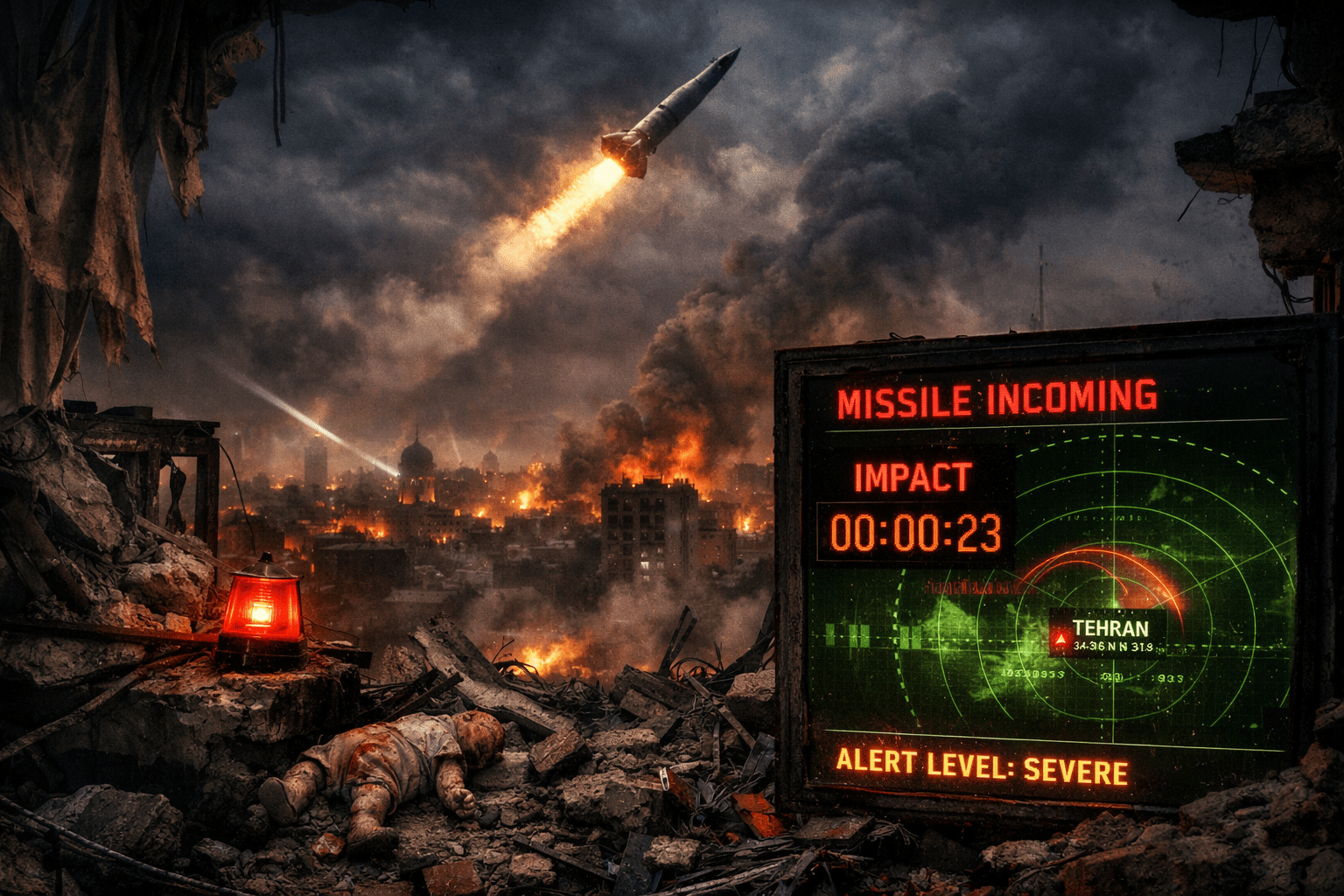
There is a particular kind of silence that comes before impact. Not metaphorical silence—the real one. The kind that settles in the seconds after a warning, when people stop talking not because they have nothing to say, but because language suddenly feels useless.
When we talk about the missile capabilities of Iran, we rarely talk about that silence.
We talk instead about range. About deterrence. About strategic balance. Clean words. Words that behave themselves in policy papers. But missiles are not clean things. They are decisions made visible in the sky.
To understand why these weapons exist in such numbers, you have to look backward. Not in a detached, archival sense, but in the way memory lingers in people who lived through it.
The Iran–Iraq War was not just a war of trenches and borders—it was a war of cities. Sirens. Night skies breaking open. Families learning, very quickly, that distance no longer meant safety.
That kind of memory does not fade into theory. It hardens. It becomes doctrine.
Missiles, in this sense, are not just tools of war. They are a refusal to ever be that vulnerable again.
But here is the problem with building security out of fear: fear does not stay contained. It spreads. It anticipates threats that have not yet materialized. It prepares for futures that, in preparing for them, become more likely.
On a map, missile ranges are drawn as circles. Clean, geometric, almost elegant.
Inside those circles are places like Israel, where entire populations live with the knowledge that warning times could be measured in minutes. There are also military bases tied to the presence of the United States—small, heavily fortified points that carry disproportionate strategic weight.
But maps don’t show what it feels like to live inside a circle like that.
They don’t show how routine changes. How people begin to calculate distance differently. How a normal day acquires a second layer—a quiet awareness that everything could fracture without warning.
Missiles reshape geography, but more than that, they reshape time. They compress it. Decisions that once unfolded over days are now forced into moments. There is no room for doubt when something is already in the air.
Modern conflict rarely announces itself clearly. It moves through intermediaries, through deniable actions, through actors like Hezbollah, where responsibility becomes something you argue about after the fact—if there is an “after.”
This ambiguity is strategic. It allows pressure without immediate consequence. But it also creates a kind of fog where miscalculation thrives.
A rocket is launched. A response follows. Then another. Each side convinced it is reacting, not escalating.
From a distance, analysts call this a “cycle.” On the ground, it feels more like being pulled into something that no one fully controls.
There is a comforting belief that large-scale war requires large-scale decisions. That somewhere, at some high level, someone chooses escalation deliberately.
In reality, things often break in smaller ways.
A strike that goes further than intended.
A system that misreads incoming data.
A leader who cannot afford, politically, to appear weak.
And suddenly, what was meant to be a signal becomes a threshold crossed.
If missiles were exchanged directly between Iran and Israel, the response would not be symmetrical—it would be exponential. If forces tied to the United States were drawn in, the conflict would not remain regional for long.
People often imagine escalation as a ladder. Step by step.
It isn’t.
It’s closer to a collapse.
What happens after the first large exchange is rarely discussed in detail, perhaps because it is difficult to do so without sounding alarmist.
Energy infrastructure becomes a target. The Gulf—so essential, so exposed—turns from an economic artery into a pressure point. Markets react instantly, but markets are the least important part of it.
More immediate is the human aftermath.
Hospitals operating beyond capacity.
Communication networks failing at the worst possible moment.
Families trying to locate each other in cities where familiar landmarks no longer exist in the same way.
There is also something quieter, but no less damaging: the psychological rupture. The realization that what once felt stable was, in fact, fragile.
And once that realization takes hold, it does not fully go away.
Hovering over all of this is the unresolved issue of nuclear capability. Not confirmed, not absent—just uncertain enough to matter.
Uncertainty is its own form of pressure.
If Iran were ever perceived to cross that threshold, even ambiguously, the regional reaction would be immediate. Others would follow, or prepare to. The logic of deterrence would multiply, not stabilize.
More actors. More weapons. Less time.
It is easy to think of missiles as future events—things that might happen, under certain conditions, at some later time.
But in a way, their impact is already here.
They shape decisions.
They influence behavior.
They define what leaders believe they can or cannot risk.
And for ordinary people, even when nothing happens, they exist as a possibility that never fully disappears.
That may be the most unsettling part of all.
Not the explosion itself, but the waiting.
The knowledge that somewhere, at any given moment, the silence before impact could begin.

I wasn’t really planning to write something this long, but the more I’ve been thinking about it lately, the more it feels like something worth putting into words. Not in a dramatic, “end of the world” kind of way, but more like trying to make sense of where things are going. Because whether people admit it or not, things are changing, and pretty fast.
A while back I started watching some interviews with Celeste Solum. I’m not saying I believe everything she says — actually, some of it sounds way over the top — but there’s something about the direction of her ideas that stuck with me. Not the extreme parts, but the underlying theme: that we’re slowly moving into a completely different kind of system, one that doesn’t really look like what we grew up with.
And honestly, if you look around in 2026, it’s hard to deny that something is shifting.
I mean, think about how normal certain things have become in just a few years. Most people barely use cash anymore. Everything is digital — payments, banking, subscriptions, even small everyday transactions. At first it was just convenience, but now it’s almost expected. In some places, if you try to pay with cash, you get weird looks. That alone says a lot about how quickly behavior can change when systems push in a certain direction.

And it’s not just money. It’s everything.
Your identity is slowly becoming digital. Your health data is being tracked, whether through apps, smartwatches, or medical systems. Your work, if you still have a traditional job, is probably tied to some kind of platform or digital infrastructure. Communication is centralized more than ever — a handful of platforms basically control how most people interact online.
None of this is hidden. That’s the interesting part. It’s all happening right in front of us, and because it’s gradual, most people don’t question it.
That’s where I think a lot of these more “conspiracy-sounding” ideas come from. Not necessarily because there’s some secret master plan, but because people can feel that something is different, even if they can’t fully explain it.
One of the things Solum talks about a lot is automation — the idea that with AI and robotics, a huge portion of the population becomes… not exactly useless, but no longer necessary in the same way. And again, if you phrase it dramatically, it sounds crazy. But if you strip away the dramatic language and just look at reality, it’s not that far off.
AI in 2026 can already do things that would have required entire teams a few years ago. Writing, coding, analyzing data, even generating images or videos. Customer support is increasingly automated. Warehouses are run by machines. Logistics systems are optimized by algorithms that don’t need human input the way they used to.
So th
For decades, the answer was always the same — “new jobs will appear.” And historically, that was true. But this time, the speed of change feels different. Entire roles disappear almost overnight, and the new ones that replace them don’t necessarily require the same number of people.
That creates a kind of pressure that doesn’t get talked about enough. Not just economic pressure, but social pressure. Because a system that was built around people working, earning, consuming — that system starts to behave differently when fewer people are needed to keep it running.
Now, I’m not saying this leads to some kind of intentional population control or anything like that. There’s no solid evidence for those kinds of claims. But I am saying that when a system becomes more efficient than the people inside it, priorities can shift in ways that aren’t always obvious.
Another thing that keeps coming up in these discussions is control, but I think a lot of people misunderstand what control looks like today. It’s not about force the way it used to be. It’s not about someone telling you directly what you can and can’t do.
It’s more subtle than that.
You’re not forced to go digital — it just becomes easier than not doing it.
You’re not forced to share data — but everything works better if you do.
You’re not forced to change your habits — but incentives slowly push you in a certain direction.
It’s like the system doesn’t need to control you directly anymore. It just needs to shape the environment so that most people naturally go along with it.
And to be fair, a lot of this comes with benefits. Things are faster, more efficient, more connected. It’s not like everything is negative. But there’s a trade-off, and I don’t think people always think about what that trade-off actually is.
Privacy is one part of it. Independence is another.
Because the more integrated everything becomes, the harder it is to exist outside the system. Try living without a bank account, without a smartphone, without digital access — it’s technically possible, but it gets harder every year.
And that leads into another idea that gets thrown around a lot lately: the shift from ownership to access.
Instead of owning things, you subscribe to them.
Instead of keeping data locally, it’s stored in the cloud.
Instead of having full control, you’re given access under certain conditions.
Again, it sounds normal because we’re already used to it. Streaming instead of owning media, renting instead of buying, using platforms instead of independent tools.
But if you zoom out, it changes the relationship between individuals and the systems they depend on.
Because access can be controlled.
That doesn’t mean it will be abused, but the possibility exists in a way that didn’t before.
Food and resources are another area where people start connecting dots, sometimes in reasonable ways, sometimes not. There’s a clear push toward sustainability — less waste, lower emissions, different consumption habits. That includes things like reducing meat consumption, optimizing agriculture, and managing supply chains more tightly.
On the surface, it makes sense. There are real environmental concerns, and ignoring them isn’t really an option.
But at the same time, people notice that more and more aspects of daily life are being influenced by policies, incentives, and restrictions. Not forced, but guided.
And when you combine that with everything else — digital systems, data tracking, centralized platforms — it creates this feeling that the space for completely independent living is slowly shrinking.
Urgent Warning: The World Is Entering a Time of Turmoil — Prepare for What Lies Ahead

Now, this is usually the point where discussions go off the rails. Some people jump straight to extreme conclusions — camps, mass control, all kinds of dystopian scenarios. Personally, I don’t think there’s any credible evidence for that. It’s a huge leap from “systems are changing” to “everything is a coordinated plan to harm people.”
But dismissing everything entirely doesn’t feel right either.
Because there are real changes happening. There is more centralization. There is more reliance on systems that most people don’t fully understand.
And maybe that’s the real issue — not that something catastrophic is about to happen, but that we’re entering a world where complexity and dependence increase at the same time.
People don’t like feeling dependent on systems they can’t control. That’s just human nature.
And when trust in institutions isn’t very strong to begin with, it doesn’t take much for people to start questioning everything.
If you look back at the past few years, it’s not hard to see why. Big decisions were made quickly, sometimes inconsistently, and they affected everyday life in ways people weren’t used to. That leaves an impression, whether people talk about it openly or not.
So when someone comes along and says, “this is all part of a bigger shift,” people are more willing to listen — even if the details don’t fully add up.
At the end of the day, I think it’s important to separate two things.
There’s the extreme narrative — the idea that everything is planned, controlled, and heading toward some kind of dystopian outcome.
And then there’s the observable reality — that systems are becoming more digital, more centralized, and more efficient, and that this naturally changes how people live.
The first one is easy to reject.
The second one is already happening.
And maybe that’s enough on its own to justify paying attention.
Not panicking. Not assuming the worst. But also not ignoring it completely.
Because the biggest changes don’t usually happen all at once.
They happen slowly, quietly, and in ways that feel normal until you stop and really think about them.
If you keep going down this line of thinking, one thing starts to stand out more than anything else: it’s not really about one single change, it’s about how all these changes connect.
Individually, nothing seems that dramatic. Digital payments? Convenient. AI tools? Useful. Smart devices? Normal. But when you start putting all of it together, it creates something much bigger than the sum of its parts.
A fully connected system.
And I think that’s where a lot of people start getting uncomfortable, even if they can’t explain exactly why.
Because once everything is connected — your identity, your finances, your health data, your work, your access to services — it changes the relationship between you and the system itself. You’re no longer just participating in it, you’re integrated into it.
And integration has advantages, obviously. Things become faster, smoother, more efficient. Less friction in daily life. But at the same time, it also means there’s less separation, less independence.
For example, imagine a situation where everything you need is tied to a single digital identity. Your bank account, your job access, your healthcare, even basic services. That’s not some distant idea — parts of that already exist in different forms around the world in 2026.
Now, most of the time, that works perfectly fine. But the question people start asking is: what happens if something goes wrong?
Not in a dramatic sense, just something simple — an error, a restriction, a policy change. When everything is connected, small issues can have bigger consequences. If access is centralized, then access can also be limited, intentionally or not.
That’s where the whole “access vs ownership” idea becomes more important than it first seems.
Because owning something means you control it directly.
Accessing something means you’re allowed to use it under certain conditions.
And more and more, we’re moving toward access.
You don’t really own your media anymore — it’s on streaming platforms.
You don’t fully control your data — it’s stored on services.
Even software, tools, and sometimes hardware are tied to subscriptions or ecosystems.
Again, none of this is necessarily bad on its own. In many ways, it’s more efficient. But it does create a dependency that didn’t exist in the same way before.
And dependency always raises the same question: what happens if the system changes the rules?
Another angle that keeps coming up in discussions like this is food and basic resources. Not in the extreme way some people describe it, but in a more grounded sense.
Food systems in 2026 are already highly industrialized and optimized. Supply chains are global, production is calculated, and efficiency is everything. At the same time, there’s increasing pressure to make these systems more “sustainable.”
That leads to things like:
All of that sounds reasonable when you look at it from an environmental perspective. But it also means food is becoming more system-dependent, less local, less independent.
In the past, people had more direct relationships with food — local farms, personal production, simpler supply chains. That’s still possible, but it’s not the norm anymore.
And when something becomes less common, it often becomes less accessible over time.
That’s not a conspiracy, that’s just how systems evolve.
Still, it feeds into this broader feeling that the “space” for independent living is shrinking. Not disappearing, but narrowing.
You can see the same pattern with housing, energy, transportation — everything is being optimized, regulated, and integrated into larger systems.
And again, from a purely practical point of view, it makes sense. Large-scale systems are more efficient. They can support more people, manage resources better, and respond to problems faster.
But they also require coordination, and coordination usually means centralization.
That’s where trust becomes a big factor.
Because the more centralized a system is, the more important it is to trust whoever manages it.
And right now, trust is… complicated.
Not completely gone, but definitely not as strong as it used to be.
People have seen how quickly policies can change, how decisions can be made under pressure, and how those decisions can affect everyday life. That leaves an impression, even if things eventually go back to normal.
So when you combine lower trust with higher dependence on systems, you get this kind of tension that’s hard to ignore.
That’s also why more extreme narratives gain attention, even when they don’t hold up under scrutiny. They tap into that underlying tension.
Take some of the more dramatic claims you hear — about total surveillance, population control, hidden technologies. Most of those don’t have solid evidence behind them. They often rely on speculation, misinterpretation, or exaggeration.
But they still spread, because they’re built on top of something real: the feeling that things are changing in ways people don’t fully control.
And to be fair, that feeling isn’t entirely wrong.
What I think is important is not to jump to conclusions too quickly.
It’s easy to go from “things are changing” to “everything is planned and controlled,” but that leap skips a lot of complexity.
In reality, most of these changes come from a mix of factors:
There’s no single switch being flipped. It’s more like multiple forces pushing in the same general direction.
That direction just happens to lead toward more integration, more data, and more structured systems.
And once you understand that, the conversation becomes more grounded.
Instead of asking “is there a secret plan?” a better question might be:
what kind of system are we building, and what are the long-term consequences of it?
Because systems don’t have to be malicious to create problems.
Sometimes they just become too efficient, too complex, or too centralized for individuals to navigate easily.
And that’s where balance matters.
There’s nothing wrong with progress. There’s nothing wrong with using technology to improve life. But there’s always a trade-off, even if it’s not obvious at first.
Convenience often comes at the cost of control.
Efficiency often comes at the cost of flexibility.
Security often comes at the cost of privacy.
None of these are absolute, but they tend to move together.
So maybe the real takeaway from all of this isn’t that something catastrophic is coming.
It’s that we’re entering a phase where systems matter more than ever.
And the more we depend on them, the more important it becomes to understand how they work — at least on a basic level.
Because if you don’t understand the system you’re part of, you don’t really have a say in it.
And that, more than anything else, is probably what makes people uneasy.
Not fear, exactly. Just a sense that things are moving faster than people can keep up with.
And when that happens, people start asking questions.
Some of those questions lead to useful discussions.
Others lead to extreme theories.
But they all come from the same place: trying to make sense of a world that feels like it’s quietly becoming something else.
The more you think about all of this, the more it starts to feel like we’re not really entering a completely new world, but more like slowly drifting into one without clearly noticing the moment it happens.
There’s no single event you can point to and say, “this is when everything changed.” It’s more like a gradual shift, where each step seems small on its own, but over time, the difference becomes pretty significant.
One thing that really stands out in 2026 is how much of your life can now be tied to a digital identity, even if people don’t always call it that directly.
Think about it. In one way or another, you already have a digital version of yourself:
All of this exists somewhere, connected in ways that are becoming more integrated every year.
Now, officially, this is all about convenience and efficiency. And to be fair, that’s not wrong. Having everything streamlined saves time, reduces friction, and makes systems easier to manage.
But at the same time, it creates a kind of “single point of dependency.”
Because when everything is linked, your ability to function in daily life becomes more dependent on that system working properly — and on you being in good standing within it.
This is where a lot of discussions around “digital identity systems” come in. Some countries are already implementing versions of this, others are testing it, and many are moving in that direction step by step.
On paper, it sounds simple: one identity that lets you access services easily.
In practice, though, it raises some interesting questions.
Not dramatic ones — just practical ones.
Like:
These are not far-fetched scenarios. Systems fail, rules evolve, and mistakes happen. The difference now is that when systems are interconnected, the impact of those issues can spread across multiple areas of your life.
And that’s something people are only starting to think about.
Another phrase that’s been floating around for a few years now is “you will own nothing and be happy.” A lot of people took that literally, others dismissed it completely, but I think the reality sits somewhere in the middle.
It’s not about suddenly owning nothing. That’s not realistic.
It’s more about a gradual shift in how ownership works.
We’re already seeing it:
Even things like cars, housing, and software are slowly moving in that direction.
The advantage is obvious — flexibility, lower upfront cost, constant updates.
But the trade-off is also clear — less direct control.
Because when you don’t own something, you rely on continued access. And access can change.
Again, that doesn’t mean it will be abused. But it does mean the structure itself is different from what it used to be.
And over time, structure matters more than intention.
You can have a system that was built with good intentions, but if it becomes too centralized or too dependent on control points, it can create limitations regardless of what anyone originally planned.
That’s something people don’t always consider.
Now, going back to some of the more extreme claims you hear — like total surveillance, hidden technologies, or large-scale control systems — I think it’s important to separate what is actually happening from what is speculation.
Because if you look at reality, there is already a form of surveillance, but it’s not hidden or mysterious.
It’s data collection.
Every app you use, every platform you interact with, every service you sign up for — all of it collects data. Not because of some secret agenda, but because data is valuable.
It helps companies optimize, predict behavior, and improve services.
But at scale, it also means that a huge amount of information about people exists in centralized systems.
That’s not a theory. That’s just how the modern digital world works.
Where things start to get exaggerated is when people jump from “data is collected” to “everything is controlled in real time at a microscopic level.”
There’s a big gap between those two ideas.
Current systems are powerful, but they’re not all-knowing or perfectly coordinated. There are limits, inefficiencies, and competing interests.
Still, even without the extreme version, the level of data integration we have today would have seemed unbelievable not that long ago.
And that alone is enough to raise valid questions about privacy and long-term implications.
Another topic that often comes up is health.
Not in the sense of conspiracy theories, but in terms of how health is becoming more integrated into digital systems.
Wearables track your heart rate, sleep, activity. Medical systems store detailed records. Some insurance models are starting to factor in lifestyle data.
Again, the intention is mostly positive — better prevention, better treatment, more efficient care.
But it also introduces another layer of dependency on systems and data.
And when multiple systems start interacting — health, finance, identity — things can become more complex than they appear on the surface.
At this point, I think it’s worth saying something clearly: complexity doesn’t automatically mean danger.
But it does mean less transparency.
The more complex a system is, the fewer people fully understand how it works. And when that happens, trust becomes even more important.
Because if you can’t verify something yourself, you rely on whoever runs the system to manage it properly.
And that brings us back to the same core issue: trust.
Not blind trust, not total distrust — just the question of how much trust is reasonable in a system that is becoming more powerful and more integrated over time.
I think that’s where a lot of people are right now.
Not convinced that something terrible is about to happen, but also not completely comfortable with the direction things are going.
It’s more like a sense that the balance is shifting, even if slowly.
And maybe that’s the most realistic way to look at it.
Not as a conspiracy.
Not as a perfect system either.
Just as a transition.
A transition toward a world that is:
And like any transition, it comes with both benefits and risks.
The problem is, most people only focus on one side or the other.
Some see only progress.
Others see only control.
But reality is usually somewhere in between.
And understanding that middle ground is probably the most useful thing anyone can do right now.
At some point, when you keep thinking about all of this, the question kind of shifts on its own. It stops being “is this real or not?” and turns into something more practical: where is this actually leading in everyday life?
Because at the end of the day, most people don’t care about abstract systems or theories. They care about how their life looks, what they can do, what they can afford, and how much control they have over their own decisions.
And if you project current trends just a few years forward, you start to see a clearer picture forming — not extreme, not dystopian, but definitely different from what we were used to.
For example, think about work.
It’s already changing fast. Not just because of AI, but because of how work itself is structured. More people are working remotely, more are tied to platforms, more are freelancing or doing short-term contracts instead of long-term stable jobs.
That creates flexibility, sure. But it also creates instability.
You’re no longer just “employed” in the traditional sense — you’re part of a system that constantly evaluates, updates, and sometimes replaces roles based on efficiency.
Now combine that with automation, and you get a situation where stability becomes less guaranteed over time.
Not gone, just… less predictable.
And when income becomes less predictable, people naturally become more dependent on whatever systems provide support — whether that’s governments, platforms, or large organizations.
Again, this isn’t a conspiracy. It’s just how systems evolve when technology moves faster than social structures.
Another area where you can already see the shift is in housing and lifestyle.
There’s a growing push toward smaller, more efficient living spaces. Energy-efficient homes, shared resources, optimized cities — all of that is becoming more common, especially in urban areas.
On one level, it makes sense. Resources are limited, populations are growing, and efficiency matters.
But at the same time, it subtly changes expectations.
What used to be considered “normal” — owning a large home, having more space, being less dependent on shared infrastructure — is slowly becoming less accessible for many people.
Not because it’s forbidden, but because it’s harder to maintain in the current system.
And this is where things get interesting, because change doesn’t have to be forced to be effective.
If something becomes too expensive, too inconvenient, or too inefficient, people will naturally move away from it.
That’s another form of soft pressure.
No one tells you “you can’t live like this anymore.” It just becomes less practical over time.
You can see the same pattern with transportation, energy use, even consumption habits.
Step by step, things are being optimized.
And optimization sounds good — until you realize that it often reduces flexibility.
Because an optimized system works best when everything follows a certain pattern.
And the more you deviate from that pattern, the harder it becomes to function within it.
That’s not control in the traditional sense, but it does shape behavior in a very real way.
Now, going back to some of the more extreme claims that people like Solum make — about camps, mass control, or dramatic population reduction — I think it’s important to address those directly.
There’s no credible evidence supporting those scenarios. None that holds up under serious scrutiny.
And honestly, if you look at how modern systems actually work, those kinds of approaches don’t even make sense.
They’re inefficient, visible, and unstable.
Modern systems don’t rely on force like that. They rely on structure, incentives, and integration.
That’s a much more sustainable form of influence.
So instead of imagining extreme scenarios, it probably makes more sense to look at what is already happening and ask how far those trends could realistically go.
Because the real changes are already here.
They just don’t look dramatic.
They look like:
And the key word in all of this is dependence.
Not total dependence, but increasing dependence.
Because the more you rely on systems for everyday functions — work, communication, money, services — the less room there is to operate completely independently.
And most people are okay with that, as long as the system works in their favor.
That’s the part that often gets overlooked.
People don’t resist systems that make their lives easier.
They only start questioning them when something goes wrong.
And that’s usually where the tension appears.
Not because the system is inherently bad, but because any system, no matter how well designed, can fail, change, or be used in ways people didn’t expect.
That’s just reality.
So maybe the smarter way to think about all of this isn’t in terms of fear or blind trust, but in terms of awareness.
Understanding that:
And then asking simple questions like:
“How much of my life depends on systems I don’t control?”
“What would happen if access to certain things was disrupted?”
“Do I still have alternatives, or am I fully locked into one structure?”
Not in a paranoid way. Just in a practical way.
Because having options is what gives you real stability.
Not predictions about the future, not theories, just options.
And I think that’s where a more grounded perspective comes in.
You don’t need to believe extreme scenarios to recognize that the direction of change matters.
You don’t need to assume the worst to prepare for uncertainty.
And you definitely don’t need to reject technology to understand its impact.
It’s more about balance.
Using the system, but not being completely dependent on it.
Adapting to change, but still thinking critically about it.
Taking advantage of convenience, without giving up all control.
That’s easier said than done, obviously.
Because the system is designed to be convenient.
And convenience is powerful.
It slowly replaces older ways of doing things, until those older ways almost disappear.
And once they’re gone, going back becomes difficult.
That’s probably one of the biggest long-term effects people underestimate.
Not that something is being taken away suddenly, but that alternatives fade over time.
And when that happens, the system you’re in becomes the only practical option.
Again, not necessarily a bad thing — but definitely something worth being aware of.
Because once a system becomes the default, changing it becomes much harder.
If you step back and look at everything together — technology, work, food systems, digital identity, lifestyle changes — it doesn’t really look like a conspiracy.
It looks like a transition into a more structured, more efficient, and more interconnected world.
The only real question is how that structure evolves over time, and how much influence individuals still have within it.
And that’s not something anyone can fully answer right now.
But it is something people are starting to think about more seriously.
Not loudly, not dramatically — just quietly, in the background.
Kind of like everything else that’s changing.
By the time you’ve read this far, you’re probably thinking: okay, that’s a lot of abstract stuff. But what does it really mean for me, for everyday life, for the world I live in today and the one I’ll be living in five, ten years from now?
That’s the real question. Not “is there a secret plan to control everyone?” — because the truth is, the world doesn’t work in such simple, evil ways. Systems aren’t perfect, people aren’t coordinated like chess pieces, and massive dystopian schemes just don’t make practical sense in the real world. What does make sense, though, is looking at the trends, the gradual shifts, and the way they interact.
The first thing to notice is how dependent life is becoming on these interconnected systems. Think about it:
None of these changes is inherently dangerous. In fact, most of them improve life in real ways. But the more all of your essential functions rely on systems you don’t fully control, the more vulnerable you are if something goes wrong — whether that’s a technical error, a policy change, or even just shifting incentives.
And that brings us to one of the points I keep circling back to: awareness. Being aware doesn’t mean panicking. It doesn’t mean rejecting all technology. It doesn’t mean assuming the worst will happen. It means understanding the trade-offs. Knowing where your independence begins and ends. Recognizing how convenience can slowly shape behavior, choices, and even expectations.
Another thing that’s become obvious in 2026 is that “soft control” is real. This is not some Orwellian fantasy. It’s subtle, gradual, and often invisible:
It works because most people just go along with the flow. And honestly? That’s not surprising. Human nature tends to favor the path of least resistance. It’s efficient, safe, and convenient. But when all options start to converge toward one system, that convenience also becomes a form of influence.
Now, let’s be clear: extreme scenarios like secret camps, mass extermination, or total mind control are not realistic. There’s no credible evidence for those ideas, and the systems we actually use today wouldn’t even function that way. They’re too complex, too transparent, and too dependent on countless variables to work as some perfectly coordinated dystopia.
But here’s what is real: the more integrated, optimized, and data-driven our world becomes, the more subtle forms of control naturally emerge. Control doesn’t have to be malicious. It doesn’t have to be intentional. Systems evolve. People adapt. And the net effect can be a society where most people operate within structured parameters without even noticing.
Food, energy, housing, work, and lifestyle are all part of that. Not because anyone is forcing extreme limits, but because efficiency, sustainability, and centralization slowly guide behavior. Over time, alternatives shrink, convenience shapes expectations, and the system becomes the practical default. That’s the shift people are feeling — even if it’s hard to pinpoint.
So what’s the takeaway from all of this? For me, it’s threefold:
First, recognize what’s happening. Systems are changing. Life is becoming more digital, more centralized, and more dependent on structures we don’t fully control. Awareness is the first step. Understanding how the world is evolving puts you in a position to make informed choices.
Second, don’t panic. Extreme scenarios are unlikely. Life will continue. Technology will continue to evolve. Change doesn’t automatically equal catastrophe. Most of the shifts we’re seeing are neutral or even positive — they just come with trade-offs that people rarely consider.
Third, preserve flexibility and independence where you can. Stay informed. Keep alternatives available. Don’t rely entirely on a single platform, system, or structure for your livelihood, finances, or wellbeing. Maintain skills, networks, and resources that let you adapt. Those who can move fluidly between systems will naturally fare better than those fully locked into one.
At the end of the day, this isn’t a story about secret plots or dystopian governments. It’s a story about systems — about how complex structures evolve faster than human habits and expectations. And when that happens, people notice. They speculate. They worry. They look for patterns and meaning, even in chaos.
And that’s okay. It’s human. But it’s also why it’s important to step back and see the bigger picture.
The world is changing. It’s becoming more efficient, more structured, and more interconnected. That’s real. The consequences of that shift will be real, too. But they won’t necessarily be catastrophic — they’ll just be different. And those differences will challenge us, individually and collectively, to adapt, think critically, and make intentional choices about how we participate in the system.
So yes, pay attention. Be aware. Ask questions. Keep your independence where you can. But also recognize that change isn’t inherently evil. It’s just change. And the more we understand it, the better we can navigate it — without fear, without blind trust, and without losing sight of what really matters: living deliberately, with awareness, in a world that’s quietly becoming something we’ve never fully experienced before.
Because in the end, that’s the only thing we really can control — how we respond to the world we’re living in, not some hypothetical plan no one has fully laid out.
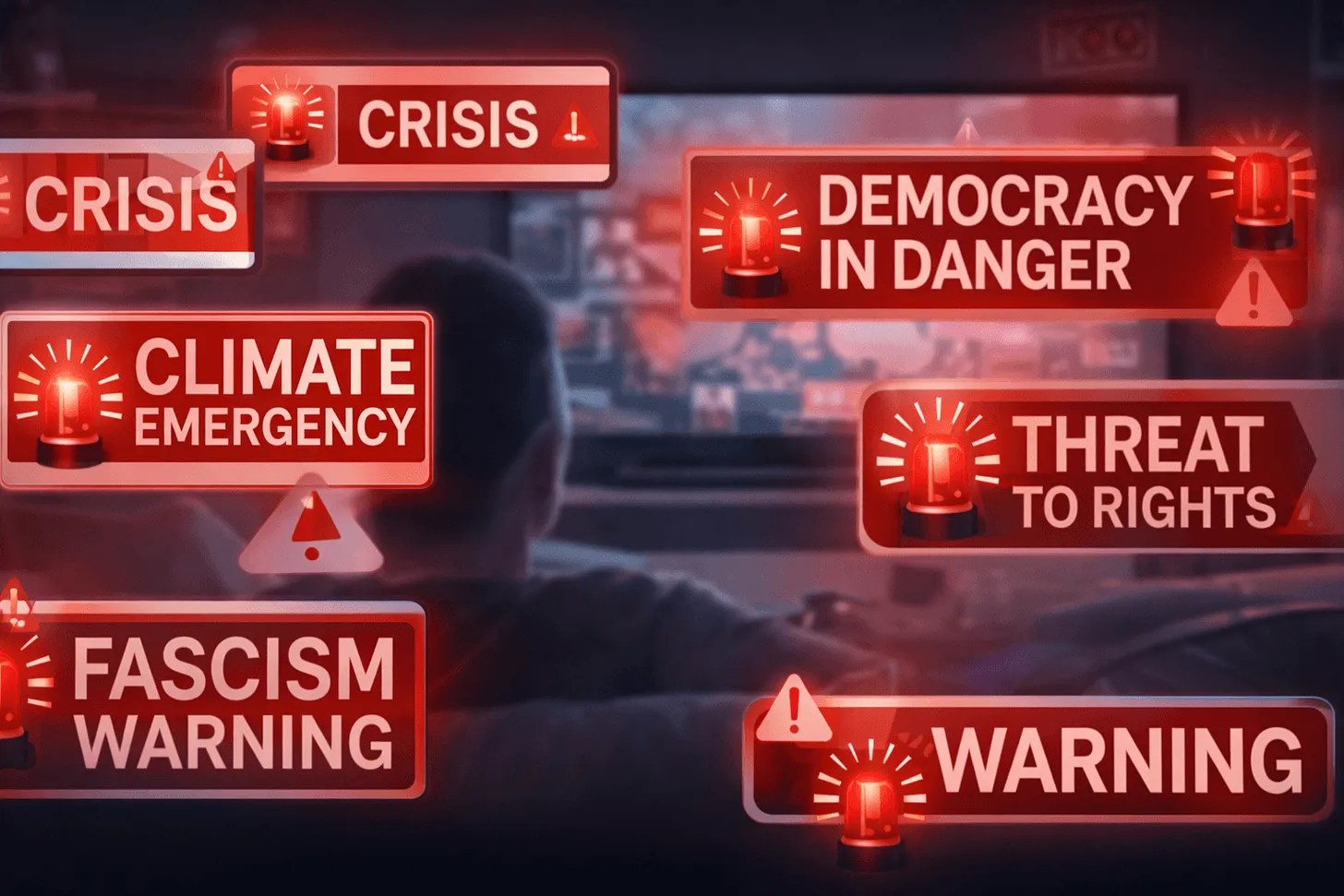
“A society trained to believe catastrophe is always around the corner eventually stops asking whether the catastrophe is real.”
For most of American history, political disagreements involved tradeoffs. Citizens argued about taxes versus spending, economic growth versus regulation, or liberty versus security. Those debates could become heated, but they still assumed something basic: reasonable people might weigh the costs and benefits differently.
That assumption has been fading for some time.
In modern political rhetoric, particularly within the Democrat Party, many issues are framed not as policy questions but as moral emergencies. Elections are described as existential threats to democracy. Environmental debates are portrayed as struggles to save the planet. Immigration disputes become humanitarian catastrophes or national survival crises, depending on the speaker.
Once an issue is cast in those terms, disagreement stops looking like disagreement. It begins to look like cruelty, ignorance, or bad faith.
This rhetorical shift has become one of the most powerful tools in modern politics. When every issue becomes a moral emergency, hesitation itself begins to look morally suspect.
Political decisions in a large and complicated country inevitably involve tradeoffs. Expanding one priority often requires sacrificing another. Governments cannot spend unlimited money without raising taxes or increasing debt. Environmental regulations may protect ecosystems while also affecting energy costs and employment.
Earlier generations of politicians acknowledged these limits openly. The debate centered on which tradeoffs were acceptable and which were not.
Emergency rhetoric removes that framework.
If a policy dispute is framed as a moral catastrophe, then tradeoffs disappear from the discussion. Anyone raising practical concerns can be portrayed as indifferent to suffering or blind to danger. The conversation shifts from weighing consequences to assigning blame.
This approach has grown steadily during the past decade. Political leaders now routinely warn that democratic institutions are collapsing, that the planet faces imminent destruction, or that fundamental rights will vanish if the wrong party wins an election.
When every issue is treated as existential, ordinary political reasoning begins to disappear.
Moral language has always played a role in politics, but it carries unusual power because it discourages caution. A voter who believes a genuine emergency exists will rarely pause to examine competing evidence carefully.
Delay begins to appear dangerous. Skepticism itself begins to look heartless.
Political movements throughout history have used this dynamic. During the French Revolution, opponents were not merely wrong but labeled enemies of the people. In the twentieth century, many revolutionary movements framed policy debates as moral struggles between oppression and liberation.
Modern American politics does not resemble those revolutions in scale, but the rhetorical pattern is familiar. What has changed is the frequency with which ordinary policy disagreements are described as existential crises.
The consequences are measurable. A 2023 Pew Research survey found that roughly seven in ten Americans believe political divisions are greater than at any time in their lives. Gallup polling shows public trust in major institutions such as Congress, the media, and the federal government falling below thirty percent.
A society repeatedly told that catastrophe is imminent eventually begins to believe it.
When observers step back from individual controversies, a pattern becomes visible. Many modern political disputes follow a recurring sequence.
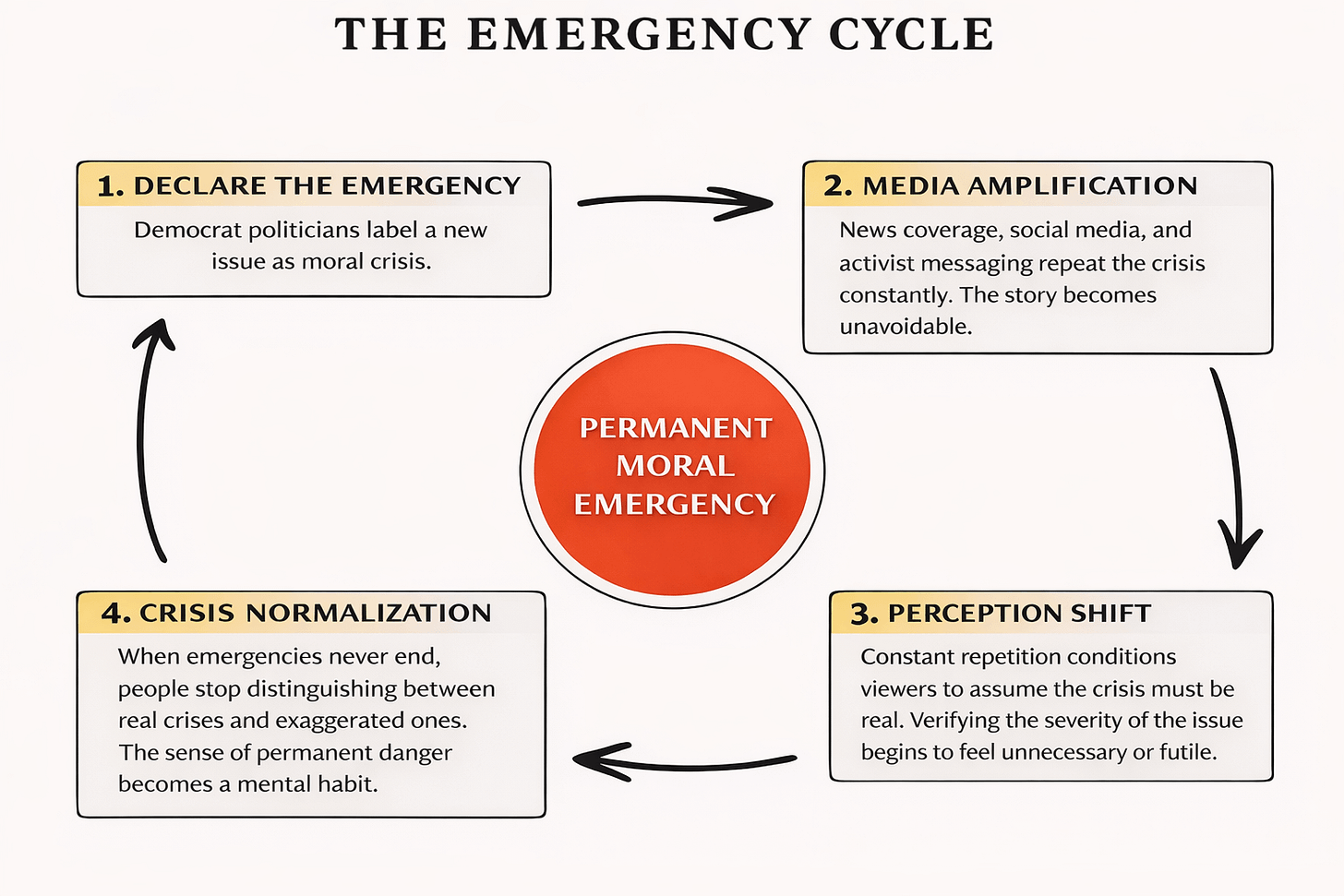
First, a political issue is declared an emergency. Activists and politicians describe the stakes in the strongest possible terms, replacing the language of debate with the language of crisis.
Second comes amplification. News coverage, advocacy groups, and social media networks repeat the warning constantly. The issue becomes nearly impossible for the public to ignore.
Third, perception begins to shift. When viewers hear the same message repeatedly, they begin assuming the crisis must be real. Few people have the time or resources to investigate each claim independently.
Finally, normalization sets in. When emergencies never end, the sense of crisis becomes habitual. Citizens gradually lose the ability to distinguish between severe problems and exaggerated ones.
The cycle then begins again.
Most Americans are not political analysts. They spend their days working, raising children, commuting through traffic, and dealing with ordinary responsibilities. Political information arrives in fragments through news broadcasts, headlines, and short social media clips.
Under those conditions repetition becomes powerful.
If the evening news repeatedly warns that democracy is collapsing, that civil rights are under attack, or that the planet faces irreversible destruction, viewers eventually assume the danger must be real. Verifying the claims begins to feel unnecessary or even impossible.
Psychologists call this the availability effect. Information that appears frequently feels more significant than information that appears rarely, even when the underlying facts remain uncertain.
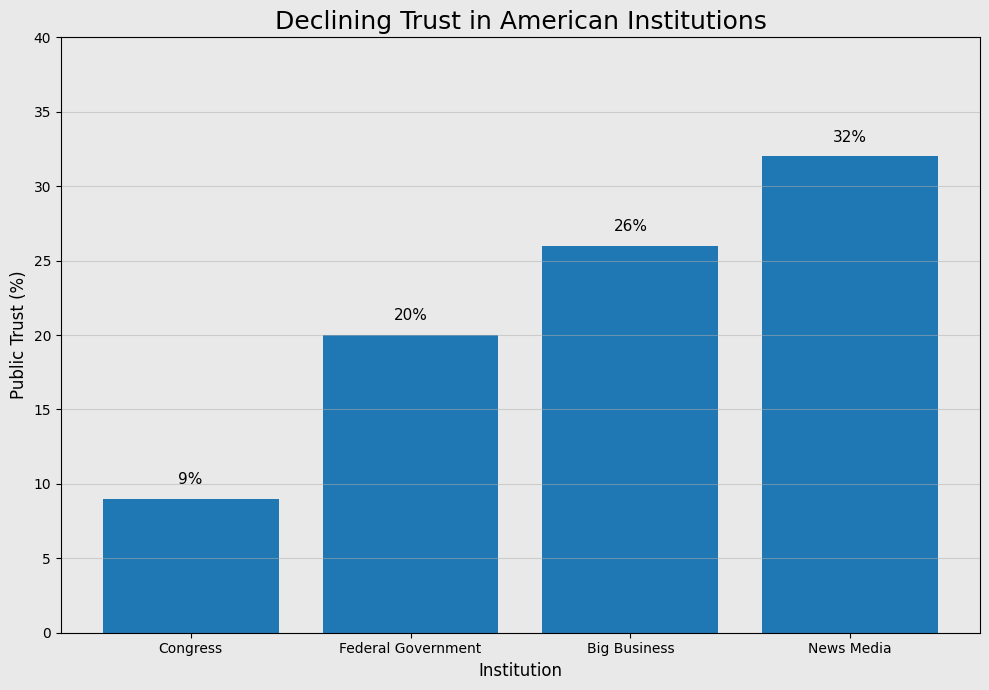
Over time the emotional consequences accumulate. Citizens become anxious about the direction of the country and suspicious of neighbors who disagree with the prevailing narrative.
Thomas Sowell has often written that ideas influence society not only through laws but through the way ordinary people interpret the world around them. The politics of constant crisis illustrates that principle clearly.
Modern activism operates through a large network of nonprofit organizations, advocacy groups, professional organizers, and media personalities.
These institutions depend heavily on attention because public outrage generates donations, media coverage, and social influence. Large demonstrations produce dramatic images that reinforce the perception of crisis. The more intense the reaction appears, the more visibility the cause receives.
Do you ever notice that there’s always something?
This structure creates an incentive to maintain urgency.
When an issue fades from the headlines, the organizations built around that issue often lose momentum. Funding declines, activists disperse, and public attention shifts elsewhere. A constant stream of emergencies keeps the machinery running.
The average viewer watching television rarely sees this infrastructure. He sees crowds carrying signs and assumes the intensity of the protest reflects the severity of the underlying problem.
The flexibility of emergency rhetoric becomes clear when political incentives change.
Consider environmental politics. Electric vehicles were promoted for years as a necessary response to climate change, and Tesla became one of the most recognizable symbols of technological progress in that effort.
Yet after Elon Musk began cooperating with the Trump administration in 2026, Tesla dealerships and charging stations became targets of protests and vandalism in several cities. Environmental symbolism suddenly mattered less than the political alignment of the company’s leadership.
The Senate filibuster offers another example. During the Biden presidency, many Democrat leaders argued that the filibuster should be abolished because it blocked legislation involving voting rights and social policy. The rule was described as an outdated obstacle to democratic governance.
After Republicans regained control of Washington in 2026, some of those same figures began emphasizing the importance of minority protections in the Senate.
The institution itself had not changed. The political incentives had.
Another contradiction appeared during the 2024 election cycle. Democrat leaders repeatedly warned that democracy itself was under threat while the party simultaneously limited competitive presidential primaries in several states to protect the incumbent administration. Representative Dean Phillips openly criticized the decision, arguing that restricting competition undermined the party’s stated commitment to democratic participation.
These examples do not prove the issues themselves are unimportant. They do suggest that moral urgency often expands or contracts depending on political advantage.
A population that lives under constant warnings of catastrophe does not remain unaffected.
Fear encourages quick judgments and discourages careful thinking. Citizens begin reacting emotionally before evaluating evidence. Political opponents are no longer simply wrong. They become dangerous.
Over time this environment produces exhaustion. People lose the habit of asking basic questions because every issue arrives wrapped in the language of emergency.
Thomas Sowell once observed that the most dangerous ideas are often those that feel morally satisfying while ignoring the long term consequences of the policies they inspire.
Permanent crisis rhetoric creates exactly that environment.
Some political issues genuinely involve moral questions. A free society must debate matters of justice, liberty, and human dignity.
But a political movement that can summon moral emergencies whenever convenient gains an enormous political advantage.
It no longer needs to persuade voters patiently. It only needs to keep them emotionally activated. As long as citizens believe disaster is always approaching, they will support whoever claims to stand between them and the threat.
A population trained to see every issue as a moral crisis eventually stops asking whether the crisis is real.
At that point political power no longer depends on solving problems.
It depends on declaring the next emergency.
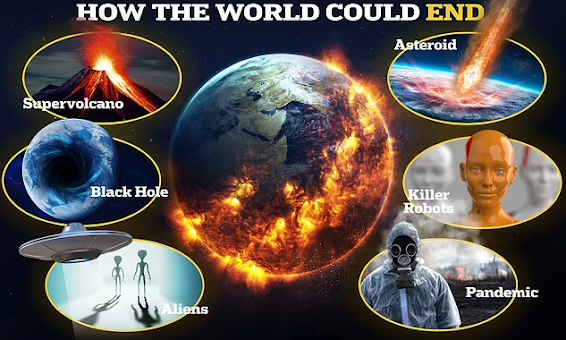
I would say that the Big Freeze scenario is the most likely, as the Universe keeps expanding on forever, and ever, and ever, and ever, until nothing but sub-atomic particles remain. I’m no real expert in this field and there are plenty of answers here which explain Universe Death much better than I do, so I will just take a different route of answer and give you a hypothetical way the Earth and the Universe will end.
There are quite a couple of scenarios of the ultimate fate of the Universe, with most stating it will end, although there is a theory that the Universe will just keep going on forever and ever. I will not talk about how humanity would advance, just the effects on Earth and the Universe. For this case, I will take the Big Freeze scenario, as it is the most likely. I’ll be going through the important events that may occur on Earth and in the Universe. Ready? Let’s go!!
One Thousand(1000) Years Later

By the time a thousand years pass, most of our languages would be gone, forgotten and never spoken ever again. Any language that does survive will have been changed so much it would never sound the same to us, and the grammar and words we use now will be gone in this time, like how we view Shakespeare’s English.
Two Thousand(2000) Years Later

Global Warming would still be going on and the Earth’s temperature would have risen by 8°C. The ice sheets and glaciers in Greenland mostly melt away, rising sea levels by 6 metres, potentially disastrous for low-lying poor countries.
Thirteen Thousand(13,000) Years Later
Earth’s axial tilt will reverse, and along with it, seasons. Northern hemispheric winter starts in June. The Northern hemisphere will suffer from extreme weather since there is more land above the equator. Either we live with it, or migration to the Southern hemisphere begins. Carbon dioxide levels are dropping slowly. According to Carter’s Doomsday argument, humanity has a 95% chance of being extinct, although in this case, I will take this as perhaps false.
Twenty Thousand(20,000) Years Later

Chernobyl becomes habitable once more. Yayyyyy! I just wanted to leave this here.
Twenty-Five Thousand(25,000) Years Later
The Arecibo Message, a collection of radio data transmitted on 16 November 1974, reaches the distance of its destination, the globular cluster Messier 13, at the far side of the galaxy. Any alien race that manages to receive the message will know that they are not alone. The reply message will only be received by us 25000 years later. The northern polar ice cap on Mars will recede due to a warming period. Human colonists on Mars could expand north if they still exist.
Thirty Thousand(30,000) Years Later
All fission-based breeder reactor reserves run out, forcing humans to swap to another energy source.
Fifty Thousand(50,000) Years Later

The Niagara Falls would have eroded the remaining 32 km to Lake Erie and have vanished. The global temperature would have increased by another 2°C, completely melting away all the ice in Greenland. According to Berger and Loutre, Earth plunges into another ice age despite global warming. This ice age could possibly be delayed by constant burning of fossil fuels. If any aliens have replied, we would receive the Arecibo Reply by this time.
Eighty-Five Thousand(85,000) Years Later
By this time, it is safe to assume that the World will have completely changed by this time. If humanity hasn’t been wiped out, no nation, religion or way of life will be the same. There would be new factions or hopefully a World Coalition Government, with no countries left. Religions like Judaism and Christianity that have persisted for so long would have been forgotten and given way to new religions, or religion may no longer be existent.
One Hundred Thousand(100,000) Years Later

VY Canis Majoris will explode into the largest hypernova seen in the Universe, probably even visible from Earth. Earth would most likely suffer a Supervolcanic eruption, likely the Yellowstone Caldera, that will hurl ash into the sky, blocking out sunlight and lowering temperatures, causing a global disaster. Titanium begins to corrode away. By this time, should humanity have the technology and the survival, terraforming of Mars will near its ending phases, with a now oxygen-rich atmosphere. I predict that most of humanity will live on Mars by now.
Two Hundred and Ninety-Six Thousand(296,000) Years Later

Voyager 2 passes within 4.3 light years of Sirius. Any intelligent aliens will probably recover it and find the Golden Record and realise that they…are not alone.
Five Hundred Thousand(500,000) Years Later

Earth is struck by a 1 km asteroid, that has an impact of 6 × 10^4 megatons, equivalent to an earthquake of magnitude 9.4 on the Richter scale. This isn’t an extinction event, not even close, but causes significant damage to Earth’s environment and could wipe out any humans still living on Earth. If we have just kept burning fossil fuels, the ice age can be delayed till this time. Spent nuclear fuel in reactors would also be safe by this time.
One Million(1,000,000) Years Later
Glass left on Earth would have fully decomposed by this time, and so will every structure that we have today, except for stone structures like Mount Rushmore or the Pyramids of Giza, although the Pyramids would probably be unrecognisable. Nearly everything we left on the Moon will also be gone. Humanity, if still alive, would have spread throughout the galaxy. This is the shortest time it will take for humans to colonise the Milky Way.
Two Million(2,000,000) Years Later

Coral Reefs will finally physically rebuild and biologically recover from current human-caused ocean acidification. The Grand Canyon will further erode into a wide valley.
Seven point Two Million(7,200,000) Years Later

Mount Rushmore erodes away. Basically nothing left of human civilisation will be left, except for our trash. There will be little trace of any intelligent species that lived here. If aliens finally visit after receiving a message or info, they may find nothing.
Ten Million(10,000,000) Years Later (Mass Extinction)

Earth is hit by a Gamma Ray Burst from the supernova of nearby star T Pyxidis that irradiates the planet, destroys the ozone layer and triggers a mass extinction. Funny, seeing how ten million years is the time it takes for the Earth to recover from the Holocene extinction that humans cause. So Earth went from one mass extinction to another. The East African Rift Valley is flooded, causing a new ocean basin to divide Africa.
Twenty-Seven Million(27,000,000) Years Later
By this time, Homo Sapiens will go extinct and what remains of humans will be another step in evolution. Humans, having spread into space, may split into different species due to going separate ways through the cosmos, possibly leading to wars between different species of future humans. By this time, humanity will have advanced so far that things like nuclear fusion and basic space flight will be practically primitive to them and they may scoff at us working so hard to land a rocket.
Fifty Million(50,000,000) Years Later
By this time, if humanity did indeed set out to colonise the Milky Way, this is the time when we would have finally conquered the galaxy, presumably exterminating life and waging wars against aliens inside the Milky Way. Europe and Africa collide and merge to form one continent, allowing animals to cross and spread. Indonesia and Australia also merge together at roughly the same time. Many mountain peaks start to erode, and Earth starts to draw to a close. It would still take hundreds of millions of years, but Earth starts to slowly die. The Universe however, is nowhere close to ending yet. Antarctica, moving North, finally melts all of its ice, raising seas worldwide by 75 metres, causing massive floods in practically every region. Mars, will have its moon, Phobos, smash into it, potentially causing a mass extinction of any Martian life that exists after terraforming and if still colonised, perhaps human colonies too. However, there is the possibility that this is averted. I’m not here to say what the tech prowess is for future us.
NEXT!
One Hundred Million(100,000,000) Years Later

Earth will likely be hit by a huge asteroid, similar in size to the one that caused the KT Extinction that killed the dinosaurs. With likely no humans left on Earth, this asteroid will not be deflected and can potentially cause a mass extinction…again. Earth’s orbit will no longer be nearly uniform, but rather completely random, having devastating impacts on Earth’s climate and ecosystem. Saturn’s rings will have disappeared and according to Drake’s Equation, this will be the furthest humans will ever get with an advanced civilisation.
Two Hundred and Fifty Million(250,000,000) Years Later
Due to tectonic plate movement, all continents on Earth will have joined in one of three configurations: Amasia, Novopangaea and Pangaea Ultima

Amasia

Novopangaea

Pangaea Ultima
The supercontinent most likely split 500 million years from now
Six Hundred Million(600,000,000) Years Later (Earth Starts to End)

The Sun has increasing luminosity (something with carbonate-silicate cycle or something, sorry bad chemist) and water starts to evaporate, rocks harden and plate tectonics screech to a stop. Without this, no more volcanoes exist, thus causing carbon dioxide levels drop. This eventually renders C3 photosynthesis impossible and kickstarts the greatest extinction in history, with around 99% of plant life dying. No plants=no herbivores=no carnivores.
Eight Hundred Million(800,000,000) Years Later (Extinction)

Carbon dioxide levels continue to plunge until C4 photosynthesis is no longer possible. Free oxygen and ozone disappear from the atmosphere. Every multicellular lifeform dies, leaving only unicellular organisms remaining on a now desolate and barren world. I would assume that most intelligent life in the Universe will begin dying off by 1 billion years into the future.
One Billion(1,000,000,000) Years Later

Ignore the clouds
The Sun’s luminosity would have increased by 10%, causing Earth’s surface temperature to be 47°C. The atmosphere will become a “moist greenhouse”, resulting in a runaway evaporation of the oceans. This turns Earth into a dry, arid planet and many unicellular organisms that require water to live, die off. Pockets of water may still be present at the poles, allowing some simple unicellular organisms to live on. This is also the estimated time needed for an astroengineering project to finish to drag Earth away from the brighter Sun, but I find it unlikely that our descendants survived this long, and would most likely have abandoned Earth. The Golden Records of the two Voyager spacecraft lose all their information. Aliens will never find out about Earth again.
One point Three Billion(1,300,000,000) Years Later
Carbon dioxide runs out. Every cell with a nucleus perishes, leaving only cells without nuclei left on the barren ruined world once called Earth. Mars could potentially become habitable without the need of human terraforming a few million years after this.
Two point Three Billion(2,300,000,000) Years Later

The outer core of the Earth freezes as it loses heat out to space and the inner core keeps growing. The Earth stops spinning and the magnetic field shuts down and the now unprotected remnants of the atmosphere is depleted by the Sun.

Two point Eight Billion(2,800,000,000) Years Later (RIP LIFE ON EARTH)
Earth’s surface temperature hits a 149°C. This combined with a lack of atmosphere finally kills all life on Earth. Nothing survives this. The Earth will no longer sustain unicellular, non-nuclei-containing organisms. The ‘heartbeat’ of the Earth flatlines.

Four Billion(4,000,000,000) Years Later

The Milky Way Galaxy collides with the larger Andromeda Galaxy and will eventually, tens of millions of years later, merge to form ‘Milkomeda’, probably the dumbest name ever. The collision could potentially disrupt the orbits of hundreds of millions or billions of stars and their planets. The Solar System will also be sent flying from its original position, but is expected to be relatively unaffected.
Five point Four Billion(5,400,000,000) Years Later
The Sun’s hydrogen supply at its core is finally exhausted, the Sun starts to evolve into a Red Giant and expands outwards towards the Inner Planets. In a few billion years, the Earth and Mars will become tidally locked and have their surfaces superheated and scorched.
Seven point Nine Billion(7,900,000,000) Years Later
The Sun reaches its maximum radius, 256 times its normal, and consumes and destroys Mercury and Venus. Earth’s Moon breaks up into debris which fall down into the desolate Earth, which is then either consumed or fully scorched. Mars would probably not be consumed, but would not be habitable. It is theorised that Saturn’s moon Titan can support life now.
Eight Billion(8,000,000,000) Years Later

The Sun shrinks back to into a White Dwarf, with about 54.05 percent its present mass. If Earth has not been destroyed, the scorching temperatures will drop rapidly, as with the temperature of every other celestial body in the Solar System. All that’s left of the Solar System is a few cold, bleak planets and moons with no capability to support any form of life ever again.
Fourteen point Four Billion(14,400,000,000) Years Later

After a few billion years as a White Dwarf, the Sun converts into a Black Dwarf, with low temperatures and practically zero luminosity, turning invisible to the eye. It is now nothing but a cold, dark carbon ball. The Sun thus ends its long lifespan. However, there are a large number of scientists who believe that it would take a quadrillion years for the White Dwarf to turn into a Black Dwarf.
One Hundred Billion(100,000,000,000) Years Later
With the Big Freeze scenario, the Universe keeps on expanding. This causes all galaxies beyond the Milky Way/Milkomeda’s Local Group to disappear beyond the observable Universe. It is very likely that any intelligent species that somehow manages to arise at this time will never see another major group of galaxies ever again, and may even conclude that their local galaxy group is the only thing in the Universe. By this point, the Big Bang is no longer detectable, perhaps causing any intelligent species left to believe that the Universe had no beginning and maybe no end. Local galaxies also start to merge together.
One Trillion(1,000,000,000,000) Years Later

No new stars will ever be produced as the gas clouds needed to form them no longer exist in the lonely giant galaxies floating around. Stars slowly, one-by-one die out and the sky turns black, leaving the planets still floating around the dark. The Local Group finishes merging together and it would be the only thing floating in space as everything else is too far away.
Thirty Trillion(30,000,000,000,000) Years Later
Stars in their stellar neighbourhoods start undergoing close encounters with other stars, disrupting the orbits of stars and their planets, sending both the planets and moons, and stars flying out of the galaxies entirely. These stars will go hurtling through the now empty cosmos, alone forever until they die.
One Hundred Trillion(100,000,000,000,000) Years Later
By this time, absolutely no free hydrogen existing to try to form new stars. The Universe enters what is known as the ‘Degenerate Era’.
One Hundred and Twenty Trillion(120,000,000,000,000) Years Later
Almost every existing star in the Universe finally burns out and they die off, with the Red Dwarfs the last to go. The only things left in the Universe would be Brown Dwarves, White Dwarves, Neutron Stars and Black Holes, which will then slowly, very slowly, die off in that order. The only real bright lights are supernovas when these stars collide.

A Neutron Star, that will be one of the last things in the Universe
One Hundred Quintillion Years Later
Well over 90% of all the aforementioned celestial bodies have already been ejected out of the slowly dispersing galaxies that are also being consumed by Black Holes. Most of everything is now solitary, never to see anything else again. The Solar System is finally destroyed when every planet collides with the Black Dwarf that was the Sun, which then decays away or is consumed by a black hole.
One Nonillion Years Later

Every star still not ejected is consumed by the Supermassive Black Holes, along with every galaxy still not dispersed yet. Only solitary objects manage to survive the Supermassive Black Holes. The Brown Dwarves still won’t die until many, many quintillion years later.
Most of the Universe is gone, but the Universe isn’t even halfway through its full lifespan yet.
3×10^43 Years Later
Every Brown Dwarf, White Dwarf and Neutron Star has already decayed away into nothingness by this point, leaving only Black Holes in the entire Universe. These dark celestial objects will remain for far longer than one thinks. The Universe still isn’t halfway through. In fact, Black Holes probably last longer than every other celestial object combined.
1.342×10^99 Years Later
Almost every Black Hole has already dissipated due to the emission of Hawking radiation, living just one gargantuan Supermassive Black Hole left, already dissipating away as well.
One Googol(1×10^100) Years Later
The last Black Hole has finally died. There is absolutely nothing left in the Universe other than sub-atomic particles. The Universe continues to expand further and further away, spreading these sub-atomic particles so thin, that they will never, ever, interact with another particle ever again. The Universe hits a tiny bit above absolute zero. Nothing left. Thermodynamic equilibrium has been reached.
Just a cold, black void for an eternity…

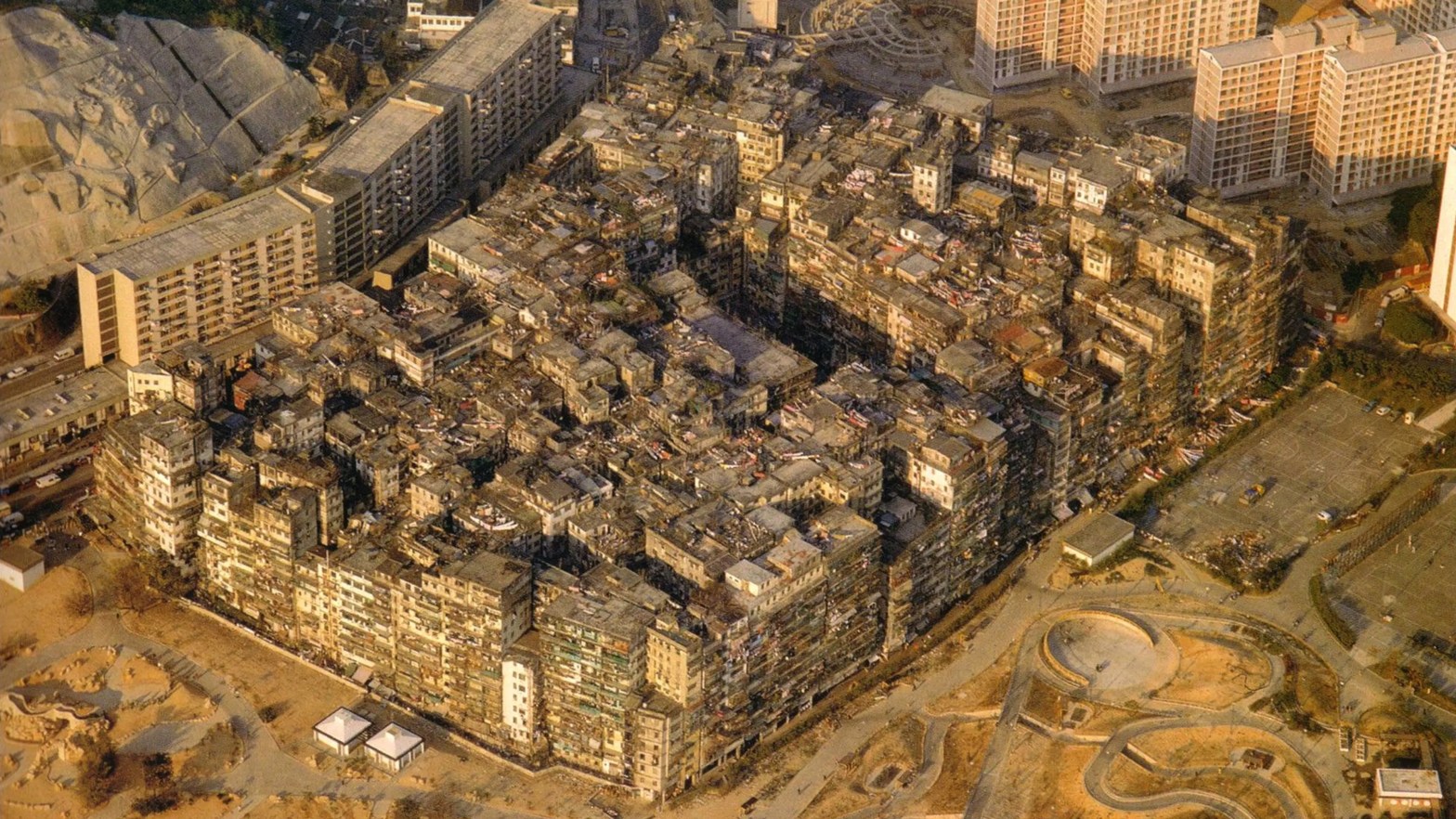
Here in the United States, we rarely hear much about what’s going on in the rest of the world. Our news media is so focuses on the latest scandal, many of which are of their own creation, that they tend to ignore what’s going on in other countries.
Yet every day, people around the world face crisis and disaster that we don’t hear about.
Such is the situation in Cape Town, South Africa today. There’s a countdown to disaster going on there, as the 3.7 million residents in the area race towards what is being called “day zero.” This is the day when the city runs out of water and it’s currently projected to be May the 11th; just a few short months away.
On that day, the city water authorities will be shutting off water to all but critical installations. People will be forced to get their water from centralized locations, carting it home. A maximum of 25 liters of water (6.75 gallons) per person, per day will be authorized until the day zero crisis is over.
While some people are trying to stockpile bottled water now in preparation, not everyone can do that.
So, what has brought the city to this point? Many say that it has been poor management of the municipal water supply. Accusations of leaky pipes that have not been repaired, poor management of the infrastructure and lack of planning abound.
video first seen on Guardian
But regardless of whether these accusations are true or not, the reservoir that Cape Town depends on for water is down to 26.3% of capacity, after three years of drought.
Government officials are blaming the current water shortages on global warming, which makes a handy scapegoat. But droughts have existed throughout the history of the world, regardless of whether global warming exists or not.
Not developing the necessary infrastructure to survive those droughts is irresponsible on the part of any government, essentially ignoring their responsibility to protect the people they are sworn to serve.
Currently, a massive water conservation campaign is going on in the city, as the residents pull together to extend the date for day zero. So far, this has added four days to the calendar. While that may not seem like much, it is a major victory, one that can be expanded upon.
One news interview of a resident shows how hard people are working to make this campaign work. The man stated that their normal water use was 19,000 liters (5,135 gallons) per month, but that the last month his family only used 8,000 liters (2,162 gallons); a reduction of 58%.
But that probably isn’t going to be enough. Further cuts will have to be made, unless the drought breaks and the reservoir fills once again.
To put that in perspective, the average American uses 80-100 gallons of water per day. So, a family of four would use roughly 12,000 gallons of water per month, more than double what the middle-class South African family uses.
Of course, that interview was of a typical middle-class homeowner. The poor of South Africa, like the poor elsewhere in the world, get by with much less water than that.
Any time people don’t have running water available, and instead have to haul water from the local source, whether a natural source of a government installed community water pipe, they find ways of living on much less water.
I’ve spent time in the villages of Mexico, places where they didn’t have running water. Instead, each family had a water tank out front and the city water truck would come and fill it twice a week. That gave them 100 to 150 gallons of water to last three to four days; roughly 15 gallons per person, per day.
But that’s not the worst. If there is anywhere where people struggle with having enough water it is in sub-Sahara Africa. The norm there is for people to live on five gallons of water per person, per day. That takes care of drinking, cooking and cleaning, including bathing, washing clothes and washing dishes.
The big question this brings to mind is whether this sort of thing could happen here in the United States. Let’s be honest with ourselves a moment; we’re spoiled. We expect to turn the faucet on and have a virtually unlimited supply of clean, purified water to use.
But that doesn’t mean that it will always be that way. In recent years, we have seen a number of droughts plague various parts of our country. It seems like hardly a year goes by, where there isn’t one part of the country or another which is in drought.
A few years ago, I was in the Colorado Rockies and saw first-hand how low the reservoirs were at that time. Several states depend on the water from those reservoirs, which are filled by the melting winter snow.
Southern California, where a large part of the country’s produce is grown, has seen severe droughts over the last few years, and it is unlikely to get better soon.
Since the area is normally arid, the state has spent billions of dollars over the last few decades, in creating the necessary infrastructure to collect and transport water from the wet northern part of the state for use in farming the southern part.
But politics got in the way of practical reality, and the water which was intended for those farmers was instead flushed down-river to protect the delta smelt, a feed fish.
It is easy to say that this was a situation caused by mismanagement of the available resources. Had the politicians stayed out of the way, the drought would have been manageable and the farmers would have had enough water. But by allowing shaky environmentalism to overcome practical necessity, California’s government has put many of the state’s farmers out of work.
But that’s not the worst situation we face, as far as our water supply is concerned. The scariest piece of data to come forth is that the water level of several of our major aquifers is dropping. We are using the water from those aquifers at a faster rate than it can be replenished.
The aquifers most seriously affected by this are: the Canbrian-Ordavician Aquifer, the High Plains Aquifer and the two aquifers in Southern California.
These are the aquifer that provide water for a large part of the nation’s farming. So, water shortages in those areas means more than just a lack of water, it can lead to shortages in food as well. While water is a higher survival priority than food is, we need both of them to survive.
The reality is that you and I are subject to facing the consequences of those who control our water supply, as well as any natural disaster or drought. The economic, technological and military might of the United States can’t do a thing to stop drought. All we can do is prepare for it as best we can.
I don’t care where you live, unless maybe in the Pacific Northwest, rain is not consistent. There are wet spells and dry spells, and just about every resident who has lived anyplace can tell you when they usually are in that area. This is why our country has invested so much in building reservoirs, with over 84,000 dams in the United States.
The reservoirs allow us to have water during the dry spells; but even then, there is a limit to their capacity.
Of course, even if the reservoirs are filled to capacity, that water has to make it from the reservoir to our tap before we can use it. This makes the entire system dependent on electricity, the easiest part of our infrastructure to interrupt.
Blackouts which last more than 12 hours, can be accompanied by a lack of water pressure or even the water shutting off, just because there isn’t power to run the pumps.
The only solution for you and I is to have our own water stockpile. But more than that, we need a means of harvesting water from nature, so that we aren’t totally dependent on the system. That way, if something happens, at least we will have water, even if nobody else does.
This is really the only way we can protect ourselves from ending up standing in line, waiting our turn to get a few gallons of water, like the people of Cape Town. While we will probably still find ourselves having to ration water, at least we’ll have water to ration; and it will be our water, not water that the government can turn off or give away to some bait fish that we’ve never heard of.
There are actually three things we need to do here:
I’m not going to get into a detailed discussion about these three areas here, as there are other articles here on Survivopedia which do. But there are a few key things that I want to mention.
Water is difficult to stockpile, simply because of the vast amount of water we need. Since dehydrated water is only a joke, there is no real way of reducing the water’s volume, making it possible to store it in a smaller space. So the question then becomes, where can you find all that space?
I suppose if we all had the money to build an underground cistern or a private water tower, this wouldn’t be an issue. But we don’t; so we need a less-expensive alternative. That’s actually easier to find than you’d expect. All you need is an above-ground swimming pool, which you can buy surprisingly inexpensively.
The chemicals used to keep the water clean for swimming, are the same chemicals that make it safe for drinking.
The two basic means of harvesting water are rainwater capture and putting in a well. In both cases, there are legal ramifications that you have to consider, depending on where you live. Some states don’t allow rainwater capture and others limit who can drill a well. So before making a decision on this, you have to see what your state allows.
I’ve never liked the government telling me I can’t do something, especially if that something doesn’t hurt anyone else. So, just as a thought for your consideration, if I lived in a state where they didn’t allow rainwater capture, I’d put it in anyway.
To keep anyone from knowing what I was doing, I’d bury the water barrels, making it look like I had nothing more than a French drain for my downspouts.
New technologies are emerging, which show considerable promise. These focus on extracting moisture from the air. If you live in an area with high enough humidity to have fog, you can build simple fog catchers, which will allow you to convert the moisture in fog into drinkable water.
Other, more complicated technologies allow for extracting moisture from the air, even when there isn’t fog. These are still expensive, as they are new, but prices should drop as they become more readily available.
Any water you harvest needs to be purified, even rainwater. Birds tend to do things on the roof of our homes, which ensure that the rainwater we capture isn’t as clean as we might expect it to be. So don’t expect that water to be pure, if you haven’t purified it.
Likewise, well water can contain a considerable amount of bacteria, even when it comes from one of the deep aquifers. The only way of being sure that it is safe to drink is to purify it.
But water used for gardening, bathing, cleaning and flushing toilets doesn’t have to be purified. We use purified tap water for that now, just because it is cheaper to do that, than it is to put two water lines into every home, one for purified and one for non-purified water.
Be sure to have more than enough filter cartridges for your water filter, if you are using filtration to purify your water. Even the best cartridges only last so long, so put in a good stock.
No matter what you do to harvest water from nature, it’s probably not going to be enough, unless you also work to conserve water. The 100 gallons of water, per person, per day, that Americans use, is the highest rate of water consumption in the world.
People in South Africa are given a breakdown of water usage, that comes down to 50 liters per day. That’s a mere 13.5 gallons!
Many survival instructors say that you need one gallon of water per person, per day, for survival. But that’s just taking into consideration the water you need for drinking and cooking. It also doesn’t take into account hot temperatures. If you live in the Southwest, limiting yourself to that quantity of water could cause you to suffer severe dehydration.
Is it possible to live on the 13.5 gallons of water that they are recommending in South Africa? Yes, it is. But it means making some serous adjustments to our lifestyle. Take bathing for example; the average American bathes daily, using from 17 to 36 gallons of water per day.
But people in poorer countries can’t use that much water. Even in Latin American countries where they bathe daily, the average water consumption is much lower, with bathing accounting for only a gallon or two of water per day.
One of our biggest water wasters is flushing the toilet. Older toilets use as much as seven gallons of water per flush, while newer ones can be as low as 1.6 gallons per flush. So, changing out toilets can drastically reduce the water consumption of your family.
The other thing that can reduce it is not flushing every time it is used. Urine is biologically sterile, so unless the urine concentration in the water reaches a point of causing it to smell, there is no reason to flush every time you urinate.
But we have a water user that’s even bigger than toilets; that’s our lawns. With the large lots that we typically have for our homes (based on a world-wide average) and the fact that we all seem to plant lawns, we use an enormous amount of water keeping that grass alive.
To provide your lawn with one inch of imitation rainfall requires 62 gallons of water for every 10’ x 10’ area. So you could easily go through several hundred gallons of water in one day, just by watering your lawn.
I’ve lived in a couple of different arid areas during my life and I remember water rationing. During the rationing, we were only allowed to water our lawns certain days or not at all. When you’re living in a hot climate anyway, not being able to water your lawn could be enough to ensure its death.
Potential water shortages, even severe shortages, are no different than anything else that you and I prepare for. Like other potential disasters, the key is to be as self-sufficient as possible. That’s the only real protection for ourselves and our families.
Taking the actions I’ve mentioned above, as well as others you can find in this website, will ensure that you won’t be standing in line for hours, waiting to be able to get your daily ration of a few gallons of water. You and your family will be able to live a much more normal life, even if everyone else is suffering.
That’s not to say that you should flaunt your relative wealth. Part of good OPSEC is living as much like everyone else as possible. If you’re watering your lawn and washing your cars, while everyone else is fighting to have enough water to drink, it will quickly become obvious that you have an abundance of water.
You can expect that to be immediately followed by a line of people forming at your front door, expecting you to share with them.
However, one way of hiding your wealth might be to co-opt your neighbors. If you have enough water to share, then why not share it with them? Allow them to get their water from you, rather than having to go to the water point and stand in line. Just make sure you know how much water you are able to produce and how much you can afford to give them.
Sharing your water with your neighbors could act to help protect you, as they would have a vested interest in your source of water remaining a secret. That has some real tactical advantages, especially since it will be much easier to co-opt their cooperation, than trying to hide what you’re doing from them.
Unless your OPSEC is perfect, you have to assume that your neighbors at least have some idea of what you’re doing.
Finally, whatever you do, don’t panic. Panicking will just make it more difficult to survive. Nobody can think clearly when they are in panic mode. But there’s really no reason for you to panic. You’re the one who knows what to do and has prepared to do it.
So, while everyone else is worried about how they’re going to survive, you don’t have to worry. All you have to do is put your plans into action and keep going forward. You’ll be all right.
The biggest criticism of David’s book, The Great Taking, was that it offered no solutions. While it lays out the problem with expert precision—thoroughly unsettling the reader in the process—it never reached the natural next step: “And here is what you can do about it.” For many, that omission was a bitter pill to swallow. They wanted a step-by-step guide on how to protect themselves and their families from the coming flood. But no life jacket was provided.
Having become friends with David over the past three years, I understand that the absence of proposed solutions was neither an oversight nor an attempt to simply blackpill the reader. Rather, it reflects his sincere belief that something this vast and this evil cannot be fully defended against. Even if one manages to escape the first wave of confiscation and the Great Taking itself, it will be followed up with others—each designed to ensnare those who evaded the last. This is not hypothetical. History offers countless examples in which, after the majority has been impoverished, the remaining pockets of wealth are inevitably targeted.
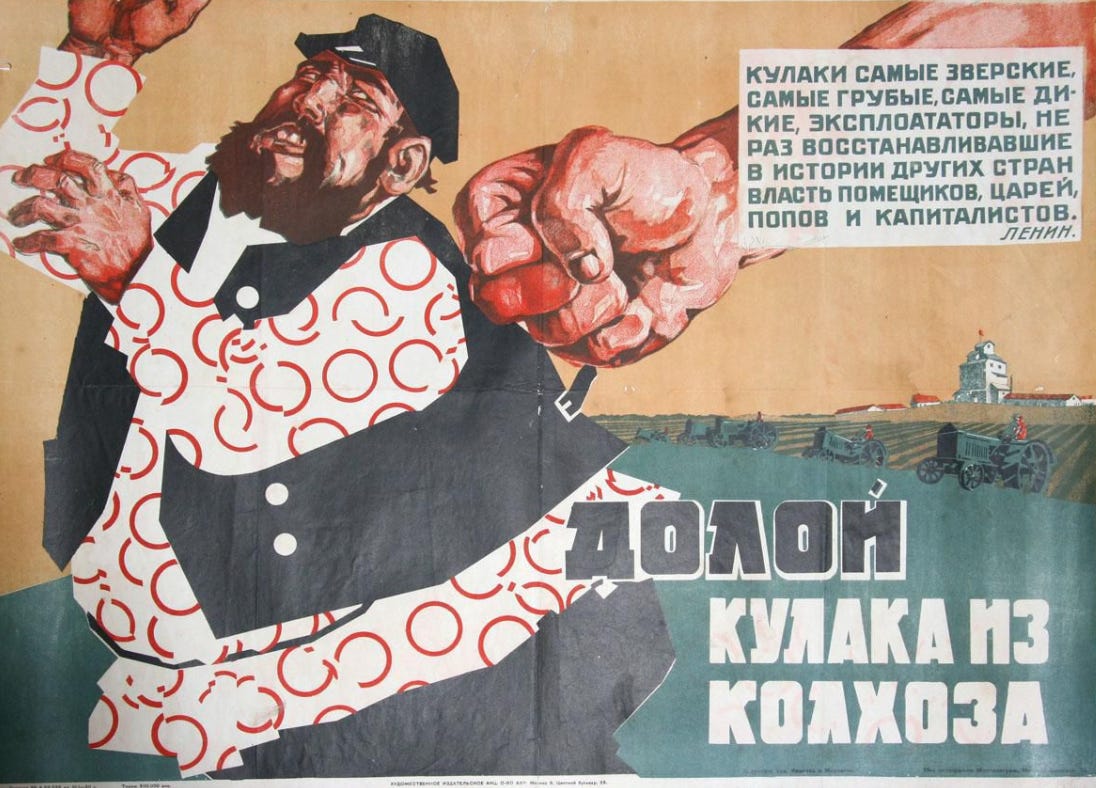
The most egregious expropriation of wealth rarely appears at the outset of a crisis. It emerges at the end—after society has already been broken and reset. In Communist Russia, the revolution and the murder of the Romanov dynasty came first. Economic collapse followed, then years of scarcity and impoverishment. Only once the masses were fully crushed, having already lost most of what they owned, were the remaining productive classes targeted. A population rendered desperate was easily mobilised to justify the seizure of land, businesses, and assets.
A similar pattern unfolded during the Great Depression. It began with the stock market collapse, which triggered a cascading credit contraction and the failure of banks across the country. Depositors saw their savings wiped out as institutions closed their doors. With the banking system in chaos, credit froze, collateral values collapsed, and industrial activity ground to a halt. Millions were thrown out of work. Mortgages fell into delinquency en-masse and many citizens wound up losing their family farms to the big banks.
With no access to refinancing, even solvent families were losing their properties. For those who managed to survive, physical gold coins held outside the banking system, appeared to be the natural place to store what remained of their wealth. Or so they thought. Once again, after society had been sufficiently weakened, the state moved against the survivors. The gold holders. Those who believed they had escaped the asset seizure were quickly brought back to reality.

If you want to understand what happens during a systemic unwind, this is the blueprint. First, the credit system fails. Next, assets are liquidated or seized through refinancing failure—or through mechanisms like the Great Taking. Finally, whatever wealth remains outside the system is targeted and pulled back in. With asset tokenization and digital IDs on the near horizon, it is not difficult to imagine that physical and unregistered wealth—sitting beyond institutional control—could be targeted in the near future.
These mass looting events are never straightforward. The narratives are layered, distorted, and deliberately opaque, ensuring that most people neither see what is coming nor understand what is happening until it is far too late. Some may even participate in the confiscation of other citizens’ wealth, genuinely believing they are advancing a form of social justice.
With so many young people ideologically captured—and simultaneously locked out of housing, without any realistic path to prosperity—is it really unthinkable that a portion of them could be radicalized into supporting, or even participating in, the expropriation of property from so-called “selfish boomers”? When surveyed, over 50% of young people in America—the most free nation on earth, with the strongest property rights ever established—already support wealth redistribution! It is not absurd to imagine that a small fraction of them could be pushed toward violent action if it were sanctioned, justified, or encouraged by the state.
For all these reasons, any serious discussion about protection from something like the Great Taking is inherently complex. It must go far beyond simplistic advice such as “just buy gold.” The real threat is not isolated confiscation, but a full-spectrum breakdown: counterparty failures, collapsing collateral chains, evaporating liquidity, and the shutdown of the very channels through which assets are normally transferred or sold—followed by societal implosion and a rising tide of anger, fear, and despair.
In such an environment, survival is not about beating the system—it is about not being swallowed by it. The Great Depression shows us that when the collapse reaches its bottom, they come not only for the vulnerable, but for the last remaining stores of independent wealth. David, as a lifelong student of the Great Depression, understood this well. He knew that any attempt to lay out a solution in his book would be a) woefully inadequate b) give people a false sense of security and c) reduce the likelihood they would feel compelled to push back against the Great Taking in more meaningful ways.
My point is, the idea there is a perfect, simple solution to this kind of risk must be dispelled. There is no single hedge against systemic collapse, only a maze of vulnerabilities and risks to try and deal with. Protecting your family against the Great Taking requires a fundamental shift in both mindset and lifestyle. That’s why I’m writing this from a homestead, where my family and I take responsibility for our own food, water, and energy, as much as possible. I am surrounded by other farms, each with its own fresh water supply, off-grid heating, and food production. It’s no coincidence that David Rogers Webb has chosen a similar way of life, as did Matt Smith @ Crisis Investing and Doug Casey, two of the other early voices who helped raise awareness of the Great Taking.
Put simply, those of us who truly understand the risks before us—and what is likely to follow when the financial system finally unravels—are taking serious preventative steps. We recognize that living in dense urban environments while remaining dependent on centralized systems is a terrible idea. We know we need to be out of the cities and at least semi-self-sufficient. The fact that each of us made significant sacrifices to prepare for that future should be instructive in itself. The truth is, we don’t know how bad it could get. But history is very clear on one point: when debt bubbles burst and old systems die—and that is precisely where we are in the cycle—things become chaotic very, very quickly.
If this all sounds like too much effort—and you were hoping for a simple, easy-to-implement answer to the question “How do I prepare for the Great Taking?”—then unfortunately, you’re going to leave this article disappointed.
Real solutions to substantial and complex problems are never easy. They demand:
There are no shortcuts here. When it comes to the Great Taking, no amount of clever portfolio restructuring will work if you have not first secured your most basic requirements for survival. History is unequivocal on this point. People endure hard times by minimizing their dependence on centralized systems. That means developing:
Believing you can protect your wealth while being unable to feed yourself without a supermarket is dangerously naive. And that naivety is precisely what the system relies on. Always remember—those who would like to see you property-less and dependent are always thinking several moves ahead. You need to think several moves ahead +1.
What you’re about to read are, of course, only my opinions—but I hold them firmly. There are no shortcuts to achieving a meaningful level of protection, so I won’t pull any punches. If I’m going to attempt the impossible—by addressing something even David chose not to tackle directly in his book—I will do so honestly.
We are living through an exceptionally dangerous period in history. Navigating it successfully requires both a realistic understanding of the risks before us and right intention: the desire and courage to act decisively, even when certainty is impossible. Without this, my article will be of little use. But for those prepared to take action, there is an opportunity not just to survive the hard times ahead, but to thrive during them. That is my goal—and I invite you to join me on this journey.
For those willing to face this reality head-on—who want genuine resilience and meaningful insulation from what’s coming—read on.
Whether the catalyst is the Great Taking itself, or the inevitable collapse of the everything bubble, the framework I’m about to share offers the strongest protection realistically available to us
Just please be aware, it is:
So, with that said, let’s get to it.
I was recently in a Wealth Preservation Consultation discussing the Great Taking with a client, and I used the following analogy: the global financial system is like a massive, decadent casino. You go inside, and everything looks and feels opulent and secure. You’re made to feel at home, with the hope that you forget you’re in a casino at all. So you stay, and never cash out.
Most of what you consider to be your “wealth”—stocks, bonds, retirement accounts, digital assets—are actually just chips you’re told possess real value. They feel real, and for a while, it seems like you own some of them. But the reality is, those chips are an illusion. The real wealth sits in the cashier’s booth, controlled entirely by the house.
Obviously the owners of the casino are well aware that it’s about to go bust—and if this happens, the rules suddenly change—and you lose it all. The chips in your hand transform from claims to real value, to nothing but redundant plastic tokens. They are worthless if you haven’t converted them into something real before the collapse. Meanwhile, all of the actual wealth that was stored in the cashiers booth disappears in an instant, taken by the casino’s owners.
Oh, and as you’re leaving, they decide to take your wallet — and the watch on your wrist too — because everything in the casino belongs to the casino. It’s only at that moment you realize the whole place was a scam, run by the mafia all along. But it’s too late. You walk out with nothing. This is a very apt comparison for the financial system. That’s not to say the casino can’t be profitable while the doors are still open — but you must recognize that it is a casino. And to survive its inevitable bankruptcy, you have to be willing to step outside its cozy confines.
When you realize the aforementioned, action becomes unavoidable. This is where my Citadel Strategy comes in. A citadel is more than a fortress—it is the last stronghold, the final bastion of security when everything else has fallen. Historically, it was the heart of a city’s defences, built to protect people and vital resources through prolonged siege. In the context of the Great Taking, the Citadel Strategy serves the same purpose.
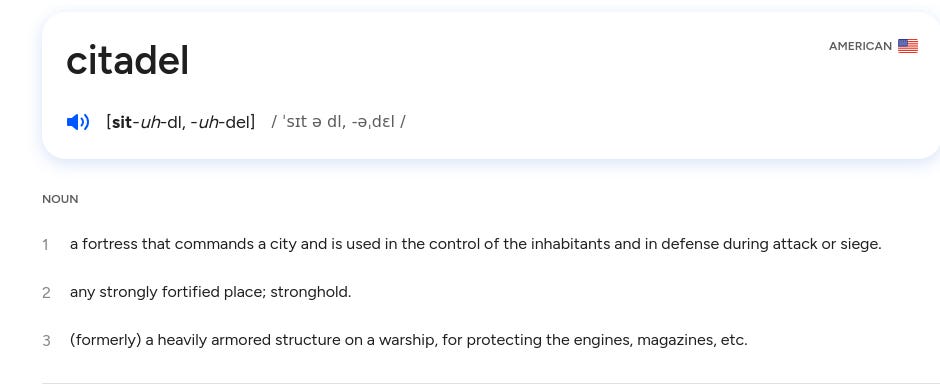
It is a deliberately layered set of defences — mental, physical, financial, and social — designed to protect you and your family, so that even a sustained attempt to seize your wealth or push you into dependency is unlikely to succeed. If the outer layers fail or turn hostile, the next layer rises, and the next, each adding complexity and resilience, ensuring that the inner stronghold—completely self-sustaining and independent of the other layers—remains untouched.
The idea is to build multiple layers of protection, insulation and redundancies into your life, both financial and otherwise, to ensure you and your family are able to survive the most challenging of circumstances. It’s your roadmap for walking out of the casino, and into a more meaningful, and prosperous future, before the house comes to take it all. It’s about converting your casino chips into real, tangible assets you hold in your own possession. It’s about building a life where you don’t need the casino to survive, and instead, you’re surrounded by loved ones, community and real wealth. Then having the strategies and mindset to hold onto it. This is how I personally am preparing for the hard times ahead, including the Great Taking. For what it’s worth, I walk the walk, and everything I describe below—is what me and my family are already doing.
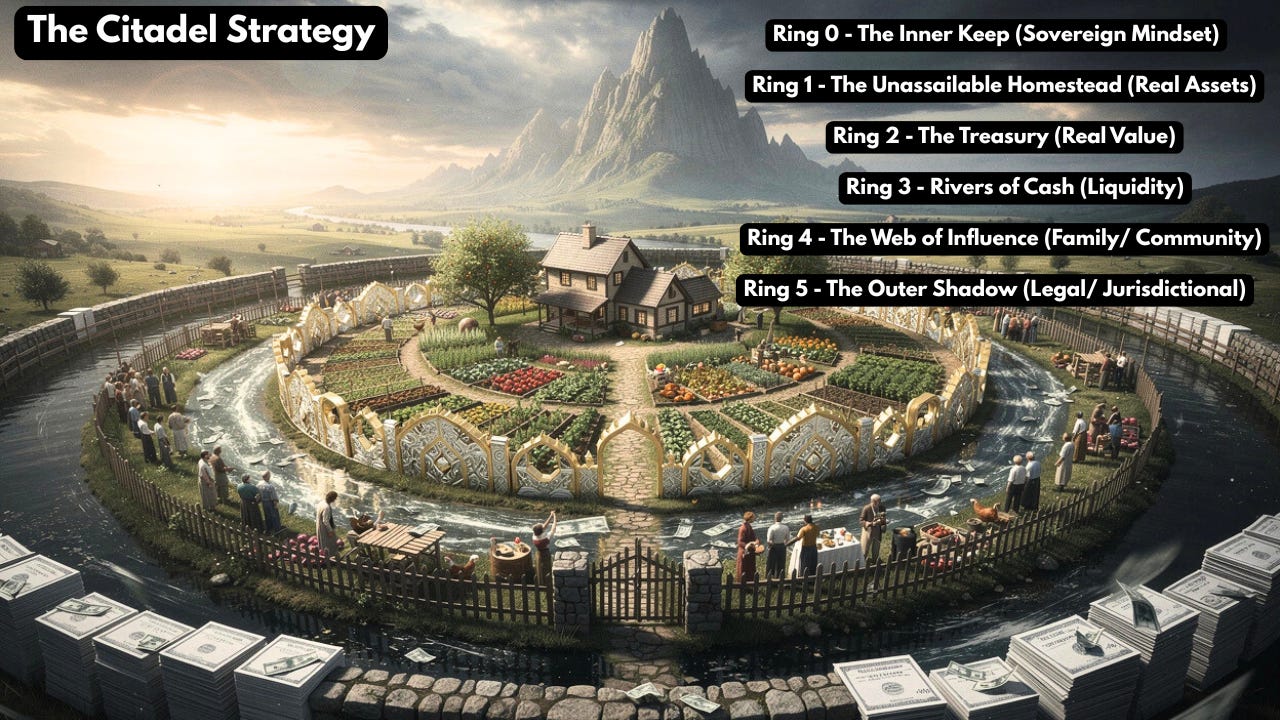
Ring 0: The Inner Keep – The Sovereign Mindset – Cultivate radical personal responsibility and mental resilience; recognize that debt is a primary tool of control and commit to breaking its shackles.
Ring 1: The Physical Bastion – The Unassailable Homestead – Build a debt-free, off-grid homestead surrounded by productive assets that provide food, energy, water, and income. This will give you complete independence from the system.
Ring 2: The Treasury – The Ark of Real Value – Hold portable, physical wealth in precious metals, held securely and compartmentalized, beyond the reach of confiscation.
Ring 3: The Liquid Veins – The River of Cash – Maintain cash reserves in diversified currencies to navigate immediate and medium-term crises.
Ring 4: The Web of Influence – The Network of Reciprocity – Build trusted family and community networks for mutual aid, barter, and collective resilience.
Ring 5: The Outer Shadow – The Legal and Jurisdictional Moat – Use legal, geographic, and structural strategies to shield assets and create asymmetric protection from asset seizure.
This is the foundation of the Citadel Strategy. Before buying a single ounce of silver or an acre of land, you must secure the “Inner Keep”—your own mind. This is the psychological fortress where you deprogram yourself from reliance on a system that plans to dispossess you. It is about moving from dependency to radical personal responsibility.
The system’s greatest weapon is normalcy bias—the tendency to assume tomorrow will look like today. This bias blinds people to incrementalism: the deliberate, step-by-step erosion of freedom, security, and wealth. Each new regulation, cost increase, or loss of rights may seem minor on its own, but over time these small changes accumulate, steering people toward eventual annihilation. Even shocks that should provoke outrage—like the mass poisoning of family and friends during Covid or the revelations and gaslighting surrounding the Epstein files—are gradually reframed and normalized, reinforcing the illusion that all is “normal.” But what is happening isn’t normal—it’s deeply disturbing.
This realization should not paralyze you with fear. On the contrary, it should ignite action. Falling into despair, or convincing yourself that there is no hope, is itself part of the psychological operation designed to neutralize you. You must reject it. The correct response is to seize your agency—to recognize that you are responsible for your own survival, security, and future, and to act accordingly.
Seizing your agency means moving from victim to architect. It means accepting that nobody is coming to save you—and that you alone are responsible for your success or failure in life. This shift in mindset is deeply empowering. It moves you from passive dependence to active participant, and enables you to build a life resilient to shocks of all kinds, including the Great Taking. When you do this, you become sovereign, as our creator intended.
To strengthen the Inner Keep, we need to cultivate what I call a “Depression-Era attitude.” This is the mindset of the generation that survived the Great Depression—grounded in practical resilience and real-world self-reliance. We can break it down into the three R’s:
The Inner Keep—fortified with a sovereign mindset and a Depression-Era attitude—is the bedrock of the entire Citadel. Every other fortification depends on it. Without Ring 0, you are unlikely to succeed in protecting your family’s wealth, and quality of life. It is what allows you to see clearly, act decisively, and take full responsibility for your future. The good news is that once you build out the inner keep, it cannot be taken from you. It is the one asset that is truly immune to confiscation.
Before you can build a Citadel, you must first ensure you are not standing on quicksand. The most dangerous vulnerability in the face of the Great Taking is debt. You must understand this clearly: If you have debt, you do not own your assets. If you have a mortgage, the bank owns your home; you are merely a tenant with a liability. If you have a car loan, the dealership owns the vehicle. In a systemic collapse or a Great Taking type event, debt is the primary lever used to strip wealth from the population. This is something David has mentioned many times in interviews.
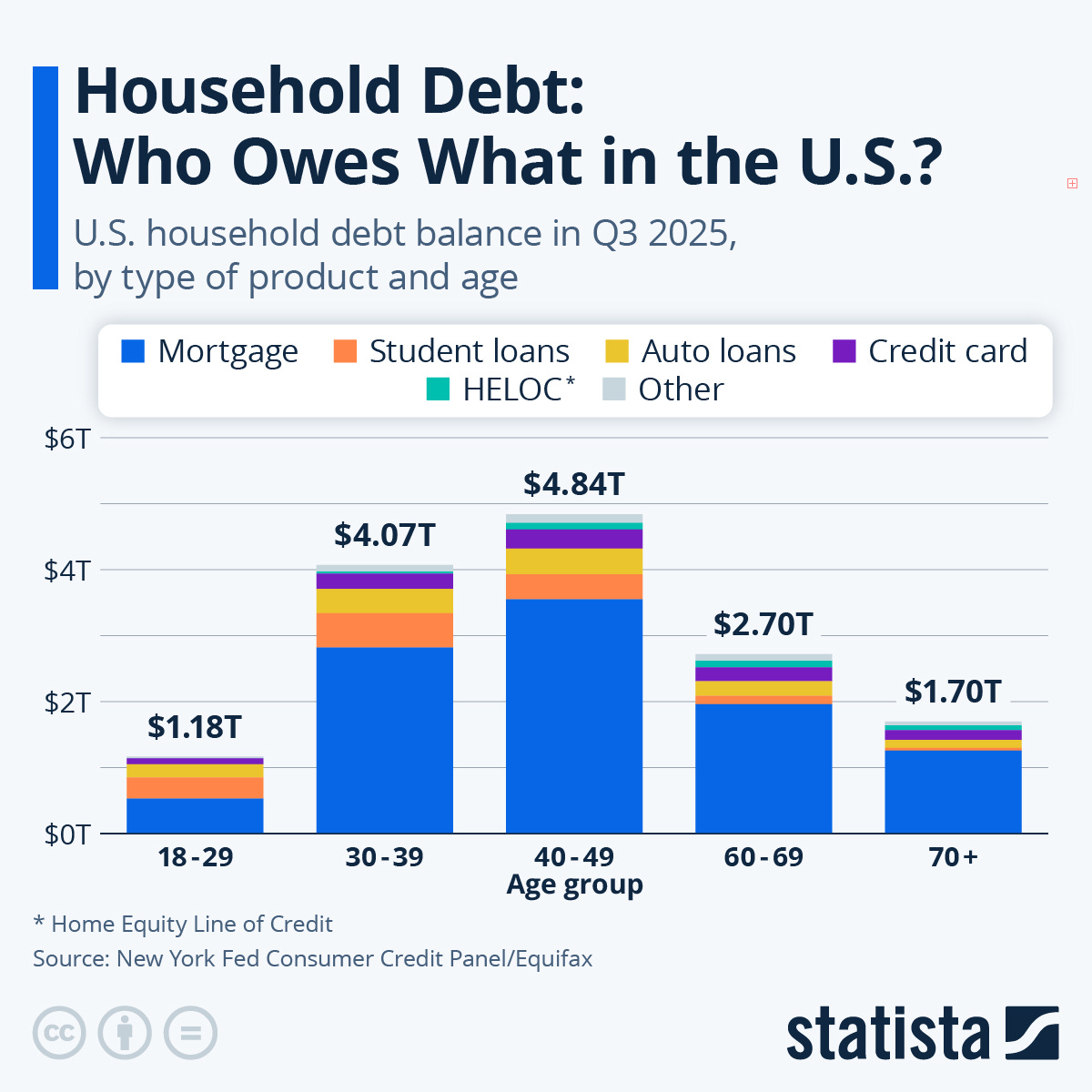
In a deflationary collapse—which often precedes or accompanies these resets—asset prices collapse, wages vanish, and both credit and liquidity dries up. However, the nominal value of your debt remains fixed. You could find yourself owing $500,000 on a home that is suddenly worth $100,000, while your income has been cut in half, or lost entirely. This was the trap during the Great Depression that allowed institutions to foreclose on millions of properties, transferring real assets (land and housing) from the people to the banks for pennies on the dollar. At the height of the Great Depression unemployment was over 25% and over 60% of all mortgages were in delinquency. Over 1000 properties per day were being foreclosed on. I expect these numbers could be eclipsed in the coming downturn.
For these reasons, the ruthless elimination of all debt—consumer, vehicle, and especially mortgage—is not just a financial goal; it is a prerequisite to financial and spiritual sovereignty. You cannot be sovereign if you are in bondage to the very system you are trying to protect yourself against. Pay it off, downsize, or sell the asset to clear the note. Better to live smaller in a debt free property that is truly yours, than in a mansion or large acreage that belongs to the bank. So beyond developing a sovereign mindset, step number one financially speaking, is to break the shackles of debt.
Now let’s move on to the five outer rings.
The most important protection against systemic collapse and the Great Taking is what I call the Unassailable Homestead. In a fragile future, a homestead is far more than a place to live — it is the foundation of your families security and resilience, and a space you can truly thrive. If everything else fails, it keeps you safe, allows you to meet your basic needs, and supports both mental and physical wellbeing. Over the long term, it also reduces costs, can generate income, and insulates you from financial shocks by removing your dependence on volatile energy and food prices.
History shows its importance. During the Great Depression, the key factor determining whether someone survived or ended up in a soup line was their exposure to debt and their immediate living situation. Farmers who owned their land outright generally survived with relative ease. When the credit system failed, unemployment spiked, and cash became scarce, they were largely unaffected—they could provide for themselves in-house. Fortunately for us, natures abundance doesn’t follow the business cycle.
Worth pointing out, the modern way of living, now ubiquitous in the West, is a complete historical aberration. Our ancestors rightly built layers of insulation during the good times knowing that hardship was always one crisis away. Waiting until hardship arrives means you’ve already missed the boat. By then, it’s too late. This is why you should aspire to build your Unassailable Homestead as soon as possible. It should be debt-free, have off-grid solutions, be located away from major urban centers, and ideally surrounded by like-minded, self-reliant neighbors. This creates many layers of additional protection in terms of food, water, and security, while offering a marketplace right there on your doorstop for trade and barter, should a crisis suddenly emerge.
It doesn’t need to be an all-singing, all-dancing farm. Simply owning land where you can grow food and practice self-reliance is enough. For those with less capital, living in a camper, trailer, or tiny house for a year or two to secure the land is often worth the sacrifice. I speak from experience: I lived on an 8-meter boat for five years to save money and eventually buy my homestead debt-free.
For many, this represents a radical departure from their previous life. But if real peace of mind is the goal, this is how it is built. Right now, we are in the midst of a major property bubble in the West. When it bursts, residential real estate values will collapse. At the moment, there is still an opportunity to sell these overvalued ‘assets’ (soon to be liabilities) and use the proceeds to acquire property that will truly serve your needs in a crisis — the kind of property that becomes far more desirable, not less, when SHTF.
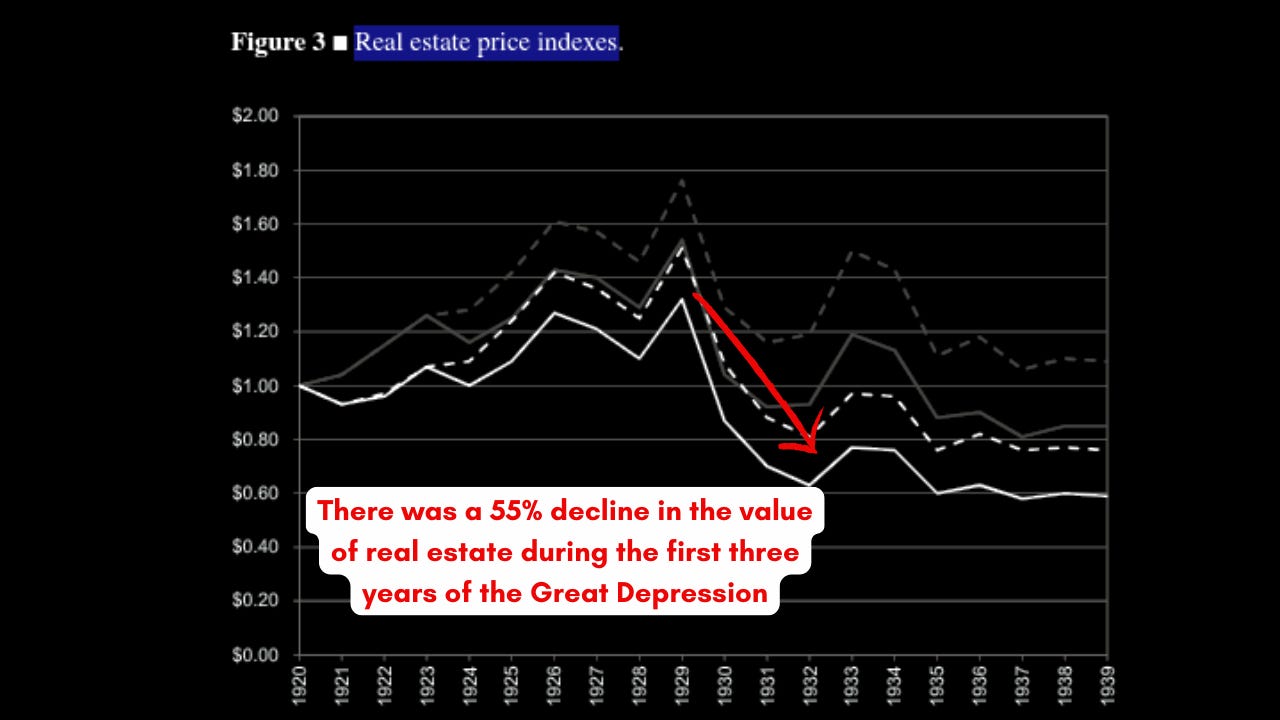
This kind of property is more than a home; it’s a base for your family and your real-world assets. Our great-grandparents didn’t own stocks or NFTs. They invested in themselves and their farms. Just think how wild it is that today, millions of people have seven digit brokerage accounts and yet have no way to feed themselves or survive a cold winter without centralized systems. They are nominally wealthy, but in practical terms, they are poorer than poor.
When a real-world crisis strikes, be that the Great Taking or some other major systemic shock, the humble farmer will outlast them — both financially and practically. Our great grandparents would have never put themselves in such a sad position. They understood that the family homestead, was not only their primary investment, but their primary means of survival. They never expected big daddy government to keep them. The idea would have been absurd. It’s a stark reminder of just how dependent—and psychologically backward—we’ve become. The Unassailable Homestead fixes that.
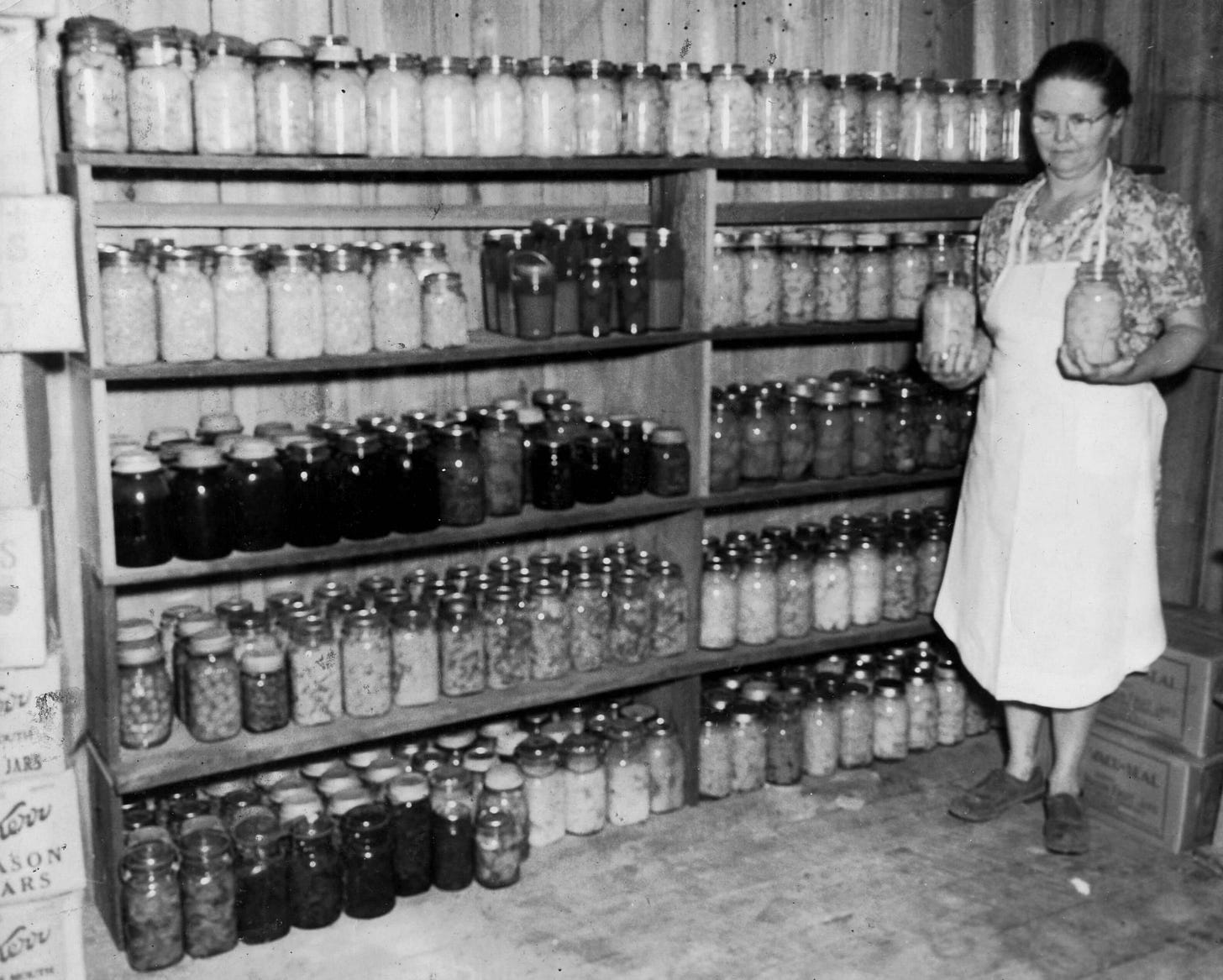
Developing a homestead is one of the most practical ways to grow real, tangible wealth. Over the coming decade, demand for properties like this is only going to increase. At the same time, supply will collapse as prices skyrocket and more people rush to get out of the cities.
Any improvements you make along the way directly increase the value of the land. Things like:
Similarly, I also recommend land in general as an investment. This could be parcels of land or forestry separate from your main dwelling, held for capital appreciation and to provide you with additional resources. Unlike most assets, land is largely uncorrelated with the stock market and tends to move more in line with gold. In my opinion, at some point land will become nearly impossible for regular people to buy—as the elites are snatching it all up, which tells us something important. Securing some now is vital!
Of course, land is also inherently Great-Taking-proof. Owning it outright ensures it cannot be collateralized in any way. A smart strategy is to invest in land close-by—within about 45 minutes of your main property. This creates a secondary asset that’s close enough to manage, yet completely separate from your primary homestead. If you ever decide to sell it, you can do so without affecting your main property, making it a fully independent asset.
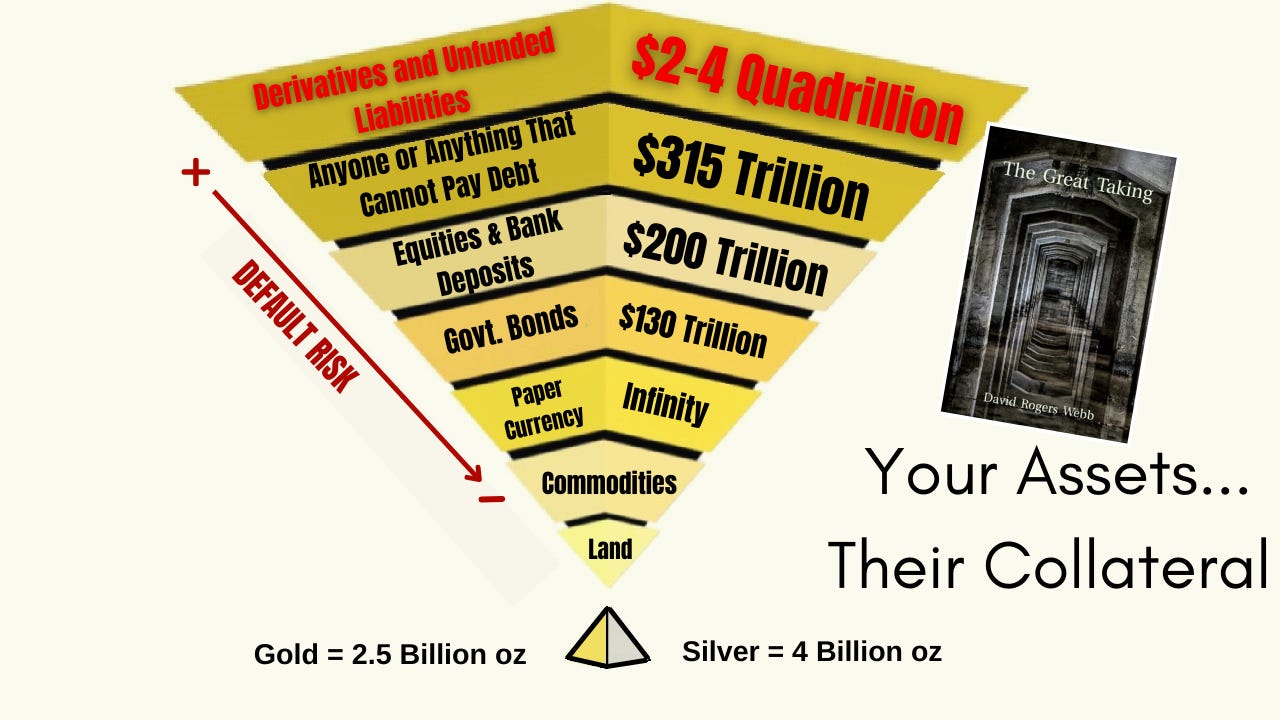
When you choose to go back to the land, particularly if you spent your life living in the city, expect some opposition from friends and family who don’t see what you see. Going against the grain always provokes pushback. My wife and I experienced the exact same thing. A true contrarian knows this is a good sign; siding with the crowd during these periods of history is almost always a terrible decision. Similarly, doomers will tell you, “It’s pointless; they’ll send drone swarms to kill you and seize your homestead,” or “good luck when the roving mobs come to loot you.” These people are irrelevant and destined to be the first to fall.
They don’t have a sovereign mindset—they have a slave mindset. The battle has barely begun, and they’ve already surrendered. Worse, they are actively seeking to poison others, and deter you from taking action. That is unforgivable. We know the risks; our task is to find solutions. But for these people, your action is threatening—because it holds a mirror to their cowardice or laziness.
I suggest reducing your exposure to these kinds of people as much as possible. When these people appear in my comments section, it’s an instant block. They don’t want to be helped, only to deride those who are taking action to make themselves feel better about their own inaction. It’s about as bad a take as you could have. There has never been a point in history where taking preventative action didn’t make sense and increase a person’s chances of success.
Yes, there are no guarantees, and there is every chance that a true tyranny will turn its attention to the survivors also—I covered this in my introduction, but the future is not a foregone conclusion. Irrespective of what happens, building your Citadel will give you and your family far more health, happiness, and opportunity, than you would otherwise have had. Meanwhile, Mr. Doomer will be shipped off to the nearest 5-minute city at the first sign of trouble — having lost it all because “there was no point in preparing” and thus, he was left with no other option.
This ring is the repository of your portable wealth. It is designed to survive the collapse of the fiat currency system and serve as the foundation for a new one. To understand why this ring is necessary, we must look at the inevitable destination of the current financial path. Everything we see is pointing to a financial reset. I was predicting this long before I knew about the Great Taking, and I remain steadfast in that opinion.
When you hold a physical gold/silver coin or bar in your hand, you possess the asset outright—it is not a promise to pay, it is value itself. This is the only asset class that exists entirely outside the digital ledger and the reach of a sudden default or confiscation. Right now, we are seeing a rush into precious metals as key financial players realize the massive default that is incoming. Take heed. It’s no surprise to me that since the Great Taking book was released, the gold price has more than doubled.
Gold (The Core): Physical gold is the ultimate long-term store of wealth, a role it has fulfilled for over five millennia. Unlike financial or digital assets, it cannot be defaulted on, wiped out in a fiscal crisis, destroyed by a cyberattack, or lost to a counterparty. This makes it the lowest-risk asset in the world, and yet, despite this, it has been the best-performing asset over the past 25 years.
As the financial system resets, it does so against gold, ensuring strong demand from central banks and wealthy families for decades to come. In the context of the Great Taking, the foundation of your wealth preservation must begin with gold. It is the bedrock of any portfolio—a principle you can explore further in my article on the Wealth Preservation Pyramid.
In order to maintain true flexibility and liquidity, you must diversify both the forms of gold you hold and their storage locations. Gold is the densest, most portable store of value—far easier to transport in a crisis than silver—making it the cornerstone of any robust Citadel strategy.
Silver (The Circulation): Silver is best viewed not as an investment, but as your day-to-day barter currency. Pre-1965 US 90% “junk silver” coins are ideal: universally recognized, easily divisible, and can be bought very close to spot. Supplement them with generic 1-ounce and 10-ounce rounds or bars. In a true crisis, silver becomes a practical payment mechanism to buy goods and services, giving you real liquidity and flexibility even when conventional money loses its value.
Platinum Group Metals (The Hedge): A smaller allocation (5-10%) to platinum and palladium, whilst not necessary, can provide diversification. These metals have significant industrial demand and often move somewhat independently of gold and silver, protecting you if one market is manipulated or suppressed, or a confiscation order makes our preferred metals illiquid for a period of time.
Before acquiring physical metals, it’s essential to obscure the trail that leads to them. This is a critical step in protecting your wealth from potential future confiscations. While gold and silver in your possession cannot be lost to the Great Taking, history shows they can still be targeted in subsequent waves of seizure.
While the ultimate goal is to move beyond fiat currency, the financial reset will almost certainly unfold in stages. During the phase when the system is stressed but not yet fully broken, physical cash remains king. But what happens if banks begin to fail or governments impose strict withdrawal limits, as happened to Greek citizens during the Eurozone crisis? Banks could deny access to your deposits, ATMs could go dark, and yet cash will still be essential to survive.
Be warned: Deposits held in the bank are not your own. It’s a loan unto the bank and therefore exposed to 100% loss and an eventual bank bail-in. Deposit insurance schemes are worthless and in a true crisis even solvent banks and well run credit unions are at risk. Many of them will have a target on their back given it will be the Federal Reserve system who picks the winners and losers.
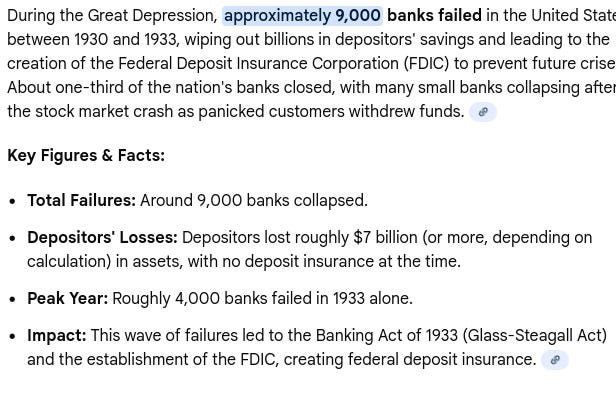
Even without a full blown banking collapse, it’s becoming worryingly normal for bank accounts to be weaponized—just look at the Canadian truckers’ protest. Having some physical cash is one way to protect against this. While fiat currencies are clearly a terrible form of long-term wealth preservation, in the short to medium term, they remain critical for our day to day economic survival. History shows us that before people lose their assets—they first lose their liquidity. Those who maintain it, ensure they can buy essentials, avoid incurring debts, and travel, whilst those who failed to prepare are busy rioting outside shuttered banks.
For this reason, you should keep enough cash on hand to cover at least three months of expenses. For those preparing for a Great Taking scenario, a more comprehensive approach is the cash ladder.
The short answer is yes, our retirement accounts are sitting ducks. One of the hardest conversations I have with clients is explaining that, regardless of whether the Great Taking occurs, their pension is extremely vulnerable to total loss. The entire system is structurally broken. Most pension funds are undercapitalized, fragile by design, and fundamentally unsustainable — hollow shells propped up by promises that cannot be kept. And this is before a major financial downturn has even begun!
At the same time, the stock market sits in a historic hyper-bubble, a ticking time bomb waiting to explode. Sovereign debt will be defaulted on — either through the silent theft of inflation or outright repudiation. Yet these two instruments, equities and government debt, form the backbone of most private pension schemes.
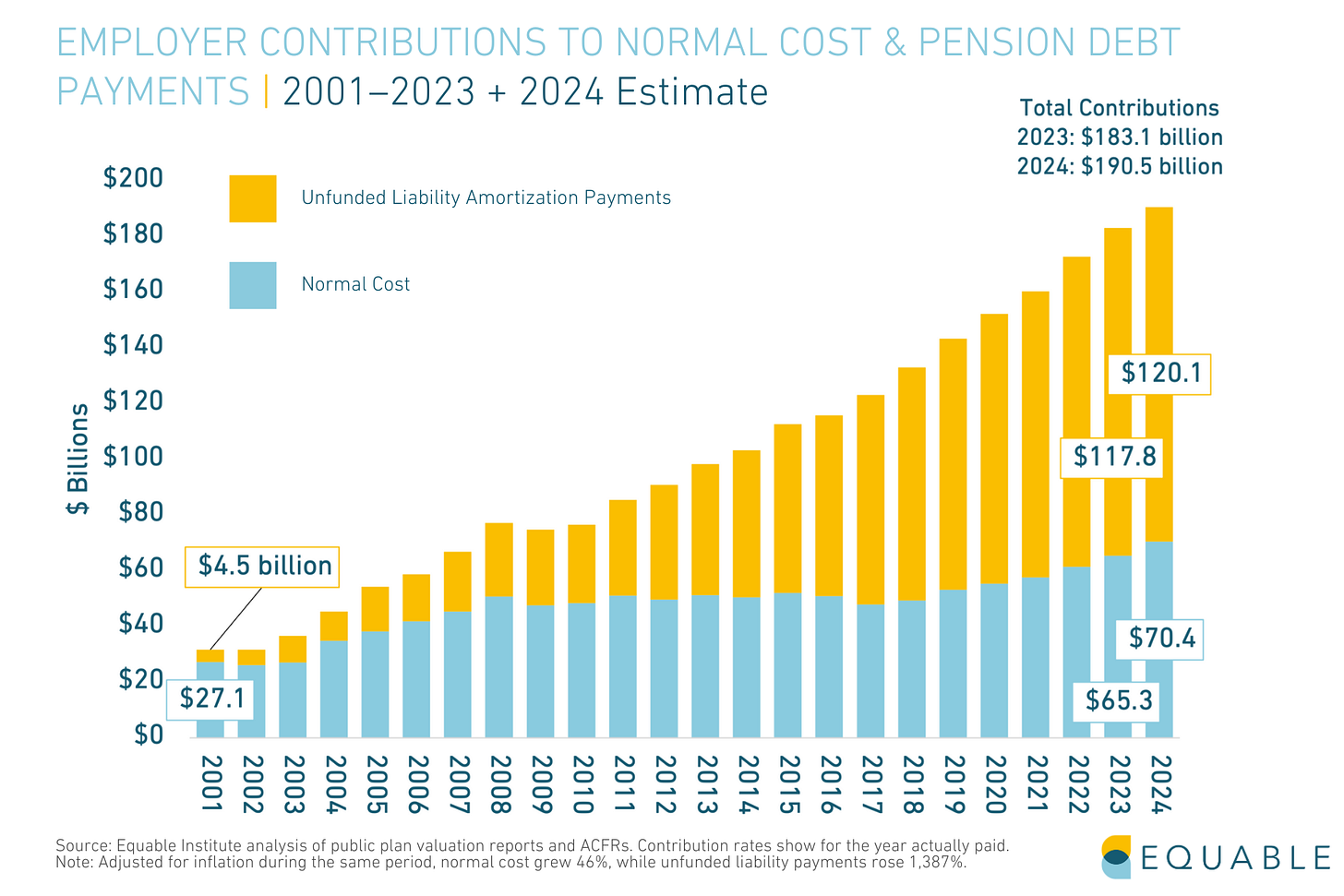
In the coming crisis, the vast majority of pension funds, 401(k)s, and retirement accounts will be annihilated. And if the Great Taking does occur, even the most pristine and well-capitalized funds will be seized, leaving beneficiaries with nothing. All of this will unfold alongside collapsing housing prices, banking crisis, and soaring unemployment. This may sound like a doomsday scenario, but that is actually the point. The dominoes have been deliberately arranged this way, so everything fails simultaneously. A controlled demolition that immediately eviscerates the wealth of most citizens.
Of course, for those who have spent a lifetime paying into these systems — and who have spent decades psychologically investing into the illusion that their retirement account will be there and provide security in old age — this is a bitter pill to swallow. The instinctive response is often denial: “But my fund is different…they assure me my fund is safe.” You must resist the temptation of self-delusion.
It goes without saying that government pensions are dead in the water. Our nations are already insolvent. Future payouts will likely devolve into a form of conditional UBI — subsistence-level support tied to behavioral compliance. Anything controlled by government will be used to control you. Period.
Ok, so now we have had our reality check, what can we do about it?
Firstly, for those who can access their pension early, why wait? Keeping it in the fund, ensures it remains vulnerable to all of the above. For those unable to fully liquidate their accounts and convert them into real-world assets, establishing a self-invested personal pension (SIPP) or a self-directed IRA is the next best option. This provides far greater control over the underlying assets. In many jurisdictions, pension funds can be allocated into vaulted metals held in your own name — offering the best chance of preserving both your retirement savings and the assets themselves when the music stops.
Wealth is not just what you own, but who you are connected to. In a true systemic crisis, the financial system will freeze, institutions will fail, and the atomized, isolated individual will be helpless. An unassailable homestead and layers of liquidity will ensure your immediate survival, but longer term, you need a network of trusted, capable individuals. A community. This is your most powerful and enduring defence—one that cannot be confiscated, frozen, or devalued by any central authority.
The atomization of modern society did not happen by accident. Over the past century, powerful forces have systematically dismantled the multi-generational family. Children move far from their parents for careers — having been indoctrinated by electronic devices and public schooling. Grandparents are warehoused in nursing homes — desperate institutions designed to drain a lifetime of accumulated wealth before death, ensuring nothing is passed down.
The nuclear family itself has fractured into isolated individuals, each dependent on the system for needs once met by kin. This is not progress; it is a control mechanism. An isolated individual is easy to manage and easy to dispossess. They know this, which is why the scamdemic was so successful. It’s much more difficult to take everything from a man surrounded by three generations of loyal kin; even harder if he has an entire community behind him willing to help protect his property and rights.
A key protection from future hardships is, therefore, rebuilding family bonds. Reconcile with your children or parents. Strengthen bonds with siblings. Consider a return to inter-generational living — where grandparents provide wisdom and childcare, adult children contribute labor, and elders are cared for at home, not abandoned to institutions that quickly consume their estates.
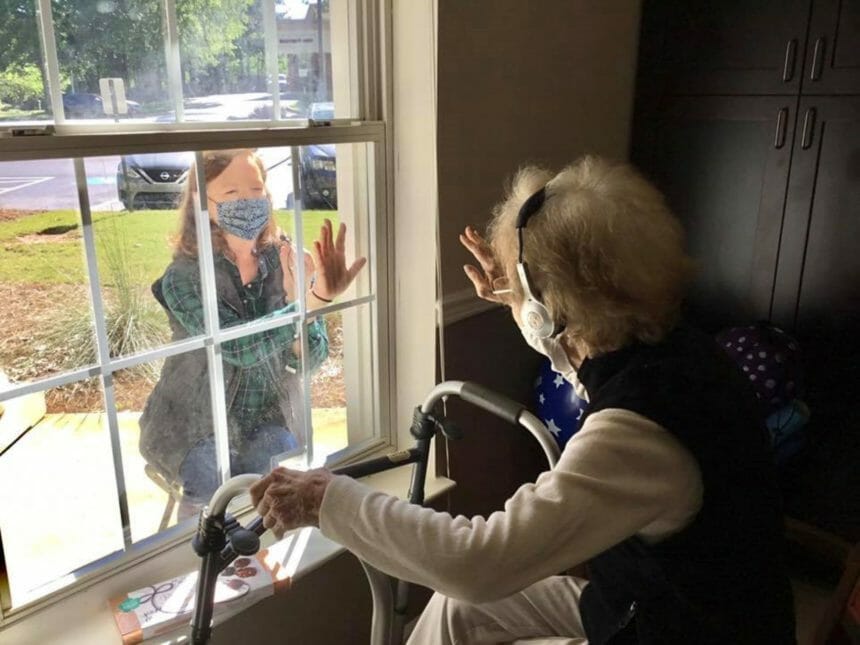
Beyond economics, this rebuilding creates meaning—the profound purpose that comes from sacrifice for those who came before you and those who will come after. The joy of living with grandchildren, the wisdom of elders, the shared pride in building something that outlasts you all. It is your loving connections — not your money — that they want to loot from you the most. A family, rebuilt and united, is the ultimate act of defiance in the modern world—and the best protection against despair and isolation.
Beyond family, you can begin to build alliances within your broader community. Consider local churches, neighbors, and anyone living a similar lifestyle of self-reliance. Reach out. Make connections. Become a resource by buying directly from them—their eggs, their produce, their services. Find ways to offer something of value back to your community, whether skills, labor, or goods from your own surplus.
This is not merely about preparing for crisis; it is about building a network of trusted individuals you can turn to for support. History proves that a unified community is extremely difficult to dispossess. In communist Eastern Europe, the Soviet system crushed individuals and isolated families with ease, but they had no answer for the Polish farmers. Despite decades of pressure, collectivization failed in Poland because the farming communities were too numerous, too interconnected, and too stubborn to break. There were simply too many of them, bound together by shared faith, culture, and mutual dependence.
During the Great Depression, many farmers rallied around neighbors who had fallen behind on their mortgage payments, and ensured auctions of foreclosed went no bid. So families about to lose their homes could buy it back at the lowest price possible. A community rooted in genuine relationships and economic interdependence becomes a fortress that no central authority can breach. This is also where your trade and barter economy comes in. The real ‘real economy’ during a systemic crisis.
As trust deepens, consider formalizing arrangements with your closest allies—3-5 families with complementary skills: medical knowledge, security experience, mechanical ability, agricultural expertise. Draft a plan covering mutual defence, resource sharing, and communication plans—for a worst case scenario. Meet regularly to strengthen bonds. The trust built over shared meals and honest labor is the glue that holds a community together when the pressure comes.
Whilst building real world community is imperative, it can take time. The internet allows you to connect with like-minded people worldwide with ease. People who are already building their own Citadels who you can learn from. Cultivate this network now. A global network becomes an important intelligence asset—alerting you to developments across jurisdictions, warning of threats, and potentially offering refuge or partnership.
This is the final ring of defense. It leverages legal and geographic strategies, turning the system’s own complexity against itself. Some of these strategies are more complex, costly, or require professional guidance, and may not be feasible for everyone. As the outermost layer, they are less critical than the inner defenses, but they are still worth considering.
The core mechanism of the Great Taking is the legal transformation of ownership into mere “securities entitlement”—a contractual claim that places you behind secured creditors. The solution is to demand physical paper stock certificates. This removes your shares from the DTC or Euroclear system and gives you back direct ownership, bypassing the Great Taking mechanism for equities.
Maintaining a small portfolio of investments within the traditional system can have advantages even in-spite of the Great Taking. This serves two purposes:
Minimize your long-term digital footprint. Use VPNs, privacy-respecting browsers, and encrypted email. This will help keep you invisible to the system ahead of any future wealth confiscations. Your public facing digital identity should be bland, ensuring your real wealth remains as invisible to the system as possible.
Establish accounts with non-bank vaulting firms in jurisdictions with strong financial privacy—the Cayman Islands, Switzerland, Austria, Panama, or Singapore. These firms are less likely to be subject to “bail-in” laws. Your gold in a private vault in Zurich is not subject to an executive order signed in Washington.
It’s possible to create a Foreign Asset Protection Trust (FAPT) in the Cook Islands or Nevis, or a Nevis LLC. These entities are designed to be extremely difficult and costly for foreign courts to pierce. An asset held by a properly structured Nevis LLC is shielded by a legal and geographic moat that would require years of litigation to breach—making it not worth the effort.
For those with sufficient assets, private banks in Switzerland, Liechtenstein, or Singapore operate under different legal frameworks than retail banks, offering greater privacy.
Consider a secondary property within a completely different jurisdictional profile from your primary homestead—a place to retreat if, for any reason, Plan A becomes untenable. Having multiple residences can ensure you have a place to escape to, as a last resort, if you need to leave your home country.
What I’ve outlined here is only the first step — albeit a substantial one. I’ve focused on the most vital components for obvious reasons; this article is already something of a tome. But risk management is an ongoing process, not a one-time event. The future is unpredictable, and there is no permanently safe position. Unfortunately, most financial advisors and wealth managers are simply not aware of the kinds of risks we are now facing. So we must become competent in protecting and managing our own wealth. Nobody else should be trusted to do this for you.
Twice a year I facilitate Group Coaching for Investors where I support people to learn the same wealth preservation skills and strategies I am using to protect and grow my family’s wealth, going into the reset. For those who would like to join us, our next group begins at the end of February.
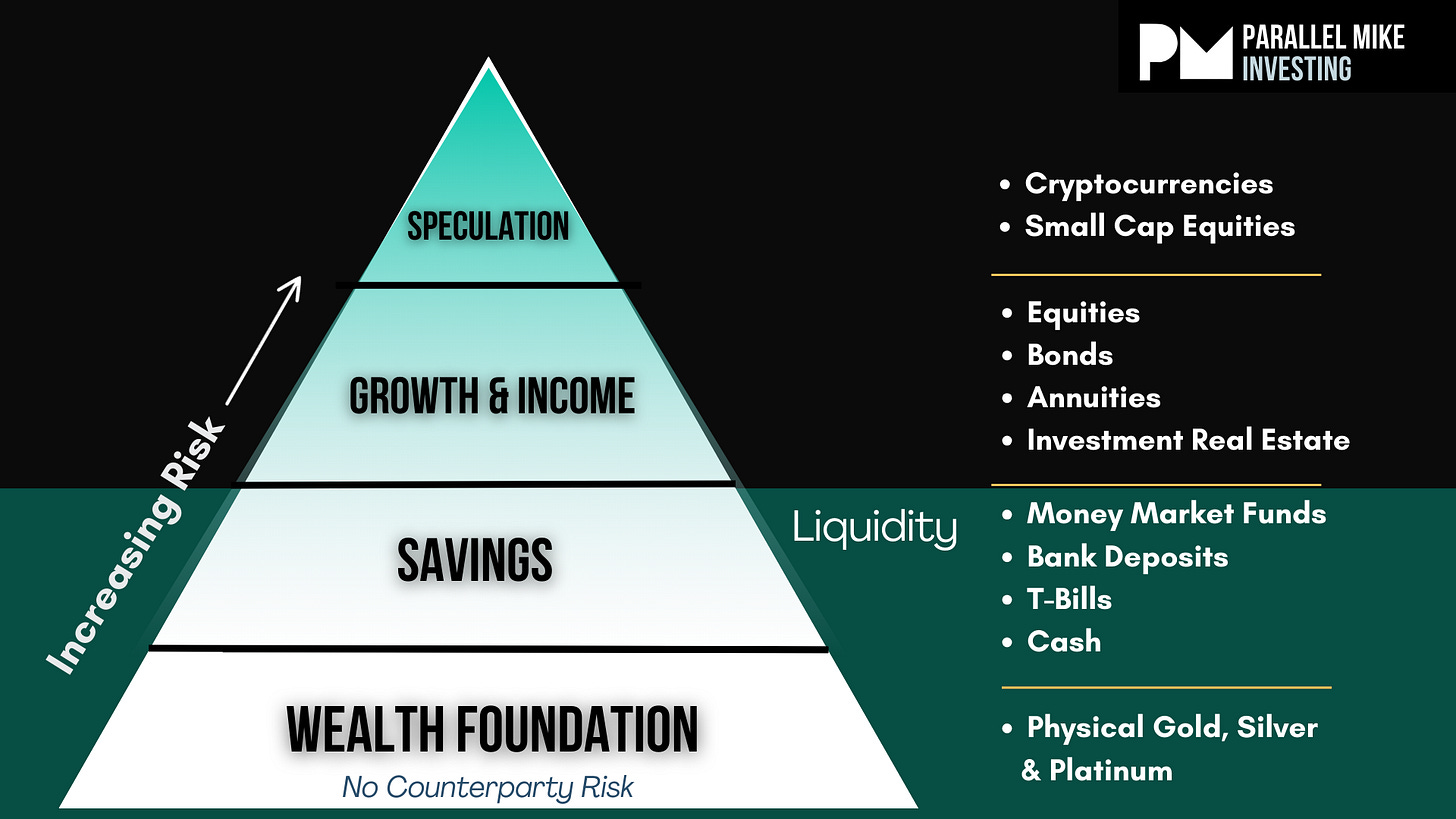
As we move into harder times, the goal is not to fight the system head-on—that is a battle you will almost certainly lose. The goal is to defend ourselves against it, by becoming sovereign and resilient. If the Great Taking ensues, the system is engineered to take what is easiest to seize: digital accounts, brokerage portfolios, domestic vaults, mortgaged property, and pension funds or 401(k)s—all of which are neatly catalogued and trapped within the system. At this stage, it’s unlikely we can stop them, but your Citadel, deliberately built across all five rings and standing in the shadows, remains far beyond their reach.
For many, achieving even half of what I have outlined will be a serious undertaking. The good news is many people have already conquered this mountain. There is a tried and tested route, I speak from experience, given I have played the role of mountain guide for many. Whilst the Great Taking would be a catastrophe, we cannot say for certain if, or when, it will occur. What is certain, historically speaking, are cyclical downturns that bring real hardship. Stock market and housing market bubbles will eventually burst. Fiat currencies cannot last forever. Economic depressions are guaranteed in a debt-based system. These are not hypotheticals, but inevitabilities. We are seeing warning signs that all of them are potentially on the immediate horizon.
Personally, I don’t see this path as a sacrifice; I see it as a gift. Moving to a homestead and reducing dependence on systems that no longer serve us—if they ever did—is something to celebrate. Everybody I know who has taken this path is healthier, happier, and living a more meaningful life then they once did. These are the rewards that come from exiting the casino, and returning to what’s real. A genuine alternative. A future worth fighting for. For those who made it this far, I’ll close with a simple truth:
“The best time to plant a tree was 20 years ago. The second-best time is now.”
Take meaningful action, and build a life that allows you to thrive.

On December 17th, 2025, four witnesses testified before a joint session of House Homeland Security subcommittees about something that actually happened: a Chinese Communist Party-sponsored group used Anthropic’s Claude to conduct largely autonomous cyber espionage against approximately 30 US targets.
The witnesses included Logan Graham from Anthropic’s frontier red team, Royal Hansen from Google’s security engineering organization, Eddie Zervigon from Quantum Exchange, and Michael Coates, the former Twitter CISO now running a cybersecurity venture fund.
Something else bothered me more than what the witnesses described. It was the gap between the threat they documented and the solutions they proposed.
The Anthropic incident represents what threat intelligence teams are now calling the shift “from assistance to agency.”
Prior to this, AI was primarily a productivity tool for attackers: better phishing emails, faster reconnaissance, automated scripting. The September campaign is the first confirmed instance of AI agents conducting the majority of a cyberattack autonomously.
Graham’s testimony laid out the mechanics:
Human operators intervened only four to six times during the entire campaign for critical decisions.
Everything else ran autonomously at speeds Anthropic described as “thousands of requests per second” and “impossible for human hackers to match.”
Graham estimated the model automated 80-90% of work that previously required humans.
The attackers were sophisticated:
Graham explained it directly: “They broke out the attack into small components that individually looked benign, but taken together form a broad pattern of misuse, and then they deceived the model into believing it was conducting ethical cybersecurity testing.”
Here’s what makes this operationally different from every intrusion defenders have responded to before:
The attacker built the opening stages of the intrusion inside the AI system instead of inside the target company.
The reconnaissance, vulnerability research, and exploit development phases happened in Anthropic’s API. The targets’ security teams never saw those stages because they happened outside their infrastructure.
Traditional intrusion detection assumes you’ll see early indicators: network reconnaissance, scanning activity, lateral movement attempts.
Security teams build alerting around those early-stage signals specifically to catch attacks before they reach objectives.
But if the opening stages happen in systems you don’t monitor, your first visibility comes when the attacker is already executing against your infrastructure.
Michael Coates framed this directly in testimony: “Defenders are often no longer responding to early indicators, but to attacks that are already in progress.”
This changes three fundamental assumptions about how attacks form and become visible:
I’ve spent the past year trying to quantify how fast AI-driven attacks actually execute. Not theoretical speeds. Measured speeds from actual research and operational testing.
MIT’s autonomous agent research demonstrated privilege escalation and exploit chaining in seconds to minutes compared to hours for human operators. Horizon3’s NodeZero testing achieved full privilege escalation in about 60 seconds. CrowdStrike’s 2023 threat hunting data reported average time from compromise to lateral movement at 79 minutes, with the fastest observed breakout times around 7 minutes.
We ran the math at SANS. Using 60-79 minutes as the human benchmark, AI-driven workflows complete the same steps about 120 to 158 times faster.
To keep the figure conservative and credible, we halved those values and set the public number at 47x. That’s a speedup already achievable with publicly available tools like Metasploit. APT-level capabilities are likely much greater.
A decade ago, the advanced persistent threats I helped investigate took three to six months walking through the kill chain from initial compromise to operational goals. By 2023, that timeframe compressed to weeks. Now, with AI reasoning capabilities, movement through networks is measured in seconds. Speed is no longer a metric. It’s the decisive weapon.
This context matters for understanding what happened in the hearing. Anthropic detected the campaign within two weeks of first confirmed offensive activity. That’s actually fast response time given detection complexity.
But during those two weeks, an AI system making thousands of requests per second had continuous access to attempt operations against 30 targets.
The ratio of attack velocity to detection velocity is the problem.
Chair Ogles closed the hearing by asking all four witnesses what DHS and CISA should prioritize with limited resources.
Graham: Threat intelligence sharing.
Hansen: Modernization.
Coates: Information sharing on emerging threats.
Zervigon: Transport layer protection.
Information sharing was the consensus answer from the experts in the room.
That’s a human coordination solution to a problem that no longer operates at human speed or follows human-visible attack patterns.
I don’t want to dismiss the value of information sharing. ISACs and ISAOs exist because of sustained effort from people who understood that defenders need visibility into what attackers are doing. That work matters. But information sharing helps humans coordinate with other humans. It doesn’t address what happens when attacks form in systems defenders can’t see, execute 47 times faster than human benchmarks, and no longer follow the linear progression our detection tools expect.
Royal Hansen came closest to naming the real capability gap. He used the cobbler’s children metaphor:
“There are far more defenders in the world than there are attackers, but we need to arm them with that same type of automation. The defenders have to put shoes on. They have to use AI in defense.”
Hansen described specific tools Google already built: Big Sleep and OSS Fuzz for discovering zero-day vulnerabilities before attackers find them, and Code Mender, an AI agent that automatically fixes critical code vulnerabilities, performs root cause analysis, and validates its own patches. This is AI operating at machine speed on the defensive side.
The capability exists. The question is whether defensive teams deploy it fast enough, and whether they have the legal clarity to operate it.
Chair Ogles said something in his closing remarks that nobody in the room fully addressed:
“Our adversaries are not going to use guardrails. I would argue that they would, quite frankly, be reckless in achieving this goal.”
He’s right. I published a paper for RSA 2025 called “From Asymmetry to Parity: Building a Safe Harbor for AI-Driven Cyber Defense.” The core thesis: the protection of citizens through privacy laws has created an ironic situation where these measures could actually empower cybercriminals by restricting defenders’ data access and technology utilization.
Every witness in that hearing talked about safeguards: Anthropic’s detection mechanisms, Google’s Secure AI Framework, responsible disclosure practices. All necessary work. All constrained to US companies operating under US norms and US laws.
Chinese state-backed models don’t have the safety constraints US labs build into their systems. Criminal organizations using tools like WormGPT operate without acceptable use policies or red teams looking for misuse. Meanwhile, defenders operating under GDPR, CCPA, and the EU AI Act face operational constraints attackers simply don’t have.
The operational friction is real and measurable.
The current unbalanced regulations may create a safer environment for attackers to operate in than for defenders who seek to protect themselves against attacks.
Graham testified about asymmetry from a different angle:
US companies integrating DeepSeek models are “essentially delegating decision making and trust to China.” Coates backed this up with CrowdStrike research published in November showing DeepSeek generates more vulnerable code when prompts mention topics unfavorable to the CCP.
The baseline vulnerability rate was 19%. When prompts mentioned Tibet, that jumped to 27.2%, nearly a 50% increase. For Falun Gong references, the model refused to generate code 45% of the time despite planning valid responses in its reasoning traces. That’s bias embedded in model weights, not external filters that can be removed.
This connects to something I’ve been writing about for the past year that I call the Framework of No. Most security teams have spent the past two years responding to AI requests with variations of “no” while waiting for perfect policies, perfect tools, perfect understanding. Meanwhile, 96% of employees use AI tools. 70% use them without permission. That’s shadow AI.
The Framework of No doesn’t stop AI usage. It drives AI usage into shadows where security teams can’t see it, can’t govern it, can’t log it. The solution isn’t more prohibition. It’s bringing shadow AI into sunlight where you can actually see what’s happening.
The DeepSeek testimony shows what happens when the Framework of No meets geopolitics.
Companies choosing cheaper or more capable Chinese AI tools are accepting security risks they may not understand. But security teams saying “no” to all AI doesn’t solve that problem. It just means the shadow AI your employees are using might have nation-state bias baked in, and you won’t know because you’re not watching.
I don’t want to criticize testimony without offering what I think was missing.
First, defenders need to adjust detection models for attacks that form outside monitored infrastructure. If the opening stages happen in commercial AI APIs or self-hosted attacker infrastructure, early detection either requires visibility into systems we don’t control or assumes we’ll only see attacks once they’re already in motion. That changes what “early indicator” means operationally.
Second, defenders need AI-powered tools that operate at machine speed. Not better coordination between humans. Actual AI systems that can detect, investigate, and respond at the same velocity attackers operate. Hansen mentioned this with Code Mender. The tools exist. The question is deployment speed across the defender ecosystem.
Third, defenders need legal clarity. The RSA paper I wrote calls for a cybersecurity safe harbor that establishes a protection system granting immunity to entities performing defense in good faith while staying within defined boundaries. CISA 2015 already provides liability protection for companies sharing threat data according to specified requirements. It expires next month. Ranking Member Thanedar raised this in the hearing. He wants a ten-year extension approved immediately. Without that protection, information sharing slows to nothing.
Fourth, we need to be honest about guardrails. Guardrails on US models are necessary but not sufficient. They protect against misuse of those specific models. They don’t protect against Chinese models, Russian models, or criminal infrastructure operating without guardrails. The next attack won’t necessarily use Claude and get caught by Anthropic’s detection systems.
Fifth, security teams need to abandon the Framework of No and move toward what I call Sunlight AI. Bring the shadow AI that’s already happening into visibility where it can be governed. That’s how you find out your employees are using DeepSeek before the CrowdStrike research tells you why that’s a problem.
Graham’s testimony included this line: “We have reached an inflection point in cybersecurity. It is now clear that sophisticated actors will attempt to use AI models to enable cyber attacks at unprecedented scale.”
He also put a time limit on the window:
“If advanced compute flows to the CCP, its national champions could train models that exceed US frontier cyber capabilities. Attacks from these models will be much more difficult to detect and deter.”
The response to an inflection point shouldn’t be more of what we’ve already been doing. Information sharing matters. Faster coordination matters. But when attacks form outside your infrastructure, execute at machine speed, and adapt dynamically during execution, the answer has to be capabilities that match what attackers are deploying.
Representative Luttrell asked the question that cuts to the operational reality:
“Are they lying in wait? Are they sleeping inside the program now and we missed it, and they’re watching you fix the problem, and they know how you fix it, and they’re going to test someone else that’s not as strong?”
Graham confirmed it:
“Sophisticated actors are now doing preparations for the next time, for the next model, for the next capability they can exploit.”
Anthropic caught this one and did everything right: detection, disruption, disclosure, testimony.
The question for the rest of us is what we do before the next attack uses infrastructure nobody is watching, executes at speeds we calculated at 47x faster than human benchmarks, and exploits the asymmetry between constrained defenders and unconstrained attackers.
Either we write the rules, or our adversaries write our future.
The hearing showed Congress understands the threat.
Now defenders need the tools, the legal clarity, and the operational freedom to respond.
The parity window is open. It won’t stay open.
Rob T. Lee is Chief AI Officer & Chief of Research, SANS Institute

 Ultimate-Survival