
For much of the past three decades, economic crises were generally viewed as isolated events. The Asian financial crisis of the late 1990s remained largely regional. The collapse of the dot-com bubble primarily affected technology markets. Even the global financial crisis of 2008, despite its extraordinary scale, originated within a specific segment of the American financial system before spreading outward through increasingly interconnected markets. Policymakers, economists and investors therefore became accustomed to thinking in terms of singular shocks—one event, one trigger, one identifiable cause.
The international economy no longer enjoys that simplicity.
The defining characteristic of today’s environment is not the existence of one overwhelming threat but the convergence of several structural pressures that increasingly reinforce one another. Geopolitical conflicts now overlap with trade disputes, elevated public debt, fragile supply chains, technological rivalry, demographic change and persistent fiscal deficits. None of these developments necessarily guarantees a severe downturn on its own. Collectively, however, they create a system that has become considerably less resilient than it appeared only a decade ago.
The International Monetary Fund captured this changing reality in its latest World Economic Outlook, warning that the global economy has entered a period in which armed conflict, geopolitical fragmentation, renewed trade tensions and elevated public debt are no longer peripheral risks but central variables shaping economic performance. Under its baseline assumptions, the IMF still expects global growth to continue, albeit at a noticeably weaker pace than the average experienced before the pandemic. More importantly, the institution emphasizes that downside risks now dominate the outlook, particularly if military conflicts expand, protectionist policies intensify or energy markets experience another prolonged disruption.
Urgent Warning: The World Is Entering a Time of Turmoil — Prepare for What Lies Ahead

What makes this warning particularly noteworthy is not its prediction of imminent collapse—indeed, the IMF makes no such claim—but rather its acknowledgement that the global economy has gradually lost much of the flexibility that allowed it to absorb previous shocks. Public finances remain strained after years of extraordinary fiscal intervention, interest rates are significantly higher than those prevailing throughout most of the 2010s, and governments increasingly find themselves balancing economic priorities against national security concerns. As a result, decisions that would once have been evaluated primarily through the lens of efficiency are now judged according to resilience, strategic autonomy and geopolitical risk.
This transformation represents one of the most profound shifts in international economics since the end of the Cold War.
For more than thirty years, globalization operated on a relatively straightforward principle: production should occur wherever it could be performed most efficiently. Manufacturers distributed operations across continents, companies minimized inventories through just-in-time logistics and consumers benefited from steadily declining production costs. The extraordinary expansion of international trade during this period contributed to lower prices, higher productivity and unprecedented economic integration. Few business leaders questioned whether the system itself had become overly dependent on stable diplomatic relations because stability increasingly appeared permanent.
Events over the past several years have challenged that assumption with remarkable speed.
The pandemic exposed the fragility of highly optimized supply chains. The war in Ukraine forced Europe to rethink decades of energy policy almost overnight. Continued instability in the Middle East has repeatedly reminded financial markets that a significant share of global energy supplies still depends upon a relatively small number of strategically vulnerable maritime corridors. Meanwhile, the economic rivalry between the United States and China has evolved beyond conventional tariff disputes into a broader contest involving semiconductors, artificial intelligence, rare earth minerals, advanced manufacturing and critical infrastructure.
Trade policy has consequently undergone a transformation that extends far beyond customs duties.
Tariffs, export controls, industrial subsidies and investment restrictions increasingly serve strategic objectives as much as economic ones. Governments that once encouraged companies to locate production wherever costs were lowest now offer substantial incentives for domestic manufacturing, particularly in sectors considered essential for national security. Semiconductor fabrication plants, battery production, pharmaceutical ingredients and defense technologies have become central components of industrial policy throughout North America, Europe and parts of Asia. While these initiatives may strengthen long-term resilience, they also introduce higher costs into a system that previously prioritized efficiency above almost everything else.
The economic consequences of this transition are often less visible than the political debates surrounding it. Tariffs, for example, are frequently presented as measures directed against foreign producers, yet economists have consistently observed that much of their cost ultimately flows through domestic supply chains. Importers pay higher prices for intermediate goods, manufacturers experience rising production costs and businesses gradually pass part of those increases to wholesalers, retailers and consumers. Unlike a sudden financial panic, these pressures accumulate slowly, making them politically easier to overlook even as they reshape investment decisions across entire industries.
The challenge becomes considerably more complex when trade fragmentation unfolds alongside geopolitical instability. Modern wars rarely remain confined to the territories where military operations occur because the global economy depends upon infrastructure that extends well beyond national borders. A disruption affecting one strategically important shipping corridor can alter insurance costs for commercial vessels worldwide. Longer maritime routes increase fuel consumption and delivery times. Manufacturers operating with tightly synchronized inventories begin experiencing shortages of components that may originate thousands of kilometers away from the conflict itself. Commodity markets react almost immediately to uncertainty, while central banks are forced to consider whether renewed inflationary pressures stem from domestic demand or from external supply shocks beyond their control.
The importance of maritime trade illustrates this interconnectedness particularly well. Close to ninety percent of global merchandise trade continues to travel by sea, making waterways such as the Strait of Hormuz, the Bab el-Mandeb Strait and the South China Sea indispensable to the functioning of the modern economy. Even temporary disruptions along these routes can reverberate through energy markets, manufacturing, agriculture and retail sectors within weeks. According to the IMF’s latest analysis, one of the principal reasons for the deterioration in the global outlook is precisely the increased vulnerability of these strategic corridors at a time when geopolitical tensions remain elevated and policy buffers have become progressively weaker.
If there is one lesson that economic history teaches with remarkable consistency, it is that structural change rarely announces itself through a single dramatic event. The Great Depression was not caused solely by the stock market crash of October 1929, just as the inflationary turmoil of the 1970s cannot be explained only by the oil embargo or the collapse of the Bretton Woods system. In both cases, multiple vulnerabilities had been accumulating beneath the surface for years before a visible shock exposed them. Excessive leverage, policy miscalculations, deteriorating confidence and geopolitical tensions interacted in ways that few policymakers fully appreciated until the crisis had already become impossible to contain. The relevance of those historical episodes today lies not in suggesting that the world is destined to repeat them, but in reminding us that complex systems often become most dangerous precisely when individual risks appear manageable in isolation.
One of the clearest examples of this dynamic is the changing relationship between geopolitics and international trade. For much of the post-Cold War era, businesses assumed that commercial considerations would generally outweigh political disagreements. That assumption encouraged companies to establish production networks spanning dozens of countries, with components crossing multiple borders before reaching consumers. The model delivered extraordinary gains in productivity and significantly reduced manufacturing costs. Yet it also depended on a level of international stability that, in retrospect, may have been unusually exceptional rather than historically normal. As relations between major powers have become increasingly competitive, governments have begun reassessing economic dependencies that were once regarded as harmless. Critical minerals, semiconductor fabrication, pharmaceutical ingredients, telecommunications infrastructure and advanced computing capabilities are now treated as strategic assets rather than ordinary commercial goods. The result is an international economy in which political calculations increasingly shape investment decisions that were once driven almost exclusively by market forces.
This transition is already producing measurable economic consequences. According to several international institutions, foreign direct investment has become progressively more concentrated among politically aligned countries, a trend often described as “friend-shoring” or “near-shoring.” Multinational corporations are investing heavily in redundant manufacturing capacity, relocating parts of their production closer to domestic markets or diversifying suppliers to reduce geopolitical exposure. While these strategies undoubtedly improve resilience against future disruptions, they also involve substantial costs. Building duplicate factories, training new workforces and establishing alternative logistics networks require billions of dollars in additional investment that ultimately filter through corporate balance sheets before reaching consumers. The era in which efficiency alone determined the structure of global supply chains appears to be giving way to one in which resilience carries a significant premium.
Energy remains perhaps the most important variable linking geopolitics and economic performance. Although many advanced economies have accelerated investment in renewable energy, hydrocarbons continue to underpin much of global transportation, manufacturing and electricity generation. Oil and natural gas therefore retain an influence over inflation that extends far beyond fuel prices themselves. Transportation costs affect agricultural products, industrial goods, construction materials and consumer merchandise alike. Even relatively modest increases in energy prices can spread throughout the economy as businesses adjust pricing to reflect higher operating expenses. This explains why financial markets react so quickly to developments in regions such as the Persian Gulf or the Red Sea. Investors understand that disruptions affecting major producers or shipping routes can influence inflation expectations long before any physical shortage actually emerges.

The events of recent years have demonstrated this relationship with unusual clarity. Attacks on commercial shipping in the Red Sea forced numerous shipping companies to reroute vessels around the Cape of Good Hope, extending transit times between Asia and Europe by thousands of nautical miles. The additional fuel consumption, insurance costs and logistical complexity increased transportation expenses across multiple industries, even for goods entirely unrelated to the conflict itself. Similar patterns emerged following Russia’s invasion of Ukraine, when energy markets experienced extreme volatility and European governments scrambled to secure alternative sources of natural gas. These episodes illustrated how rapidly regional security crises can evolve into global economic challenges, particularly in an era when supply chains remain deeply interconnected despite growing efforts to diversify them.
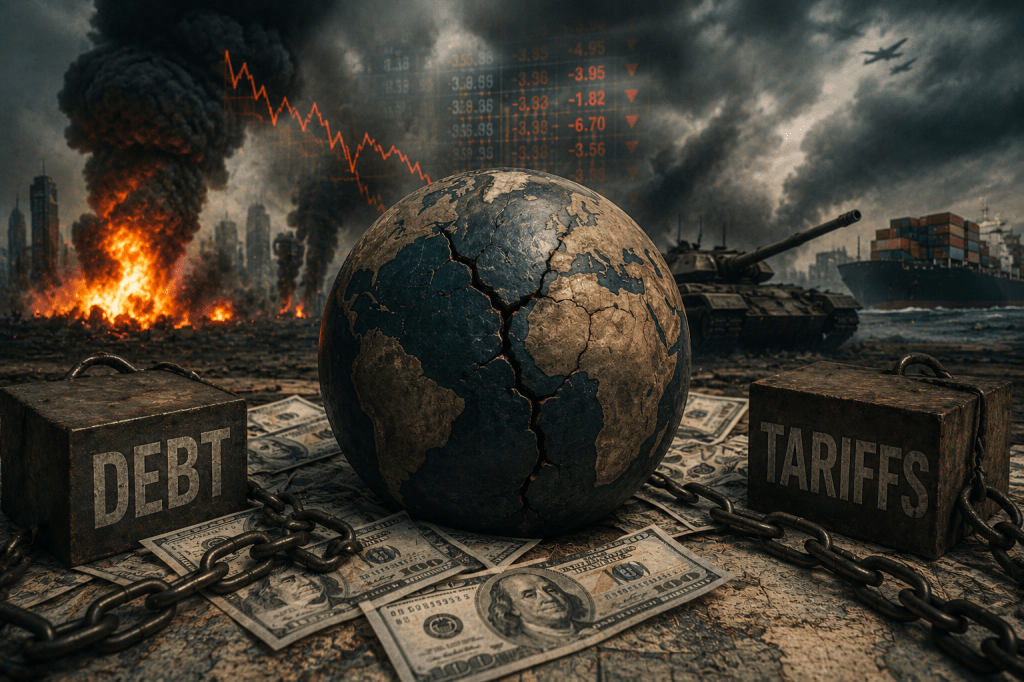
Another source of concern is the steady expansion of public debt across both advanced and emerging economies. Governments dramatically increased borrowing during the pandemic to prevent mass unemployment, stabilize financial markets and support healthcare systems under extraordinary pressure. Few economists dispute that these interventions mitigated what could have become a far deeper global recession. The longer-term consequence, however, has been a significant reduction in fiscal flexibility. Higher debt levels translate into larger interest payments, particularly after the sharp increase in global interest rates that began in response to post-pandemic inflation. Resources that might otherwise be allocated to infrastructure, education or innovation are increasingly devoted to servicing existing obligations, limiting governments’ ability to respond decisively to future crises.
This issue becomes especially significant when viewed alongside demographic trends affecting many developed economies. Aging populations increase demand for pensions, healthcare and social services while simultaneously reducing the proportion of working-age taxpayers supporting those systems. Several advanced economies therefore face the prospect of rising public expenditure precisely as long-term economic growth moderates. Such structural pressures are unlikely to produce an immediate crisis, but they complicate fiscal planning and reduce policymakers’ room for maneuver if another major global shock were to occur. History suggests that debt is most problematic not during periods of stability but when unexpected events require governments to spend aggressively at precisely the moment financial markets become less willing to provide inexpensive financing.
Technology introduces another layer of complexity into this already challenging landscape. Artificial intelligence has become one of the defining economic themes of the decade, promising substantial productivity gains across industries ranging from healthcare and finance to logistics and manufacturing. At the same time, the infrastructure supporting this technological transformation demands enormous quantities of electricity, advanced semiconductors and highly specialized components. Data centers are expanding at an unprecedented pace, while competition for computing capacity has intensified among governments and private corporations alike. This has elevated the strategic importance of semiconductor supply chains and critical minerals, reinforcing geopolitical competition over industries that barely attracted public attention only a few years ago.
The interaction between technology and geopolitics illustrates a broader transformation in the global economy. Whereas previous decades emphasized comparative advantage and international specialization, the current environment increasingly rewards strategic redundancy. Governments are willing to subsidize domestic production even when doing so reduces short-term efficiency because resilience has acquired economic value of its own. Whether this represents a temporary adjustment or the beginning of a more permanent reconfiguration of globalization remains one of the defining questions confronting economists today. What appears increasingly clear, however, is that the world is entering a period in which political stability, technological leadership and economic competitiveness can no longer be analyzed as separate issues. They have become deeply interconnected, and the policies designed to strengthen one objective often carry unintended consequences for the others.
Before every major economic downturn, there is a tendency to search for a single warning sign that, in hindsight, appears to explain everything that followed. Yet history offers a far more nuanced lesson. The deepest crises have rarely been the product of one catastrophic decision or one unexpected event. Instead, they emerged when multiple vulnerabilities—many of which seemed manageable in isolation—began reinforcing one another until confidence, the foundation upon which every modern economy ultimately depends, started to erode. Financial markets can absorb isolated shocks. Businesses can adapt to temporary supply disruptions. Governments can respond to regional conflicts. What becomes considerably more difficult is managing several of these pressures simultaneously, particularly when they begin interacting in ways that amplify rather than offset one another.
This interaction explains why economists have become increasingly interested in the concept of economic fragmentation. The concern is not simply that trade is becoming more expensive or that geopolitical competition has intensified. Rather, it is that the assumptions underpinning the international economic order for more than three decades are being reconsidered almost simultaneously. Global supply chains are becoming shorter and more geographically concentrated. Industrial policy has returned to the forefront of government strategy after decades in which markets were expected to allocate capital with minimal intervention. National security considerations increasingly influence investment decisions, technology transfers and access to critical raw materials. Even financial markets, long regarded as largely insulated from geopolitical considerations, are beginning to price political risk more aggressively than at any point since the early years of the twenty-first century.
None of these developments should automatically be interpreted as evidence that the global economy is approaching another Great Depression. Important differences distinguish the present from previous eras of economic instability. Central banks possess more sophisticated monetary tools than those available during the 1930s. Banking regulation is substantially stronger following the reforms introduced after the 2008 financial crisis. International institutions, despite growing political disagreements among their members, continue to provide mechanisms for financial cooperation that did not exist during earlier periods of severe economic stress. Governments also benefit from access to real-time economic data and communication technologies that allow policymakers to respond far more rapidly than was possible for previous generations.
At the same time, it would be equally misleading to assume that these institutional improvements have eliminated systemic risk. Every generation confronts challenges that differ from those faced by its predecessors. During the twentieth century, policymakers focused primarily on inflation, unemployment and financial stability. Today’s decision-makers must navigate a considerably broader landscape that includes cybersecurity, artificial intelligence, climate adaptation, demographic aging, strategic competition over advanced technologies and the increasing weaponization of trade, finance and information. Economic resilience is therefore no longer determined solely by fiscal or monetary policy. It depends upon the ability of governments, businesses and international institutions to adapt to an environment in which economics and geopolitics have become inseparable.
Recent years have already provided several examples of how rapidly confidence can shift. Financial markets have repeatedly demonstrated remarkable resilience following episodes that many analysts initially believed would produce prolonged instability. At the same time, they have also shown increasing sensitivity to geopolitical developments that, only a decade ago, might have attracted relatively limited economic attention. Announcements concerning export controls on advanced semiconductors, disruptions affecting commercial shipping routes or unexpected changes in trade policy now generate market reactions that extend far beyond the industries directly involved. Investors increasingly recognize that the global economy has entered an era in which political developments can alter long-term economic expectations almost as significantly as traditional macroeconomic indicators.
One hypothetical scenario frequently discussed in academic and strategic circles involves the possibility that several relatively moderate disruptions could occur within a relatively short period rather than one catastrophic event unfolding in isolation. Imagine, for example, a period during which trade restrictions expand further between major economic blocs while instability simultaneously disrupts one of the world’s principal maritime corridors. At the same time, unusually high energy prices could place renewed pressure on inflation, forcing central banks to maintain restrictive monetary policies for longer than financial markets currently anticipate. Individually, none of these developments would necessarily trigger a global recession. Combined, however, they could significantly weaken investment, reduce consumer confidence and slow international trade more sharply than many current baseline forecasts assume.
A second hypothetical scenario concerns the increasing dependence of modern economies on digital infrastructure. As financial systems, logistics networks, electricity grids and industrial production become progressively more interconnected through advanced software and artificial intelligence, operational resilience becomes just as important as traditional economic indicators. A large-scale disruption affecting critical digital infrastructure—whether caused by technical failure, cybercrime or state-sponsored activity—would not necessarily resemble previous financial crises. Instead of beginning within banks or stock markets, disruption could emerge within payment systems, transportation networks or essential supply chains before gradually affecting broader economic activity. Governments and businesses have invested heavily in improving cyber resilience, making such an outcome far from inevitable, yet the possibility illustrates how the nature of systemic risk continues to evolve alongside technological progress.
A third hypothetical scenario illustrates the importance of confidence itself. Economic history repeatedly demonstrates that confidence rarely disappears overnight. It weakens gradually as households postpone spending, businesses delay investment and financial institutions become increasingly cautious about extending credit. Under normal circumstances, these adjustments remain relatively limited. However, if they were to coincide with persistent geopolitical instability, elevated borrowing costs and slower global trade, the cumulative effect could prove considerably more significant than any individual factor alone. Such an environment would not necessarily resemble the Great Depression or the financial crisis of 2008. It would likely represent a distinctly twenty-first-century challenge, characterized less by dramatic financial collapse than by prolonged economic stagnation, subdued investment and a gradual decline in global productivity growth.
Whether any of these scenarios ever materialize will ultimately depend upon decisions that have yet to be made. Governments retain significant policy tools. Businesses continue adapting supply chains with remarkable speed. Technological innovation still offers substantial opportunities to improve productivity and strengthen resilience. International cooperation, despite its current difficulties, has repeatedly demonstrated its value during previous crises. These factors should not be underestimated, nor should they be overshadowed by excessively pessimistic narratives.
Perhaps the most valuable lesson from history is not that crises are inevitable but that resilience depends upon recognizing vulnerabilities before they become emergencies. The global economy has repeatedly demonstrated an extraordinary capacity to adapt to profound structural change, from the reconstruction that followed the Second World War to the integration of global markets after the Cold War and the unprecedented fiscal and monetary response to the COVID-19 pandemic. Each period presented challenges that appeared overwhelming at the time, yet each also produced innovations and institutional reforms that reshaped the international system.
The years ahead are unlikely to be defined by a single dramatic event capable of determining the fate of the global economy. They will instead be shaped by the cumulative interaction of countless political decisions, technological advances, demographic changes and economic adjustments occurring simultaneously across the world. Wars, tariffs, debt, energy markets and strategic competition are no longer separate stories unfolding in parallel. They have become interconnected chapters within a much larger narrative about how globalization itself is evolving.
Whether that evolution ultimately produces a more fragmented and volatile international economy or a more resilient and diversified one remains uncertain. What is increasingly clear, however, is that the era in which economics could be analyzed independently of geopolitics has come to an end. For governments, investors and ordinary households alike, understanding that new reality may prove just as important as anticipating the next recession itself.
FEMA Emergency Alert! Hidden Terrible Situations Exposed- Watch the video below to find out the most shocking details!!!
With a whopping 1.03 million home invasions occurring every year in just the U.S. alone, there’s no reason you shouldn’t have a plan of action ready to utilize in case you become one of these unfortunate victims.
So pay chose attention because this video will change your life forever for the good!


 Ultimate-Survival