The Coming Global Famine (The signs of the times are all around us.)

Sometime around 4,000 years ago, the Pharaoh of Egypt summoned an imprisoned slave named Joseph. Two dreams bothered Pharaoh, and none of his magicians or wise men could interpret them (Genesis 41:1-8). In his first dream, Pharaoh saw seven fat, healthy cows grazing by the Nile. Then seven thin cows appeared and ate the seven fat ones. In his second dream, Pharaoh saw seven large, beautiful heads of grain. Then seven shriveled heads of grain appeared and swallowed up the first seven.

Pharaoh asked Joseph to interpret the dreams. “I don’t have the power to do this,” Joseph told him. “But God does, and He can tell you what it means.” Joseph went on to tell Pharaoh the meaning of the dreams. He said seven years of famine will follow seven years of plenty.

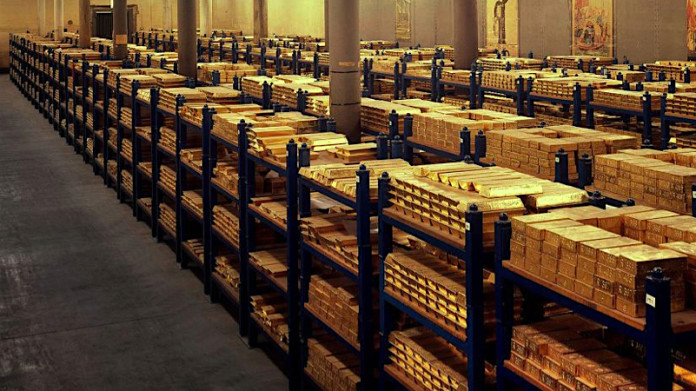
In response, Pharaoh made Joseph the second most powerful man in Egypt (Genesis 41:40). He put him in charge of the land, and Joseph collected one-fifth of the food produced for the next seven years. He stored up massive amounts. When the famine came, it hit neighboring nations hard. People from the lands all around Egypt came to buy grain from Joseph (Genesis 41:57).

Eventually, the people ran out of money. They had nothing to buy food. So they gave Joseph their livestock in exchange for food (Genesis 47:17). When their livestock was gone, they offered their land and themselves (Genesis 47:19). Before long, Pharaoh owned all the land in Egypt (Genesis 47:20). The people became his slaves, and Pharaoh’s power multiplied.

Like many stories in the Bible, the story of Joseph and Pharaoh is also a symbolic prophecy. It foreshadows a coming time of great famine when, like Pharaoh, one man will gather immense power over the known world.

The seven lean years of Pharaoh’s dream mirror the seven year period known as the Tribulation. Like the seven lean years, the Tribulation will begin with widespread famine. And in an effort to survive, people throughout the world will willingly give their power and wealth to one man – just as they gave their power and wealth to Pharaoh four thousand years ago. Do we have any reason to believe such a famine is on the horizon? Unfortunately, we do.

Rising Food Prices

The political push to move away from fossil fuels to renewable energy, coupled with the supply/demand distortions caused by the COVID shutdowns, has resulted in much higher energy prices. This is particularly true in Europe where the accelerated push for green energy has led to a surging energy crisis. What does this have to do with rising food prices?

As a popular site points out in this article:

“You can’t make fertilizer without urea and natural gas. As the price of either of these goes higher (both are), it significantly impacts the price of fertilizer. The price of fertilizer impacts in turn the price of food. This is because fertilizer is the second largest cost component of most agricultural production. The first being…you guessed it, diesel.”

The rising cost to grow food then impacts the feed cost for cattle, hogs, chickens, and other animals. This means higher costs for meat producers. Throw in increased costs for transportation, a global shortage of workers, and pandemic-induced supply chain problems, and the rising cost of food doesn’t show any signs of slowing down soon.

Supply Chain Issues

Global supply chain issues are another reason we see rising food prices, but the broken supply chain is the primary reason many grocery store shelves have gone bare. While increased demand due to COVID lockdowns and hoarding play a factor, the majority of these shortages are due to problems rippling through the global supply chain.

In some cases, a lack of key inputs such as aluminum, cardboard, or artificial sweeteners means manufacturers can’t produce or package certain items at the scale they used to (if at all). This results in fewer available products, and thus, empty shelves.

Supply chain problems have also resulted in a global shortage of urea. Not only is urea a key component in fertilizer, it’s also a key ingredient in the diesel exhaust fluid AdBlue. AdBlue is used in cars, trucks, buses, and other vehicles equipped with a selective catalytic reduction (SCR) system for reducing emissions. All the diesel vehicles in South Korea and Australia use AdBlue, and China supplies 97% of South Korea’s AdBlue and 80% of Australia’s. Due to the rising cost of fertilizer (and the need to feed more than a billion people), China recently banned the export of urea. This has taken a heavy toll on AdBlue inventories in those countries and the dwindling supplies threaten to wreak havoc on their economies, which are currently the 10th and 13th largest in the world.

Even worse, if Australia and South Korea can’t source new supplies of urea, and they run out of existing inventory, all their trucking will come to a standstill. If trucking stops, their grocery store shelves go bare, and the real prospect of a famine in these advanced economies will become a reality. Given the severity of the situation, we really need to wonder, why would China take such a drastic measure?

China Is Hoarding Grain

With such a large population, it makes sense for China to be concerned about rising fertilizer and food prices. Hungry populations revolt, and China’s government fears a revolution. From that standpoint, a ban on the export of urea makes sense as it’s a critical component in growing food. But China’s recent actions go beyond the urea export ban.

According to Nikkei Asia, China is also hoarding massive amounts of grain. In an article titled “China Hoards Over Half the World’s Grain, Pushing Up Global Prices,” they point out China (which has only 20% of the world’s population, is expected to have “69% of the globe’s maize reserves in the first half of crop year 2022, 60% of its rice and 51% of its wheat.” The article speculates one of the reasons for China’s food stockpile is to offset “food uncertainties due to factors such as its deteriorating relations with the U.S. and Australia, which could drastically alter the import environment.” In other words, since China doesn’t produce enough food domestically to feed itself, it needs to stockpile enough food in case imports from the U.S. and Australia go away. The question is, why would they go away?

Rumors Of War

“Rumors of war” have been common since the end of World War II, but the current situation is different. Rarely have we seen the prospect of several high profile conflicts erupting at the same time. China threatens to invade Taiwan on an almost daily basis. If China does invade, the United States claims it will defend Taiwan. This means two major nuclear powers could potentially go to war. Could that be why China is hoarding food? Even if an invasion of Taiwan doesn’t result in a U.S. military response, it would almost certainly lead to major economic sanctions from the U.S. and Australia. Is this an indication China is preparing for an invasion?

The probability rises every day, especially due to U.S. involvement in the current Russia-NATO dispute over Ukraine. If Russia invades Ukraine, and the U.S. does nothing after saying it would defend Ukraine, then China may feel emboldened to invade Taiwan. And if the U.S. does defend Ukraine, China may believe the U.S. is too distracted to defend Taiwan and seize the moment to invade.

Meanwhile, Iran and Israel continue to generate their own rumors of war. If any of these areas erupt into war, the result will be a disaster for the global economy. Oil prices will go much higher. Global trade will contract. Supply chains will break down even further, and food prices will skyrocket. Worse than that, a major conflict could lead to food shortages throughout the world. Is this what China is preparing for?

The Coming Famine

While these events may or may not plunge the world into a worldwide famine in the near future, the Bible is clear – a global famine will strike the world during the Tribulation. This famine will follow a global war (Revelation 6:4). In the aftermath of this war, destruction will be widespread. People will be scattered. The global supply chain will be in ruins.

The Bible describes this famine in detail (Revelation 6:5-6). Riding on a black horse and holding a pair of scales, Revelation 6 says a voice calls out, “A loaf of wheat bread or three loaves of barley for a day’s pay. And don’t waste the olive oil and wine.” This indicates a global famine.

The rider’s scales suggest a need to carefully measure and ration the food supply. We know because the voice that calls out indicates a scarcity of food. Three loaves of barley are about one pint. Many believe this is the minimum amount of food needed to survive. Yet this verse is telling us a time is coming when an entire day’s wages will only buy enough food to survive.

When this happens, it’s possible the Genesis story of Joseph and Pharaoh will play out a second time. Desperate for food, most of the world will willingly give their wealth and power to anyone who can feed them. Just as in ancient Egypt, when the dust finally settles, one man will control everything.

The signs of the times are all around us. Jesus is coming.

How to Prepare For A Potential Civil War

America is more polarized than ever. According to a recent poll 34% of Americans believe civil war is “likely” and 13% believe it is “very likely.” Luxury bunker sales are up with customers citing concerns of “civil unrest”. (DiMella, 2024) Could we be headed toward civil war? If so, how can we prepare for it?

When Societies Fracture

From studying and interviewing survivors of civil war, coups and unrest from different countries, all shared one thing in common. When societies fracture, they do so along political, geopolitical, religious, ethnic, tribal, racial or economic lines. People group up along these lines and those who are not in control (usually, but not always the minority), suffer terribly at the hands of those in control (usually, but not always the majority.) People group up and most of them avoid going outside. If you are in an area controlled by the opposing group, I strongly suggest getting to someplace that is controlled by your people before the checkpoints go up.

Those who fail to get to an area controlled by their people before checkpoints go up typically suffer. Their options for survival are often not good. If they want to survive, they often have to find someone who is not an enemy of those in power who is willing to hide them, or E&E to friendly lines, and the latter is extremely difficult to do in occupied cities. Those who do get out usually do so on foot, through rough terrain, with only what they can carry.

Ivory Coast

Some good friends of ours emigrated from Ivory Coast. Both of them came from well-to-do land owning, families that own farming and livestock concerns. Ivory Coast has experienced two civil wars, the first began in 2002 as the result of a military rebellion and ended in 2007. The second Ivorian Civil War began in 2010, ended in 2011 and was fought over election results. Thousand died in each war. 750K civilians were displaced by the fighting. (Wikipedia, 2024)

The husband told me that during the war, around 30 people took shelter in his home. That is a lot of mouths feed! Imagine cramming 30 people in your home.

The wife told me that she “got fat” because she was unable to go outside. Her home was also packed with people, but they had plenty of food because they own a mango large plantation that grows tons of fruits and vegetables all year round and her father ranches hundreds of head of cattle, as well as goats, sheep, chickens, and has other livestock.

The farmers had to be protected, or the people would starve, so they did what they could to help others. Unfortunately, very few American families own farms anymore, even hobby farms.

Civil War I vs Civil War II

Our last civil war killed 2.5 percent of the population of our nation or around 750,000 people. If the same percentage of people die in our next civil war, 7 million Americans will lose our lives. (Staff, 2016) That would be like losing the entire state of Arizona. However, it is possible that many more could die due to urbanization, globalization, the number of weapons in the hands of the people, the efficacy of modern weapons, and the next level zeal with which the hardcore radical left hates conservatives.

During my lifetime, we have gone from being able to sit down at the same table and share meal to liberals disowning family members they suspect might be conservative, openly calling for the death of conservative politicians, chanting “Death to America” (by Americans, in America!), and now the assassination attempt on former President Trump. (Sarah Rahal, 2024) It could be argued that the first shots have already been fired because the assassination attempt was clearly inspired by the incendiary rhetoric of extremists within the political left.

On some level, these events and this behavior are just incomprehensible to me because it’s so far outside the accepted norms of polite society. On another level, it’s not surprising at all to students of history, nature, and survival. We see it over and over. Cruelty, violence, and hatred resulting from incendiary rhetoric and propaganda. It must not be so hard to use these tools to get a certain type of people whipped up into a frenzy because it happens over and over.

How Does One Prepare for a Civil War?

We cannot know, of course, with any certainty, if or when Civil War II will happen. Mankind has a dismal track record when it comes to attempting to predict the future. Therefore, I’ll leave that to the realm of soothsayers, crystal balls, economics and other pseudoscience.

Sometimes Survival is About What You Don’t Do

So, how do we prepare if we can’t predict the future? The answer is to attain a state of general readiness and antifragility. Get ready for volatility and disruption by figuring our where you are fragile, work to become more resilient in those areas, and then don’t do anything stupid. It’s good to do the work and get prepared, but survival isn’t only about what you do. It’s also what you don’t do.

In a civil war, some of us will have to decide whether join up and fight for our side. Volunteering to go fight in a war may not increase your chances of survival, but sometimes the greater good trumps individual safety.

Another decision we may have to make is whether to shelter in place or bugout. One will improve your chances of survival and the other will diminish it.

Be Ready to Shelter in Place or Bug Out as the Situation Demands

The two main survival strategies are the same for a Civil War as they are for nearly everything else. Either you shelter in place or you bugout. Either one could be the only way to survive a particular threat, so the survivalist must be prepared to do both!

How do you know which to do? When society fractures, you will find yourself in the majority or the minority. Either way, you need to get to someplace your people are in control of. We can’t know precisely what we will be facing until it happens, but we know the general lines upon which societies break up and realign themselves, which I identified at the beginning of the article.

You may be able to see it coming or you may be living someplace where you are already a minority on virtually all counts. You are already in the political, economic, racial, ethic, and religious minority. Or you live someplace and it’s just obvious that the place will go to go sideways the moment the SHTF. If any of these are the case, I suggest relocating now. However difficult it is for you to move now; it will probably be easier than moving post-SHTF.

25 years ago, I lived in Arizona in the Phoenix-Metro area. There was no place for the populace of the Valley of the Sun to evacuate to because there was no place with the infrastructure to support millions of people that could be reached on one tank of gas. Emergency planners understood this, so they didn’t bother working on an evacuation plan. There simply wasn’t one and there may never be one.

Phoenix is low on water and has way more people than it can support. It’s basically an island surrounded by desert. Trying to get out would be like a scene from Mad Max. Staying could be worse. Either way, people would have to compete with each other for water and food in the Mecca of competitive shooting. It would be a bloodbath.

Understanding how easily things could all fall apart, I moved to a smaller community in dairy country in the Intermountain West that should be more stable and self-sufficient. Here, I am no longer in the political or religious minority. It should be more somewhat more stable in volatile times as the valley exports food, there is plenty of water (an anomaly in the West, water flows into Cache Valley from three sides), we are not downwind of any nuclear targets or reactors, and my family is part of the institution. In short, I relocated to a good homesteading location in the hope that it is less likely that I will have to bugout, but I have plans for that just in case.

Bugout

Many civilians are displaced during civil war. Entire towns empty ahead of or during fighting. So, be ready to move.

Being prepared to bugout requires more than a bugout bag.

One of the most important factors in a bugout is to bugout before everyone else does. To achieve that obviously takes a certain amount of preparation, planning, and practice. It also requires having predefined triggers. “If such and such happens, then we pack the truck, grab our gear, and leave.”

Another important factor is having someplace to go. “I’m grabbing my pack and my rifle and heading to the mountains.” Is not a bugout plan. You need a specific destination, and during a war, you may not know which direction you will be able to flee, so you should have multiple bugout destinations and routes in all directions, like the Apache had. They resisted the US Army for over 90 years, which makes their guerrilla campaign a good case study, in my opinion.

As a destination, a lifeboat property or retreat is ideal, but that’s not what most people do. That’s what the wealthy do, but of the cases I have studied, I have found that most people cannot afford that. Instead, they go and stay with family or friends. Those who are unable to do this, often become displaced persons, refugees. If possible, this should be avoided.

You might be more welcome when you arrive at your family member’s house if you show up towing a trailer full of food and medicine. It might also go more smoothly if the two of you had a mutual assistance agreement in place before the disruption.

Shelter in Place

I have read accounts of Ukrainians who left the relative safety of their homes to charge a cellphone, only to never return. The point of sheltering in place during a war is to not give anyone any reason to come into your home and hope that they do not. To do that you’ll need to stockpile supplies so you can stay inside.

Caching

My Viking ancestors prepared for battle by hiding their wealth, burying their hacksilver in the ground. Today people assume they did this as a practical consideration so their enemy wouldn’t capture their wealth if they battle didn’t go their way. They could go dig it up afterwards if they escaped or were ransomed.

After studying their religious beliefs and treasure hoards buried in Gotland, I think there is more to it than that. I think they also buried it to take it with them to the next life. The did the same thing on their farms. The father would bury a hoard, but the son wouldn’t dig it up, instead he buried his own, and this sometimes carried on for generations.

I agree that caching wealth and supplies in case of capture is a good idea.

8 States That Pose Highest Risks Of Missile/Nuclear Strike

The most shocking videos in the world! This video actually shows us what the secret of the Trump family is related to their expressive health!!! Video HERE.

If SHTF, living in one of these states, may put you at the unnecessary risk of a potential missile or nuclear strike.

I’ve been studying nuclear warfare for quite a few years now. During this time, I’ve found that some states pose a much higher likelihood of becoming a target of war. 

The enemies of the United States have one goal in mind, which is to destroy as many people as possible when they launch their attacks. 

Luckily, we’ve avoided this thanks to a Military built like no other; the enemies know that messing with the United States is a terrible idea. 

Nuclear warfare would decimate our country if our offensive systems failed when attacked. This would cause mass destruction and fallout in every corner of our nation.

Nevertheless, I’ve covered what to factor in when determining this and compiled the states that I believe pose the highest risk of missile or nuclear strike.

Warning!!! First Signs That U.S. Consumers Are In Very Serious Trouble

30 Million Americans Face Hunger As They Can’t Afford Insane Grocery Prices:Nearly 10 percent of the U.S. population is facing the threat of hunger and about 70 percent of Americans say they are struggling to pay their grocery bills right now.

The following video reveals the secrets of a future crisis, but the government does not want us to know the truth!

4 Factors To Consider 

Population Density 

The first thing that comes to mind when I think of what states are better or worse to reside in during war is population density. 

States that have a lower population tend to be less on the radar vs. states that have ten to fifteen million or more people living there. The foreign enemies of the United States want to destroy as many people as possible when they launch their strike. 

This is why residing in a state such as New York, or California puts you at exceptionally high risk for the chances of being hit by a missile or nuclear bomb. To avoid this, you’ll want to move to a state such as Montana or Maine.

These states are low-key and are not the first choice of a target for our enemies. Launching an attack on low population density states would be nothing more than a waste of resources for our enemies, and they know this.

WARNING: Watching The Following Video Will Give You Access To Knowledge The Government Does NOT Want You To Know About

Military Bases

If you’re at all knowledgeable about warfare, you know that military bases play a large role in where the enemies may launch a strike; but if you don’t, let me explain. 

Military bases are our primary source of protection from both air and land invasion. If the various military bases were taken out, not only would we be more susceptible to land invasion, but air invasion as well. 

In contrast, not all of our air missile protection systems are located near these bases; however, many of them are. So it only makes logical sense that areas with a high amount of military bases would be a priority target.

If you want to stay safe, or at least lessen your chances of becoming a victim of war, you should live in an area with as few military bases as possible. 

Important Officials 

In my opinion, the part that plays a massive role in determining the area of which seems attractive to attack via airstrike would be states of which many vital officials call home. A great example of this would be Washington, DC. 

The enemies know that if our President or the Governor of New York is taken out that our government would be scrambled. It would undoubtedly cause havoc within our Military and cause many distractions. 

Many of the officials live in Washington, DC, California, New York, and Florida, to name a few. A perfect example of this is when the united states took out Osama Bin Laden; once this operation was successful, his little army fell apart. 

Imagine that scenario but on a much larger scale. However, we are considerably more prepared than Osama Bin Laden ever was. If you’re looking to avoid the chances of airstrikes, avoid the states listed below, if at all possible.

Fuel & Power

If I had to choose one thing that I thought would be one of the first things that could be destroyed via airstrikes, I’d say it’d be our fuel and power resources. Almost all of our transportation systems and power relies on electricity, gas, and oil, to name a few. 

If these were taken out via airstrike, our country would come to a slow halt. This is also feasible via an EMP strike, which is essentially a nuclear bomb detonated in the sky, which would disable and fry all electronic devices, such as cell phones, computers, medical equipment, and much more. 

This is a possible scenario and is much more likely to occur in states known for its power production, such as Texas. 

The enemies understand that our reliance on these luxuries would cripple America if they were taken away from us suddenly, which is why it such a significant consideration for our enemies; this is why many people are beginning to build entirely off-grid homesteads.

EXPOSED: Free Power Secrets! Revealed: The century-old device making solar panels obsolete. Embrace efficient, sustainable energy. Open the Gates of Innovation!

8 States That Pose The Highest Risk

Washington, DC

The home of the President and the White House, Washington, DC, poses some of the highest risks of airstrikes out of all other states due to it being home to so many essential officials. 

The White House does have, likely, the most sophisticated bunker system in the world. However, this does not mean the area is immune to war. 

Washington, DC does have intelligent systems that can strike down incoming missiles. Still, they are not always accurate enough to target the rocket, and it should be remembered that they can undoubtedly fail. 

The area is also home to millions of Americans, giving the enemies another reason to launch a strike. Destroying DC would lead to mass complications and unrest, and our enemies know this.

New York

If I had to choose a state that was most at risk of an airstrike, I’d choose New York. This state houses tens of millions of Americans and is home to many military bases. 

New York is one of the most influential places globally, housing the One World Trade Center and many other critical buildings and operations important for the world. 

As we know, the previous two world trade centers have already been destroyed, so it has already fallen victim to terrorism. If a nuclear strike were imminent, no one would have enough time to escape the strike. 

New York is also home to many vital officials, which could be the motivation to target this area. It is well protected from air missiles, but as mentioned before, they are not always successful.

California 

It’s a given that California is added to this list. This state is called home by over thirty-seven-million residences, making it the most populated state in the nation. 

This makes it have an exceptionally high risk of becoming a victim of missile strikes. It does have in its favor a multitude of military bases, which could strike down an air missile.

Military bases are typically a good target for our enemies, so this is a sketchy situation. We can protect the state, but if the protective systems fail, it will result in mass destruction. 

California is also home to several influential politicians and features many of our big tech giants and energy systems, which are definitely on our enemies’ radar.

Virginia

This was an easy decision to have added, mostly due to the dense amount of military bases near the Hampton area. There are nearly 20 all within a small space, which, if taken out, would cripple the state. 

Virginia is also near Washington, DC. This means that if these bases were taken out, the protection for Washington, DC, would be cut in half. There is also an abundance of air-missile defense systems that can take out any incoming missiles. 

These are used to protect not only Virginia, but Washington, DC, and the states surrounding it. The eight million residents are a motivating factor for our enemies as well. 

I should note that when a nuclear bomb detonates, it releases a toxic gas called fallout. This can travel for hundreds of miles, wreaking havoc on people in other states, making Virginia a target in itself due to it being surrounded by highly populated states.

Florida 

This state should not come as a surprise to you, but if it does, let’s explain why. Firstly, Florida is packed full of Military bases and features several space programs, including NASA, SpaceX, and more. 

It is home to numerous influential politicians, including Donald Trump’s private residence. It is also home to over twenty million people, making it the third most populated state in the nation.

It’s well known that Florida is a significant tourist attraction for individuals all across the world and features many of the most sought-after vacation destinations, which means Florida could be used as a target to destroy an American symbol.

While states do not surround it, a nuclear explosion would decimate the entire state due to destruction and fallout. If you want to avoid experiencing nuclear war firsthand, stay away from Florida. 

Nevada 

This state only has a few Military bases, the largest being located in Las Vegas, employing over ten thousand servicemen and women. Something that it does have, however, is Area-51. 

This is a secret military installation used to test unknown elements. Currently, there are no civilians that know of what occurs inside of this base. However, certain government officials do.

I think it’s possible that foreign nations, like Russia or China, know at least a little of what happens here, and I think it’s easy to agree that it’s likely weapons technology of some sort.

If Area-51 was destroyed, all of the technology and equipment is going with it. Las Vegas should be considered because it features some of the most sought after buildings in the world. The destruction of LV would lead to mass civil unrest.

“Crime of the Century”: What Big Pharma Isn’t Telling You About Its Benefits Against Major Diseases: How Coffee Can Combat Parkinson’s, Type 2 Diabetes, Heart Disease, Liver Cancer, and Obesity — Secrets Big Pharma Keeps Quiet

Hawaii 

Most people would call me crazy for adding this state in, but if you think about it, it’s probably in the top three most dangerous states to be in during the nuclear war.

For starters, it’s an island. This means that nearly one nuclear bomb could destroy the entire state. They do have anti-air missile technology, but as mentioned before, they can fail.

Fallout should also be considered because even if the missile was shot down, if it were shot down far enough into our atmosphere, it could still deliver fallout and the effects of an EMP.

There are also over ten military installations in Hawaii. On top of the two million people living there, it brings a huge motivator for our foreign enemies to attack the area.

Texas

Texas is believed by many, including myself, to be a great state to stay in when SHTF due to its exponential amount of natural resources, relaxed Gun laws, and a plethora of available land to purchase.

However, it can also be the most dangerous in a specific SHTF scenario: nuclear warfare. Texas is home to many military bases, anti-air missile defense systems, and atomic weapons.

If foreign nations ever attacked a state, Texas would likely be one of them. Besides, it’s the second most populated state. 

The most significant motive to destroy Texas would likely be to disable a huge military and nuclear presence, that if destroyed, would make destruction a much easier goal for the attackers. In most other cases, however, Texas is great for most other SHTF scenarios.

EXPOSED: Viral Content! Scientists from Fukushima University of Japan just proved this silent clog is the real cause of BPH in millions of men…- See video!


Verdict 

Nuclear warfare is probably the worst disaster imaginable. There have been nuclear detonations previously, such as the one that destroyed Hiroshima, but the nuclear bombs that we’ve made today surpass anything ever detonated before.

Nuclear weapons, when detonated, cause massive explosions near the detonation site and spread toxic chemicals called fallout for hundreds of miles, wreaking havoc in every living thing it touches.

If you happen to live in one of these states, consider moving to one of these states, or look into building a bunker. Fallout bunkers are also available to the public but are not something to count on.

The best way to stay safe from a nuclear blast is to seek shelter in the most robust building or shelter available, as far down or underground as possible, while blocking all airways. 

The question now isn’t if this will spiral into WWIII—it’s when.

SHTF Risk Based on Your State

Let’s face it, the state of our civilization is more fragile than people like to think. Natural disasters, economic calamities, infrastructure collapse, and catastrophic social unrest can all threaten your way of life. Of course, some places are more prone to natural and man-made disasters than others.

If you’re worried about the SHTF risk of your home state, or you’re thinking about setting down roots somewhere with a lower risk of catastrophe, you need to do your homework. To help get you started, I thought we’d take a little bit of a closer look at the different SHTF risks of various states and regions.

Alabama

Alabama is a veritable smorgasbord of SHTF risks. This starts with the risk of Gulf hurricanes, flooding, and tornadoes. Poverty is also high, which leads to crime rates being high. Alabama also suffers from aging infrastructure which can also slow relief efforts when there is a disaster.

Alabama also has strategic value to foreign powers that want to do the US harm. Not the least of which is the Redstone Arsenal and the U.S. Army Aviation and Missile Command facility. Alabama becomes an even juicier target when you consider that it’s also home to the U.S. Army Materiel Command which oversees global supply chain management of military equipment and technology.

Alaska

The earthquake and tsunami risk in coastal Alaska along with its strategic value give it multiple SHTF risks. Inland Alaska also sees threats from massive snowstorms and crippling winter temperatures.

Should a seismic incident or a military strike hit Alaska during the winter or a time it could make it extremely hard to survive. Any possible relief efforts are also reduced the farther one goes inland from the coast.

Arizona

SHFT Risk Based on Your State

At first glance, Arizona’s biggest SHTF risk comes from the environment.

Extreme heat, desert drought conditions, and the risk of wildfires are all potential widespread concerns. Yet it’s other external factors that put Arizona at the greatest risk should the United States suffer a period of prolonged strife.

The agricultural base in Arizona relies solely on managed water systems which would likely be compromised in a SHTF scenario. Arizona’s economy also relies heavily on outside tourism dollars. If these systems fail, and the US military is overtaxed elsewhere the severe crime issues just over the border can easily spill into Arizona from Mexico.

Arkansas

The frequency of widespread severe storms, flooding, and being in tornado alley all increase Arkansas’ risk of suffering a SHTF situation. You also shouldn’t forget about the nearby New Madrid fault system which can and will one day cause a severe earthquake.

There’s also a SHTF concern from the largely agricultural base the Arkansas economy relies on. Crop failures, severe drought, and crop disease can strain the population, which spikes the risk of civil unrest throughout the region.

California

California’s high SHTF risks, from its imminent seismic threats to the relentless wildfires, paint a challenging survival scenario. The state’s dependency on external water sources only heightens the danger, as any disruption could leave millions stranded in an arid, desperate landscape. With such dense population centers along the coast, historical events like the L.A. Riots underscore the volatility and potential for civil unrest during crises.

There’s also the problem of California’s strategic value to foreign powers. If it was an independent country the Golden State would be the fifth-largest economy in the world. It is also festooned with important military bases like the San Diego Naval Base, Marine Corps Air Station Miramar, and Fort Hunter Liggett just to name a few.

Given California’s strategic military importance and the sheer scale of its economy, the stakes are incredibly high. In preparing for such scenarios, understanding the environment and having a solid plan is crucial. No-nonsense advice on how to stay safe and secure when staying put becomes the best—or only—option. This guide could be an invaluable resource in navigating the unique challenges posed by California’s potential SHTF situations.

Colorado

Colorado has its fair share of weather-related concerns. The mountainous parts of the state can be crippled by snow. Many mountain regions were only capable of being settled thanks to modern avalanche management strategies, which can go unattended during times of strife. Eastern Colorado is also prone to catastrophic droughts as well as being part of tornado alley.

SHFT Risk Based on Your State

Yet I think Colorado’s military importance is what gives it more SHTF risk.

This starts with Fort Carson and Peterson Space Force Base.

Colorado is also home to Cheyenne Mountain which NORAD and the US Space Command use as a control center.

A foreign power that wanted to beat the clock on mutually assured destruction, would have to target Cheyenne Mountain with a massive attack, which would wreak unearthly devastation on whatever was left of Colorado.

Connecticut

The biggest SHTF risk in Connecticut comes from the population density and its proximity to other densely populated areas like New York City and Boston. This means that if there is a severe problem that affects the entire region, there will be a lot of competition for resources. Any attempts to bug out will be thwarted by the sheer volume of people between you and the wilderness of places like Upstate New York, Vermont, New Hampshire, and Maine.

There’s also some SHTF risk from natural disasters. While hurricanes this far north are rare and weak they can bring severe storm surges. There’s also the winter threat of Nor’easters and blizzards like the Ground Hog’s Day Blizzard.

Florida

Florida’s biggest SHTF risk comes from hurricanes, which threaten to devastate some parts of the state almost every year. You also have to keep in mind that much of Florida’s coastal regions are densely populated and low-lying.

While the locals have a certain tolerance for disorder after a disaster, there’s a tipping point where people start turning on each other for necessities. This can turn into a powder keg for civil unrest if relief efforts after a natural disaster are delayed.

In the chaos of widespread civil unrest, cities can turn into war zones fast. When things get too hot, heading for the hills might be your only shot at staying safe. But surviving out there isn’t just about knowing the basics—it’s about mastering the long game.

It’s not your run-of-the-mill survival manual; it’s a no-nonsense tool that teaches you the old-school wisdom of our ancestors who knew how to live off the land and thrived there.

So, when you’re gearing up to make your escape. It could be the game-changer you need when everything else goes sideways.

Georgia

SHFT Risk Based on Your State

Hurricanes and regional flooding are some of the more common natural disasters that can cause a SHTF situation in Georgia. There’s also a risk for spring and early summer tornados that can devastate large swaths of the Peach State. It’s when these natural disasters affect Georgia’s declining infrastructure blocking relief that the SHTF risk starts to spike.

This is when income inequality, and racial and political tensions turn up the risk of civil unrest and widespread lawlessness, further impeding relief efforts.

Hawaii

Hawaii has long been a military target for foreign powers looking to cripple the US naval presence in the Pacific and beyond. Any sort of large-scale attack that hits Hawaii will also expose the fact that most of the population is dependent on imported goods. Most of which will run out in less than two weeks.

There’s also the constant threat of tsunamis and earthquakes to be wary of. A major tsunami event like the one that devastated Hilo in 1946 could decimate Hawaiian ports. This could make it extremely difficult to bring in all the necessary supplies the island population needs in a SHTF situation.

Idaho

Wildfires and the distribution of water resources stand as the biggest SHTF threats to Idaho. Especially in the arid regions near the Oregon border where infrastructure can be sparse in places.

Militarily Idaho is also the home to the Mountain Home Air Force Base which plays a critical role in supporting U.S. national security interests worldwide. It’s also a major training center, and as home to the 366th Fighter Wing is a crucial piece of the Northwestern defense infrastructure.

Illinois

The more populated areas of Illinois such as Chicago and Peoria suffer from aging infrastructure. There’s also a heightened risk of crime and civil unrest in the areas of urban sprawl. Not to mention the infamous tornado alley continues to creep deeper and deeper into the heart of Illinois. The risk of concern here only goes up when you consider that many of Illinois’ low-lying agricultural regions rely on water management systems.

Any one of these problems on its own might be manageable. It’s when two or more of these factors occur simultaneously that the SHTF risk factor starts to increase dramatically!

In light of these growing risks, it’s essential to consider how you can build resilience in your own life. While we don’t all need to become full-scale homesteaders, starting with a few chickens or a small garden can help you achieve a degree of self-reliance and access to fresh food. For more details on how to create a self-sufficient backyard, including year-round self-sustaining garden. It’s an invaluable resource for anyone wanting to boost their self-sufficiency and get better prepared for whatever comes their way.

Indiana

SHFT Risk Based on Your State

Indiana’s reliance on manufacturing and its aging infrastructure can serve as a powder keg increasing the strife people could experience when SHTF.

We can look at the 2008 recession’s impact on Indiana to see proof of how economic downturns can rock the state.

One also shouldn’t underestimate Indiana’s role in refining oil into gasoline. A foreign power or terrorist organization striking the Whiting refinery, or the Country Mark Cooperative in Mount Vernon could cripple gasoline infrastructure throughout the Midwest and Eastern seaboard for months if not years!

Iowa

Severe weather, flooding, and agricultural stress are the top risks for a SHTF scenario in Iowa. These natural disasters are only compounded by the state’s aging infrastructure.

If a widespread natural disaster strikes Iowa during times of strife for the rest of the US, relief efforts might be sparse. Flooding and infrastructure failures will only compound struggling relief efforts.

Kansas

Being in the heart of Tornado Alley certainly puts all of Kansas at risk for natural disasters. Kansas also has several military targets that a foreign power might be tempted to strike as part of a full-scale invasion. Not the least of which include Fort Riley and Fort Leavenworth.

It’s also worth bearing in mind that Kansas is prone to severe droughts. In recent decades tapping into the Ogallala Aquifer has kept these weather trends from crippling the state’s agriculture. However, it’s at risk of running dry or being badly depleted within this generation.

Kentucky

On average, Kentucky has a low SHTF risk. Natural disasters like tornadoes, flooding and widespread winter ice storms are a serious concern to the Bluegrass State. There’s also the potential earthquake threat of the New Madrid Fault in Eastern Kentucky.

Fort Campbell does increase Kentucky’s target viability to hostile foreign powers. Yet there are likely juicier targets to the south and east. This might make Kentucky less of a target in anything short of a large-scale assault on US soil.

Louisiana

SHFT Risk Based on Your State

Louisiana and the other states along the Gulf of Mexico are always at heightened risk for massive hurricanes that can cripple the infrastructure for months or even years.

We don’t have to look past the aftermath of Hurricane Katrina to see proof of how natural disasters can cripple this region.

You also have to take into account that Louisianna holds a sizeable portion of the US strategic oil reserve. The Gulf Coast states also play a critical role in US offshore oil production. Any sort of strike here would have catastrophic consequences on energy infrastructure.

Maine

Down East coastal Maine does have high enough population density that it could experience some “People Problems” in a SHTF situation. However, the bigger concern is people fleeing from natural disasters in other parts of New England will flock toward Maine’s largely untouched wilderness. This makes “Other People” the biggest risk to Maine should SHTF.

Maryland

Maryland’s proximity to Washington D.C. and being the heart of the Chesapeake Bay give Maryland one of the highest SHTF risks of any state. You also need to consider Maryland’s importance as a cargo port, which was on full display during the Francis Scott Key Bridge incident.

Sea level rise and erosion throughout the Chesapeake Bay area also puts Maryland at increased risk of a SHTF situation from a natural disaster. Hurricanes and strong storms that send storm surges up the Chesapeake Bay can disastrously inundate Maryland’s expansive coastal network of communities. Potentially cutting off access to relief.

Massachusetts

Population density and high visibility make up the core of Massachusetts SHTF risk. We see this on display with things like the Boston Marathon bombing, and the fact that the 9/11 Terrorist attacks started in Boston.

The problem with any disaster that strikes New England, in general, is that Massachusetts citizens have nowhere to bug out to. While also being in the face of millions of other people trying to bug out to other states like Maine, New Hampshire, and Vermont. There’s a real risk of a lot of strangers ending up in your backyard, increasing the already high competition for local resources.

Michigan

SHFT Risk Based on Your State

While Michigan is one of the safer states when it comes to SHTF risk, it still suffers from widespread aging infrastructure. Especially in urbanized areas like Detroit and Flint.

Michigan can also suffer from some brutal winters.

Not only does the cold of the upper Midwest hit the Great Lakes state hard, but many areas are inundated with lake-effect snow in the winter. If a major disaster strikes the country on the heels of a major winter storm, many communities in Michigan could be cut off and left out in the cold.

Minnesota

Minnesota has a relatively low SHTF risk when it comes to military value. Outside of brutally cold winters, it isn’t threatened by major natural disasters. There are even a lot of abundant natural resources to tap into should one need to bug in or bug-out to a cabin.

However, the biggest risk to Minnesota comes from the states to the west. The Dakotas and Montana are home to a high number of ICBMs. Any nuclear assault that hits those states will set radioactive material straight at Minnesota on the prevailing westerly winds.

Mississippi

Poverty, decaying infrastructure, and the prevalence of tropical storms give Mississippi a higher-than-average SHTF risk. We’ve all seen what happens when massive hurricanes hit Mississippi and the prolonged relief and recovery efforts.

Should a natural disaster strike the Gulf Coast during a stiff economic downturn or cause the flood management infrastructure to fail, it could leave Mississippi in a world of hurt. With dwindling resources, and little aid available, the people living in the area could easily start turning on each other.

Missouri

A combination of natural disasters and aging infrastructure poses the greatest SHTF risk for the state of Missouri. When you consider it’s in the heart of Tornado Alley, at the conflux of two major rivers prone to flooding, and sitting on the New Madrid fault zone, the ingredients for a perfect storm are all there.

Montana, Wyoming & Idaho

The biggest SHTF risk in Montana comes from the nuclear missile silos positioned there. If the numbers are vaguely accurate, Montana has over 150 ICBMs.

This makes the whole northern Rockies a potential target for a nuclear counterattack, or an EMP.

If you’re thinking about moving there, the tough winters are a factor that definitely puts you at risk.

If you currently live there, then you’ve already got what it takes to tough out the weather.

Nebraska

While many think of Nebraska as a “Fly Over State” its agricultural importance and strategic risk can’t be ignored. Rocked by tornado alley in the spring and summer, the winters in Nebraska can be equally cruel, and have a knack for shutting the state down when blizzard winds howl for too long.

Nebraska is also on the verge of a water crisis. Large sections of the Platte River dry up during summer droughts. The local agriculture thus relies on the Ogallala Aquifer, which is doomed for eventual depletion within this generation.

Nevada

In the heart of the Great Basin, arid conditions always pose a looming risk for the state of Nevada. There are also risks of flash flooding and landslides which could close mountain passes and impede relief efforts.

Twenty years ago, Nevada would have been a major military target. Yet the general public getting wise to all the skunk works and black ops development in the Great Basin prompted the US government to take it elsewhere. Savvy foreign powers who need to make the most out of a strike-first strategy will likely look elsewhere, lowering the SHTF threat to Nevada.

New Hampshire & Vermont

Their small size and shared presence in New England give New Hampshire and Vermont a very similar SHTF risk. The populated parts of the state have the same “People Problems” as any urban area.

It’s when people bug out of those cities into the wild portions of these small states that things get complicated. There simply aren’t enough resources in a SHTF situation to support that mass of humanity.

New Jersey

SHFT Risk Based on Your State

Population density and proximity to other critical targets along the Eastern Seaboard give New Jersey an uncomfortably high SHTF risk. Especially in areas near New York City which are a prized target for terrorists and foreign powers.

In a bug-out situation, there is some hope of being able to escape into the New Jersey Pine Barrens.

It’s a region that’s made remoted by the swamps and twisting roads. Only people who know the area well can navigate it successfully. This could prove to be the only viable bug-out destination in the whole of the Garden State.

New Mexico

The presence of nuclear missile silos and Kirkland Air Forces base increases New Mexico’s SHTF risk as a target area. scenario. Obviously, there’s more going on in this part of the United States than the government wants to let on, and foreign powers know it. This could easily make New Mexico the target of a nuclear strike or EMP.

The arid climate of New Mexico and the extreme heat of summer can also complicate any disasters that befall the southwestern states. In a scenario where you do have to bug out, the heat can kill.

New York

New York City is arguably the biggest target outside of Washington D.C. for both terrorist organizations and hostile foreign powers. The population density of the city and surrounding suburbs makes it nearly impossible to bug out, and if you bug in the competition for resources will be fierce.

If you’re considering a bug-out plan and want to be well-prepared for surviving in the wild, check out the Wilderness Long-Term Survival Guide by Nicole Apelian. Nicole, who famously survived 57 days alone on Vancouver Island in the History Channel’s Alone, offers expert advice on thriving in the wilderness. I found her insights invaluable and decided to get a copy right away. Her guide could be a game-changer for anyone serious about long-term survival skills.

Outside of New York City, in upstate New York, the population problem drops as does the SHTF risk. It’s mostly small farm communities, that have the ability to subsist. If you live here, the biggest threat is people bugging-out of the city in droves.

North Carolina

SHFT Risk Based on Your State

North Carolina has a large military footprint with over 112,000 active-duty service members stationed there. A foreign power or terrorist organization could easily see this region as a potential target.

There’s also the very real risk of hurricanes flooding and knocking out power in the coastal regions.

If the National Guard and other military entities are already engaged in relief efforts, the entire region’s SHTF risk goes up.

North Dakota

The biggest SHTF risks about North Dakota is the presence of so many nuclear missile silos as well as a few air force bases of strategic importance. There are also vast oil reserves in the Williston basin which increase Dakota’s target value appeal to a foreign power.

If the coasts of the United States were hit, and the strategic oil reserves in Texas and Louisiana were compromised, the US military effort would rely heavily on North Dakota’s oil reserves. A wise foreign power would recognize this and certainly direct some portion of their attack at the Peace Garden State.

Ohio

Ohio’s SHTF risk has dropped steadily over the last 50 years or so. It’s no longer considered a major port region and has minimal strategic importance to terrorist or hostile foreign powers.

The aging infrastructure and vast urbanization of Ohio stand as its biggest problems in a SHTF scenario. In a widespread disaster, the people of Ohio would be hard-pressed to bug out to safety and would face tough competition for resources.

Oklahoma

Oklahoma being in the heart of tornado alley, increases the risk of widespread storm devastation. If the state and federal governments are already stressed, the aftermath of a tornado outbreak in Oklahoma could leave millions desperate for aid.

However, the bigger SHTF risk for Oklahoma and the Southern Plains states comes from long-term weather trends. This area has long been prone to epic droughts, which history witnessed during the Dust Bowl. If the aging water infrastructure fails during a drought, the Sooner State could fall into deep strife.

Oregon

SHFT Risk Based on Your State

Earthquakes, wildfires, and drought are the top natural disaster risks for the Beaver State.

This part of the Pacific Northwest is home to a fault structure that can produce a massive tsunami wave within minutes after a large earthquake. This could devastate much of coastal Oregon and Portland.

On the one hand, Oregon isn’t much of a nuclear target for a hostile foreign power. On the other hand, it sits between Washington State and Northern California, which are juicy targets. This could easily spill devastation into Oregon.

Pennsylvania

While it doesn’t have major strategic value and isn’t prone to massive natural disasters, Pennsylvania’s proximity to other targets complicates its SHTF risk. Especially in Philadelphia in the east and Pittsburgh in the west, where population density and poverty are serious problems.

The middle of Pennsylvania has a lower SHTF risk. There’s a lot of Amish country here with resources available. Without being any sort of military target. It’s possible to bug out to these locations for better chances of survival if you see a SHTF problem on the horizon.

Rhode Island

Rhode Island itself isn’t much of a target for hostile invaders. Unfortunately, being surrounded by a lot of other juicy targets like New York City and Boston raises Rhode Island’s SHTF risk.

You also can’t rule out storm surge complications anytime a hurricane threatens the eastern seaboard. Since much of the state is flat, if Rhode Island’s infrastructure fails during a major storm, the flooding could be immense.

South Carolina

Flooding and hurricane storm surge are the two biggest types of natural disasters driving up South Carolina’s SHTF risk. The Palmetto state has long been prone to flooding, and if its aging infrastructure fails during a massive storm the entire region could be inundated for months!

The Naval Weapons Station based out of Charleston also has high strategic value to foreign powers. A targeted strike there would do more than hurt the US Atlantic fleet, it would also devastate much of South Carolina.

South Dakota

While South Dakota no longer has the massive warhead threat it used to, its proximity to other states that are armed to the teeth increases its SHTF threat. Any military strikes that hit North Dakota, Colorado, Montana, or Wyoming will inevitably spill over destruction onto South Dakota.

SHFT Risk Based on Your State

South Dakota’s winters shouldn’t be taken for granted. They can be bitterly cold, with massive snow events followed by crippling ground blizzards. Interstates close for days at a time, making emergency aid all but impossible.

Tennessee

Tennessee isn’t much of a strategic target for other nations and terrorist groups. Aside from spring and summer tornadoes and the occasional winter ice storm, there aren’t a lot of natural disasters that strike the region.

Oak Ridge Tennessee’s nuclear facility is still active. An incident or an A-symmetrical attack here could spill over toxic, radioactive risks to surrounding portions of the Volunteer state.

Texas

Hurricanes, high drought risk, wildfires, tornadoes, and the potential for catastrophic winter ice storms ping the natural disaster risk radar for the state of Texas. We need only look to events like Hurricane Harvey and the ice storm of 2021 to see what widespread damage Mother Nature can do to Texas.

Texas also has major strategic value to terrorists and foreign powers. It houses a large percentage of the United States strategic oil reserve, which could cripple the United States if compromised. There are also over 110,000 active-duty members of the US military stationed in various military bases throughout the Lone Star state.

Given this combination of natural and man-made risks, the potential for an EMP attack targeting Texas is a serious concern. Such an event could knock out power grids, cripple electronic devices, and leave the state’s vital infrastructure in chaos. Protecting against this threat is crucial, and one way to do so is by using an EMP-Proof Cloth, which can safeguard essential electronics from the devastating effects of an EMP. This cloth is designed to block electromagnetic waves, ensuring that anything wrapped in it remains functional even after an EMP strike.

For those preparing for the worst, securing an EMP-Proof Cloth might be one of the most practical steps you can take to protect your critical devices and ensure your survival in the event of a large-scale electromagnetic disruption.

Utah

Utah’s arid climate becomes a major SHTF risk factor, in a scenario where the existing infrastructure is crippled. This element of the state is often underestimated, right up to the moment it becomes dangerous.

SHFT Risk Based on Your State

Of course, Utah is also home to several important nuclear installations and military bases. Not the least of which is the White Sands Missile Range and Green River Launch Complex.

In a nuclear attack scenario, a hostile foreign power would paint much of Utah with a bullseye.

Virginia & Washington DC

For obvious reasons Washington DC and Northern Virginia are a prime military targets for any foreign military power or terrorist organizations. The less-spoken about poverty problems outside the beltway are also a major concern for civil unrest, which is only amplified when political tensions run high.

The natural disaster threat to the Chesapeake Bay region is also more serious than some might realize. In the past, Hurricanes Agnes and Hazel as well as an unnamed hurricane in 1933 showed just how disastrous storm surge can be. Sea level rise, erosion, and manmade deterioration in this area only increase the potential risks of a SHTF natural disaster.

Washington

The Pacific Northwest faces a higher SHTF risk due to the earthquakes and volcanic activity present in the region. Some scientists believe there is a massive earthquake due to strike this region offshore, which could send an even more catastrophic tsunami inland faster than most people could escape.

There’s also a heightened risk of military and terrorist activity due to the heightened military value as well as its increased importance to the Tech sector. This could make the Pacific Northwest a very appealing target for a foreign power looking to wreak havoc with the US.

West Virginia

West Virginia and the other states in the Appalachian Mountains carry very little strategic value to hostile foreign powers. This greatly reduces the SHTF risk from outside attacks. The hollow structure of communities and twisting mountain roads also make it difficult to invade, and easy for locals to bug in.

However, there are some poverty concerns throughout the area. Yet the people of West Virginia tend to do a better job of banding together than tearing each other apart.

Wisconsin

While heart disease from consuming too much cheese and beer is the leading cause of death, Wisconsin has a relatively low SHTF risk. It has almost no military strategic value and modest population density.

SHFT Risk Based on Your State

Winters in Wisconsin can be fierce.

If a major blizzard or ice storm knocks out power, whole communities can be cut off for days at a time.

So, even though the SHTF risk is low in Wisconsin, one still needs to be reasonably prepared.

Wyoming

The biggest SHTF risk for the cowboy state comes from all the nuclear missile silos it houses. Any foreign power planning a large-scale attack on the US will inevitably make Wyoming a prime target as part of a preemptive attack.

The dry summer weather and tough winters in Wyoming are also challenging, and many parts of the state find themselves cut off at random times. If you’re already from Wyoming, this is a minor factor, as you have what it takes to handle what nature throws at you. If you’re considering moving to Wyoming, learning to roll with nature’s punches could be prohibitive.

The states with the highest SHTF risks include California, Illinois, New York, Hawaii, and Florida. Washington D.C. Maryland and Northern Virginia also top the list due to their strategic value and the risk of natural disasters.

In all of these cases, there’s also some inherent risk that comes with high population density compared to the available natural resources. When something does go wrong, people living in these high SHTF risk areas face further face “People Problems” in regard to safety and resources.

If you’re thinking about moving, or you just want to wipe the sweat from your brow, some of the lowest SHTF risk states include Wisconsin, Minnesota, West Virginia, Kentucky, and Tennessee. These states have low population density, low risk of major natural disasters, and little strategic value.

Remember that nowhere in North America carries a zero SHTF risk. Even a state like South Dakota with little strategic value can still suffer disastrous consequences from freak weather, or fallout from an attack on a neighboring state.

Most Important Things You Need to do Right Now to be Prepared For a Natural or Man-Made Disaster (No One Knows What’s Coming)

In today’s world we need to be vigilant and prepared for sudden changes in our environment which may be brought on by Mother Nature or Political Activities. We all want to protect our family from harm, and preparedness for disaster emergencies should be one of our top priorities. I’m not advocating that you pack up your family and move to some isolated location to hide from the world, but I am offering simple preparations for ice storms, floods, hurricanes, or terrorist activities will make your existence much more palatable during the disaster.

1. Be prepared

Yes, the first thing on the list is to use the list to be prepared. It is one thing to take a glance at the list, but unless you actually put this list into a workable plan for your family, then reading this is just wasted time on your part. Just making the preparations will give you a sense of calm when faced with the disaster.

This sense of calm will work in your favor because you will be less likely to be one of the hordes of people acting in a reactionary, fear driven, panic when the reality of the disaster is recognized (usually when the news anchors start saying things like “This is going to be bad.”… or… “We can’t stress enough the dangerous nature of this storm.”… or… “Here is video of people fighting over the last of the bread at this grocery store.”… or… “The police have lost control of this area of town.” While the crowds are rushing to the grocery store and emptying the aisles of bread and milk, you will be safely at home making last minute preparations to keep yourself and your family safe.

Because I realize that there is a definite cost factor in making these preparations, I will try to prioritize the items on the list as to which are absolutely necessary and which ones can be added as funds are available. Any item with an * next to it is a priority item and needs to be included from the beginning. To my Prepper Friends, I do realize that this list will not satisfy your need to prepare for any and all situations and it is only a short term duration solution, so don’t pounce on me with a long list of items that you think I have left off. It is intentionally a short, condensed list which is meant to help an average family through a short term disaster situation, not a nuclear holocaust. I also have not addressed any need for firearms or ammunition.

A big part of the preparation is being organized. There will be enough things to be concerned with when the situation presents itself, trying to remember where all of your supplies might be stored should not be one of them. Buy one of the following. We will be storing everything possible in them, so your preparedness items will be readily available to you when you need them.

a. Storage Locker* – Find a well built, heavy plastic storage locker that is large enough to hold a lot of gear, but still small enough to fit in the trunk of your car or the bed of your truck. This is not one of those plastic storage bins that people use to store winter clothes in during the summer, this thing needs to be a bit more durable than that. Find one with handles to make it easier to move into and out of your vehicle. Most stores like Academy will have them starting at about $20.

b. Backpack* – This is not a child’s school backpack. Go to the camping section and find one that is well made, durable, and large enough to hold lots of stuff. Don’t worry about it being too big, we are not going to have to backpack across the Grand Canyon with it, and my experience is that you ALWAYS need more space to store stuff. The starting price for a good one will be around $39, but if you can only afford a back-to-school type backpack, go ahead and get it, we can always upgrade later.

Also watch this video- SALT A SPIRITUAL WEAPON! UNCOVER THE SECRET THAT CAN CHANGE YOUR LIFE

2. Shelter from the weather

Unexpected disasters will likely subject you to the elements. This could be due to a fast developing situation where you are caught away from home when the disaster strikes, or it could result from a storm that has caused widespread power outages, broken windows in your home, or taken off a portion of your roof. Exposure to the weather is not just annoying, it can be dangerous. The combination of being wet and cold is deadly.

a. Polyethylene tarp – These come in a variety of sizes and are quite inexpensive. (a 6×8 tarp is only about $5 if you check some camping supply stores). These are great for keeping out the weather if windows are broken during a storm. They can also be used for a makeshift tent if you happen to be caught out of your home when the disaster strikes. They will be great for keeping you dry and holding off the wind. Get 3-4 of them. Put them in your storage locker.

b. Plastic rain poncho* – One for every member of your family, plus a few extra (they are cheap (as little as $1) and will get torn when being worn for any length of time). Get the kind that fold up into a small pouch. Put into your backpack.

c. Quart – ½ Gallon sized plastic zip-lock bags* – These will be used to store some of the items on this list as well as storage of food and medicines. These are important, but cheap. Put in the storage locker.

d. Wool, Cotton, Fleece pullover or Hoodie – One for every member of the family. My preference would be wool, but anything is better than nothing. They are about $12 each for Haynes brand at most stores. If the power goes out, or if you are caught away from home, the cooler temps at night are deceptively dangerous. One main goal is to stay dry and warm. Roll up and place into a zip-lock bag and then put in your backpack.

e. Extra wool or cotton socks* – Two or three pair for every member of the family. Style is not important here, regular white tube socks are just fine (about $8 for a pack of 3). Cheap, but a fresh change of socks can do wonders, and will help keep your feet more healthy and comfortable during the disaster situation and can act as emergency mittens if needed. I can’t say enough about taking care of your feet. I know it sounds trivial, but it is not. Put unopened packs into zip-lock bags and then into your backpack (keeping them dry is key).

f. Change of clothes* – A complete change of clothes for each member of the family. This is not time for a fashion statement, we are after durability and function here. Long pants (blue jeans) and a long sleeve shirt. Don’t forget a change of underwear. Also include a pair of shoes that you would be comfortable wearing for long periods of time. An old pair of tennis shoes might be the answer. Really no costs here, we are going to use clothes we already have in the closet, but probably don’t wear because it has a stain on it, or it is not a color we wear often. Put in the storage locker.

g. Sleeping Bag – One for each member of the family. In this case, I am recommending a specific product, SOL Emergency Bivvy Bag* (do a Google search for stores selling it). Sells for about $17 each but packs up very small and will save your life. Much smaller than a standard sleeping bag (starting price, around $20). If you have the room for a sleeping bag for each person, by all means get them. Store the SOL Emergency Bivvy Bag in your backpack, and the Sleeping bags in a single location near where you will store the backpack and storage locker.

3. Safety and Security

There are several items that you will need to make sure that you and your family remain healthy and safe.

a. Medical Kit – You should get two kits.- Watch- The Home Doctor – Practical Medicine for Every Household.

I. The first is a small, compact first aid kit* that can easily be stored in a zip-lock bag and placed in your backpack and are designed to take care of minor medial issues like blisters, splinters, sprains, etc. They sell for less than $20.

ii. The next is a more complete kit, sometimes called a trauma kit. It contains more supplies and tools and is usually marketed as a Sportsman’s First Aid Kit, or an Outdoors Adventure Medical Kit (starting price is about $49). Store this in your storage locker.

b. CPR Training* – At least one person in your family needs to be CPR certified. The Red Cross and American Heart Association offer classes on a regular basis, but usually charge for the certification class ($70-$110). Most fire departments also offer classes but these classes do not provide a certification needed to fulfill any job requirements (usually free).

c. Know your evacuation routes* – Think about where you could go if you had to quickly leave your home due to the disaster. Keep in mind the destinations that would be appropriate for the situation (going to stay with your Uncle on the coast may work well if your home is threatened by a fire, but is not a good idea if you are fleeing a hurricane). Get an old fashioned paper map ($5-$10) and learn how to read it, don’t rely on your navigation app to get you anywhere, the system could be down due to the disaster. Have more than one route mapped out for each destination, roads may be impassable and you may need to find a secondary route. Keep the map in your vehicle.

Also watch- Attention: The US is Facing The BIGGEST Threat Of The Century

d. Make a list of contacts* – Everyone in the family should have a list of important contacts they carry with them. Make sure you include numbers for your office, your partner’s office, your children’s schools, day care, doctors, and close family members. Include the numbers of your health and home owner’s insurance companies, as well as your policy numbers. On this list include information of any medical condition and medications needed for all family members (for young children, also include the date of birth). Also designate a family member or friend that will serve as the point-of-contact if your family is separated. Choosing someone out of town is a good idea because they may be less likely to be experiencing the same issues in their area as you are experiencing in yours. Put this list inside of a zip-lock bag and place in your backpack (and an emergency contact list in your child’s school backpack).

e. Money – In disaster situations, ATM’s, credit cards and debit cards may not work or may not be accepted by merchants. Have a stash of emergency funds available in cash. It doesn’t need to be lots of money, but make sure that you have both small bills and some change (probably quarters) already packed in your backpack. The amount that you choose is up to you, but I suggest that it is enough to get a tank of gas, a few meals for the family while on the road, or buy some last minute item needed for the situation at hand.

4. Food and Water

It is a good idea to have a minimum of three days’ emergency supply of food* on hand at all times. My preference would be two weeks. Keep in mind that this does not mean regular full blown meals, these are meals during emergency situations. If you are remaining at home and the power is gone, here are some guidelines to follow:

a. First, use perishable goods from the pantry (apples, bananas, oranges, potatoes, hard packaged salamis, sausages, pepperoni, etc.) and food items in the refrigerator. Do not open the freezer!

b. Second, use the items stored in your freezer. Limit the number of times the freezer door is opened. Foods stored in a well-stocked freezer will still have ice crystals in the center even after two days of no power and will be safe to eat. Place zip-lock bags ¾ filled with water into the freezer so that you will have ice bags already in the freezer if the power goes off. These bags will fit into the spaces between items and will help keep them frozen and safe for longer periods of time after the power is out.

c. Third, use non-perishable items from the pantry. If you don’t already have them on hand, these are also the things you want to stock up on if you have a warning that a storm is headed your way. Don’t worry about bread and milk. The following items should be a part of your emergency supply because will last a long time and will be a perfect supplement for your family’s nutrition: Peanut butter, nuts, canned meats, canned vegetable soups, canned fruits and vegetables, dried fruits, instant cereals that only require water, white rice, hard candy and canned nuts, crackers, trail mix, granola bars, power bars, sports drinks.

d. Water is essential for life. It is also needed for cleaning utensils, cooking, bathing, and brushing teeth. Maintaining personal hygiene is a top priority in a disaster situation. Not only does it keep you physically healthy, but it gives you a morale boost as well. Store your water near the storage locker so that you know exactly where it is when the disaster strikes.

Also watch this video! The US Army’s Forgotten Food Miracle And 126 Superfoods That You Can Store Without Refrigeration for Years.

I. A minimum of one gallon of water per family member per day. This will supply the needs of each person for personal hygiene. This water can be stored in plastic containers and filled when making last minute preparations for the disaster (time permitting). I suggest getting several 5-gallon collapsible containers* from the camping supply store (about $7). When not in use, they take up very little space. While water supplies are usually not totally disrupted during storms, the water supply may become contaminated. If these containers are filled at the beginning of the storm or disaster preparation, the water will be good for personal hygiene or for drinking (if needed) for several months.

ii. Bottled water for drinking packaged in small containers is great for almost any situation. They can be included in a backpack, carried in your pocket, or loose in the vehicle for use at any time. A case of bottled water can be as little as $2 at the grocery store and has a relatively long shelf life.

5. Tools

There are certain things that you need to have on hand to be prepared for a disaster situation. Place these in the storage locker.

a. Flashlight – Having working flashlights is a must. Do not make the mistake of buying flashlights for your disaster kit and then using them around the house. If you do, then you will inevitably find them with dead batteries when they are needed most. Get several LED flashlights with a minimum brightness of 15-20 lumens*. If you have children, get a multi-pack of LED flashlights. This will give them something to keep them from being scared of the dark and a light that they can play with and will keep them from playing with your flashlights. Both single flashlights and small multi-pack flashlights can be found for as little as $5 each.

EXPOSED: Free Power Secrets! Revealed: The century-old device making solar panels obsolete. Embrace efficient, sustainable energy. Open the Gates of Innovation!

b. Extra Batteries – In many flashlights, the batteries are good for about 12-16 hours of use. Get enough spare batteries to replace the batteries in your flashlights 5 times.

c. Manual Can Opener – If the power goes out, you need to have a way to open the cans in your pantry.

d. Moist Towelettes – These are useful for all kinds of personal hygiene and cleaning household surfaces.

e. Garbage Bags* – Tall kitchen bags are probably the best size to use. You do not want any garbage to build up in your home.

f. Dust Masks – In the aftermath of a disaster gas explosion, earthquake, hurricane, volcano, tornado, tsunami, winter storm, terrorist attack, flood, fire, accident or other emergency, contaminants may be released into the air. It is important to have an air filtration mechanism such as a dust mask or particulate air filter.

g. Pry Bar – In an emergency situation, the basic reason for having a pry-bar is to open a door or window. If water, or heat from a fire, causes wood to swell, or an earthquake causes a door to jam, or a file cabinet or book case keeps the door closed, and we must get through it, having a pry-bar is the only way to go. The flat bar type, 18″ – 24″ in length is just fine and should cost $10-$15 for a quality one.

h. Fire Extinguisher* – Get a small to medium sized ABC extinguisher, available for $15 – $20.

I. Channel Lock Style Pliers – A quality channel lock pliers of at least 10″ length is a must for your disaster tool box. Do not buy a cheap one, it will not work properly and will slip when you need it most. They are available for as little as $15 at most hardware supply stores (Home Depot, Lowes, etc).

j. Adjustable Wrench – You need to have a quality adjustable wrench in your disaster tool box, and it needs to be at least 10″ in length to be able to have the leverage that you might need. They are available from the hardware supply stores for about $12 each.

k. Screwdriver Set – Get a basic screw driver set that has various sizes and both flat and Philips style tips. Again, a quality set is important, because a cheap set will not hold up at all. A basic 10 piece set will cost approximately $20 at any hardware supply store.

l. Claw Hammer – This tool is one of those multi-purpose tools that you will find quite useful. Available from $10 everywhere.

m. Camping Style Cookware – If the power goes out you may find the need to cook on a camp fire or in your fireplace. You will not be able to use your everyday cookware for this, and something as simple as a hot cup of coffee in the morning can make a huge difference in your day.

I. Dutch Oven – a Dutch oven will provide you with a great meal that you can cook right on an open flame, such as your fireplace.

ii. Coffee Pot – Get an enamel coffee pot, you will be glad you did. You will be able to make coffee, tea, or even just boil water for use in cooking.

n. Multi-tool – A Leatherman style Multi-tool will be the solution for a multitude of situations and is available for around $15 at most camping or hardware supply stores.

o. Folding Knife – There is no need to buy a giant knife like the one Crocodile Dundee used in the movies. A folding knife with a blade length of 4 inches is just fine. Make sure that the blade locks open so that you can use it more safely. Starting at $15 at most camping supply stores.

This is a good starting point for your family disaster preparedness. It is only a starting point, there is so much more that you can do to be prepared. However, if you do nothing more than the things on this list, you will be far ahead of many others who will be floundering around when the time for action comes.

COVID Vaccines Pose 112,000% Greater Risk of Brain Clots, Strokes Than Flu Shots

A peer-reviewed study published last week in the International Journal of Innovative Research in Medical Science found reports of 5,137 cases of cerebral thromboembolism after COVID-19 shots over 36 months, compared with 52 reported cases following flu vaccines and 282 cases for all vaccines over the past 34 years.

COVID-19 vaccines pose a 112,000% greater risk of brain clots and strokes than flu vaccines and a 20,700% greater risk of those symptoms than all other vaccines combined, according to a peer-reviewed study that calls for a global moratorium on the vaccines.

The study, published last week in the International Journal of Innovative Research in Medical Science, found reports of 5,137 cases of cerebral thromboembolism after COVID-19 shots over 36 months. This compares to 52 reported cases following flu vaccination and 282 cases for all vaccines over the past 34 years.

According to the study, this represents an “alarming breach in the safety signal threshold concerning cerebral thrombosis adverse events” following COVID-19 vaccination.

The study’s authors — independent researcher Claire Rogers, obstetrician and gynecologist Dr. James A. Thorp, independent researcher Kirstin Cosgrove and cardiologist Dr. Peter McCullough — used data from the U.S. government’s Vaccine Adverse Event Reporting System (VAERS), for their analysis.

The data also indicated 9,821 reports of atrial fibrillation — an irregular heart rhythm that is “the most common identifiable cause of cerebral arterial thromboembolism” — following COVID-19 vaccination in 41 months, compared to 797 cases reported in 34 years for all other vaccines combined.

Rogers told The Defender the findings confirm anecdotal evidence of an increased incidence of stroke seen during and after the COVID-19 pandemic.

Rogers said:

“Cerebral thrombosis case reports in VAERS substantially increased after the COVID vaccines. Not only have clinicians witnessed this in the hospital setting, but the average citizen has seen increased reports of stroke in celebrities, athletes and young people.”

McCullough told The Defender the study employed a “reasonable vaccine safety research strategy” by comparing “a new vaccine to the routine influenza vaccination as a ‘safe’ standard.” He said the results showed “horrific outcomes” following COVID-19 vaccination.

These outcomes led the study’s authors to call for an immediate global moratorium on the use of COVID-19 vaccines “to mitigate further risk with an absolute contraindication in women of reproductive age.”

“Our study joins the growing chorus of analyses calling for all COVID-19 vaccines to be removed from the market,” McCullough said. The withdrawal “should be the first priority” for the next administration.

Spike protein implicated in increased stroke risk

According to the study, the spike protein found in the SARS-CoV-2 virus and COVID-19 vaccines is likely a significant contributor to brain clots and strokes.

“Early in the COVID pandemic, it became evident that there was a thrombogenic effect of the Sars-CoV-2 virus and it is now believed that the spike proteins [are] one of the major contributors to this thrombogenic effect,” the study said.

According to the study, the original strain of the virus led to “a variety of severe thromboembolic events.” However over time, “natural evolution may have resulted in less virulent strains.”

This original risk was replaced by an increase in the incidence of microclots, “affecting the smaller vessels in the circulatory system.” The study noted that it is “widely understood that cumulative exposure to the spike protein” leads to an increased risk of such clots in patients.

According to Rogers, “One mechanism by which the spike protein is thought to contribute to this pathogenesis is by triggering endothelial dysfunction” — a condition that exists when coronary arteries are constricted even though there isn’t a physical blockage.

The study did not compare the different COVID-19 vaccine types — the Pfizer and Moderna mRNA vaccines, and the Johnson & Johnson (Janssen) and AstraZeneca adenovirus-based vaccines. Rogers noted, though, that the adenovirus vaccines were withdrawn in the U.S. and Europe following reports of blood clots.

Noting that VAERS “is regulated, owned, and maintained” by the Centers for Disease Control and Prevention (CDC) and the U.S. Food and Drug Administration (FDA), the study addressed the relative advantages and disadvantages of using this database for such an analysis.

“Despite the bias of the CDC/FDA and their attempts to hide, conceal, and ‘throttle’ the deaths and injuries caused by the COVID-19 vaccines, there remains an unprecedented breach of the safety signal using their own criteria,” the study said.

This safety signal is evident even though the “relative underreporting factor … in VAERS is thought to be in the range of 30-100.”

A 2011 Harvard study found that less than 1% of all adverse events are reported to VAERS.

Calls intensify for a moratorium on COVID shots

Karl Jablonowski, Ph.D., senior research scientist at Children’s Health Defense, told The Defender that despite “the limitations of using VAERS data to infer risk,” he was “startled” by the study’s results. He said the study adds to the growing number of voices calling for a moratorium on the administration of the COVID-19 vaccines.

“While one study does not justify a moratorium, a cacophony of studies does,” Jablonowski said.

According to the study, “There are now 3,580 studies published in peer-reviewed medical journals documenting injuries, disabilities, and deaths after COVID-19 vaccines,” strengthening calls for their withdrawal.

Last month, Idaho’s Southwest District Health said it would stop offering COVID-19 vaccines, following testimony by members of the local community and by experts including McCullough and Thorp.

This followed last month’s release of a Slovak government report calling mRNA shots “dangerous” and calling for their ban. Also last month, a town council in Western Australia called for a ban on mRNA products.

This article was funded by critical thinkers like you.

The Defender is 100% reader-supported. No corporate sponsors. No paywalls. Our writers and editors rely on you to fund stories like this that mainstream media won’t write.

In January, Florida Surgeon General Joseph Ladapo called for a “halt in the use of COVID-19 mRNA vaccines” over safety concerns.

Psychotherapist Joseph Sansone, Ph.D., author of the “Ban the Jab” resolution adopted by 10 Florida counties, supported the study’s call for a moratorium on the COVID-19 vaccines.

He said:

“COVID-19 and mRNA nanoparticle injections are biological and technological weapons of mass destruction. It is time for the medical community to tell the truth and admit they were lied to like everybody else. These injections harm those injected and those not injected, via the shedding of this technology.

“All mRNA nanoparticle injections need to be prohibited immediately and there needs to be a thorough investigation into the criminals behind this attack on humanity.”

Organizations including the World Council for Health, Doctors for COVID Ethics and the Association of American Physicians and Surgeons have also called for a moratorium on the COVID-19 vaccines.

“COVID vaccine uptake by the public is at an all-time low,” Rogers said. “The need is no longer there for production of these products.”

Jablonowski said:

“A global moratorium on the COVID-19 vaccines would be a major step forward for humanity, not just in human health but for our humility.

“We would have to admit that we were fooled into taking a dangerous product and that our governments, scientists and pharmaceutical companies were all too willing to fool us. Our brighter future starts when we come to these terms.”

Warning! 4 Scenarios of Potential Collapse (The Pitiable State of the Economy Has Sparked Fear That the World is to Face An Even Earger Economic Collapse in the Coming Year.)

Beneath the resilient surface of the global economy lie structural challenges that could threaten its stability. We examine what could unfold in the unlikely—but not impossible—event of a global economic collapse.

The global economy may seem invincible, bouncing back after a pandemic, wars, and energy crises. But beneath the surface, deeper cracks are forming. Mounting debt and structural changes like ageing demographics threaten the very foundations of the current global order. What happens if these pressures trigger a collapse? We explore the wild card of global economic collapse through four future scenarios.

While they’re not an exhaustive list of all the possible future directions, the four scenarios below analyse pivotal trajectories that could trigger a global economic collapse, providing a strategic lens for organisations to explore the diverse ways the future might unfold.

In our scenario-building process, we focused on the following set of key driving forces that will influence the future of the global economy:

  • Rising Debt
  • Demographic drought
  • Increasing energy prices
  • Geopolitical tensions
  • Regulations
  • Central bank independence
  • Productivity growth

In each scenario, we examine the different ways these drivers may evolve in the years ahead, as well as the different ways they may interact and influence each other. All four scenario descriptions also include a development timeline section, which lists three to six steps that could plausibly happen to move us closer to the given scenario. The purpose of this section is to give readers a list of signs and indicators to look out for when monitoring future developments.

Scenario 1: Hyperinflation leads to global famine

In a global climate marked by instability and deficient monetary policies, inflation spirals out of control. As superpower rivalry intensifies, a weakening dependency ratio and stagnant productivity growth increase debt levels. Prices for essential commodities and raw materials—such as fertilizers, grain, and oil—skyrocket. Despite the surging inflation, central banks find themselves unable to raise interest rates adequately due to political pressures and mounting debt.

In an effort to revive struggling economies, new monetary stimulus programs are introduced, but these measures backfire, triggering hyperinflation. The economic shock is severe and immediate. Global trade grinds to a near halt. Amidst the chaos, people hoard goods, and the barter system reemerges. Starvation becomes rampant, with some regions facing deadly famine.

Western currencies are forcibly tied to the dollar, which provides a temporary solution to the problem of high indebtedness. Yet, the broader economic landscape remains fraught with uncertainty and instability as nations navigate the aftermath of these turbulent changes.

Development path for scenario 1

2025: Economic growth remains sluggish, with governments still running large deficits post-pandemic. Intensifying economic competition between China and the US leads to increasing trade tariffs and further strains global markets.

2027: China forms alliances and trade agreements with raw material-rich countries. Emerging markets significantly increase their share of Chinese exports, driving up global demand and prices for commodities.

2029: A proxy war between the US and China erupts in the Pacific, causing severe supply chain disruptions. Economic prospects deteriorate sharply, with soaring inflation eroding wages and plunging many into poverty.

2030: Western central banks are reluctant to raise interest rates amid political and economic pressure. Instead, they implement monetary stimulus measures, causing inflation in Europe to spiral abruptly out of control.

2035: The culmination of all these factors leads to a global famine.

Scenario 2: Deregulation leads to an asset bubble, culminating in a global financial crisis

After a prolonged period of sluggish growth, governments opt to deregulate the financial sector to eliminate constraints. In the short term, this decision boosts productivity, economic growth, and employment rates. However, it also causes a sharp and unsustainable rise in the market values of assets and housing. The accumulation of high debt ultimately leads to a catastrophic bubble burst.

As the bubble bursts, capital flows into safe assets such as US bonds. Homeowners and households experience a dramatic collapse in their net wealth, leading to a wave of foreclosures. Though devastating, the financial collapse accelerates long-term productivity growth by eliminating unproductive firms from the market.

Development path for scenario 2

2026: A gradual ideological shift in politics sparks a demand for renewal of the Basel Accords.

2028: Looser financial regulations are implemented, boosting investments, income, and demand for housing and assets.

2030: Urbanisation adds pressure to housing prices. Private debt and asset prices reach record highs.

2032: The economy overheats, leading to a contraction in the housing market. A chain reaction of collapsing banks ensues, triggering a financial crisis.

Scenario 3: Demographic crisis leads to permanent economic stagnation

Global demographic changes severely impact economic growth, leading to a slow and painful stagnation. A shrinking labour force undermines fiscal stability and hampers economic expansion. Despite borrowing and investing, governments are largely powerless to cope with these structural shifts.

The labour shortage drives up labour costs, empowering workers to dictate terms in the job market. This dynamic increases unemployment and further exacerbates the dysfunction of the labour market. Consequently, the growth in real income and living standards in the Western world grinds to a permanent halt. Consequently, the megatrends of urbanisation and globalisation also begin to reverse as people move away from high-cost urban centres and countries turn inward to focus on domestic issues.

Development path for scenario 3

2025: Governments grapple with rising pension costs and a shrinking labour force. Low-skilled immigration fails to provide sufficient tax revenue.

2032: Birth rates plummet to unprecedented lows. While technological progress boosts individual labour output, automation solutions remain unfeasible.

2040: Despite growing R&D investments, returns diminish as labour continues to be a crucial component for increasing production.

2045: Low economic prospects drain investments and consumption, causing the global economy’s growth trend to turn negative permanently.

Scenario 4: Global economic volatility leads to widespread stagflation

A weak and volatile global economy faces the dual challenges of high inflation and deep depression. Superpower competition and severe geopolitical tensions disrupt supply chains and increase production costs, driving high inflation. In response, central banks sharply raise interest rates, which deepens the economic downturn.

Unemployment and bankruptcies surge, leading to widespread austerity measures around the world, particularly in the unstable euro area. Shortages of imports and basic goods become common. Recovery is sluggish due to stringent fiscal and monetary policies that prolong economic stagnation.

Development path for scenario 4

2027: Global polarisation intensifies as some countries try to challenge the status quo of the US hegemony. Supply chain disruptions drive up commodity prices.

2029: Technological obstacles hinder the transition to green energy, leading to rising energy prices.

2030: Significant interest rate hikes occur worldwide. Consumer price inflation remains high, and the global economy falls into a depression. Consequently, the world economy enters a prolonged period of stagflation.

The ‘Great Blackout’ is Arguably the Most Expedient Pathway Towards the Great Reset! What Would Happen if a Solar Flare Blackout, EMP, Or A Plague Killed All Technology? How Much Harder Would Life be?

It’s one or two years after an EMP attack and you are safely tucked away in your retreat somewhere in the middle of nowhere. Your storage foods have mostly been used and your high tech electronics is useless. The really bad stuff is mostly past. Now it’s try to stay fed and alive and pray that civilization as you know it is coming back. You’re going to have to work your environment to live. Ever wonder what life might be like? What would it really be like to have no running water, electricity, sewer, newspaper or Internet? No supermarket or fire department close at hand?

I have a good imagination but I decided to talk to someone who would know first hand what it was like: my mother. She grew up on a homestead in the middle of Montana during the 1920s and 1930s. It was a two room Cottonwood cabin with the nearest neighbor three miles away. She was oldest at 9, so she was in charge of her brother and sister. This was her reality; I feel there are lessons here for the rest of us.

There was a Majestic stove that used wood and coal. The first person up at four thirty A.M., usually her father, would start the fire for breakfast. It was a comforting start to the day but your feet would get cold when you got out of bed.

A crosscut saw and axe was used to cut wood for the stove and after that experience, you got pretty stingy with the firewood because you know what it takes to replace it. The old timers say that it warms you when you cut it, when you split it, and again when you burn it. The homes that were typical on homesteads and ranches of the era were smaller with lower ceilings than modern houses just so they could be heated easier. The saw and axe were not tools to try hurrying with. You set a steady pace and maintained it. A man in a hurry with an axe may loose some toes or worse. One side effect of the saw and axe use is that you are continuously hungry and will consume a huge amount of food. Lights in the cabin were old fashioned kerosene lamps. It was the kid’s job to trim the wicks, clean the chimneys and refill the reservoirs.

The privy was downhill from the house next to the corral and there was no toilet paper. Old newspaper, catalogs or magazines were used and in the summer a pan of barely warm water was there for hygiene. During a dark night, blizzard, or brown out from a dust storm, you followed the corral poles-no flashlights.

There were two springs close to the house that ran clear, clean, and cold water. The one right next to it was a “soft” water spring. It was great for washing clothes and felt smooth, almost slick, on your skin. If you drank from it, it would clean you out just as effectively as it cleaned clothes. Not all clean water is equal.

The second spring was a half mile from the cabin and it was cold, clear, and tasted wonderful. The spring itself was deep – an eight foot corral pole never hit bottom- and flowed through the year. It was from here that the kids would fill two barrels on a heavy duty sled with water for the house and the animals. They would lead the old white horse that was hitched to the sledge back to the buildings and distribute the water for people and animals. In the summer, they made two trips in the morning and maybe a third in the evening. In the winter, one trip in the morning and one in the evening. They did this alone.

Breakfast was a big meal because they’re going to be working hard. Usually there would be homemade sausage, eggs and either cornmeal mush or oatmeal. More food was prepared than what was going to be eaten right then. The extra food was left on the table under a dish towel and eaten as wanted during the day. When evening meal was cooked, any leftovers were reheated. The oatmeal or the mush was sliced and fried for supper. It was served with butter, syrup, honey or molasses.

The homemade sausage was from a quarter or half a hog. The grinder was a small kitchen grinder that clamped on the edge of a table and everybody took turns cranking. When all the hog had been ground, the sausage mix was added and kneaded in by hand. Then it was immediately fried into patties. The patties were placed, layer by layer, into a stone crock and covered with the rendered sausage grease. The patties were reheated as needed. The grease was used for gravies as well as re-cooking the patties. Occasionally a fresh slice of bread would be slathered with a layer of sausage grease and a large slice of fresh onion would top it off for quick sandwich. Nothing was wasted.

Some of their protein came from dried fish or beef. Usually this had to be soaked to remove the excess salt or lye. Then it was boiled. Leftovers would go into hash, fish patties, or potato cakes.

The kitchen garden ran mostly to root crops. Onion, turnip, rutabaga, potato and radishes grew under chicken wire. Rhubarb was canned for use as a winter tonic to stave off scurvy. Lettuce, corn, and other above ground crops suffered from deer, rats, and gumbo clay soil. Surprisingly, cabbage did well. The winter squash didn’t do much, only 2 or 3 gourds. Grasshoppers were controlled by the chickens and turkeys. There was endless hoeing.

Washing clothes required heating water on the stove, pouring it into three galvanized wash tubs-one for the homemade lye soap and scrub board, the other two for rinsing. Clothes were rinsed and wrung out by hand, then hung on a wire to dry in the air. Your hands became red and raw, your arms and shoulders sore beyond belief by the end of the wash. Wet clothing, especially wool, is heavy and the gray scum from the soap was hard to get out of the clothes.

Personal baths were in a galvanized wash tub screened by a sheet. In the winter it was difficult to haul, heat and handle the water so baths weren’t done often. Most people would do sponge baths.Everybody worked including the kids. There were always more chores to be done than time in the day. It wasn’t just this one family; it was the neighbors as well. You were judged first and foremost by your work ethic and then your honesty. This was critical because if you were found wanting in either department, the extra jobs that might pay cash money, a quarter of beef, hog or mutton would not be available. Further, the cooperation with your neighbors was the only assurance that if you needed help, you would get help. Nobody in the community could get by strictly on their own. A few tried. When they left, nobody missed them. You didn’t have to like someone to cooperate and work with him or her.

Several times a year people would get together for organized activities: barn raising, butcher bee, harvest, roofing, dance, or picnics. There were lots of picnics, usually in a creek bottom with cottonwoods for shade or sometimes at the church. Always, the women would have tables groaning with food, full coffee pots and, if they were lucky, maybe some lemonade. (Lemons were expensive and scarce) After the work (even for picnics, there was usually a project to be done first) came the socializing. Many times people would bring bedding and sleep out overnight, returning home the next day.

A half dozen families would get together for a butcher bee in the cold days of late fall. Cows were slaughtered first, then pigs, mutton, and finally chickens. Blood from some of the animals was collected in milk pails, kept warm on a stove to halt coagulation and salt added. Then it was canned for later use in blood dumplings, sausage or pudding. The hides were salted for later tanning; the feathers from the fowl were held for cleaning and used in pillows or mattresses. The skinned quarters of the animals would be dipped into cold salt brine and hung to finish cooling out so they could be taken home safely for processing. Nothing went to waste.

The most feared occurrence in the area was fire. If it got started, it wasn’t going out until it burned itself out. People could and did loose everything.
The most used weapon was the .22 single shot Winchester with .22 shorts. It was used to take the heads off pheasant, quail, rabbit and ducks. If you held low, the low powered round didn’t tear up the meat. The shooters, usually the kids, quickly learned sight picture and trigger control although they never heard those terms. If you took five rounds of ammunition, you better bring back the ammunition or a critter for the pot for each round expended. It was also a lot quieter and less expensive [in those days] than the .22 Long Rifle cartridges.

If you are trying to maintain a low profile, the odor of freshly baked bread can be detected in excess of three miles on a calm day. Especially by kids.

Twice a year the cabin was emptied of everything. The walls, floors, and ceilings were scrubbed with lye soap and a bristle brush. All the belongings were also cleaned before they came back into the house. This was pest control and it was needed until DDT became available. Bedbugs, lice, ticks and other creepy crawlies were a fact of life and were controlled by brute force. Failure to do so left you in misery and maybe ill.

Foods were stored in bug proof containers. The most popular was fifteen pound metal coffee cans with tight lids. These were for day to day use in the kitchen. (I still have one. It’s a family heirloom.) The next were barrels to hold the bulk foods like flour, sugar, corn meal, and rice. Everything was sealed or the vermin would get to it. There was always at least one, preferably two, months of food on hand. If the fall cash allowed, they would stock up for the entire winter before the first snowfall.

The closest thing to a cooler was a metal box in the kitchen floor. It had a very tight lid and was used to store milk, eggs and butter for a day or two. Butter was heavily salted on the outside to keep it from going rancid or melting. Buttermilk, cottage cheese and regular cheese was made from raw milk after collecting for a day or two. The box was relatively cool in the summer and did not freeze in the winter.

Mice and rats love humanity because we keep our environment warm and tend to be sloppy with food they like. Snakes love rats and mice so they were always around. If the kids were going to play outside, they would police the area with a hoe and a shovel. After killing and disposing of the rattlesnakes- there was always at least one-then they could play for a while in reasonable safety.

The mice and rats were controlled by traps, rocks from sling shots, cats and coyotes. The cats had a hard and usually short life because of the coyotes. The coyotes were barely controlled and seemed to be able to smell firearms at a distance. There were people who hunted the never-ending numbers for the bounty.

After chores were done, kid’s active imagination was used in their play. They didn’t have a lot of toys. There were a couple of dolls for the girls, a pocket knife and some marbles for the boy, and a whole lot of empty to fill. Their father’s beef calves were pretty gentle by the time they were sold at market – the kids rode them regularly. (Not a much fat on those calves but a lot of muscle.) They would look for arrow heads, lizards, and wild flowers. Chokecherry, buffalo berry, gooseberry and currants were picked for jelly and syrups. Sometimes the kids made chokecherry wine.

On a hot summer day in the afternoon, the shade on the east side of the house was treasured and the east wind, if it came, even more so. Adults hated hailstorms because of the destruction, kids loved them because they could collect the hail and make ice cream.

Childbirth was usually handled at a neighbor’s house with a midwife if you were lucky. If you got sick you were treated with ginger tea, honey, chicken soup or sulphur and molasses. Castor oil was used regularly as well. Wounds were cleaned with soap and disinfected with whisky. Mustard based poultices were often used for a variety of ills. Turpentine, mustard and lard was one that was applied to the chest for pneumonia or a hacking cough.

Contact with the outside world was an occasional trip to town for supplies using a wagon and team. A battery operated radio was used very sparingly in the evenings. A rechargeable car battery was used for power. School was a six mile walk one way and you brought your own lunch. One school teacher regularly put potatoes on the stove to bake and shared them with the kids. She was very well thought of by the kids and the parents.

These people were used to a limited amount of social interaction. They were used to no television, radio, or outside entertainment. They were used to having only three or four books. A fiddler or guitar player for a picnic or a dance was a wonderful thing to be enjoyed. Church was a social occasion as well as religious. 
The church ladies and their butter and egg money allowed most rural churches to be built and to prosper.

The men were required to do the heavy work but the ladies made it come together. The civilizing of the west sprang from these roots. Some of those ladies had spines of steel. They needed it. That’s a partial story of the homestead years. People were very independent, stubborn and strong but still needed the community and access to the technology of the outside world for salt, sugar, flour, spices, chicken feed, cloth, kerosene for the lights and of course, coffee. There are many more things I could list. Could they have found an alternative if something was unavailable? Maybe. How would you get salt or nitrates in Montana without importing? Does anyone know how to make kerosene? Coffee would be valued like gold. Roasted grain or chicory just didn’t cut it.

I don’t want to discourage people trying to prepare but rather to point out that generalized and practical knowledge along with a cooperative community is still needed for long term survival. Whatever shortcomings you may have, if you are part of a community, it is much more likely to be covered. The described community in this article was at least twenty to thirty miles across and included many farms and ranches as well as the town. Who your neighbors are, what type of people they are, and your relationship to them is one of the more important things to consider.

Were there fights, disagreements and other unpleasantness? Absolutely. Some of it was handled by neighbors, a minister or the sheriff. Some bad feelings lasted a lifetime. There were some people that were really bad by any standard and they were either the sheriff’s problem or they got sorted out by one of their prospective victims. 
These homesteaders had a rough life but they felt they had a great life and their way of life was shared by everyone they knew. They never went hungry, had great daylong picnics with the neighbors, and knew everyone personally within twenty miles. Every bit of pleasure or joy was treasured like a jewel since it was usually found in a sea of hard work. They worked hard, played hard and loved well. In our cushy life, we have many more “things” and “conveniences” than they ever did, but we lack the connection they had with their environment and community.

The biggest concern for our future: What happens if an event such as a solar flare, EMP, or a plague takes our society farther back than the early 1900s by wiping out our technology base. Consider the relatively bucolic scene just described and then add in some true post-apocalyptic hard cases. Some of the science fiction stories suddenly get much more realistic and scary. A comment out of a Star Trek scene comes to mind “In the fight between good and evil, good must be very, very good.”

Consider what kind of supplies might not be available at any cost just because there is no longer a manufacturing base or because there is no supply chain. In the 1900s they had the railroads as a lifeline from the industrial east.

One of the greatest advantages we have is access to a huge amount of information about our world, how things work and everything in our lives. We need to be smart enough to learn/understand as much as possible and store references for all the rest. Some of us don’t sleep well at night as we are well aware of how fragile our society and technological infrastructure is. Trying to live the homesteader’s life would be very painful for most of us. I would prefer not to. I hope and pray it doesn’t ever come to that.How long would it take us to rebuild the tools for recovery to the early 1900 levels?   Beans? There was almost always a pot of beans on the stove in the winter time. Chickens and a couple of milk cows provided needed food to balance the larder. They could not have supported a growing family without these two resources.

US Government Has Killed More Than 20 Million People In 37 “Victim Nations” Since WW2

The “U.S. government” is comprised of a wide variety of different people, many of which are good and decent human beings. So this obviously does not represent everyone who works in the government. More importantly, this does not represent U.S. citizens either, so please do not fall into the trap of defending the crimes of your government, because you feel yourself personally under attack. Identify yourself with integrity, humanity and Truth, not a criminal government or group.

After the catastrophic attacks of September 11 2001 monumental sorrow and a feeling of desperate and understandable anger began to permeate the American psyche. A few people at that time attempted to promote a balanced perspective by pointing out that the United States had also been responsible for causing those same feelings in people in other nations, but they produced hardly a ripple. Although Americans understand in the abstract the wisdom of people around the world empathizing with the suffering of one another, such a reminder of wrongs committed by our nation got little hearing and was soon overshadowed by an accelerated “war on terrorism.”

But we must continue our efforts to develop understanding and compassion in the world. Hopefully, this article will assist in doing that by addressing the question “How many September 11ths has the United States caused in other nations since WWII?” This theme is developed in this report which contains an estimated numbers of such deaths in 37 nations as well as brief explanations of why the U.S. is considered culpable.

The causes of wars are complex. In some instances nations other than the U.S. may have been responsible for more deaths, but if the involvement of our nation appeared to have been a necessary cause of a war or conflict it was considered responsible for the deaths in it. In other words they probably would not have taken place if the U.S. had not used the heavy hand of its power. The military and economic power of the United States was crucial.

This study reveals that U.S. military forces were directly responsible for about 10 to 15 million deaths during the Korean and Vietnam Wars and the two Iraq Wars. The Korean War also includes Chinese deaths while the Vietnam War also includes fatalities in Cambodia and Laos.

The American public probably is not aware of these numbers and knows even less about the proxy wars for which the United States is also responsible. In the latter wars there were between nine and 14 million deaths in Afghanistan, Angola, Democratic Republic of the Congo, East Timor, Guatemala, Indonesia, Pakistan and Sudan.

But the victims are not just from big nations or one part of the world. The remaining deaths were in smaller ones which constitute over half the total number of nations. Virtually all parts of the world have been the target of U.S. intervention.

The overall conclusion reached is that the United States most likely has been responsible since WWII for the deaths of between 20 and 30 million people in wars and conflicts scattered over the world.

To the families and friends of these victims it makes little difference whether the causes were U.S. military action, proxy military forces, the provision of U.S. military supplies or advisors, or other ways, such as economic pressures applied by our nation. They had to make decisions about other things such as finding lost loved ones, whether to become refugees, and how to survive.

And the pain and anger is spread even further. Some authorities estimate that there are as many as 10 wounded for each person who dies in wars. Their visible, continued suffering is a continuing reminder to their fellow countrymen.

It is essential that Americans learn more about this topic so that they can begin to understand the pain that others feel. Someone once observed that the Germans during WWII “chose not to know.” We cannot allow history to say this about our country. The question posed above was “How many September 11ths has the United States caused in other nations since WWII?” The answer is: possibly 10,000.

Comments on Gathering These Numbers

Generally speaking, the much smaller number of Americans who have died is not included in this study, not because they are not important, but because this report focuses on the impact of U.S. actions on its adversaries.

An accurate count of the number of deaths is not easy to achieve, and this collection of data was undertaken with full realization of this fact. These estimates will probably be revised later either upward or downward by the reader and the author. But undoubtedly the total will remain in the millions.

The difficulty of gathering reliable information is shown by two estimates in this context. For several years I heard statements on radio that three million Cambodians had been killed under the rule of the Khmer Rouge. However, in recent years the figure I heard was one million. Another example is that the number of persons estimated to have died in Iraq due to sanctions after the first U.S. Iraq War was over 1 million, but in more recent years, based on a more recent study, a lower estimate of around a half a million has emerged.

Often information about wars is revealed only much later when someone decides to speak out, when more secret information is revealed due to persistent efforts of a few, or after special congressional committees make reports

Both victorious and defeated nations may have their own reasons for underreporting the number of deaths. Further, in recent wars involving the United States it was not uncommon to hear statements like “we do not do body counts” and references to “collateral damage” as a euphemism for dead and wounded. Life is cheap for some, especially those who manipulate people on the battlefield as if it were a chessboard.

To say that it is difficult to get exact figures is not to say that we should not try. Effort was needed to arrive at the figures of 6six million Jews killed during WWI, but knowledge of that number now is widespread and it has fueled the determination to prevent future holocausts. That struggle continues.

Our “Leaders” Ceded National Sovereignty at 1992 “Earth Summit”- Like the COVID hoax, climate change is a flimsy pretext to impose a globalist communist tyranny.


Left, The WEF wants to return humanity to the stone age. Technology is reserved for them.

Like the COVID hoax, climate change is a flimsy pretext to impose a globalist communist tyranny. At the Rio Earth Summit in 1992, almost 200 countries worldwide agreed to disenfranchise their citizens and join the climate change psy op designed to enslave, rob and cull humanity.

“The First Global Revolution: A Report to the Club of Rome (1991),” reads “In searching for a new enemy to unite us, we came up with the idea that pollution, the threat of global warming, water shortages, famine, and the like would fit the bill. All these dangers are caused by human intervention, and it is only through changed attitudes and behavior that they can be overcome. The real enemy then, is humanity itself.”

“A key achievement of the 1992 conference was the establishment of the United Nations Framework Convention on Climate Change (UNFCCC) established in part as an international environmental treaty to combat “dangerous human interference with the climate system” and to stabilize greenhouse gas concentrations in the atmosphere. It was signed by 154 states at the United Nations Conference on Environment and Development (UNCED). By 2022, the UNFCCC had 198 parties. Its supreme decision-making body, the Conference of the Parties (COP) meets annually to assess progress in dealing with climate change.

“A key achievement of the 1992 conference was the establishment of the United Nations Framework Convention on Climate Change (UNFCCC) established in part as an international environmental treaty to combat “dangerous human interference with the climate system” and to stabilize greenhouse gas concentrations in the atmosphere. It was signed by 154 states at the United Nations Conference on Environment and Development (UNCED). By 2022, the UNFCCC had 198 parties. Its supreme decision-making body, the Conference of the Parties (COP) meets annually to assess progress in dealing with climate change.

from Jan 16, 2024

The 1992 Earth Summit on climate change in Rio de Janeiro, organized by the United Nations, brought together the most extreme environmental activists from around the world to deal with the supposed threat of global warming, and Agenda 21 was the document they drew up.

What came out of the Rio Summit was summed up by the radical environmentalists themselves, and one United Nations-approved introduction to the Agenda 21 document claimed that:

Effective execution of Agenda 21 will require a profound reorientation of all human society, unlike anything the world has ever experienced — a major shift in the priorities of both governments and individuals and an unprecedented redeployment of human and financial resources. This shift will demand that a concern for the environmental consequences of every human action be integrated into individual and collective decision-making at every level.

The document left no one alone, stating that: There are specific actions which are intended to be undertaken by … in short, every person on Earth.

quote-what-if-a-small-group-of-world-leaders-were-to-conclude-that-the-principal-risk-to-the-maurice-strong-71-38-79.jpgWhat it means for Americans is more than just an end to fossil fuels; it means a lower standard of living.

The strategy for implementing Agenda 21 was much broader than ever attempted before by the environmentalist movement. They sought global treaties and national legislation, as in the past. They also sought to shame individuals and corporations into changing their behavior on a voluntary basis. That, too, was not new. But they began fighting for “soft-law” changes to consumers’ living standards. “Soft law” is the use of centralized governments to bribe with aid either smaller government sub-units (states or localities) or private companies for following ever-more stringent eco-standards with tax breaks or outright cash “aid.”

On the state and local level, the push for “soft law” is led by the International Council for Local Environmental Initiatives, or ICLEI, which had been founded a couple of years before the Rio Summit. More than 1,000 state, county, and municipal government organizations around the world are ICLEI members and are pushing this radical environmentalist agenda with bribes and stiffer regulations. In many American towns, local officials boast about the impact of ICLEI in the form of putting state rebate checks on display for properly following new environmentalist incentives. For example, John Birch Society New England Regional Director Hal Shurtleff was able to point out that:

“Here is what’s disturbing. Here is a check, made out to the City of Newburyport from the Massachusetts Executive Office of Energy and Environmental Affairs. And why is this check on display? This is the second such check that I have found in a city or town that belongs to the ICLEI, the International Council on Local Environmental Initiatives, which is a government-to-government entity, unconstitutional on its face. Their goal is to implement Agenda 21, what they call “soft law” that came out of the Rio conference in 1992, very hostile to property rights, and freedoms.

ICLEI has become a big part of the subsidy and regulation regime on the state and local levels, but it’s not the only part of the eco-subsidy agenda. That also extends to the White House, where President Obama has called for the government to start picking winners and losers in the markets for more energy-efficient products. President Obama boasted in his May 6, 2011, weekly address to the nation that he would continue to “invest” in green jobs.

This is part of the reason why huge corporations such as General Electric were able to claim a $3.25 billion tax credit in 2010, paying no corporate income taxes last year. GE cashed in on federal “tax credits” for green projects, such as its wind turbine projects.

Of course, nobody objects to private companies offering more fuel-efficient automobiles or creating products that don’t fill up landfills. The problem with ICLEI and Agenda 21 is that they primarily seek governments to pick winners and losers in the marketplace. Governments usually pick the wrong winners. That was the lesson from the housing bubble of the last decade. The federal government promoted home ownership by subsidies, tax credits, and suppression of interest rates, and crashed the economy. The government doing the same thing on green jobs will do the same thing to the economy on a much larger scale.—

First Comment from RH-
No human in their right mind would sign off on a statement saying: 

“The real enemy then, is humanity itself.”
Who declares himself a real enemy to himself? 

We need to look at their actions, not words.  What they mean is we are the enemy.  It is their corporations that pollute, colonize territories to exploit labor (Niger, as one example), create shortages (famines and energy) and cause real or imaginary sicknesses.  These things harm us, not so much them. They will not change this behaviour voluntarily.

“The federal government promoted home ownership by subsidies, tax credits, and suppression of interest rates, and crashed the economy.”

My feeling is that the federal government was and still is carrying the water for the banks.  Home loans are a form of usuary to home borrowers. 30 year loans?  A generation ago, 15 years was considered too long.   Savings and Loans companies were too beneficial to home owners, so they had to be liquidated and they were in 1980s.  Tax credits centralize housing ownership to syndicators and make us renters not owners.  Banks were (and are) so greedy they speculated on home loans and that crashed the economy.  But, the banks were bailed out while the home owner was foreclosed on.  

Gerald Celente is saying we are “unbanking.”  We are withdrawing our money from the banks.  

He also says, when all else fails, they take us to war.  This could be interesting, eh?