One of the scenarios we prepare for is the complete absence of any form of government, or at least the local governments we rely on to keep things quasi-normal. When the chaos is too great or the resources are overwhelmed due to illness, panic or scale of the issue, the systems we rely on now for support in bad times can disappear. Hospitals can become overcrowded and stop accepting patients. Police departments can be overwhelmed if crime is reported in too many areas or riots are taking the bulk of their staff. Fire Departments can be rendered obsolete if the water stops flowing or there are simply too many fires to put out.
Without law enforcement as a deterrent to crimes, desperate, opportunistic or even criminally motivated people take to the streets and chaos ensues. When this happens, you have anarchy. It’s just one of the many scenarios us preppers describe as SHTF. In some instances, anarchy like behavior is tolerated as in the 2015 riots in Baltimore where the mayor wanted to give protestors some “space” to destroy.
“IT’S A VERY DELICATE BALANCING ACT BECAUSE WHILE WE TRY TO MAKE SURE THAT THEY WERE PROTECTED FROM THE CARS AND THE OTHER THINGS THAT WERE GOING ON, WE ALSO GAVE THOSE WHO WISHED TO DESTROY SPACE TO DO THAT AS WELL, AND WE WORK VERY HARD TO KEEP THAT BALANCE AND TO PUT OURSELVES IN THE BEST POSITION TO DE-ESCALATE.” – BALTIMORE MAYOR STEPHANIE RAWLINGS-BLAKE
The Anarchy I am referring to today is not your usual (these days) run of the mill rioting over social injustices – perceived or real, hypocritical outrage from the outcome of a political race or made up issues people want to scream about (hoop earrings, really?). I am specifically talking about situations caused by internal or external triggers that instead of leaving police in a position to allow thugs “space to destroy”, they are incapable of stopping it even if they wanted to. When this happens, things get violent quickly and for the prepper caught in the wrong place, they can turn deadly. Have you considered what you would need to do if you found yourself in that type of situation?
Identifying the threat
Without going into the potentially boring details of what Mob Mentality is, I think most of us would agree that when angry people get together to protest, bad things can happen. If you disagree with that statement, this article isn’t for you and perhaps you should be attending a local meeting of people who just want to “Hug it Out”.
In a WROL environment, there will be no checking the crowds. There will be no barricade of police officers to keep them noisily contained to one section of town, the mob will be free to roam as they see fit. Targets that fall into their hands will be random and the mob will not self-regulate. All behavior will be deemed acceptable because the crowd chooses to go along with each other. Cars are overturned, windows smashed and shops set ablaze. Innocent bystanders are attacked and beaten either for some perceived slight or out of the sheer glee of getting away with acts the perpetrators know are wrong. They simply don’t care.
What could cause an anarchy situation in your town? Any one of hundreds of reasons probably, but I will throw out a few hypothetical scenarios for discussion.
Migrants have moved into an area causing confrontations with the locals. Women are raped and law enforcement does nothing to stop this from happening. Locals form to put a stop to this. Things escalate.
Hackers take down the EBT system preventing anyone from obtaining any benefits. Over 46 MILLION Americans are no longer able to purchase as much food. Fear and panic take over as entire population centers descend into chaos as people try to hoard as much food and steal items to sell for money.
EMP device detonation over the middle of the US completely eviscerates the electrical grid. Instantly we are taken back to the 1800’s in terms of technology. The only problem is we have none of the 1800’s know-how to survive.
Fanatics succeed in several major assassination attempts on political figures and accept responsibility immediately giving race retribution as their motivation. Race war is raging in the streets and people are forced to choose sides. Large cities are worst hit.
You have options
So, the scenarios could come from anywhere, but the potential exists in many ways for a complete breakdown of society. I mean, that is one of the major driving forces for prepping, correct? OK, so when it all goes to hell and the mobs are a few blocks away, what are your choices?
Run – The best way to avoid conflict is to never get involved in conflict in the first place. Large unruly mobs who are motivated or who simply have enough time will take down even the most hard-core prepper. You do not have enough guns. You won’t be able to kill them all before they get to you so your best bet is to run before they are even close.
But how will you know when the right time to act is? First you have to as a prepper be very in tune with your local surroundings. This takes situational awareness to the next level. Make sure you have at least a casual understanding of world, national and regional issues that are going on. Unless something like an EMP happens, things usually escalate. Ham Radio or even CB communications are great tools for keeping tabs on where violence is. A great police scanner and a good area map of your city will help you pinpoint exactly where trouble spots are if the police have any presence at all.
Situations like this are exactly why your bug out bags are so important and should be ready at all times. With minutes notice you can have everything you need packed in the family bug out mobile and your town in the rear-view mirror heading to a safer location.
Hide – Hiding is a riskier option but it is still possible especially if you have any type of hidden rooms. Mobs aren’t going to be methodically searching house to house and may be content thinking you already hightailed it out of dodge if they arrive to find your doors open and belongs strewn on the lawn already. You can make your home look as though it has already been picked over and if they can’t quickly find people or anything they want to take, may just keep moving on. This isn’t a Walking Dead situation where they have time to sit and chat.
Blend In – This is not the same as joining in, but it may look virtually similar and this brings a higher amount of risk potentially and would require the least adherence to any moral code you have. If you have no other options, you could join into the Anarchy. Put your balaclava on and take a few swings with a sledge-hammer at the shop door for credibility. One danger in this is that you could be forced into a situation where you could be party to causing injury to someone innocent and then, well. You are the mob – so you deserve no quarter.
Blending in for me would only work in a situation where you weren’t participating in any violence, but might be walking along with the crowd, chanting some of the same non-sense they are in order to move through an area safely. You join the throng from a side street pumping your fists and high-fiving everyone you meet. Carry on for a block or so and then exit out another side street to make your way out-of-town. You won’t be able to look like you are bugging out in this scenario though so the facility is of limited value I think and could only be used in the most extreme examples.
Could you fight?
Yes, you could, but I think you would die. Even if I had Seal Team 6 as my best friends and we were holed up in my house with about 10,000 rounds of ammo I would still think the better odds would be to get the hell out of there. You will be overrun, or burn out or a car could drive through the front door. Too many variables for the normal suburban prepper to adequately account for. Yes, the body count would be high on their side but I still think its a losing proposition. I certainly wouldn’t want to put my family at risk for those odds.
So much of what we prepare for is to be on our own in some sense to provide for our own safety. If we only had to worry about ourselves, survival would be less of an issue for most of us, but people are always going to be the greatest threat to our safety. Anarchy may be the worst expression of this threat absent an invading army. It’s best to plan now to avoid this type of situation as early as possible.
Regardless of who strikes first, nuclear doctrine of almost every state allows for massive retaliatory attack. So as soon as those first missiles fly, the risk of global conflagration increases by magnitudes.
If SHTF, living in one of these states, may put you at the unnecessary risk of a potential missile or nuclear strike.
I’ve been studying nuclear warfare for quite a few years now. During this time, I’ve found that some states pose a much higher likelihood of becoming a target of war.
The enemies of the United States have one goal in mind, which is to destroy as many people as possible when they launch their attacks.
Luckily, we’ve avoided this thanks to a Military built like no other; the enemies know that messing with the United States is a terrible idea.
Nuclear warfare would decimate our country if our offensive systems failed when attacked. This would cause mass destruction and fallout in every corner of our nation.
Nevertheless, I’ve covered what to factor in when determining this and compiled the states that I believe pose the highest risk of missile or nuclear strike.
4 Factors To Consider
Population Density
The first thing that comes to mind when I think of what states are better or worse to reside in during war is population density.
States that have a lower population tend to be less on the radar vs. states that have ten to fifteen million or more people living there. The foreign enemies of the United States want to destroy as many people as possible when they launch their strike.
This is why residing in a state such as New York, or California puts you at exceptionally high risk for the chances of being hit by a missile or nuclear bomb. To avoid this, you’ll want to move to a state such as Montana or Maine.
These states are low-key and are not the first choice of a target for our enemies. Launching an attack on low population density states would be nothing more than a waste of resources for our enemies, and they know this.
Military Bases
If you’re at all knowledgeable about warfare, you know that military bases play a large role in where the enemies may launch a strike; but if you don’t, let me explain.
Military bases are our primary source of protection from both air and land invasion. If the various military bases were taken out, not only would we be more susceptible to land invasion, but air invasion as well.
In contrast, not all of our air missile protection systems are located near these bases; however, many of them are. So it only makes logical sense that areas with a high amount of military bases would be a priority target.
If you want to stay safe, or at least lessen your chances of becoming a victim of war, you should live in an area with as few military bases as possible.
Important Officials
In my opinion, the part that plays a massive role in determining the area of which seems attractive to attack via airstrike would be states of which many vital officials call home. A great example of this would be Washington, DC.
The enemies know that if our President or the Governor of New York is taken out that our government would be scrambled. It would undoubtedly cause havoc within our Military and cause many distractions.
Many of the officials live in Washington, DC, California, New York, and Florida, to name a few. A perfect example of this is when the united states took out Osama Bin Laden; once this operation was successful, his little army fell apart.
Imagine that scenario but on a much larger scale. However, we are considerably more prepared than Osama Bin Laden ever was. If you’re looking to avoid the chances of airstrikes, avoid the states listed below, if at all possible.
Fuel & Power
If I had to choose one thing that I thought would be one of the first things that could be destroyed via airstrikes, I’d say it’d be our fuel and power resources. Almost all of our transportation systems and power relies on electricity, gas, and oil, to name a few.
If these were taken out via airstrike, our country would come to a slow halt. This is also feasible via an EMP strike, which is essentially a nuclear bomb detonated in the sky, which would disable and fry all electronic devices, such as cell phones, computers, medical equipment, and much more.
This is a possible scenario and is much more likely to occur in states known for its power production, such as Texas.
The enemies understand that our reliance on these luxuries would cripple America if they were taken away from us suddenly, which is why it such a significant consideration for our enemies; this is why many people are beginning to build entirely off-grid homesteads.
8 States That Pose The Highest Risk
Washington, DC
The home of the President and the White House, Washington, DC, poses some of the highest risks of airstrikes out of all other states due to it being home to so many essential officials.
The White House does have, likely, the most sophisticated bunker system in the world. However, this does not mean the area is immune to war.
Washington, DC does have intelligent systems that can strike down incoming missiles. Still, they are not always accurate enough to target the rocket, and it should be remembered that they can undoubtedly fail.
The area is also home to millions of Americans, giving the enemies another reason to launch a strike. Destroying DC would lead to mass complications and unrest, and our enemies know this.
New York
If I had to choose a state that was most at risk of an airstrike, I’d choose New York. This state houses tens of millions of Americans and is home to many military bases.
New York is one of the most influential places globally, housing the One World Trade Center and many other critical buildings and operations important for the world.
As we know, the previous two world trade centers have already been destroyed, so it has already fallen victim to terrorism. If a nuclear strike were imminent, no one would have enough time to escape the strike.
New York is also home to many vital officials, which could be the motivation to target this area. It is well protected from air missiles, but as mentioned before, they are not always successful.
California
It’s a given that California is added to this list. This state is called home by over thirty-seven-million residences, making it the most populated state in the nation.
This makes it have an exceptionally high risk of becoming a victim of missile strikes. It does have in its favor a multitude of military bases, which could strike down an air missile.
Military bases are typically a good target for our enemies, so this is a sketchy situation. We can protect the state, but if the protective systems fail, it will result in mass destruction.
California is also home to several influential politicians and features many of our big tech giants and energy systems, which are definitely on our enemies’ radar.
Virginia
This was an easy decision to have added, mostly due to the dense amount of military bases near the Hampton area. There are nearly 20 all within a small space, which, if taken out, would cripple the state.
Virginia is also near Washington, DC. This means that if these bases were taken out, the protection for Washington, DC, would be cut in half. There is also an abundance of air-missile defense systems that can take out any incoming missiles.
These are used to protect not only Virginia, but Washington, DC, and the states surrounding it. The eight million residents are a motivating factor for our enemies as well.
I should note that when a nuclear bomb detonates, it releases a toxic gas called fallout. This can travel for hundreds of miles, wreaking havoc on people in other states, making Virginia a target in itself due to it being surrounded by highly populated states.
Florida
This state should not come as a surprise to you, but if it does, let’s explain why. Firstly, Florida is packed full of Military bases and features several space programs, including NASA, SpaceX, and more.
It is home to numerous influential politicians, including Donald Trump’s private residence. It is also home to over twenty million people, making it the third most populated state in the nation.
It’s well known that Florida is a significant tourist attraction for individuals all across the world and features many of the most sought-after vacation destinations, which means Florida could be used as a target to destroy an American symbol.
While states do not surround it, a nuclear explosion would decimate the entire state due to destruction and fallout. If you want to avoid experiencing nuclear war firsthand, stay away from Florida.
Nevada
This state only has a few Military bases, the largest being located in Las Vegas, employing over ten thousand servicemen and women. Something that it does have, however, is Area-51.
This is a secret military installation used to test unknown elements. Currently, there are no civilians that know of what occurs inside of this base. However, certain government officials do.
I think it’s possible that foreign nations, like Russia or China, know at least a little of what happens here, and I think it’s easy to agree that it’s likely weapons technology of some sort.
If Area-51 was destroyed, all of the technology and equipment is going with it. Las Vegas should be considered because it features some of the most sought after buildings in the world. The destruction of LV would lead to mass civil unrest.
Hawaii
Most people would call me crazy for adding this state in, but if you think about it, it’s probably in the top three most dangerous states to be in during the nuclear war.
For starters, it’s an island. This means that nearly one nuclear bomb could destroy the entire state. They do have anti-air missile technology, but as mentioned before, they can fail.
Fallout should also be considered because even if the missile was shot down, if it were shot down far enough into our atmosphere, it could still deliver fallout and the effects of an EMP.
There are also over ten military installations in Hawaii. On top of the two million people living there, it brings a huge motivator for our foreign enemies to attack the area.
Texas
Texas is believed by many, including myself, to be a great state to stay in when SHTF due to its exponential amount of natural resources, relaxed Gun laws, and a plethora of available land to purchase.
However, it can also be the most dangerous in a specific SHTF scenario: nuclear warfare. Texas is home to many military bases, anti-air missile defense systems, and atomic weapons.
If foreign nations ever attacked a state, Texas would likely be one of them. Besides, it’s the second most populated state.
The most significant motive to destroy Texas would likely be to disable a huge military and nuclear presence, that if destroyed, would make destruction a much easier goal for the attackers. In most other cases, however, Texas is great for most other SHTF scenarios.
Verdict
Nuclear warfare is probably the worst disaster imaginable. There have been nuclear detonations previously, such as the one that destroyed Hiroshima, but the nuclear bombs that we’ve made today surpass anything ever detonated before.
Nuclear weapons, when detonated, cause massive explosions near the detonation site and spread toxic chemicals called fallout for hundreds of miles, wreaking havoc in every living thing it touches.
If you happen to live in one of these states, consider moving to one of these states, or look into building a bunker. Fallout bunkers are also available to the public but are not something to count on.
The best way to stay safe from a nuclear blast is to seek shelter in the most robust building or shelter available, as far down or underground as possible, while blocking all airways.
It can be hard to imagine a looming food crisis when you can walk into your local grocery store and see shelves overflowing with abundance. You can find easily find everything you need, and plenty that you don’t.
You might even ignore those around you warning you to stock up on food while you still can. In fact, they might seem like Chicken Little desperately calling out, “The sky is falling!”
But don’t let the full shelves fool you. While the sky may not actually be falling, the world is facing a food shortage. It’s only a matter of time until it hits. Until then, the government wants you to keep walking into the stores, feeling like everything is fine.
The world’s food situation is not fine. Here are just eight of the many indicators that it’s time to stockpile food, and start growing some of your own.
1. Raising Food Prices
Have you noticed the price of groceries rising in your area? I sure have here, especially for basic staple ingredients such as butter, flour, and rice. Every time I head to the store, it seems like I have to stretch my food dollars a little further.
It’s not just in my neck of the woods where prices are creeping up. According to a study by the USDA Economic Research Service, supermarket prices are expected to rise .25-1.25 percent during 2025, and 1.0-2.0 percent during 2026. While those percentage points may seem low, they’re still moving up.
But, since the price of gas and food are intertwined, those numbers could soar past predictions if gas goes up again. Most of the food in the supermarket wasn’t grown in your local area. It was shipped there, requiring fuel.
As food prices continue rising, it’s getting harder and harder for families to buy what they need. That means the number of families now getting food assistance from the government continues to grow. It’s not a healthy outlook for our food supply.
2. Drought
Plants need water to grow and produce harvestable yields. As temperatures around the world rise, droughts are becoming more common.
Widespread droughts are hitting fertile cropland across the planet. From California to India, low rainfall and high temperatures cause devastation on crop production. Long-term forecasts indicate these weather patterns are likely to continue.
3. Diseases Wiping Out Crops & Animals
It’s not just the weather wreaking havoc on our food supply, it’s also disease. From the virulent Panama disease taking out bananas to African Swine Fever that can wipe out entire pig farms, diseases are running rampant in the food supply.
Modern food production techniques such as CAFOs create the perfect environment for peril. In a natural setting, you’d see a couple of pigs on farms across the landscape. They’d be interacting with nature, and have other animals and plant life around to help keep disease causing parasites at bay.
Instead, the majority of today’s pig farms are just pigs and concrete all around. When a disease comes in, it quickly moves through the whole herd. Often entire farms have to execute their animals to prevent the disease from spreading.
The loss of that many animals plays a role in rising food prices. Supply can no longer keep up with demand.
These issues aren’t just a problem for pigs. Cows, chickens, and other animals are being raised in conditions that make them prone for disease.
Crops are being raised in similar fashion. Instead of farmers growing a variety of crops, you see corn growing in huge fields for miles around. There are similar fields for soybeans, wheat, and other crops.
4. Food Safety Concerns
Have you noticed how often food is being recalled? From peanuts to frozen vegetables, meat to processed foods, it’s hard to trust the establishment to deliver safe food to your table. Listeria, e-coli, salmonella, and a host of other food borne illnesses are harming and killing people around the globe. Modern food handling practices have led to these food safety concerns.
Factories play a part in the production of numerous food products. When one factory has a role to play in the bulk of the food system, a containment can quickly spread.
Add transportation, storage, and unsafe handling, and you’ve got food that’s ready to play host to multiple strains of bacteria. Then there’s that whole GMO debate. Some countries don’t believe that genetically modified foods are safe for consumption. Others have drunk the GMO Kool-Aid and are pushing them on the marketplace at an astounding rate.
That’s another reason to grow your own food. You can pick heirloom varieties that haven’t been modified. No matter what you grow and preserve, be sure to inspect what you stockpile to ensure it’s safe.
5. Crops Being Used for Other Purposes
Crops aren’t just being grown to feed humans anymore. A huge portion of our food supply goes to feed cows. Cows were never meant to eat grains in the first place! Let them eat hay, and that’ll relieve a huge burden on our food supply.
Then there’s the whole ethanol thing. About a quarter of US corn is being used for fuel instead of food now. With a food crisis already in the works, using food for other purposes adds to the problem.
6. The Death of Small Farms
The family farmer is slowly become obsolete. Small family farms are being bought out by large mega-farms.
When single companies have their hands in so much of the food chain, a blow to one can cause huge problems. Conversely, when you have hundreds of small farms producing, it’s easy for the others to step in and make up the difference if one experiences loss.
But with rules and regulations definitely favoring mega-farms, it’s no wonder that small ones are selling out and shutting down. As governments continue persecuting small farmers, the number of farms producing your food will continue to shrink.
7. Mistreated Soil
The Fukushima crisis spewed nuclear material onto much of Japan. That soil isn’t safe to grow food in, and probably won’t be for a long time.
Nuclear disasters aren’t the only thing polluting our soil. Farming practices that strip all the nutrients out and dump chemicals back in also play a role.
Mega-farms don’t tend to care about the soil. They just like the money. Until sustainable practices are used in the ag industry, our soil will continue being mistreated.
Bad soil won’t grow as much food. However, it will keep bringing the food crisis closer to our reality.
8. Dependence on Processed Food
The majority of food on supermarket shelves is highly processed. This is the food that many people rely on to supply their nutrition on a daily basis. This boxed and packaged food hardly resembles real food. Because of this, people are becoming further removed from the source of their food.
Many don’t know how to make bread. They don’t know how to cut apart a chicken. They don’t know what animal hamburger comes from. For many people, food just comes from the store. That’s all they know, and this attitude is dangerous.
The further people get from their food, the easier it is for a crisis to occur. They’re totally dependent on other people to supply what they eat. When those farms or factories shut down, they simply won’t have a clue how to begin feeding themselves and their family.
How to Prepare for the Food Crisis
It’s not too late to begin preparing for the coming food crisis. You can begin taking steps to ensure your family’s survival when the grocery store shelves are empty. Here are a few important ones:
Education
Ensure you know where your food comes from. If you are currently food ignorant, make friends with some farmers. Do some research. Learn all you can. Feeding yourself doesn’t have to be complicated!
To take it a step further, you can educate yourself about local food regulations. Be on the lookout for laws that are restricting your right to feed your family. Play an active role in the political process to end the regulations that are strangling small farms.
Buy Local
Source food that’s grown as close to you as possible. Not only will you be supporting your local economy and farmers, you’ll also be eating food that’s fresher.
Local sources of food are less likely to be affected by national food shortages. If you’re already used to finding food that’s not in a supermarket, you’ll be a step ahead when the time comes.
Start Producing Your Own Food
No matter where you live, you can begin growing your own food. If you don’t have much space, put a couple of containers in your windowsills. Learn how to grow food in small spaces.
If you have more space, consider getting some livestock. Rabbits and chickens are allowed in many cities, and you’ll be producing your own meat and eggs.
You can continue to expand your survival garden as space allows. Try to grow some of the nutritious foods described in this Survivopedia article.
If you grow too much, learn how to preserve your harvest. Freezing, dehydrating, canning, and fermenting are some of the methods used to save food for later.
Producing your own food will help you lower your food bill and gain self-sufficiency. Everything you grow better prepares you for the food crisis.
Learn How to Cook
Stop buying processed food and take back your kitchen. Learn how to prepare simple, nutritious food that your family enjoys. Good food doesn’t have to be complicated!
Stockpile Food
Each time you go shopping, make it a point to buy some extra food. But, you shouldn’t just buy any food. You really need to stockpile what you actually eat.
Otherwise your family will have to adjust to both a crisis and new food when the time comes. It’s much better to have food on hand that you enjoy.
You don’t have to spend a ton of money to stock up. If your budget is really tight, try allocating just $5 or $10 a shopping trip. While it doesn’t sound like much, you’ll begin growing your reserves.
Be sure you store your stockpiles properly to keep pests and bacteria out. You also need to rotate your stores, which is why you should be eating what you’re storing. When I add to my stockpile, I put the new in the back. That way I use the older food first.
How Are You Preparing?
Have you noticed these eight signs of an approaching food crisis? Are there others you’d add to my list?
What basic steps are you taking to prepare? What advice would you give someone who is just starting to develop a preparedness mindset? Please share your tips in the comments section below so others can learn from you!
In today’s world we need to be vigilant and prepared for sudden changes in our environment which may be brought on by Mother Nature or Political Activities. We all want to protect our family from harm, and preparedness for disaster emergencies should be one of our top priorities. I’m not advocating that you pack up your family and move to some isolated location to hide from the world, but I am offering simple preparations for ice storms, floods, hurricanes, or terrorist activities will make your existence much more palatable during the disaster.
This sense of calm will work in your favor because you will be less likely to be one of the hordes of people acting in a reactionary, fear driven, panic when the reality of the disaster is recognized (usually when the news anchors start saying things like “This is going to be bad.”… or… “We can’t stress enough the dangerous nature of this storm.”… or… “Here is video of people fighting over the last of the bread at this grocery store.”… or… “The police have lost control of this area of town.” While the crowds are rushing to the grocery store and emptying the aisles of bread and milk, you will be safely at home making last minute preparations to keep yourself and your family safe.
Because I realize that there is a definite cost factor in making these preparations, I will try to prioritize the items on the list as to which are absolutely necessary and which ones can be added as funds are available. Any item with an * next to it is a priority item and needs to be included from the beginning. To my Prepper Friends, I do realize that this list will not satisfy your need to prepare for any and all situations and it is only a short term duration solution, so don’t pounce on me with a long list of items that you think I have left off. It is intentionally a short, condensed list which is meant to help an average family through a short term disaster situation, not a nuclear holocaust. I also have not addressed any need for firearms or ammunition.
A big part of the preparation is being organized. There will be enough things to be concerned with when the situation presents itself, trying to remember where all of your supplies might be stored should not be one of them. Buy one of the following. We will be storing everything possible in them, so your preparedness items will be readily available to you when you need them.
The most shocking video can be found below:
a. Storage Locker* – Find a well built, heavy plastic storage locker that is large enough to hold a lot of gear, but still small enough to fit in the trunk of your car or the bed of your truck. This is not one of those plastic storage bins that people use to store winter clothes in during the summer, this thing needs to be a bit more durable than that. Find one with handles to make it easier to move into and out of your vehicle. Most stores like Academy will have them starting at about $20.
b. Backpack* – This is not a child’s school backpack. Go to the camping section and find one that is well made, durable, and large enough to hold lots of stuff. Don’t worry about it being too big, we are not going to have to backpack across the Grand Canyon with it, and my experience is that you ALWAYS need more space to store stuff. The starting price for a good one will be around $39, but if you can only afford a back-to-school type backpack, go ahead and get it, we can always upgrade later.
2. Shelter from the weather
Unexpected disasters will likely subject you to the elements. This could be due to a fast developing situation where you are caught away from home when the disaster strikes, or it could result from a storm that has caused widespread power outages, broken windows in your home, or taken off a portion of your roof. Exposure to the weather is not just annoying, it can be dangerous. The combination of being wet and cold is deadly.
a. Polyethylene tarp – These come in a variety of sizes and are quite inexpensive. (a 6×8 tarp is only about $5 if you check some camping supply stores). These are great for keeping out the weather if windows are broken during a storm. They can also be used for a makeshift tent if you happen to be caught out of your home when the disaster strikes. They will be great for keeping you dry and holding off the wind. Get 3-4 of them. Put them in your storage locker.
b. Plastic rain poncho* – One for every member of your family, plus a few extra (they are cheap (as little as $1) and will get torn when being worn for any length of time). Get the kind that fold up into a small pouch. Put into your backpack.
c. Quart – ½ Gallon sized plastic zip-lock bags* – These will be used to store some of the items on this list as well as storage of food and medicines. These are important, but cheap. Put in the storage locker.
d. Wool, Cotton, Fleece pullover or Hoodie – One for every member of the family. My preference would be wool, but anything is better than nothing. They are about $12 each for Haynes brand at most stores. If the power goes out, or if you are caught away from home, the cooler temps at night are deceptively dangerous. One main goal is to stay dry and warm. Roll up and place into a zip-lock bag and then put in your backpack.
e. Extra wool or cotton socks* – Two or three pair for every member of the family. Style is not important here, regular white tube socks are just fine (about $8 for a pack of 3). Cheap, but a fresh change of socks can do wonders, and will help keep your feet more healthy and comfortable during the disaster situation and can act as emergency mittens if needed. I can’t say enough about taking care of your feet. I know it sounds trivial, but it is not. Put unopened packs into zip-lock bags and then into your backpack (keeping them dry is key).
f. Change of clothes* – A complete change of clothes for each member of the family. This is not time for a fashion statement, we are after durability and function here. Long pants (blue jeans) and a long sleeve shirt. Don’t forget a change of underwear. Also include a pair of shoes that you would be comfortable wearing for long periods of time. An old pair of tennis shoes might be the answer. Really no costs here, we are going to use clothes we already have in the closet, but probably don’t wear because it has a stain on it, or it is not a color we wear often. Put in the storage locker.
g. Sleeping Bag – One for each member of the family. In this case, I am recommending a specific product, SOL Emergency Bivvy Bag* (do a Google search for stores selling it). Sells for about $17 each but packs up very small and will save your life. Much smaller than a standard sleeping bag (starting price, around $20). If you have the room for a sleeping bag for each person, by all means get them. Store the SOL Emergency Bivvy Bag in your backpack, and the Sleeping bags in a single location near where you will store the backpack and storage locker.
3. Safety and Security
There are several items that you will need to make sure that you and your family remain healthy and safe.
I. The first is a small, compact first aid kit* that can easily be stored in a zip-lock bag and placed in your backpack and are designed to take care of minor medial issues like blisters, splinters, sprains, etc. They sell for less than $20.
ii. The next is a more complete kit, sometimes called a trauma kit. It contains more supplies and tools and is usually marketed as a Sportsman’s First Aid Kit, or an Outdoors Adventure Medical Kit (starting price is about $49). Store this in your storage locker.
b. CPR Training* – At least one person in your family needs to be CPR certified. The Red Cross and American Heart Association offer classes on a regular basis, but usually charge for the certification class ($70-$110). Most fire departments also offer classes but these classes do not provide a certification needed to fulfill any job requirements (usually free).
FEMA Warning! These Maps Shows Safest US States to Live During Nuclear War
c. Know your evacuation routes* – Think about where you could go if you had to quickly leave your home due to the disaster. Keep in mind the destinations that would be appropriate for the situation (going to stay with your Uncle on the coast may work well if your home is threatened by a fire, but is not a good idea if you are fleeing a hurricane). Get an old fashioned paper map ($5-$10) and learn how to read it, don’t rely on your navigation app to get you anywhere, the system could be down due to the disaster. Have more than one route mapped out for each destination, roads may be impassable and you may need to find a secondary route. Keep the map in your vehicle.
d. Make a list of contacts* – Everyone in the family should have a list of important contacts they carry with them. Make sure you include numbers for your office, your partner’s office, your children’s schools, day care, doctors, and close family members. Include the numbers of your health and home owner’s insurance companies, as well as your policy numbers. On this list include information of any medical condition and medications needed for all family members (for young children, also include the date of birth). Also designate a family member or friend that will serve as the point-of-contact if your family is separated. Choosing someone out of town is a good idea because they may be less likely to be experiencing the same issues in their area as you are experiencing in yours. Put this list inside of a zip-lock bag and place in your backpack (and an emergency contact list in your child’s school backpack).
e. Money – In disaster situations, ATM’s, credit cards and debit cards may not work or may not be accepted by merchants. Have a stash of emergency funds available in cash. It doesn’t need to be lots of money, but make sure that you have both small bills and some change (probably quarters) already packed in your backpack. The amount that you choose is up to you, but I suggest that it is enough to get a tank of gas, a few meals for the family while on the road, or buy some last minute item needed for the situation at hand.
4. Food and Water
It is a good idea to have a minimum of three days’ emergency supply of food* on hand at all times. My preference would be two weeks. Keep in mind that this does not mean regular full blown meals, these are meals during emergency situations. If you are remaining at home and the power is gone, here are some guidelines to follow:
a. First, use perishable goods from the pantry (apples, bananas, oranges, potatoes, hard packaged salamis, sausages, pepperoni, etc.) and food items in the refrigerator. Do not open the freezer!
b. Second, use the items stored in your freezer. Limit the number of times the freezer door is opened. Foods stored in a well-stocked freezer will still have ice crystals in the center even after two days of no power and will be safe to eat. Place zip-lock bags ¾ filled with water into the freezer so that you will have ice bags already in the freezer if the power goes off. These bags will fit into the spaces between items and will help keep them frozen and safe for longer periods of time after the power is out.
c. Third, use non-perishable items from the pantry. If you don’t already have them on hand, these are also the things you want to stock up on if you have a warning that a storm is headed your way. Don’t worry about bread and milk. The following items should be a part of your emergency supply because will last a long time and will be a perfect supplement for your family’s nutrition: Peanut butter, nuts, canned meats, canned vegetable soups, canned fruits and vegetables, dried fruits, instant cereals that only require water, white rice, hard candy and canned nuts, crackers, trail mix, granola bars, power bars, sports drinks.
d. Water is essential for life. It is also needed for cleaning utensils, cooking, bathing, and brushing teeth. Maintaining personal hygiene is a top priority in a disaster situation. Not only does it keep you physically healthy, but it gives you a morale boost as well. Store your water near the storage locker so that you know exactly where it is when the disaster strikes.
I. A minimum of one gallon of water per family member per day. This will supply the needs of each person for personal hygiene. This water can be stored in plastic containers and filled when making last minute preparations for the disaster (time permitting). I suggest getting several 5-gallon collapsible containers* from the camping supply store (about $7). When not in use, they take up very little space. While water supplies are usually not totally disrupted during storms, the water supply may become contaminated. If these containers are filled at the beginning of the storm or disaster preparation, the water will be good for personal hygiene or for drinking (if needed) for several months.
ii. Bottled water for drinking packaged in small containers is great for almost any situation. They can be included in a backpack, carried in your pocket, or loose in the vehicle for use at any time. A case of bottled water can be as little as $2 at the grocery store and has a relatively long shelf life.
5. Tools
There are certain things that you need to have on hand to be prepared for a disaster situation. Place these in the storage locker.
a. Flashlight – Having working flashlights is a must. Do not make the mistake of buying flashlights for your disaster kit and then using them around the house. If you do, then you will inevitably find them with dead batteries when they are needed most. Get several LED flashlights with a minimum brightness of 15-20 lumens*. If you have children, get a multi-pack of LED flashlights. This will give them something to keep them from being scared of the dark and a light that they can play with and will keep them from playing with your flashlights. Both single flashlights and small multi-pack flashlights can be found for as little as $5 each.
b. Extra Batteries – In many flashlights, the batteries are good for about 12-16 hours of use. Get enough spare batteries to replace the batteries in your flashlights 5 times.
c. Manual Can Opener – If the power goes out, you need to have a way to open the cans in your pantry.
d. Moist Towelettes – These are useful for all kinds of personal hygiene and cleaning household surfaces.
e. Garbage Bags* – Tall kitchen bags are probably the best size to use. You do not want any garbage to build up in your home.
f. Dust Masks – In the aftermath of a disaster gas explosion, earthquake, hurricane, volcano, tornado, tsunami, winter storm, terrorist attack, flood, fire, accident or other emergency, contaminants may be released into the air. It is important to have an air filtration mechanism such as a dust mask or particulate air filter.
g. Pry Bar – In an emergency situation, the basic reason for having a pry-bar is to open a door or window. If water, or heat from a fire, causes wood to swell, or an earthquake causes a door to jam, or a file cabinet or book case keeps the door closed, and we must get through it, having a pry-bar is the only way to go. The flat bar type, 18″ – 24″ in length is just fine and should cost $10-$15 for a quality one.
h. Fire Extinguisher* – Get a small to medium sized ABC extinguisher, available for $15 – $20.
I. Channel Lock Style Pliers – A quality channel lock pliers of at least 10″ length is a must for your disaster tool box. Do not buy a cheap one, it will not work properly and will slip when you need it most. They are available for as little as $15 at most hardware supply stores (Home Depot, Lowes, etc).
j. Adjustable Wrench – You need to have a quality adjustable wrench in your disaster tool box, and it needs to be at least 10″ in length to be able to have the leverage that you might need. They are available from the hardware supply stores for about $12 each.
k. Screwdriver Set – Get a basic screw driver set that has various sizes and both flat and Philips style tips. Again, a quality set is important, because a cheap set will not hold up at all. A basic 10 piece set will cost approximately $20 at any hardware supply store.
l. Claw Hammer – This tool is one of those multi-purpose tools that you will find quite useful. Available from $10 everywhere.
m. Camping Style Cookware – If the power goes out you may find the need to cook on a camp fire or in your fireplace. You will not be able to use your everyday cookware for this, and something as simple as a hot cup of coffee in the morning can make a huge difference in your day.
I. Dutch Oven – a Dutch oven will provide you with a great meal that you can cook right on an open flame, such as your fireplace.
ii. Coffee Pot – Get an enamel coffee pot, you will be glad you did. You will be able to make coffee, tea, or even just boil water for use in cooking.
n. Multi-tool – A Leatherman style Multi-tool will be the solution for a multitude of situations and is available for around $15 at most camping or hardware supply stores.
o. Folding Knife – There is no need to buy a giant knife like the one Crocodile Dundee used in the movies. A folding knife with a blade length of 4 inches is just fine. Make sure that the blade locks open so that you can use it more safely. Starting at $15 at most camping supply stores.
This is a good starting point for your family disaster preparedness. It is only a starting point, there is so much more that you can do to be prepared. However, if you do nothing more than the things on this list, you will be far ahead of many others who will be floundering around when the time for action comes.
BOOOM!!! TRUMP POSTED THIS ON TRUTH!!! WATCH THE WATER!!!!
According to: knowledge.csc.gov.sg- Many economists have described the current economic and financial crisis as the most severe economic recession since World War Two. The crisis has indeed had far-ranging consequences: oncemighty banks and financial institutions have evaporated; major industries are experiencing significant consolidation; thousands of factories all over the world have shut down, and millions of workers have lost their jobs. Some economists have even speculated that the world was poised for a second Great Depression.
It is still too early to determine if the global economy has indeed seen the worst of the downturn as there are simply too many uncertainties that could destabilise any sort of recovery. However, it has become increasingly clear that the global economy will not revert to its pre-crisis status quo.
Focusing on Trump’s tariffs risks missing the bigger picture. The consequences of upending the global economic order on this scale will not be limited to trade.
A few thoughts on Liberation Day:
1. Trump just blew up what was left of the global rules-based trading system. Since the 1940s and the launch of the General Agreement on Tariffs and Trade (GATT), it has been a cardinal principle of the global rules-based trading system that countries should treat all members of the World Trade Organisation equally. America has now shattered this principle of non-discrimination by applying very different tariffs to trading partners, ranging from a baseline 10 percent up to 54 percent on imports from China. The rest of the world may, and indeed should, try to cling on to what remains of the system as a global public good, but the reality is that the trade distortions and diversions of what Trump has just done may be so profound that retaliatory and discriminatory tariffs start cropping up everywhere, leading to chaos.
2. As a result of Trump’s tariffs, America’s average tariff is now estimated to have soared to between 25 and 30 percent, far above the 20 percent level that it reached in the 1930s following the introduction of the infamous Smoot-Hawley tariffs. What’s more, this is a far larger and more rapid hike than the Smoot-Hawley tariffs. They were introduced in two phases and only applied to 20,000 items. In contrast, Trump’s tariffs apply to pretty much everything other than a few metals and other critical resources. Yet the Smoot-Hawley tariffs and the retaliation that they invited were sufficiently damaging to lead to a 60 percent reduction in global trade, deepen the Great Depression and fuel what turned into economic and political disaster in Europe.
3. The idea put about by some investment banks that this announcement will draw a line under the uncertainty that has hung over the global economy since Inauguration Day is surely for the birds. For a start, almost of all of Wall Street and the City has been spectacularly wrong-footed by the sheer scale of these tariff hikes. They have consistently misjudged the Trump economic agenda at every stage since his election victory in November, not least in assuming that his tariff threats were all about leverage rather than a profound ideological shift in American economic strategy. The result is that global investors overwhelmingly began this year long US equities and the dollar and short Europe and China. Wealth of Nations readers knew better, and now the financial markets will need to revisit all their assumptions.
4. More importantly, the Trump tariff plan is so half-baked that no one can possibly know what the future may hold. Are these tariffs a floor or a ceiling? The Executive Order announcing the tariffs claims, as if it were some kind of concession, that the new duties have only been set at half the level of the tariffs that the US government calculates other countries apply to the US. But it says that these tariffs could rise if other countries decide to retaliate, or could be lowered if they take action to allow “reciprocal trade”. Yet Trump has calculated these “tariffs” applied by applying a formula which, in effect, divides America’s trade deficit with a country by its total imports from that country. This is such a ridiculous back-of-an-envelope methodology that it hard to know what they are supposed to do to negotiate their rates down.
5. To see the problem, consider Vietnam, one of the countries hit hardest by Trump’s plan. As GaveKal explains: America runs a US$123bn deficit with Vietnam from which it imports US$137bn. So according to Trump, it is deemed to have trade barriers equating to a 90% import tariff. The US formula applies a reciprocal tariff of half that (45%), which should be enough to reduce the bilateral deficit by half. But in reality, Vietnam does not have trade barriers equal to a 90% tariff, so it cannot remove them. It has a strong comparative advantage in manufacturing and a position in global supply chains which means that it can export a lot of goods to the US (although most of the value of those goods is created elsewhere, chiefly China). And it has relatively low income, so it is not yet a good market for most of the things the US has to sell. The result is that “a small, low-income country like Vietnam does not have a lot of options other than to permit a massive depreciation of its currency or suffer a hit to economic growth”.
6. Just how damaging Liberation Day will prove to global growth is impossible to say, even if the finest minds on Wall Street and the City are hard at work trying to come up with an answer. That’s because everything hinges on how the rest of the world responds, particularly the European Union and China. At least they, unlike Vietnam, have options. They will have to decide whether to try to negotiate with Trump, raising the risk that he keeps banking concessions while throwing in fresh demands, not limited to trade, or to retaliate and risk escalation. But they do also have the option to reflate their domestic economies via fiscal and monetary stimulus and structural reforms. That would help contain some of the economic damage. Crucially, China also has the option of allowing further devaluation of the Yuan, albeit at the price of exporting the shock to its own economy the rest of the world.
7. The idea that in this dark global economic environment, Britain is some kind of winner from Trump’s trade war is bizarre. The fact that Britain is only being tariffed at 10 percent, half the level of the EU, is being talked up by Brexiteers as some kind of Brexit bonus. Leave aside the fact that Britain’s supposedly closest ally has just slapped a punitive tariff on the country even though it runs a trade surplus with America, the idea that avoiding a 10 percent additional duty on Britain’s relatively modest exports to America somehow validates an act of national self-harm that cost 15 percent of its trade and four percent of its GDP is absurd. Nonetheless, the danger is that this narrative will further complicate efforts to reset the trading relationship with the EU. Meanwhile, given its precarious fiscal position and broken economic model (in part due to Brexit), Britain is particularly vulnerable to a sharp downturn in global growth – and unlike the EU, the UK has few domestic levers to pull. Morgan Stanley reckons the new tariff regime could knock up to 0.6 percentage points off UK growth.
8. In the near-term, it is hard to see how Trump’s tariff plans can be anything other than negative for US stocks and the dollar. The UBS economics team, for example, believes that US real GDP this year could be down by 1.5-2 percentage points and inflation could rise to close to 5% if these tariffs are not reversed soon. The investment bank suggests that given such damage, the tariffs will have to be reversed. I doubt that very much. Trump has made clear that he sees tariffs as a key part of a complete overhaul of the US tax system. He needs the revenues to pay for income tax cuts. Even if some higher duties are eventually negotiated down, the 10 percent baseline is surely here to stay. Lower growth and higher inflation means that US equity valuations will “inevitably contract”, say Ian Harnett and David Bowers at Absolute Strategy Research since these are historically closely correlated. How far stocks might fall would depend on what happens to corporate earnings, but they also note that earnings are historically closely correlated to global trade growth. Meanwhile slower US growth is likely to mean lower US interest rates, while European and Chinese stimulus could mean higher rates, leading to a weaker dollar.
9. Yet there is a danger that this kind of orthodox analysis risks underestimating the wider consequences of what Trump has just unleashed. Some of those consequences are psychological, not least to confidence in the credibility of US economic policymaking. As George Saravelos at Deutsche Bank notes: “there is a very large disconnect between communication in recent weeks of an in-depth policy assessment of bilateral trade relationships with different countries versus the reality of the policy outcome. We worry this risks lowering the policy credibility of the administration on a forward-looking basis. The market may question the extent to which a sufficiently structured planning process for major economic decisions is taking place. After all, this is the biggest trade policy shift from the US in a century. Crucially, major additional fiscal decisions are lining up over the next two months.” Trust in US economic policymaking once destroyed will be hard to regain.
10. Even more importantly, it is surely naive to think that the consequences of an upending of the global economic order on this scale can be limited to trade. As Harnett and Bowers have noted, few investors recognise how closely global capital flows and global trade are linked. A crucial question now is what happens to capital flows. If it leads to lower cross-border capital flows, that could have consequences both for the dollar and US private lenders, which depend on foreign capital. As Wealth of Nations has been consistently noting since it was first launched, much of the extraordinary performance of US assets in recent years has been fuelled by vast exports of European and Asian capital. Even more consequentially, as trade becomes weaponised, will capital go the same way? After all, if countries are being forced to become more self-sufficient, they will need to be self-sufficient in capital too. The real risk is that Trump triggers a disorderly exit by foreign investors from US assets. History may record that it was not just the global trading system that Trump blew up on Liberation Day but the financial system as we knew it too.
The worst thing about a financial collapse is that you cannot predict when it is going to happen, how soon it will happen, or how long it will last for.
All you can do is take the steps needed to prepare for an economic collapse, embrace frugal methods, and start thinking about your bank and wallet as a survival tool, rather than a spending tool.
When the last economic crisis hit, the 2008 financial crisis, the world was shocked at the speed in which it set in. From what started as a meltdown in the US mortgage market, the rest of the world collapsed in a domino effect in rapid succession.
For most of us, that economic collapse was something we just weren’t prepared for, and for those that were not prepared, it was a very tough period.
The question everyone is asking now is ‘when is the next economic collapse?’. It could be this year, the next or in five years. But as many economists argue, we are due for one, and the next one could be much worse than the previous financial downturns.
Since the only thing we can do is ready ourselves for another economic downturn, we take a look at 8 steps you can start taking now to survive an economic collapse.
But first, let’s take a look at some of the basics, to understand why we need to prepare for an economic collapse.
What is an economic collapse?
Simply put, an economic collapse, interchangeably used with the term financial collapse, is a series of very severe economic conditions. Many survivalists and preppers say an economic collapse is the one thing that they are preparing for, as it includes several symptoms that place risk on our necessary needs, such as food, water, power, and safety.
One of the worst factors about a financial collapse is the fact that it doesn’t abide by a timeline. Natural disasters, for instance, while very destructive, are short, with their duration measuring only for days let alone weeks. This allows recovery efforts to commence almost immediately. Economic downturns, however, are unmeasurable in length and for most, will last a minimum of a year, with the aftereffects resonating for several years as a nation recovers.
During an economic collapse, some symptoms affect large companies and industries, with very visible signs, felt in the family home. For instance, common symptoms of collapse are high bankruptcy rates, widespread unemployment, hyperinflation, a spike in death rates (attributable to depression or other financial causes), social collapse, and a high increase in crime.
What causes an economic collapse?
Financial systems can be affected by a large number of different scenarios, and for the most part, a country can bounce back quite quickly with severe financial fluctuations going undetected by the majority of the population. But for the causes, they seem to be factors that can create a ripple effect in a country’s financial industry, resulting in economic loss shockwaves.
If we look back at history, one financial collapse is not like the other. Yes, their symptoms are the same and in the home, loss, grief, and stress are all experienced, but their causes remain unique.
The 2008 Global Financial crisis was triggered by factors such as the burst of the US housing bubble, easy credit conditions, fraudulent lending services, overleveraging, and shadow banking practices. This is different from Venezuela’s economic collapse, which has only been felt in that country and not across the world. In Venezuela, the causes of its economic crisis were caused by presidential policies and a fall in oil prices as well as several other contributing factors. Since its beginning, Venezuela has experienced severe spikes in crime, corruption, poverty, and hunger issues.
There have been some other economic downturns that have completely different causes but have all displayed widespread unemployment, poverty, hunger, and social chaos. They include:
1998 Argentine Great Depression
2001 Turkish Economic Crisis
2008 Icelandic Financial Crisis
European Debt Crisis
2014 Russian Financial Crisis
The economic crisis is not just limited to societies, it can also be limited at an individual level. But, an individual can recover much quicker than a society, by making good choices for him or herself. Keep in mind, this his pernicious crisis can likely be prevented or minimizes with some planning. Avoiding certain situations and leaning towards safe investing strategies can make all the difference.
What are the warning signs of an economic collapse?
As we have seen above, a financial downturn can set in very rapidly, and before we know it we have lost our jobs, stores are shutting down, and we’re left high and dry. But there are some warning signs to watch out for. These are early indicators for a potential financial downturn and possible economic collapse.
Of course, your first source is to stay up to date with the news. All good survivalists are avid readers of politics, finance, and weather – the three things that can kick us out of our home or make us go hungry. So inevitably, they are the go-to sections for survivalists, and anyone else that cares about what happens in the world, and indirectly themselves.
According to Lombardi Letter, there are five signs that an economic collapse is about to happen. They are:
Growing government debt: when an economy slows, the government usually steps in to help stimulate spending again, but with high debt, the government might not be able to make that injection.
Stock markets trading at all-time highs: investors are taking more risk on the market, markets continue to trade higher meaning investments are bull-market driven and not research-based which could lead to a stock market bubble.
Unemployment rate: eligible worker, retirement, and student rates all identify trends in people not contributing to the economy and could slow down economic growth
Unstable government: this boils down to the leader and government team in the decisions and actions that may affect the economy in various ways
Rising national debt: this means less consumer spending in the economy and more money spent on paying a debt.
Although those five economic collapse red flags are present in any collapse, there are also other things we can do to be ahead of a financial collapse disaster. And that is to look at what the warning signs displayed by the people involved in it all, America’s elite Wall Street executives and Silicon Valley entrepreneurs.
What are the world’s richest preppers doing?
A good sign of an economic downturn is when you see some of the world’s richest executives preparing for an economic disaster. You know things are about to go wrong if they are taking considerable efforts to protect themselves and their families.
Silicon Valley millionaires and Wall Street investors are buying big houses overlooking lakes in New Zealand and other underpopulated places in the world should they need the security of a hideaway to bug out to, should a severe financial downturn happen.
One of the world’s wealthiest technology entrepreneurs, and Trump advisor, Peter Thiel (co-founder of PayPal), became a New Zealand citizen in 2011 and has a large family mansion fitted with panic rooms on a homestead property. He plans to live out an economic collapse in that self-sufficient mansion in New Zealand, far away from Silicon Valley, when the early warning signs appear. Facebook Product Manager Antonio Martinez has five acres of isolated land in the Pacific Northwest where he has stockpiled food, water, generators, and solar panels with shelter as a bug out location.
On the Wall Street executive side, a member of an investment firm, quoted in the New Yorker, has a helicopter on standby at all times to take him to his underground bunker where he plans on living out an economic collapse with a self-sufficient garden, power source and food and water supply. Meanwhile, Mayfield Fund managing director Tim Chang has bug-out bags for him, his wife and four-year-old, and several established bug-out locations in regional areas.
Peter Thiel (middle) with President Trump.
How can you prepare for an economic collapse?
Let’s face it, we can’t fight an economic collapse, we can’t run from it either. Even if it were to be isolated to one country, such as in Venezuela, our savings would be very little in any other country, effectively trapping us and turning us into financial crisis refugees. The only thing we can do is prepare for an economic collapse and be a little more frugal when the going gets tough.
So let’s take a look at the 8 steps you can take to prepare for an economic collapse.
1. Learn simple economics so you can identify early warning signs
The list I provided above on economic collapse red flags to look out for is not a complete list, there are an endless amount of warning signs that you will be able to see if you regularly view financial news on the stock market’s performance and the nation’s economy.
Basic understandings of economics will help you in not only noticing an early downturn but will help you identify possible safe havens for your money and economic minefields that you should avoid.
2. Cash is king
When you have cash, it’s buying power that many might lose. When I mention cash, this also refers to money in the bank. Just make sure that whatever investments you have, you can quickly liquidate them should you need to and secure the cash. I would recommend not having investments in anything that takes longer than a week to withdraw. As you have seen in the past, an economic recession can set in in the blink of an eye and some resources may not be valid for liquidating due to early bankruptcy.
If I can give any advice to financial collapse preppers out there, it would be to getyour savings in a safe place. Savings and checkings accounts should always carry a certain amount of emergency money as these can be withdrawn quickly. This is much better than having all of your money in a term deposit account that provides restrictions on when you can withdraw your money.
Also try to have a set amount of cash on hand, especially if you are picking up warning signs of a recession. This amount of money will be able to act as an emergency stash until you can withdraw the money in your account and have your assets liquidated.
3. Start building an emergency cash fund
An emergency fund should not be in credit, it should be from the cash you saved in a savings account from your monthly income. You can file this in any savings account with your bank (most allow for a free account to be opened). This fund is essentially a do not touch fund, or as some prefer to call it, a SHTF fund. Make sure you have enough money to at least allow you to buy tickets to another country and support yourself and your family for a month.
This type of fund allows you to leave a country before the US dollar becomes weak and should provide for enough time to get a job in that country until the collapse has resided.
4. Start being more frugal with your monthly bills
When you have no money coming in, the worst thing to have is money coming out on expenses that you don’t need. Start minimizing your bills by going through them each month with a highlighter and seeing where most of your money is going. Is there a way to limit that? Perhaps the power is a little higher than it should be and the air-conditioning or heater is being left on?
Practicing sustainable methods such as organic gardening, generating your power, and utilizing your own space is a great way to also lessen monthly expenses and become more self-reliant in case of an economic collapse where regular comforts might not be reachable in the same manner as we are used to. You can invest in solar panels or grow your produce to supplement your food expenditures. This is also a growing trend as a lot of people are pushing towards self-sufficiency and off-the-grid methods.
A few of the people that have already moved to unpopulated areas are running gardens on their properties that can completely sustain their whole family all-year-round. It doesn’t take long to learn urban gardening skills or country homesteading skills and they are both very fun and rewarding tasks.
5. Generate an additional (collapse-proof) form of income
Our writer from Venezuela was an engineer but started making cheese, learned to use a CNC crafting and cutting kit, and became a freelance writer for various websites as a way to find alternative income when his country’s economy collapsed.
Diversifying the income, and distributing the money in the accounts you believe you may need, and even your means to receive money is crucial. In an economy like this, I believe that keeping the 20% of the monthly income in silver would have worked, but Venezuela is not a place where preppers and people concerned about taking the direction of their future are plentiful, so a trading network would have been pretty difficult to set up.
Many try starting an at-home business to ensure they have a bit of extra cash each month aside from their normal job, and as a fallback when times are tough and they have faced job loss. Of course, those skills would have to be essential skills required in a collapse, which could be things such as sewing, gardening, building, repairs, selling your foods, accounting, and other things that households would regularly require.
6. Get out of debt
If you have considerable debt, build a strategy to get out of it as quickly as possible. In the case of a financial collapse, there will be multiple job losses and widespread income loss. The sooner you remove debt the sooner you can remove the worry of having to pay debts when you have no source of income.
As a method to manage any debt you have owing, try the following:
Create a spreadsheet budget plan in excel or online using a free budget calculator
Use a column for incomings and another for outgoings.
Create another column for your debt repayments and list their interest rates as well
Identify and rank each debt by their interest rates from high to low
As you find you have savings in the bank, pay off the debt with the highest interest rate
When that debt is paid off completely, move onto the next one.
7. Make sure your passport is current
Should the country be at a point where it is about to take a steep dive downwards, it might be time to get out and spend some time abroad. This is a common move for many economic refugees as they wait for their country to regain financial security.
Your passport should have enough remaining time, with at least a few years on it so that you can avoid unnecessary complications with having to renew a passport overseas. Also, research countries that you might choose as a refuge destination and research their visa laws, as well as any possible employment there.
8. Start prepping
If a financial collapse does occur, you are going to want to start prepping so that, should an economic downturn occur, you have enough food saved up while you either grow your food in the garden to supplement it or find another source of free food. Chances are you will need food more than water as water will still run, but stores may close down and shelves may empty quite quickly.
Part of our guide to start prepping involves identifying a bug-out plan, location, a suitable bug out bag and bug out contents. If a true economic collapse was to occur, there will be a high increase in crime rates, social disorder, looting, and likely clashes with law enforcement and military. It is a safe option to consider leaving busy urban areas as these are most likely the areas that will be prone to violence.
9. Use Websites and Apps Now
In this age of technology, the best way to prepare is to make use of the applications and websites available to you. There are many investing applications to store money. Here is a list of best investing applications to consider.
Fidelity Investments is a well-known investment brokerage. The firm charges a fee or commission for executing buy and sell orders submitted by an investor. These brokerage accounts are operated through licensed firms. Through this, the investors deposit funds and buy investments. Fidelity has almost 200 investor centers around the United States. They assist customers on iMessage, google assistant, and Facebook messenger. The fidelity mobile application is fresher and easier that bring excellent trade executions and exchange-traded fund (ETF) research on the mobile screen.
The Robin Hood application has been very significant in the online brokerage industry since it launched in 2014 as a mobile application. It allows customers to buy and sell stocks without paying any commission. It offers an abundance of research, news, charting, and educational resources. It is successful because it allows individuals to open accounts with very little funds and gives them access to their entire platform.
The Acorns application is a newer kind of investment. It automatically links debit and credit card purchases while investing from them. It has 650 thousand members most of which are millennials. People can easily invest spare change to the next dollar on all purchases. Acorns do not charge a commission but they can charge one dollar per month fee on some accounts.
The Nutmeg application, which was launched in 2011, is a cheaper investment platform. It focuses on ETFs and tracker funds to provide wealth management services. The portfolio invested, as well as the different countries and industry sectors invested in, are reviewed regularly by Nutmeg. Even if the markets fluctuate, the portfolios will have the same exposure to each asset.
The TD Ameritrade mobile application is one of the most powerful platforms on the market. It gives a succinct brief on the market, as well as stock and portfolios. It allows the person to trade in foreign currencies and many other complex options. Large investment selection makes it the number one application. You’ll have access to research and top-notch customer support.
10. Expand your Skills
It is important to learn skills that can serve as an alternative to the individual’s job, should you lose your job. And, in the current climate of job globalization and automation, almost every sort of job is at risk. During the financial crises, there is a huge rate of unemployment. A person should utilize his skills in another industry or field so they can stand out from all the other candidates who will also be searching for jobs.
Over to you…
Many of us have already been affected by past economic downturns. They are reoccurring beasts that can be escaped. The only thing we can do is to ensure we are prepared so that we can survive the many problems that come with an economic collapse.
In this post, we have identified what is an economic collapse, how to tell when a financial collapse is about to happen, and how to prepare for an economic collapse. I hope this information has helped you form a more clear picture of how to start your economic collapse preparations.
Where is the best place to live in the US during and after the apocalypse?
While trying to figure out the answer, I’ve looked inside of prepping blogs to find a consensus for the criteria known to be essential for any place to survive in during the wake of such an event. That is, any event that can potentially destabilize society to the point of no return to normal any time soon. It will be important for you to have whatever supplies you need ready ahead of time before you travel to your destination. So start getting ready.
That being said, the criteria for the best area to survive in can be broken into three categories:
1. Human factors, 2. Natural factors, and 3. Economic factors
Human Factors:
Low population density (40 people per sq. mile or less)
Distance to major/minor cities (50+ miles away)
Distance to military bases (50+ miles away)
Distance to nuclear power plants (100+ miles away)
Distance to interstate highways
Low poverty rate
Low violent crime rate
Natural Factors:
Easy access to fresh water
Abundance of wild game
Low natural disaster risk
Dense forest cover
Adequate soil textures
Adequate rainfall
Low drought risk
Economic Factors:
Higher job growth
High abundance of non-renewable natural resources available for extraction (coal, oil, natural gas, metals and minerals, lumber, etc.
Higher educated citizens
Now that we know what to look for, I’ll narrow down a map of the U.S. by one category at a time using other maps I have compiled. The “Orange” counties are those disqualified, which will then become and remain dark gray when the next factor is applied. For simplicity reasons, we’ll focus on the continental U.S. But before starting I will say that the state of Hawaii is probably a fairly safe place to be considering its isolation, moderate climate, and the Polynesians have managed living there by themselves for millennia.
The first most important thing is population density or lack of it. This is common sense since you don’t wanna be around massive numbers of unprepared people when SHTF. Ideally anywhere under 40 people per square mile is best. The blue shaded counties are where to go.
Next is proximity to major and minor cities. A distance of at least 50 miles away is best.
Stay out of counties that contain Interstate highways as the most desperate people will use them traveling in search of resources.
We are now isolated from any major threats from large populations and groups of people. But, there is still the possibility of martial law being put into effect. So it’s best to keep our distance from military bases.
And nuclear reactors, in case of meltdowns occuring during grid failures.
The last places to “watch out” from are areas with already high poverty and crime rates. When they no longer can depend on Uncle Sam for their existence, it will get ugly. Avoiding these areas may potentially eliminate our options in the Southern states but I would like to keep them open for now for climate reasons. We’ll use a 25% poverty rate limit for the south and 20% everywhere else. (The south includes WV, southern MO, and eastern half of OK and TX)
I won’t make any exception for violent crime rates. Those will be applied evenly across the board. Lighter counties are safer.
We are now looking at a map of what are probably the “safest” counties in the United States. But now that the potential for human threat is minimized, we must figure out where is the best place to settle down based on what resources there will be available. The most important thing is easy access to fresh water always within close proximity.
Next in my opinion is wild game abundance, which you need for food during winters and harsh growing seasons, and for protein in general.
You wanna be safe from natural disasters such as tornadoes and hurricanes. Given recent events I think it’s safe to eliminate the lone county remaining in Florida.
This is a potentially controversial assumption, but the amount of forest cover over an area may be a good indicator for how much local resources there will be for us to utilize for our way of life. Everything from ecosystems that support wild game and edible plants to having plentiful amounts of lumber if needed (especially in the winter). Forests are just as useful as farmland. At least 25% forest cover is beneficial.
We need to grow food. This requires a number of things. Most important of them are good soil textures and rainfall. Drought-prone areas must be avoided. Warm climate isn’t necessary and depending on your environment you can expect to have different lengths of growing seasons. I will subtract all these variables all at once from the next map.
The best soil textures are ones with a close to even mixture of sand, silt, and clay, together known as loam. This mixture holds nutrients best. Anywhere on the scale from sandy loam to clay loam will work for most vegetables, fruits, wheat, nuts, and other produce.
This map is just for reference. Knowing your plant hardiness zones is key to scheduling your growing seasons with which types of produce you can expect to grow based on the average climate of your zone. Generally speaking, your options get wider the more south you go with more varieties of produce able to grow in warmer climates. There is also the potential for yielding not just one but two or more crop yields in a year with longer growing seasons in warm climates.
Rain should be 20 inches or more a year. So anything from dark green (40″+) all the way to light orange (20″) is good. Of course avoid regions that most often experience drought.
With all agricultural factors considered, this is what’s left on the map.
A variety of choices are left spanning different parts of the US. These are places that have everything we “need” to survive. You can perhaps at this point choose to pick whichever is closest to where you currently live. It is arguable that depending on the nature of the apocalyptic event the local economy may or may not make a difference on your quality of life. But let’s see where factoring it leads us.
A strong local economy in a rural area can indicate the presence of a stable natural resource based economy be it agriculture, mining, logging, etc. These resources can potentially be very important for the economic growth of the area and in the rebuilding of other economies through the exporting of these resources. It’s best to pick the areas with current stable job growth with high natural resource reserves.
Areas with 2.5%+ job growth with heavy natural resource reserves and industries:
The culture of where you live can be rather important. To borrow from one commenter, “You need a community. No matter how much of a bad ass you are you have to sleep sometime. It is great to consider things like natural resources and growing conditions, but you also need people with the knowledge to put those attributes to work for the community.” Areas with a high concentration of college graduates can indicate the presence of a college or of other skilled service providers which can potentially contribute to the needs of a community in areas such as healthcare, engineering, agriculture, etc. Areas with a population of at least 20% college graduates would be good.
We have 5 finalists:
Archuleta Co., CO
Hinsdale Co., CO
San Juan Co., CO
Hubbard Co., MN
Highland Co., VA
At this point, let’s eliminate by comparing.
For extra isolation, eliminate Highland County, VA.
For better access to water, rain, and wild game, eliminate Archuleta County, CO.
For a place with less poverty and crime, stay out of San Juan County, CO.
At this point the decision for me comes down to the potential for future economic growth and a population that is more wilderness survival conscious, which leaves us our winner….
Hinsdale County, Colorado
I welcome any suggestions from you for additions, corrections, or edits to help accurately improve the results I have found and will perhaps make updates to everything based on them in the future.
About half the time gunshot wounds are fatal or permanently crippling even in the best of emergency care and follow up surgeries. Without good follow up treatment–especially with infections–gunshot fatalities increase to almost 90%.
Those are not ‘betting’ odds under any circumstances.
In the first part of this topic we covered bare essentials of gunshot wound first aid with a slant on the KISS principle for untrained preppers when no paramedics or professional emergency services are immediately available. But this is also good procedure to know even where there are emergency trauma hospitals available but the ambulance or first responders might not get there in time, or you have to personally transport the injured to the ER.
In the Boston Marathon bombing attack, if it were not for average people and event organizers in the crowd knowing these basic wound trauma principles, and responding quickly to help to stop bleeding and keep them in respiration, many more would have died from bleeding out.
Watch this video below to find out the great secrets hidden by the government.
To Fight or Not to Fight?
In a firefight you must expect the worst even while trying damn hard to avoid it, which means if you are preparing for a gunfight, then you must also prepare for wound repair and treatment. Otherwise, you can‘t justify calling yourself a true prepper.
{adinserter aliveafteramerika}The dirty little survival secret is that many full blown armed to the teeth preppers will never get into a survival firefight! Think about it.
The whole idea of bugging out from a rapidly disintegrating social breakdown–especially in major metropolitan areas–and hiding out in your safe-retreat is to avoid this type of violent encounters in the first place.
So if you’re a ’good’ prepper you are more likely to survive by avoiding all possible potential fights, and not to get involved in a gunfight, as a basic foundation of your emergency preparations and strategies.
The other reality is that unless you’ve been in serious combat or a long time big city police officer, you likely just don’t understand the true nature of shootouts other than your experience with incorrect movie perceptions. Which almost always is not the way a true combat operator/gunfighter would handle it.
If you are unfortunate enough to get attacked where no pragmatic safe fall back is an option, you increase your odds of receiving wounds or dying by 50%, no matter how skilled you are.
Tactics and strategies are everything in gunfights. In an all-out anarchy breakdown with no rules, no limits of violence, and no ’law’, this is even more critical.
Hopefully this intro to wound first aid and how savagely brutal these wounds usually are will motivate serious preppers to adopt a correct mindset on gunfights and shootouts. That being to AVOID them at all costs in the first place. NOT thinking like it’s going to be a ’cool’ thing while you’re surviving to have some fun popping bad humans during your bug out party game.
And here are some examples of how ’bad’ it can get.
The Sucking Chest Wound (SCW)
This is probably a more common wound than people think because it is the primary target area on the human body known as ’center mass’. If bullet strikes the heart directly or ruptures an aortal artery or blows out the spleen there’s not much you’re going to do without major surgical resources even if the person is still alive.
The problem is that a large area of lung mass also is a part of this ’center mass’ section and when a bullet punctures the lung the breathing is immediately dangerously affected on top of everything else. As opposed to ’extremity’ hits, which can get very ugly and damaging but where breathing is not relatively affected, even a small less powerful bullet through the lung will be deadly if not properly treated.
Before level 4 body armor and better surgical evac resources, the military lost far too many people from SCW’s in combat. However, wounds from a SCW are often not immediately fatal and can be treated adequately in the field to prolong the likelihood of survival if additional emergency follow up can eventually be obtained.
Much of the bleeding from a SCW will be internal once the wound bleeding is stopped. So while the wound itself might not be a big problem to patch up, just stopping the bleeding won’t be good enough to save the victim’s life.
A lung penetration is bad because any air that can get into the hole in the lung will disrupt the breathing and cause foaming bubbles from the body fluids which can sometimes suffocate the victim depending on the location of the hit. This is also why it’s called a ‘sucking’ chest wound. When the person is trying to breathe through the mouth, the lungs can’t work correctly because the air is getting sucked in or right out of the bullet wound.
A certain type of dressing/bandage should be used to help prevent this and potential lung collapse.
Occlusive dressings like the Bolin Chest Seal are preferred. These are fast repair patches with a special adhesive that can be applied in one step to provide a total seal from air and liquid.
There are built in ’valves’ in some occlusive dressings to help prevent pneumothorax, or the presence of air in the pleuro-cavity which is the area between the body wall and the lungs which allows the expanding and contraction of the lungs.
But this is only a temporary ‘fix’ until further advanced treatment can be administered. If the bullet struck ribs or sternum bone and fragments are in the lungs surgery must commence asap or the person will not likely survive.
Otherwise, even if the victim looks stable, the lungs eventually fill with fluids and cause pulmonary collapse, loss of breathing function, and death.
The idea is to keep outside air from getting into the pleuro cavity from the wound but allow any excessive air or fluid build up in the space between the lungs and body to escape. In old pressure bandage closing of a SCW you had to intermittently ‘burp’ the wound by removing the bandage to allow excess air/gas to escape and drain fluids.
With a SCW the breathing and airway must be constantly monitored. And paramedics at the scene usually immediately get ready to aspirate the airway with a trachea tube so that can begin resuscitation quickly.
The other thing is that depending upon the angle of the bullet entry it can hit the spine either upon entry or exit, and this complicates the damage to a very serious extent. The gunshot victim will likely be paralyzed and any transportation movement is dangerous without trained handling.
These are among the ‘ugliest’ of hits because of the shock effect of seeing a commonly viewed part of the human anatomy which we relate to directly on a daily basis suddenly deformed and mutilated to a point beyond recognition. Especially if it is a bad facial area wound.
If it is a skull/brain hit the usual assumption is that this would be fatal.
Amazingly this is not always true especially if it was a glancing wound, and some bullet hits to the head have been fully recoverable with no, or relatively little brain damage.
However if it is a skull penetration and you are successful in stopping the bleeding, and the patient seems to be doing okay, except for intense head pain, there is the likelihood of a subdural hematoma causing pressure inside the skull and this would require immediate ER treatment or the patient will die.
After a head hit if the victim is still alive and conscious the following must be done immediately:
Try to position the person to be sitting up slightly forward to keep blood lower in the body away from the head wounds.
Immediately apply direct pressure bandages to stop the bleeding being observant that the airway is not being bled into to cause choking if it is a facial or neck wound.
Depending upon the hit point and peripheral air way damage, a tracheotomy or an airway tube insertion might have to be performed to keep them from choking and to ensure respiration, BUT KEEP IN MIND THAT YOU NEED MEDICAL KNOWLEDGE TO PERFORM IT, so don’t try it if you never did it before.
Make sure the carotid arteries are still supplying blood to the brain. If one of these is ruptured, apply soft direct pressure or an occlusive bandage.
Head/face wounds are bad. They are also very painful. Do your best to keep the person comfortable and medicated.
Abdominal Wounds
Abdominal wounds can look extremely ‘gross’ and shocking if the wound is pushing out internal organs like the intestines. The lower torso has a lot of center of gravity fluid pressure and if a gunshot victim is hit obliquely from say, a side of the waist entry hit over the hip and creates a larger exit wound around the belly button there’s often a string of bloody intestine blurting out of the muscle tissue.
In the case of a larger piece of bomb fragment/shrapnel that cuts across the front of the abdomen sideways like a chain saw, you’ll see quite a grotesque mass of guts and ‘stuff’ strewn out.
I’ve seen a couple bad ones like this in my time and even a side hit by a shotgun blast I once saw left a large part of the intestine evacuated in the dirt next to the downed victim, now screaming and writhing in pain on the ground.
First of all large wounds require large bandages. If you don’t have the proper medpac supplies this one is harder to DIY on an improvise.
So lay the person on his back and get some water and antibiotic disinfectant (but don’t wait if it is not immediately available). Depending upon the extent of the intestinal mass evacuation from the abdominal cavity, try to gently gather and place/push what is hanging out back into the abdominal cavity through the wound while you are splashing/rinsing any dirt off of it.
(Do not use your 190 proof wonder juice in your flask for this one).
If you know that professional medical help is on the way or you can get to a functioning hospital, then sometimes it’s better to just leave any escaped intestines on the abdomen after you’ve inserted some blood clotting bandages/material in the wound opening and cover the whole thing with a larger bandage or towel for the transport.
Then put a sufficient wrap gauze on this wound and prepare to tape it tightly around the entire midsection around from the back if it is a hole larger than the palm of your hand.
This must be done rapidly as large abdominal wounds bleed copiously. Gut wounds where the intestines are lacerated are highly ‘infectious’ and immediate follow up surgery and antibiotics must be obtained for the victim otherwise death is imminent.
Where the Real Protection Comes From
As you have gathered by now, gunshot wounds, especially in the head and torso, can become complicated and treatment can be overwhelming if you are not close to an emergency trauma center or at least seriously trained in such treatment.
Paramedic emergency first aid should not be extemporaneous in real time application. You’ll never get it right from just reading what to do and having a few bandages. So here’s the last stop on the issue of bad emergency first aid like gunshot wounds and other serious wound trauma.
The best thing to do for your family or group is to have one of your members actually take a real EMT or paramedic licensed course and maybe volunteer for your local volunteer ambulance of fire department first responders for some real time experience, that often is too difficult for a lot of reasons.
If you or your group are serious about such medical possibilities, which again, should be one of the primary concerns due to the reality that emergency trauma and any other type of medical service AND SUPPLIES simply might not exist as you once knew it, therefore the obvious best situation is:
1. Have a good stock of medical supplies.
This is right up there with food, water, and ammo. Not just for trauma/wounds, but for general diseases and conditions. If you think that med supplies won’t be ‘worth their weight’ just observe how many people are always at a Walmart pharmacy next time you’re there.
2. Learn some emergency serious field trauma first aid.
It also wouldn’t hurt to have a professional emergency responder, nurse, or even a doctor associated with your group that might be interested in joining you, and would be willing to provide their knowledge and skills in exchange for the security and resources you would exchange. Even a good Veterinarian can do some amazingly complex surgery on animals, which is not a totally dissimilar anatomy from humans.
3. After you have enough ammo, invest in a serious body armor.
Unlike a police officer who would have to wear it all day long for the job, you’ll only really need to wear it if you are traveling or anticipate a firefight. And you can throw a complete vest carrier on–which can also carry magazines– in seconds.
So for not really that much more in terms of cost, you should buy level 4 front back and side panels. They’re heavier but will stop most rifle bullets. They also have ballistic headgear now that’s lighter and tougher than the old military ‘pot’ helmets.
Whatever you choose, above all else DO get some REAL training and SERIOUS equipment NOW!
Nobody hesitates to spend thousands on all those firearms and bass boats and such ‘necessities’ of life. But when this neighbor of mine proudly showed me his new Nightforce super sniper scope he just paid $2500.00 for, I asked him if he had a good field first aid med-kit, and he laughed condescendingly at me and said something smart-ass cool like “what do I look like, an amateur?” He proudly opened his trunk and whipped out the best $19.95 first aid kit he could find at Walmart, and smirked ’Don’t leave home–or bug out–without it!’ I frowned, and shook my head and told him to have a nice day.
In conclusion, I’ll just say that in an all out catastrophic SHTF scenario, after the initial confusion, panic, anarchy, and mayhem, most prudent preppers will settle down into a mode of hyper vigilance and purposeful low profile existentialism while they try to recover and sustain.
Especially if they already had a shootout and survived. They would never, ever again be too eager to get into another one. This would be the optimal mode lifestyle for avoiding firefights in the first place. But this doesn’t mean your trauma equipment and supplies will go to waste.
At this point with people doing more manual things like chopping wood and using sharp or dangerous tools to maintain themselves, that emergency medical kit will not be gathering too much dust on it. I’ve seen a person splitting wood when he missed and the axe bounced back and it looked like his ankle was almost severed in half! Accidents will be plentiful in the aftermath of survival life. A good medical set up is literally a life saver.
And always remember, the more you train and prepare in defense of your Bug Out Location/castle/hideout, the less likely you’ll be in a firefight that you can’t handle. And the more you train and properly prepare with a good BOMB (Bug Out Medical Bag), the more likely you’ll make it if you do get hurt. Simple formula for smart preppers.
Important below:
Today I’d like to share with you a “3-second survival hack” you can use to skyrocket your chances of protecting your loved ones during ANY crisis.
The Great Depression in which 25% of people in America were unemployed had their homes reprocessed and faced starvation started when 7 things combined together
1. The economy went into a slower phase in the economic cycle.
2. The Wall Street stock exchange crashed in 1929 as a result of an Insider Dealer Scam (which was small compared to Maxwell or the Enron scams) still wiped out the investment of thousands of people & several banks who had not done due diligence & just hoped that share prices would continue to go up at the same rate indefinitely. Although the stock market only charts the emotional value of a stock it must sooner or later adjust the prices of stocks back to the real value based on the firm’s actual performance (it took over 2 years for the dot com bubble to burst in 2000). Other people seeing a fall in the stock market prices feared they would have a loss so rushed to sell their stock in a falling market, thus creating an excess of supply forcing prices down more to ensure they lost money.
3. The banks made things worse by demanding repayment in full of mortgages & loans at short notice in an attempt to save their business. Banks, like other businesses without Government support, will go out of business because their reduced cash flow can not keep up with their liabilities which naturally increased as the economy slowed. By removing money from economy the banks made the slow down spiral down into economic depression
4. The belief that the Government should not intervene because markets would automatically adjust to benefit a changing society because the economic system always gives people what they are worth & new jobs will appear despite the evidence.
5. The Isolation culture of thinking “if something benefits an individual than society must benefit” regardless of what harm results from that action despite the Indian’s knowing we are all part of one interconnected web of life on our only planet. The Economic system is incapable of serving the public as long as polluters do not have to compensate those who suffer from their actions because governments do not use true accounting.
6. The lack of Understanding of Fundamental Economic Cycle (still not taught in schools) leads businesses facing hard times to downsize to cut costs to hope to wait until better times return instead of looking to increase their income by switching to more profitable products. Downsizing reduces the money flowing in the economy and signals that the business has poor management & may not be trusted to be here for long.
7. The uncertain times and the untrustworthiness of the financial sector led most people to withdraw their money from the banks which the banks could not fund as only 1% of money is held as cash by banks. So more banks collapsed so creating a domino effect run on the banks.
Although FD Roosevelt did manage to halt the downward economic spiral in 1933 by ending the hysteria & restoring hope with the “New Deal” – The Great Depression did not end until full employment was created as a byproduct of the Governments policy of creating world war two with appeasement in Europe & Isolationism (ignoring the consequences of my actions in the USA)
By 1929 the down sides of technology were beginning to become apparent. E.G. the mass production lines that Henry Ford introduced to enable the greater output by braking a process down into steps performed over & over by specialists was dehumanizing people’s work and turning it into a job (just our bodies) so had strikes despite the violent oppression from their owners.
Farm technology was also having a damaging effect on wider society.
Tractors (which developed out of the world war 1 tanks) had got cheaper due to mass production so were replacing farm workers and increasing yields initially and causing an excess of supply at harvest time thereby reducing the income of the smaller farmers who then could not keep up with their mortgages.
Tractors are best for long straight fields without ditches or hedges to provide a home for natural pest controllers like ladybirds, frogs, hedgehogs etc so hedges were removed although they protect crops from the wind and supply the crops with water from deep down where they can not reach. The larger fields of monoculture naturally attracted the pests like aphids to them & with fewer predators to eat the aphids they increased in numbers every year. A couple of dry summers combined with ploughing thin soils & the removal of hedgerows & the abundance of pests led to large areas of the mid west being turned into dust bowls collapsing the income of the area & the rural banks that depended on farmers. Thus triggering the domino effect in the banking sector.
The technological fix to the problem of falling farm production caused by technology was to apply ever larger doses of poisons like DDT until they get banded because of the harm do as they get concentrated up the food chain. The chemical industry needs to constantly come up with new products to sell to farmers like fertilizers (that contaminate our water supply disrupting the reproduction of fish & humans) so they can grow the same crop in the same field year after year; new pesticides because the old ones do not work as spaying is not ever 100% effective as does not go evenly under the leaves (where the pests live) so the pests develop resistance to the poison.
In order to survive the lack of official money circulating during the great depression over 3000 other currencies (LETS) were created to enable the local exchange of transferable skills for mutual benefit to occur.
As Einstein said “Doing the same thing over & over again yet expecting different results is the definition of insanity”
So if you have a problem you need to change your thoughts to find the solution. Why do you believe the lies you are told like “Buy this and you will have women falling for you” when Happiness is an emotion so comes from with in you?
Modern society is geared to those who know how to Make Money Work for You so get to set the nominal value that the people, who will not be able to live in retirement, have to pay for things. Money only has power over your life when you choose to accept the lies you are bombarded with by the TV.
As a professional physician having always lived in a big city, I never imagined that at some point in my life, the social and economic situation of my country, Venezuela, would lead me to learn and use survival skills that I had read about but never even thought of applying.
Without being in a declared war or a formal armed conflict, we have experienced different situations of chaos for about 10 years in Venezuela. But in the last three years, the country has become a true SHTF scenario, where the only way to move forward is to learn how to survive.
I feel that the lack of food, clean water, and, at the lowest point of the situation, electricity, has given me new skills that have undoubtedly prepared me for any catastrophic situation.
After three years in this contingency, I can now share every situation that took me by surprise and the techniques I had to learn by doing.
There is no such thing as “too much” stored water
Water is one of the most important resources we need for life. Unlike other supplies, it is not interchangeable with another product, and to be ingested, it must go through a purification process.
I have never been prepared for a water shortage before. Now I know it is important to keep water stored safely in closed containers. If water is not drinkable, it must be purified before ingesting it since contaminated water can cause serious gastrointestinal diseases.
Water is not just for drinking but is used in many other activities, such as cooking and cleaning, so I had to learn some purification techniques that can be done at home.
One of the most popular techniques to decontaminate water is to boil it for three minutes. Purification tablets are also very useful, not that expensive, and easy to use.
Adding five drops of chlorine per liter of water as an emergency measure is another way to clean the stored water.
Grains are my friends
To eat properly, it is necessary to consume proteins, fats, and carbohydrates.
The moment I realized that animal protein was scarce—in addition to the fact that the electricity problems spoiled it—I had to investigate the nutritional content of other foods in order to keep myself well-fed.
Lentils are grains that are easy to store, non-perishable, and high in protein. Together with a cereal like rice, they make a complete meal that keeps us well-nourished and in good health.
Let there be light: candles, matches, flashlights, and batteries
After spending more than four hours without power, I began to worry. I had some candles saved, but I did not know where they could be. I also had a couple of flashlights, but I had removed the batteries to prevent them from being sulfated.
Candles and matches must be in several easily accessible places. Likewise, the batteries should be in the same place where the flashlights are kept, and we must be sure that they have a charge.
During this year, the country suffered the most serious electrical crisis. In several areas, there were blackouts of up to five days.
After a couple of days without electricity, the candles will not be enough, so learning to make oil lamps becomes a vital skill in this situation.
The lack of electricity can lead to a state of anguish that grows with the passage of time. It is important to do everything possible to minimize that effect.
Be prepared with medicines, but it’s better to learn from nature
Due to my profession, I am always very attentive about keeping basic medications, such as anti-inflammatories, analgesics, and antibiotics, in the cabinet.
When I had to live in an SHTF situation, my medical supplies became insufficient, and I couldn’t find any in the pharmacies or they were too expensive. So I had to learn a little more about natural medicine, its uses, and its benefits.
I must say that this is one of the most important things I learned during that time.
Many anti-inflammatory drugs and synthetic analgesics damage the stomach mucosa as a side effect. In situations of stress, there is a large production of acids in the stomach, so using drugs that further damage this organ is not the best idea.
Roots such as ginger and turmeric are excellent anti-inflammatories. They are easy to get and easy to store. Likewise, garlic is a potent analgesic.
In the case of presenting wounds or cuts and not having antibiotic ointments, honey, ginger, and cloves are foods that have scientifically proven antibiotic properties.
Chamomile and lavender are natural relaxants and help fight stress and insomnia.
No matter how big the supply of medicines we have, it will always be more economical, favorable, and easy to store the natural product, with equal and, in some cases, greater effects.
Cash
Banks have made life easier for us with the use of debit and credit cards. However, there are situations in which having a lot of money in the bank does not help much, and I learned it the hard way.
When there is an electrical fault, despite the fact that light and other electrical services have been restored already, the digital communication of the points of purchase become so affected that it is impossible to buy anything in this way.
For this reason, I understood that it is always important to keep some amount of cash for this type of contingency.
Take advantage of any time you get to replace supplies
Although during those years I did not have to be locked in a bunker without being able to leave, the feeling of confinement was quite similar. When, in spite of having the money, you can’t find what you need to eat or, despite having a private vehicle, you can’t move for lack of gasoline, the situation becomes desperate.I understood that in those moments in which there was an opportunity to replace the supplies I had at home, especially water and non-perishable food, I had to do it.
The situation in my country has improved. Although still not at the best economic and social level, and with many problems of scarcity and lack of some supplies, society has been regularized.
However, I appreciate the years that taught me these valuable lessons that I still apply.
The most important thing I learned was to be prepared for when an SHTF situation strikes again.


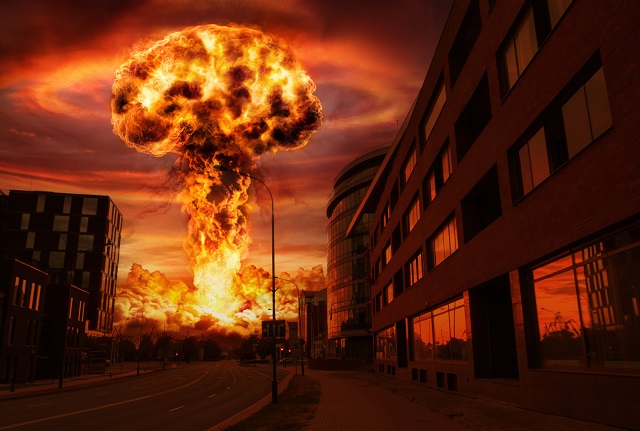




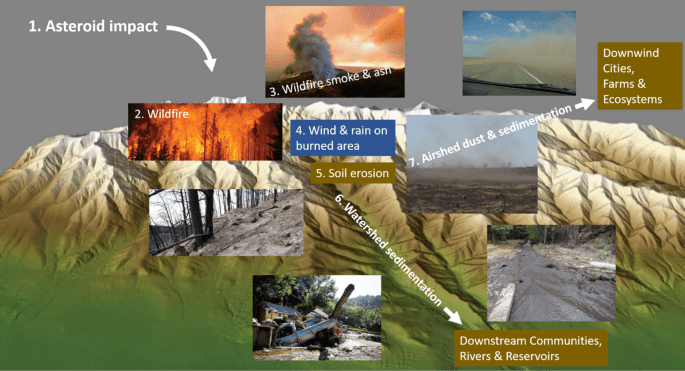



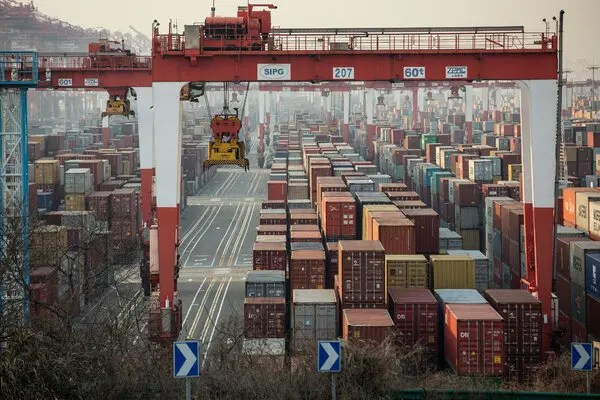



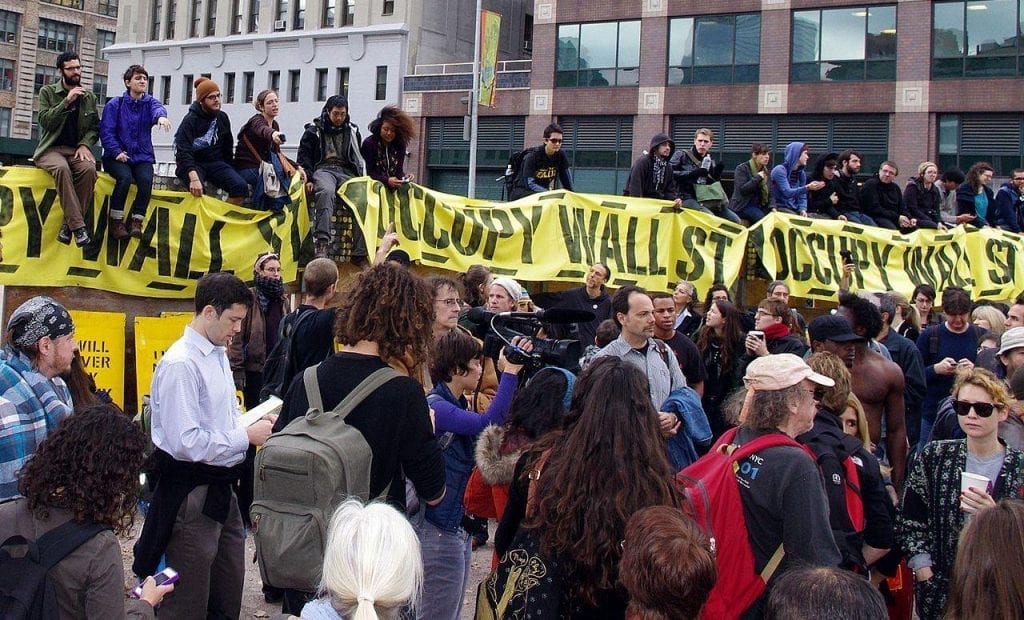


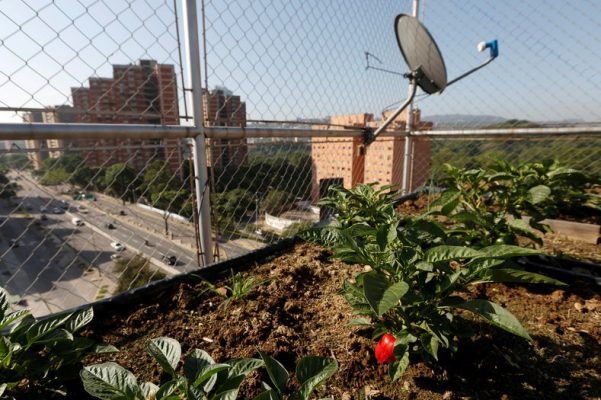
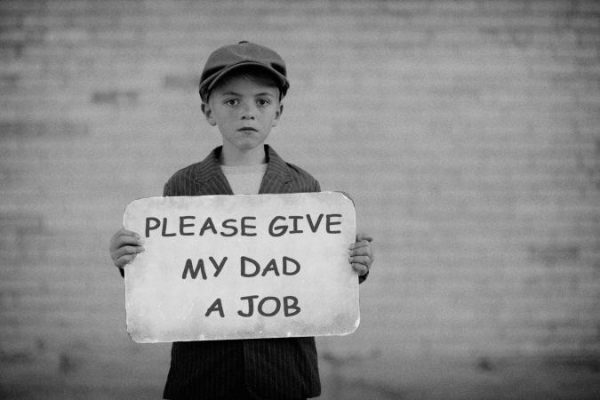
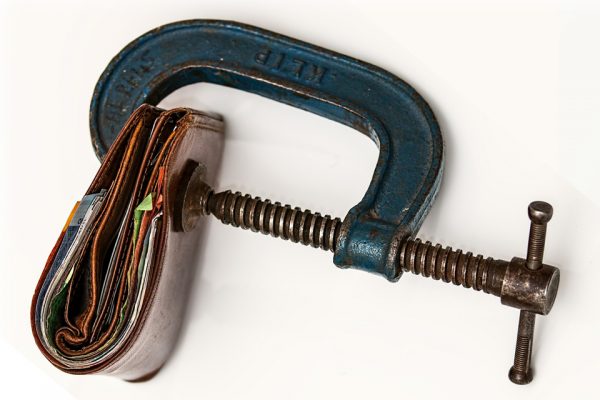
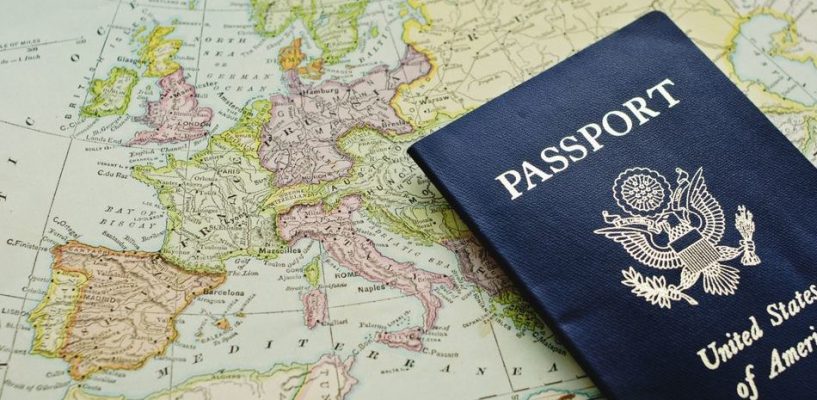
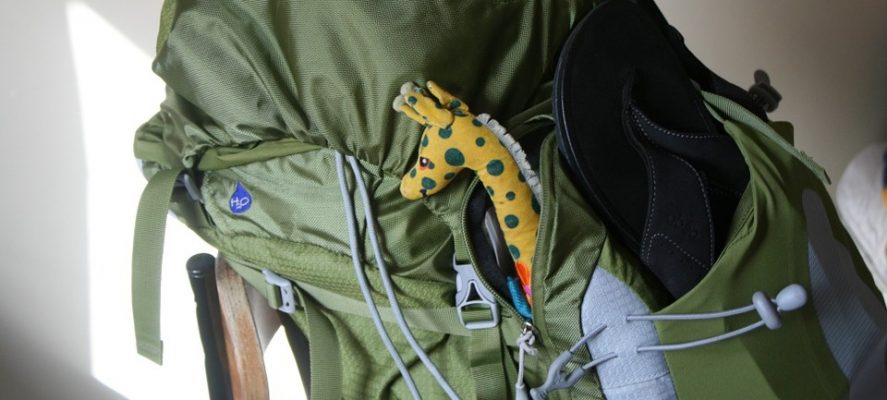

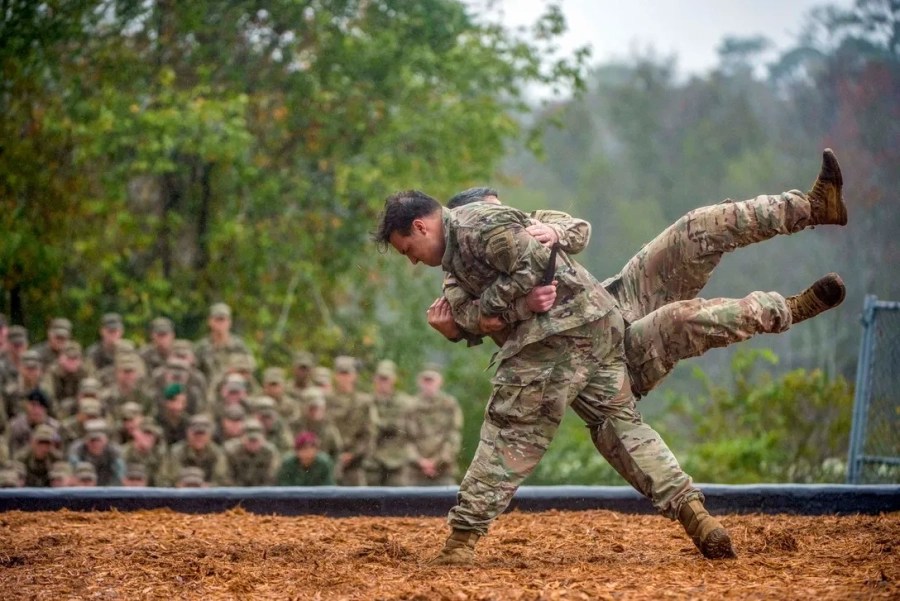



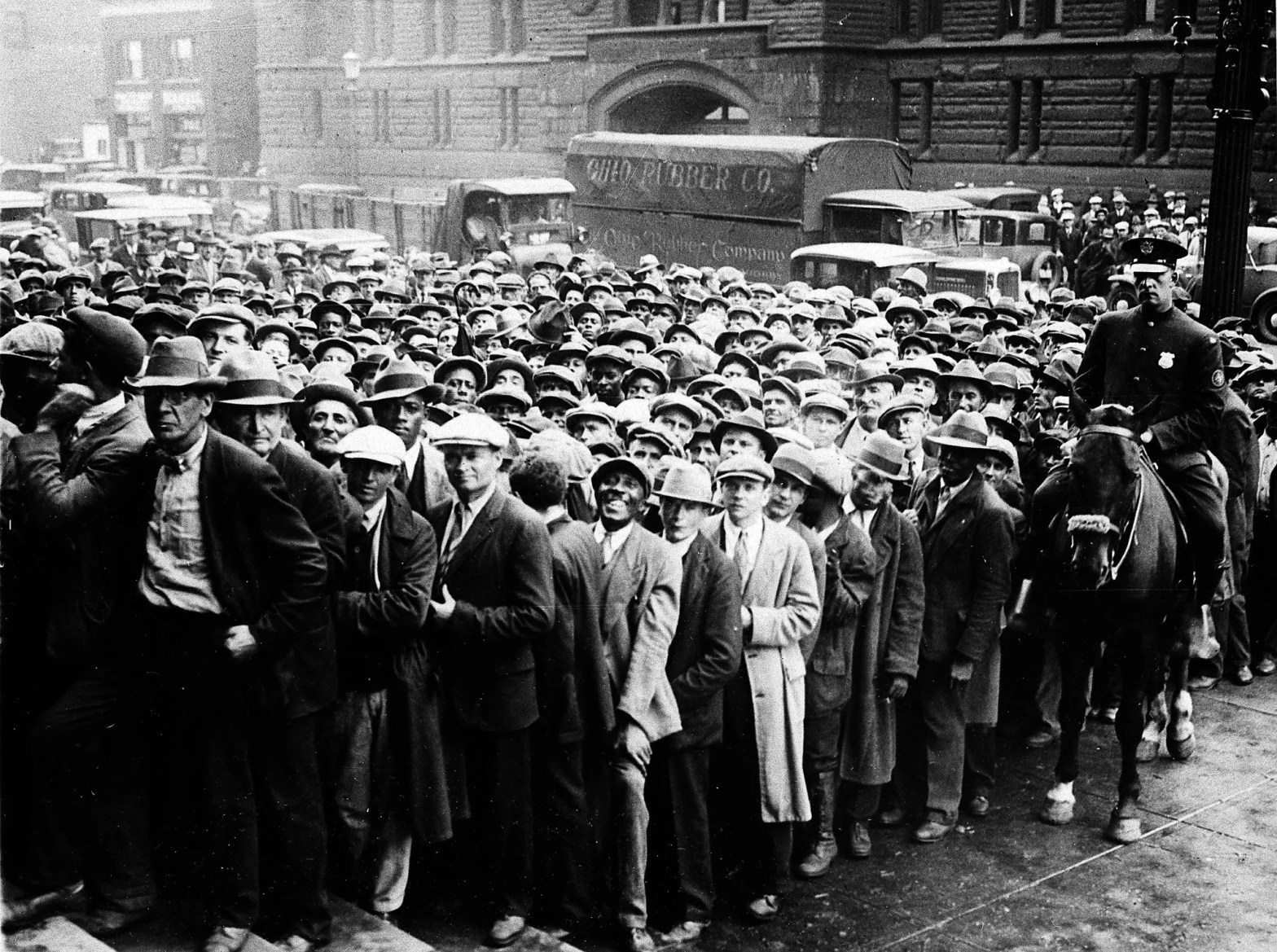


 Ultimate-Survival