Are you a conservative, a libertarian, a Christian or a gun owner? Are you opposed to abortion, globalism, Communism, illegal immigration, the United Nations or the New World Order? Do you believe in conspiracy theories, do you believe that we are living in the “end times”?
If you answered yes to any of those questions, you are a “potential terrorist” according to official U.S. government documents.
At one time, the term “terrorist” was used very narrowly. The official definition of terrorism is “The use, or threat, of force with the intention of achieving a political goal.” That makes it pretty clear what sort of people are covered, and for decades it worked well. The government applied the label “terrorist” to people like Osama bin Laden and other Islamic jihadists. But the Obama administration removed all references to Islam from terror training materials, and instead the term “terrorist” was applied to large groups of American citizens.
And if you are a “terrorist”, that means that you have no rights and the government can treat you just like it treats the terrorists that were being held at Guantanamo Bay. So if you belong to a group of people that is now being referred to as “potential terrorists”, please don’t take it as a joke. The first step to persecuting any group of people is to demonize them. And right now large groups of peaceful, law-abiding citizens are being ruthlessly demonized.
Below is a list of 72 types of Americans that are considered to be “extremists” and “potential terrorists” in official U.S. government documents. To see the original source document for each point, just click on the link. As you can see, this list covers most of the country…
The groups of people in the list above are considered “problems” that need to be dealt with. In some of the documents referenced above, members of the military are specifically warned not to have anything to do with such groups.
We are moving into a very dangerous time in American history. You can now be considered a “potential terrorist” just because of your religious or political beliefs. Free speech is becoming a thing of the past, and we are rapidly becoming an Orwellian society that is the exact opposite of what our founding fathers intended.
First looking at weather patterns, it appears that if there is nuclear fallout, where could you want to be? Remember weather patterns start in the West or North West and move across the country and change throughout the year, but always for the most part blow from East to West. So if you live East of the West Coast you could be in trouble if a Western city gets nuked. Then there are the East Winds in CA, which are called the Santa Ana Winds which are hot, fast moving and dry, the worst possible conditions for fires. As we see every few years in the Southern CA mountains.
So then perhaps you might wish to live on the West Coast, fairly good weather all year and the wind blows the other way. But you would want to live far from any major city on the West Coast. Not in LA, Not near the Nuclear Power plants, Not near the Military bases of Pt Mugu, Camp Pendleton or Vandenburg AFB. So where? Probably on the coast between Humbolt, CA and mid state OR. But alas there are huge faults along the West Coast and the OR Coastline is riddled with issues from liquefaction to offshore Tsunami generating Earthquake faults.
San Francisco gets huge Earthquakes as we know and LA is not immune either and neither is the central valley of CA with it’s issues after proof in the Coalinga Fault. Living between the Russian River and OR Coastline near the coast would be okay even with these issues. Also you would not be down wind from any fallout and you are not a target. Safe in that you have fish for food and lumber for heat and no need for much of anything like power, surrounded by capable woods people.
You would have lots of rain and no water that would be polluted running off from areas of fallout. Of course from an attack by sea from the Pacific side in the case of invasion, you would not be in the best spot, we are not expecting any wars, yet 20 years from now will China be our biggest trading partner or will 2 billion of them like this piece of real estate? If we were attacked for some reason you would have air support from all the Navy and Air guard Bases along the Pacific Coast. Where are other good spots? If Seattle was not hit by a weapon of mass destruction then you still have Earthquakes and remember MT. Saint Helen. There are some cities inland on the I-5 freeway surrounded by mountains, but they are close to volcanoes too?
Where else would be good? Well not Phoenix, not Las Vegas and Reno is over the hill from CA and gets all it’s left over weather. Boise has issues too. Although there are other cities in ID worthy of mention. Salt Lake is on a huge Earthquake fault. How about Helena MT, drought plagued and fire issues. Kellogg ID, superfund area. Billings out of water, Bozeman? Well too close to the State Park and there are issues with the volcanoes there too. Butte, MT also too close. Casper WY out of water and down wind in case of Volcanic Activity from Yellow Stone. Also think if Portland, SF or LA are not hit with nukes then we like, Four Corners, Elko NV, Battle MT (armpit) are doable with large underground water supply but it has arsenic in it. Winnamucka NV many not be safe either, but has thermal activity for power. ND and SD seem safe too, but winter weather is tough. Ogalla underground aquifer is being drained fast and could cause Earthquake from collapse. Western NE, not good, Denver either in case of water supply issues in future or fallout from volcano in Yellow Stone. How about in the Northern Section of AZ? Flagstaff has harsh weather, fire season. Winslow AZ is okay, with rail and FWY, but isolated. Of course these are only a few western states really and well we have identified several great locations with everything you need to survive.
Having studied the FEMA reports and the regional issues of each area and state and the disaster plans, we are well served by such data, but it falls short and a comprehensive plan of attack needs to be considered, because many people living in a region will need supplies, such as we see after major Hurricanes. Which by the way leaves us to wonder if there are in fact any safe cities on the entire Eastern Seaboard, Gulf Coast or West FL coastlines. As we saw in the black out of 2003, the Hurricanes and loss of power, the many fires in drought areas of CA, AZ, NV, MT, ID, OR, NM these are all big issues.
When multiple disasters hit, and transportation is down, power is out, water turned off, dams broken, bridges out, etc. Then what? Well, for some it will be their demise, others have adequately planned. Some of the safest cities are sitting near large underground water supplies and generate their own power or have co-generation plants, which are co-ops near by. Those mid western cities near large rivers are not safe due to the issues with flooding, as we have seen and continue to see every three to five years some town gets it. The water is fresh and clean in those areas and very soft, but when it floods, it is a disaster and very dangerous too.
Some would say it is probably unnecessary to have a major disaster plan, however it is a good exercise anyway, in planning. Things of importance are fresh water supply uncontaminated, food supply, encapsulated market, not over populated, no problems with contaminated air from normal weather patterns know and comparable to the last 200 years, out side of a fire zone and a defendable location. Also of secondary importance out side the risk of major seismic activity, travel from major highways causing and influx of others trying to get away thus bringing in diseases or viruses or using up local natural resources. Worst places to be D.C., state capital cities with lots of military bases close by, cities on major freeways with bridges and no other ways around for over 40 miles or passes on mountain ranges.
The cities which do not make the safest cities are Denver, Dallas, Mobile, Biloxi, Seattle, Chicago, NYC, Orlando, Tampa, Las Vegas, Salt Lake, LA, etc. Cities with no way to get out the population quickly are of problem, for instance DC with it’s daily grid lock or Los Angeles, Atlanta, SF, etc. Cities, which rely on outside sources to get in important stuff are bad. Not to mention you are more likely to die from an auto wreck, although on the plus side they have the cleanest and best filtrated water supplies. That of course a trade off from the polluted air around you which could also kill you before your average life expectancy figure.
Port cities and cities with big major airports, which are hubs for major airlines are bad too. Cities that are big but do not have fed banks are one click down on the list too. Think of the logistics by train too. Cities which are down river close to major railroad bridges, which handle lots of interstate trains are bad too. Port cities get an extra bad deal. Cities which are close to port cities which are over 2 million population are dangerous too. Large cities near borders of Mexico are dangerous if they have over 2 million populations.
San Diego County, San Antonio, Phoenix, Austin TX, Houston, even throw in Tucson, El Paso, Yuma all bad. Already at a fresh water problem time due to droughts and over populations. Santa Monica is bad and LAX is a bad area to be near. A problem at the sewer treatment plant near LAX could be devastating with chlorine gas and weather patterns, with a weapon of mass destruction. Worrisome also to our scenario of possibilities is the major computer brain areas. Like Silicon Valley, Seattle, VA and other Internet hubs, which would also include Boston.
I would like to see a comprehensive plan to save American lives if an attack or Mother Nature event occurs, one which encompasses the entire country. Perhaps this is a good job for our war planners at the Pentagon, to try a reverse order plan, it would help them learn where best to minimize vulnerabilities and an action plan against International Terrorists or Catastrophic Mother Nature Events.
I have been to every city in the United States over 10,000 population. Where have you lived? Have you lived through a natural disaster? Many of us have. The Hurricanes alone last year alone added 40 more million people to that list, it was a costly year for FEMA, but we made it through and showed resilience. So where are you safe? The answer might be nowhere or everywhere and preparation and quality of first reponders may hold that key. What were your concerns, and immediate needs during that period in your life when you faced such uncertainty? What would you tell others who plan to protect the property and lives of America, too the first responders, planners and those entrusted to protect humanity in the times of need?
It is the final backup plan for a lot of us in the case of a disaster. A generous supply of cold hard cash to buy our way out of trouble, pick up as many last-minute supplies as possible or to acquire resources that are unavailable to anyone with a credit card in a world where the electricity is out and the internet is down. We frequently talk about having cash for emergencies, but how much cash should you have if the grid goes down? What will you be able to purchase with your doomsday supply and how long would it last in the first place?
One of our readers made a recommendation the other day to have between $500 and $1000 in cash for your bug out bag and at the time it prompted me to consider again if this amount makes sense. In my personal preparedness plans I have a supply of cash but I am always trying to figure out if what I have is enough or too much. Will it even matter when TEOTWAWKI comes and how can I best use the cash I have to survive?
Why do you need to have cash on hand?
You want to know the time when you will need cash the most? It will be when you can’t get to it. How many of you right now have no cash at all in your wallets or purses? I used to be the same way. I never had cash and relied on the ready availability of cash machines or most often the ability to pay for virtually everything with a debit card. How convenient is it to never have to make change or worry if you have enough cash when with the swipe of a card your bank account funds are at your disposal. This is a great technological advance, but the problem is that this requires two things to be functioning. First, the card readers and ATM machines require electricity. If the electricity is out, neither of these two machines works. The second thing is a network connection. If the network is down, even with electricity the transaction won’t work and you can’t pay for goods or get cash from your bank.
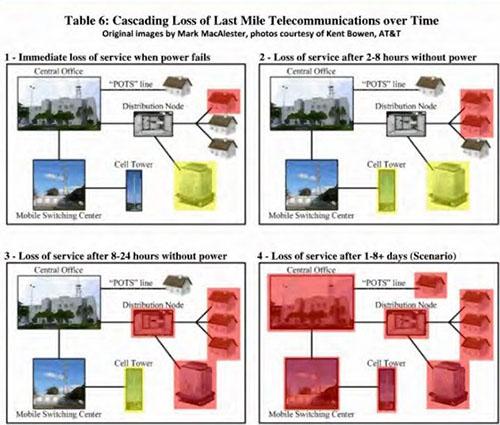
In a disaster, one of the first casualties is electricity. This doesn’t have to be due to some cosmic solar flare that has rendered the grid useless, it could be as destructive and common as a fire, flood, earthquake, tornado or winter storm. It could also be from simple vandalism or perhaps terrorism. A major fiber optic cable was cut in Arizona back in February leaving businesses without the ability to accept payments. When the electricity is out, you aren’t going to be able to access your cash via the normal means so having a supply on hand is going to be a huge advantage for you in the right circumstances.
Even if there is no natural disaster, you are still at the mercy of your bank. What if your bank closes or there is a bank holiday declared because of some economic crisis. In any of these situations, if you are dependent on access to money that is controlled by either technology or physical limitations like a bank office it is wise to have a backup plan should either of those two conditions prevent you from getting cash.
What is cash good for in a crisis?
I think there are two levels to consider when it comes to keeping cash on hand. There is the bug out scenario mentioned above where you would have some “walking around money” to take care of relatively minor needs like food, a hotel or gas. The second is for a longer or more widespread unavailability of funds. Let’s say the economy tanks and the price of everything skyrockets but stores are still open for business. Your bank is one of the casualties, but you had a few thousand dollars of cash stored away that you could use to purchase food, gas and necessary preparedness items for your family. In this scenario, the government is still backing the fiat currency and vendors are still accepting it as a form of payment. For this scenario having a few thousand dollars makes sense.
But what if we have an extreme event where the currency is devalued and is essentially worthless? Your thousands of dollars might only buy you a loaf of bread. Don’t believe it can happen? It did to the Weimar Republic after WWI so it can happen again. That isn’t to say it will, but you should balance how much money you have squirreled away under your mattress with supplies you can purchase now that will last and keep you alive during that same event. My goal is to make sure I have the basics I need to survive at home for several months to a year without needing to spend any cash. This way, if the money is worthless, I still have what my family needs to survive.
If we have a regional disaster where you can bug out to a safer location, your cash should serve you well. Of course if you are in a safer location, assuming electricity was working your access to bank funds should still be working. If this is truly the end of the world as we know it, how long will that cash you have be worth anything?
It is surprisingly simple to disrupt all credit and debit transactions. Do you have cash instead?
How much cash do you need?
So the million dollar question is how much cash should you have if the grid goes down? I always try to plan for the worst case scenario. My rationale is that if I am prepared for the end of the world as we know it, I should be just as prepared for any lesser disaster or crisis I may be faced with. The way I see it is if we do have a disaster, you aren’t going to be using that cash most likely to pay your mortgage, student loans, rent, or your credit card bills. Cash will go to life saving supplies and this will need to be used in the earliest hours of any crisis before all of the goods are gone or the cash is worthless. Once people realize for example that the government has been temporarily destroyed, they aren’t going to want to take your $500 for a tank of gas. They are going to want guns, food or bullets.
I also don’t see you using your cash to buy passage to another country, but that’s just me. I know there is a historical precedent for that, but I am not planning on that being something I realistically attempt with my family. I am also not planning on bribing any officials with cash either. My cash is for last-minute necessities and then it is back into the hopefully safe confines of my home to plan the next steps. For that I have only a couple of thousand dollars in cash stored away. I figure if I need more than that I didn’t plan well. Also, I would rather spend my money on supplies like long-term storable food and equipment than having a large horde of cash. With that amount, I figure I can make one last run if needed or be able to weather any short-term emergency when I can’t access cash.
What is the best place to hide cash in your home?
I wrote a post awhile back titled, How to hide your money where the bankers won’t find it that had lots of good ideas for reasonably safe places you could store cash. As I said in that article, you do have risks involved with keeping cash in your house, but I think you have just the same, if not worse risks relying on banks to keep your money safe and give it back when you want it. There are a million places to hide cash, but you can get tricky and buy a fake shaving cream safe to store several hundred dollars in there. Just be careful you don’t throw that away. There are other options like wall clocks with a hidden compartment inside that might be less prone to getting tossed in the trash. Your imagination is really all that is needed for a good hiding place, but I would caution you that you don’t store cash in too many places or you could forget where you hid it. This happened to me when I had hidden some cash behind an item that I ended up giving to my daughter because I thought I didn’t need it anymore. Imagine my surprise when she came into the living room and said, “Dad, I found an envelope with a lot of money in it”. I gave her a twenty for a reward…
What about you? How much cash do you think you need to have on hand and what do you plan on spending it on if the grid goes down?
Dealing with this subject has been quite difficult for me. Both the concept of the state stripping you of everything and the SHTF concept have as many backgrounds as diverse interpretations, so trying to approach this from a single point of view is a complicated task.
In my country, Venezuela, after 20 years of “revolution,” we have bottomed out and learned to live in situations we never imagined (so much so that I was able to write an article on survival techniques I never imagined myself using on daily basis).
It’s not that the governments before Hugo Chavez were much better. But there was a much more stable political and economic situation with access to the international market.In 1999, when Chávez’s government was instated, oil prices were the highest in Venezuela’s history. The newly born Communist policy in the country was hardly felt and had very few repercussions on the professional citizens who lived on a monthly salary.
That’s probably why those first few years didn’t really feel like something was taken away from us. In addition, the newly elected president had a 60% popular approval rating and promised endless opportunities for the neediest people.
One of the first economic policies was the implementation of exchange control, currently in effect. Any operation with foreign currency was managed by the state. Later came the control of the prices of basic products, which caused the disappearance of those items and initiated a black market that is also very much in force to this day.The real problem began in 2004 with the accelerated decrease in oil prices that translated into a lower income for the government. Remember that we are talking about an oil-reliant country.
The decay was soon seen in many aspects. There was no longer maintenance on public roads, and public services failed often until reaching the point of constant failures of electric service, even for days.
The public health situation is also getting worse and worse. As a health professional, I have seen this deterioration for the last 10 years.
I am an oncologic breast surgeon. In Venezuela, breast cancer is the main cause of death from cancer in women. However, in the hospital where I work, the most important hospital in Caracas, there are no basic services for this issue. No chemotherapy, the radiotherapy equipment has been inoperative since 2015, and surgical procedures are suspended every week.
For me, as a doctor, it is frustrating not to be able to help my patients in any way. Just last week two breast cancer patients who were going to the operating room were suspended for the fourth time in a row. This time the anesthesia machine was failing.
The purchasing power of the Venezuelan citizen also decreased. It seemed to have happened from one day to the next, but if you look at the political situation since 1988, the decline took a long time; all that was left was to hit rock bottom.
Finding ourselves in extreme situations makes our defense system act in a primitive way. This means activating the fight or flight response at any time within any context—and yes, the state takes advantage of that.
The state will rip you off, but it doesn’t happen all of a sudden. There are a lot of logistics; it takes a long time to develop the kind of policy that makes citizens totally dependent on the state.
You start by losing something unimportant, like some kind of monetary bonus now given to you as government-run grocery store credits, and you end up losing your freedom and all kinds of rights, including freedom of speech and protest, but these issues are so extensive that they require an article of their own to explain them properly.
The state has taken charge, with great success I must say, and you are now living in fear of the so-called public authorities, meaning police and military police, since they serve as pro-government forces of repression.
Many of us have lost the incentive to go out and protest. We did it for more than 10 years. However, I have seen the evolution of the manifestations before and now.
I remember 2003 when repression was minimal, almost non-existent. Today many friends who still have the strength to continue have gotten gas masks in order to defend themselves from the hundreds of tear gas grenades used by the authorities that should be defending people.
In any public protest, savage repression is a constant. That violence is what we Venezuelans have become used to.When there is no public or social security, when the devaluation of the currency is occurring on a daily basis, and when you don’t know if the bakery on the corner is going to be broken into tomorrow, at that moment, the debacle has already occurred.
Defending oneself from these kinds of problems is as difficult as trying to explain them. Many have chosen to leave and seek a future in other countries. That way the state even strips you of your own country by causing you to become self-exiled.
I don’t blame them. We all have more than one family member or close friend who has been kidnapped or stolen from violently, and sadly, all we can say is “You should be thankful you weren’t killed”.
Personal security becomes a problem of epic proportions, to the extent that going out on the street is considered a risky activity—a risk to which, unfortunately, you have to get used to in order to live a normal life.Living in that state of continuous stress in which your rights are violated, in cities where, despite paying high taxes, everything seems to be in ruins, is part of that hopelessness that the state achieves in the individual.
Living in a place where a good monthly salary fora top executive, for example, does not reach $100 a month, is not easy, especially taking into consideration that a basic shopping list for a family of four can cost up to $140 monthly.
So the mismanagement of incompetent and corrupt civil servants results in the deep separation of three social classes: extreme poverty, which represents more than 80% of the population and is totally dependent on the government; the working middle class, which manages to subsist through one or two basic incomes plus the economic help of family members abroad; and those who do business with the government and can live in a very comfortable, ideal world that has nothing to do with reality.
Of course, there are exceptions to this, and some people have high incomes without being involved in dubious businesses.
It is sad to see how fourth-level professionals, trained in the country, must leave in order to provide for their families.
I know it is not a unique situation in the world—it has happened and will continue to happen—but it is very different to read about it than to see it sitting in the front row or even being the leading character.
Nowadays it is the common denominator, and more and more qualified professionals and technicians step into the international airport in search of a better quality of life.That’s why there is a whole generation that has no kind of roots in their country and only waits for the opportunity to leave.
I think the worst part of all this is the desolation sown in all of us. It seems to be an endless story, with the political disqualification of opposition leaders, political prisoners, and many more vexations.
Writing all this is not easy, but it makes me reflect. It is an exercise in introspection. Without a doubt, the state strips you of everything in its eagerness to stay in charge. That’s the way they do it.
There comes a point at which the only thing in your mind is to know if you will return home alive. Everything else is secondary. At that point, the state has already massacred you internally. You can never be the same again. I’m sure I am not.
Even if you are a person who is not involved in politics, an “apolitical” citizen, in this state of anarchy, you have to fix your position.
As Desmond Tutu said, “If you are neutral in situations of injustice, you have chosen the side of the oppressor.”
Even some of our brightest scientific minds are projecting that there is absolutely no positive future for our civilization if we stay on our current course. Perhaps one of the reasons why our society has become so obsessed with short-term results is because most of us can’t bear to think about the long-term consequences of our actions. I have a website that focuses on “economic collapse”, but it isn’t just the economy that is headed for catastrophe. Virtually every aspect of our society is coming apart at the seams all around us, and the era that we are moving into will be more nightmarish than most people would dare to imagine. But our political leaders continue to insist that everything is going to work out just fine somehow, and most people choose to believe them.
This week, an old MIT study from 1972 that projected that our civilization will collapse at some point during the 21st century made headlines on several major news sites…
In 1972, a team of MIT scientists got together to study the risks of civilizational collapse. Their system dynamics model published by the Club of Rome identified impending ‘limits to growth’ (LtG) that meant industrial civilization was on track to collapse sometime within the 21st century, due to overexploitation of planetary resources.
In particular, the study identified a period of time “around 2040” when societal collapse would be very likely…
The study was published in the Yale Journal of Industrial Ecology in November 2020 and is available on the KPMG website. It concludes that the current business-as-usual trajectory of global civilization is heading toward the terminal decline of economic growth within the coming decade—and at worst, could trigger societal collapse by around 2040.
Of course events are not going to transpire exactly as they foresaw, but as far as the big picture is concerned they were right on the money.
Our society is now in the process of collapsing all around us, and you can see evidence of this everywhere that you look.
This week, civil unrest is causing widespread chaos in the streets in Cuba, South Africa, Beirut and Paris. We have entered a period of time when it seems like people are perpetually angry, and the wild scenes that are playing out around the globe are absolutely shocking.
Here in the United States, we are in the midst of a crazy crime wave. Murder rates in our major cities rose by an average of 30 percent in 2020, and they are up another 24 percent so far in 2021. Extreme violence has become a way of life in many of our largest metropolitan areas, and this is particularly true in the city of Chicago…
A Chicago rapper died after suffering as many as 64 bullet wounds to his head and other parts of his body in what police are calling an ambush shooting just as he was released from jail.
Londre Sylvester, 31, who is known by his stage name KTS Dre, was one of three people who were shot just outside Cook County Jail in the Little Village section of Chicago on Saturday.
Chicago police seem powerless to stop the endless violence, but of course the same could be said about many other police departments around the country.
The streets of our biggest cities are becoming war zones, and what we have experienced so far is just the beginning.
Meanwhile, we are dealing with the worst epidemic of illegal drugs in our history. If you can believe it, drug overdose deaths were up nearly 30 percent last year…
Drug-overdose deaths in the U.S. surged nearly 30% in 2020, the tragic result of a deadlier supply and the destabilizing effects of the Covid-19 pandemic, according to preliminary federal data and public health officials.
The estimated 93,331 deaths from drug overdoses last year, a record high, represent the sharpest annual increase in at least three decades, and compare with an estimated toll of 72,151 deaths in 2019, according to provisional overdose-drug data released Wednesday by the Centers for Disease Control and Prevention.
Drug overdose deaths were already at an all-time high coming into 2020.
So for the number of deaths to rise 30 percent above that level in just one year is really, really tragic.
At the same time, our system of public education continues to rapidly deteriorate.
Earlier today, I was shocked to learn that 41 percent of all high school students in Baltimore have a grade point average that is below 1.0…
Project Baltimore obtained a chart assembled by Baltimore City Schools. The chart shows the average GPA for every high school grade in the city – freshman through senior. In the first three quarters of this past school year, according to the chart, 41% of all Baltimore City high school students, earned below a 1.0 grade point average. In other words, nearly half of the 20,500 public high school students in Baltimore earned less than a D average.
“It’s heartbreaking,” said Patterson. “If almost half of our kids are failing, what options do they have after high school? This is really disheartening. It’s sad to see this.”
I don’t just want to single out Baltimore, because that isn’t fair.
All across this once great country of ours, public schools are completely and utterly failing our kids. The vast majority of our high school graduates cannot read, write or speak coherently, and that simply should not be happening in the wealthiest nation on the entire planet.
Switching gears, authorities up in Canada are dealing with a different form of social decay. For years, I have been warning that Christians in the western world would soon face the same sort of extreme persecution that Christians in other parts of the globe are forced to endure, and now it is starting to happen.
In recent weeks, individuals that are apparently motivated by a deep hatred for Christians have been setting churches on fire all over Canada…
Terrorists are attacking and burning down churches across Canada with impunity.
It’s a reality most Canadians only thought possible for Middle Eastern countries like Syria, where ISIS has bombarded and razed dozens of Christian heritage sites in the name of Islam.
We haven’t seen anything quite like this before. According to Keean Bexte, a total of 45 Canadian churches have been burned just since the beginning of June…
The Counter Signal has kept a close eye on these terrorist attacks, reporting on the scene just hours after a fire in a refugee church.
Our information shows that since June, there have been 45 attacks on Christian and mainly Roman Catholic congregations. Of those, 17 of them have been scorched or burnt to a crisp in suspicious circumstances.
The corporate media should accept responsibility for their role in provoking these attacks.
For years, the corporate media has been relentlessly demonizing conservative Christians, and churches are the most visible symbols of conservative Christian culture in our society.
As the corporate media continues to blame conservative Christians for society’s ills, it is inevitable that there will be more attacks on churches in the future.
But of course there will be more violence everywhere around us as our society continues to steadily unravel.
I have never seen as much anger, frustration and hate as I am seeing right now, and there is no future for a society in which virtually everyone is filled with rage.
The years ahead are going to be extremely chaotic, and I would suggest that you plan accordingly.
The mere mention of the words FEMA camps is bound to draw polar responses from our readers. Almost any topic that can be linked into a large list of what is routinely called conspiracy theories does that. It seems that no matter what the subject is if there is some form of mystery around it or the possibility that the subject is completely made up, you will have those who will argue passionately for both sides.
I think that the more sinister the underlying thought is behind the theory, the more passionate the arguing gets. If one side is seriously concerned about the risks of some dark plan to harm them, the other side will be giddy with excitement at the chance to shoot down theories and research.
For the people who believe in FEMA camps and see them as a very bad sign to watch for and fear, this topic engenders a wealth of responses and warnings about what to do if faced with the prospect. For those who think FEMA camps are a conspiracy theory, this is complete and utter nonsense, they will argue just as passionately to the contrary – that there are no such things and anyone who believes our government has plans to round people up and lock them in camps against their will is an idiot. I do agree with part of that and I’ll explain why.
What are these FEMA Camps you speak of?
To back up just a moment, for those of you who are completely unaware of what I am talking about let me give a brief explanation of what FEMA camps are. FEMA camps in this context are secretive government facilities all over the US that are supposedly being set up to house massive amounts of American citizens during a time of unrest. The closest approximation to what these camps will be like is either a prison or a forced labor camp. Some would say that’s redundant.
Why would the government set up any camps like this in the first place? There are tons of theories, but the most common is usually to house people after either a collapse of our government/economy or some massive societal problem that displaces millions and removes the ability for the public to take care of themselves. I am not going to try and convince anyone of the plausibility of FEMA Camps and that isn’t what this article is about but I would suggest that if you are curious you do your own research.
I am not advocating my position as either believing in the existence of FEMA camps or a sinister plan for their potential use or disbelief but I am sure that will be very clear as I write. What I want to do is describe how I think we could find ourselves in a situation where something very similar to FEMA camps would be possible and you would voluntarily go if you didn’t follow the steps below.
Let’s take the whole term FEMA camp out of the equation for a minute and talk about facts. In most natural disasters, there are settlements created for people who are displaced. There have been FEMA camps set up for people affected by the recent wildfires. If you look at the war in Sudan you can see refugee camps. There were FEMA camps set up for people after hurricane Sandy.
In hurricanes, there are relief shelters and people willingly go to all of these. Is it such a stretch to imagine that some event in our country could compel large numbers of people to make their way to the same types of facilities? Remember Katrina when a lot of people flocked to the Superdome? Nobody made them go, did they?
I maintain that nothing good can ever come from a situation like a refugee camp or even a relief shelter if this is on a massive scale. I am not talking about after a hurricane if your house is flooded. I am talking about a country wide problem where the only hope being offered is to make your way to a central location. I think we should all know how to avoid FEMA camps or any other camp for that matter for as long as humanly possible.
What could compel you to go of your own free will?
I think that there are a lot of reasons that people would willingly get on a bus or walk to a facility that has been set up by our government. If you think about it, things would be so much easier if people were asking to come in. Why fight with people when you can have them freely submit to whatever conditions you imposed on their stay because they were begging you to take care of them?
Reason to go to a FEMA Camp #1 – Hunger
I think this is the easiest one to predict. Let’s say there was some horrible event like an economic collapse. Now, this probably won’t play out over days or weeks, but eventually after so much time a massive economic collapse could interfere with your ability to put groceries on the table.
Let’s imagine that most people in the US lost our jobs, companies closed left and right and everyone was facing worse than depression conditions. How long could you hold out on food if there were no unemployment checks and no jobs to work? I think for most parents, the thought of their children going hungry is enough to drive you to do things you wouldn’t normally do.
This can swing to the violent side with robbery or even killing someone for food, but the path of least resistance could be the camp. If you just go to the camp, they will feed you and give you a bed to sleep in.
Reason to go to a FEMA Camp #2 – Safety
Building off the desperation subject above, I do believe if we have a collapse of society, the bad elements will rise up and join together. Criminality is a fact of life and it is an inescapable part of our history. People will be taken advantage of and bad things will happen.
If the scenario I described above happens, you could easily see gangs of people stealing, raping, and killing to either get supplies they want or simply because nobody is stopping them. If you lived under the threat of marauders invading your neighborhood and harming your family, would you consider going to the camp for safety? If you go to the camp, we will protect you and make sure nothing bad will happen. We will have security to keep any bad people from getting in to harm you and you can finally sleep safely at night. Sounds tempting right?
Reason to go to a FEMA Camp #3 – Medical/Health Needs
What if you have a medical condition that requires medicine that is no longer available? What if you are injured and the hospitals are closed or it is more dangerous trying to get to the hospital? What if your daughter is sick with an infection she received when she cut her hand on a rusty can and you don’t have any antibiotics? Would you go to the camp where they have medicine and can treat her? Would you consider the cost of her living is worth any liberties you might give up? Would you turn in your firearms to the camp for treatment for your daughter?
So how do I propose you stay out of the camps?
OK, again without going into what I think any camps might be designed for, I do think that there is a higher chance of people willingly going than being rounded up in the night. I could be wrong, but lets assume that we have an economic collapse. Maybe there is a war overseas or a biological outbreak that cripples our country and let’s further assume that going to any refugee or FEMA camp will not be good in the long run.
What can you do to avoid the FEMA camps?
1. Be able to feed yourself – I have said this multiple times before and you can’t go to any other survival/preparedness website without getting the same advice. Make sure you have extra food so that you aren’t forced to go somewhere because you are starving. How much? I normally recommend starting with 30 days, but for this to really work I think you need as much as a year of food stored up.
One year of food will enable you to last through the winter and get a garden started if you don’t have one already. Food is one of the easiest ways to prepare for any type of scenario that could affect your family. If nothing happens, you still have to eat every day.
2. Be able to defend what you have – I don’t mean counting on kindness of strangers either. If times get so bad that people are unable to feed their family, they will come for those who still can. You will need to have a means to keep your family safe and the determination to do what is necessary.
That could mean taking a life. It might just mean making a defiant stand. Either way, history shows that expecting the best of people in times of crisis is foolish and if that is your plan, you might regret it.
3. Have a plan to provide basic medical care for yourself – This can be viewed two ways. I always recommend having a more than basic medical kit for every family and the knowledge of basic first aid. You have to know how to stop bleeding and it really helps to have bandages to do that.
You have to be able to sterilize a wound and antibiotics are necessary for infections. Your basic health is another aspect of this though. If you aren’t able to walk a few miles without getting winded, how do you expect to survive if we have a collapse? Make sure you are in great shape and that will make any stress like this easier to bear and the likelihood that you will fall by the way much lower.
I really believe that if anything bad happens like this, our society has overwhelmingly demonstrated that they desire to have someone take care of them. If that someone is the Government you will lose in some way. What will that be? Who knows – I leave that up to others to debate.
I do know this though and that is that I will do anything in my power to stay away from any situation like that. I am taking steps now to prepare my family and am doing what I can to take care of them and make sure they can take care of themselves. The alternative is not attractive to me and I only see bad things happening if we go that other, easy, safe route.
Lunatics infesting the empire of lies are on a path toward killing us all.
In desperation over the thrashing of Nazi-infested Ukraine by superior Russian firepower and tactics, Politico reported the following on Saturday:
Pentagon officials support approval of F-16 warplanes to Ukrainian Nazis — while ignoring the reality of Russia’s ability to target and destroy them in flight.
Weapons of every shape and kind sent to Kiev by US/NATO regimes so far failed to halt Russia’s battering of its troops to a near-state of collapse.
Nor will F-16 warplanes change the dynamic on the ground.
While no final decision was made by the Biden regime on supplying them, according to Politico, things are heading in this direction.
It reflects increasing desperation in the empire of lies to halt Russia’s unstoppable slaying of the made-in-the-USA Ukraine monster — what will also be a major defeat for the Biden regime, congressional Russophobes and their MSM echo chamber.
War on Russia by hegemon USA and its NATO vassals is heading toward becoming full-blown with nukes.
And this reality check by Russia’s Deputy Foreign Minister, Sergey Ryabkov, saying:
Hegemon USA is using Ukraine as a platform for “testing…its military-industrial products, where various weapons systems and methods of their use, including modern, very long-range ones” against Russia.
Getting other NATO regimes to supply as much as possible, the empire of lies and forever wars on invented enemies expects US merchants of death to get multi-billion contracts for purchases of US weapons and munitions to replenish their depleted stockpiles.
What’s going on “will end badly” for their ruling regimes.
Supplying Ukrainian Nazis with arms of most every shape and kind for perpetual war makes it “pointless to talk with the Ukronazis (and) their puppeteers,” Ryabkov stressed.
Everything sent to Kiev — as well as Western troops involved in waging war on Russia — are “legitimate targets” for Moscow to target and destroy.
At the same time, Ryabkov slammed fake news “Russophobic horror stories” proliferated by US/NATO regimes and their MSM co-conspirators, adding:
“We don’t need anything from the (morally bankrupt) West.”
Yet in pursuit of their megalomaniacal aims, they’ve “consistently crawled up to the Russian borders, (while) zombifying our neighboring countries” by their humanity-destroying agenda.
Whenever Russia engaged in diplomacy with the empire of lies before, its good faith outreach was betrayed.
It’s clear proof that seeking normalized relations with US/Western regimes is a colossal waste of time.
The die was cast long ago for war on Russia by US-dominated NATO.
Now it’s ongoing, launched preemptively by the empire of lies and its NATO vassals — including against Iran.
Foiled micro drone attacks on an Iranian military facility had hegemon USA and apartheid Israeli dirty hands all over them with more of the same likely to follow.
On Sunday, the WSJ reported the following:
Biden regime and Israeli Iranophobes are “discuss(ing) new ways to combat” nonbelligerent, nonthreatening Iran, adding:
Israel’s Netanyahu regime “carried out a drone strike targeting a defense compound in Iran,” citing Biden regime officials as its source.
The foiled aggression caused minor damage to the roof of an Iranian warehouse.
Iranian Foreign Minister Hossein Amir-Abdollahian condemned the incident as cowardly.
Last week, CIA director William Burns was in Israel to discuss preemptive US/Jewish state aggression against Iran — what’ll risk full-blown Middle East war against a nation able to respond with toughness and effectiveness against nations attacking its territory.
The current Israeli regime is the most extremist and recklessly dangerous in Jewish state history.
Yet the Biden regime fully supports what demands condemnation.
Over the weekend and earlier, thousands of Israelis protested publicly against the Netanyahu regime in Jerusalem, Tel Aviv and Haifa.
A placard displayed by one protester read:
(The fake) Biden (and) Bibi (are) lying to you.”
An estimated 40,000 took to the streets of Tel Aviv, another 12,000 in Haifa.
In New York City’s Washington Square Park, anti-Netanyahu regime protesters turned out.
One displayed a sign, reading:
“Fascism (in Israel) is not OK.”
Another sign read:
“From the (Jordan) river to the (Mediterranean) sea, all people must be free.”
And this reality check:
Netanyahu is the first ever Israeli prime minister to be indicted for criminality while in office.
Yet he falsely denies indisputable evidence of bribery, fraud and breach of trust — what should have already gotten him imprisoned longterm.
Hegemon USA and apartheid Israel are rogue states, ones exceeding the pure evil of other despotic regimes.
In cahoots with each other, they risk full-blown war in the Middle East at a time when US-dominated NATO regimes are attacking Russia aggressively.
Launched by the empire of lies and its NATO vassals, WW III is underway.
Doomsday preppers are getting ready for a variety of global disasters with bug out bags, survival food storage, weapons for self-defense and emergency action plans to help them survive if the world plunges into lawless chaos, but many are forgetting to include hemorrhoid relief products in their long-term survival gear stockpile.
It may seem odd on the surface to read an article that combines doomsday prepping, bug out bags, survival food storage and hemorrhoid relief.
What really put water on the topic for it to grow into this article about doomsday survival and hemorrhoid relief came from hanging out at a barbecue last week talking about how we would survive in a disaster situation. The hosts are a married couple I’ve known for a few years. I knew they liked to be prepared for emergencies, but this year they’ve become hardcore doomsday preppers.
Socially they are liberal, peace loving and mellow people who live an Ed Begley Jr. environment first type of existence. They grow different food in a nice size organic garden and try to be self-sufficient as possible for living in San Diego, California.
They’ve been trying to get a small circle of friends that live in the neighborhood to be part of their doomsday prepper community. For Christmas they gave out well stocked bug out bags to us as presents. It was a really thoughtful gift that will last for years to come.
I would not consider myself a hardcore doomsday prepper, but I do keep the bug out bag that I did add hemorrhoid relief products to in the trunk of my car and another bug out bag in the house.
I’ve also started to take survival food storage more seriously. I now have about two months of emergency food stuffs and water in my house along with an assortment of medicated wipes, creams and ointments that are part of an extensive first aid kit for the house and car.
It’s nothing compared to what my friends have. They told me they could last two years off the grid if the world’s infrastructure suddenly collapsed because of a disaster or economic meltdown that would leave people fending for themselves.
Once a month they email a group of us updates on what we should have in our survival gear storage supplies and helpful hints on being more self-sufficient. It’s easy to forget sometimes this husband and wife are certified public accountants and not full-time survivalists.
Their doomsday prepper monthly newsletter I noticed was missing any treatments if someone gets a hemorrhoidal condition. It could have been because I’m a former hemorrhoid sufferer and write for a blog dedicated to the topic that this stuck out to me like a sore thumb.
Hemorrhoids are a serious health problem and if gone untreated can lead to dangerous infection or worse. In a survival situation during a disaster this anal health issue can be a huge physical obstacle to you fending for yourself. Your movement will be limited and you will be in constant pain.
There will very likely be no hospitals for you to seek medical treatment. You will be on your own to handle the condition. The major contributors to developing internal or external hemorrhoids are stress and constipation which causes unhealthy strain and pressure during bowel movements.
Many doomsday preppers will end up eating a diet that is mostly freeze dried foods, US military rations called MREs (Meals Ready-To-Eat) and plenty of other heavily processed foods. This radical change in diet will most likely lead to digestive and colon health problems like chronic constipation.
A doomsday prepper diet could easily cause painful growths to form inside of the rectum and outside of the anus. Also factor in super high stress levels of the world as you know it turned upside down and next thing you know you feel burning itch, awful pain and bleeding coming from your rectal area.
Lots of people that prep for the end days of society stock up on grain alcohol to use an antiseptic to fight off infection in case someone gets a wound. Alcohol is one of the worse things you can use on hemorrhoids. It will irritate and inflame the anal growths more which make the condition worse.
At the barbecue I told my friends my thoughts and they asked me for a list of products that they should have stored for emergency. Toilet paper is essential for any doomsday prepper emergency stockpile. I learned that quickly when I saw how many rolls of toilet paper they had stored in their garage and a backyard shed.
In my bug out bag and emergency doomsday stockpile I have medicated wipes too. The reason medicated wipes are important is they are compact and help clean hemorrhoids completely reducing risk of infection. Toilet paper does not clean them as well and often times irritate the delicate damaged skin. Medicated wipes avoid this problem while delivering itch and pain relief in a sanitary way.
Fargelin Plum Flower Pills have natural Chinese herbs that are well-known hemorrhoid remedy. Plum flower has healthy properties that help with digestive and colon health. This natural healer has been used for centuries to help treat and cure this rectal health ailment.
Fargelin Plum Flower Pills are an awesome natural herb formula that quickly, gently and safely assists the body in eliminating painful hemorrhoids. It is a mild extract, non-irritating remedy that is free from dangerous side effects. Fargelin plum flower pills helps with healthy blood circulation and relieves painful inflammation.
Storing tubes of a non-toxic hemorrhoid ointment that has seven kinds of naturally powerful Chinese herbal medicines that can quickly provide proven relief from chronic itching, fiery pain and terrible discomfort is smart. You really don’t want to be caught without this type of ointment.
In some cases this Chinese herbal infused ointments have cured hemorrhoids completely. These special Chinese herbal formulas are usually a slightly pink color or grey-yellow, with a pleasing fragrant smell and wonderful cooling properties. The ointments clear away unwanted heat and damaged toxic skin without exposing your skin to harsh chemicals.
It removes the putrid anal skin tissues and stimulates healthy new tissue to grow in its place. This promotes faster healing. It can be used to quickly relieve inflammation pain, reduce anal swelling, shrink piles and heal anal fissures.
If you want to be a well-prepared doomsday prepper don’t neglect thinking of what your survivalist diet will do to your digestive and colon health. Hemorrhoid relief products are a must for any doomsday survival situation.
For over three decades, the United States of America has been chest-thumping about being the world’s “sole remaining superpower“. Some in the US establishment have even claimed that the US has become the world’s first “hyperpower“. And indeed, in the immediate aftermath of the Soviet dismantlement, the US-led political West seemed unbeatable, unilaterally starting wars across the globe, all under various pretexts such as “humanitarianism“ and the much-touted “War on Terror“.
The US and NATO used both of these excuses to invade dozens of other countries, be it former Yugoslavia, Iraq, Afghanistan, Syria, Libya, etc. The US military seemed unstoppable and able to overcome any opponent, oftentimes by using air power only, with minimal ground engagements, at least until it got bogged down, which in itself was very useful for the ever-profit-hungry Military Industrial Complex.
Although many in the US establishment seemed convinced this will be a perpetual state of affairs, luckily for the world, the last decade proved the power of the belligerent thalassocracy is waning. While the Pentagon could count on hundreds of thousands of battle-ready soldiers during most of the 1990s and early 2000s, in recent years, there has been a significant drop in young Americans’ interest to go die or get maimed for life in one of America’s many pointless invasions and general aggression against the world.
Even though the Pentagon found other ways to continue with its imperialist belligerence, primarily through an exponential increase in the use of unmanned combat systems around the globe, indiscriminately targeting civilians under the ever-convenient pretext of the “War on Terror“, most Americans have become aware of the fact that the US power (albeit still significant) is fading away faster than anyone would’ve expected just a decade ago.
A new poll conducted by the YouGov/Economist is the latest proof of this public opinion shift. The project polled Americans about the probability of various “dire political scenarios“ and found that 50% of the US population considers that America will lose its global superpower status within a decade. The poll also found that nearly half (47%) of Americans think that a “total economic collapse“ is inevitable.
“Among 15 potential future scenarios involving instability or political violence, the one that most Americans consider likely in the next decade is that the U.S. ceases to be a global superpower (50% say this), followed by a total collapse of the U.S. economy (47%). Each of the 15 dire scenarios is considered somewhat or very likely in the next decade by at least 20% of Americans. […] 37% of Americans say [a civil war] is at least somewhat likely to occur,“ the YouGov poll found.
The most surprising aspect of the poll must be the staggering nearly 40% of US citizens who consider civil war “at least somewhat likely.“ With a population of approximately 330 million people and being among the world’s most armed nations, such a prospect seems rather terrifying. However, it’s hardly surprising, especially given the sheer level of polarization of the US society, regardless if it’s based on race, religion, sex/gender, identity, ideology or any other parameter which the parties and various interest groups in the US are trying to exploit and use for political, financial and power gain.
“[…] After an end to the U.S.’s global-superpower status and economic collapse, the next scenario is that the U.S. will cease to be a democracy (39%). Democrats believe the U.S. will become a fascist dictatorship (31%), while Republicans think it will be a communist one (21%). Two-thirds of Republicans (65%) believe that total economic collapse is at least somewhat likely, compared to only 38% of Democrats. Around half of Republicans (48%) say it’s likely that the government will confiscate citizens’ firearms; only 17% of Democrats say this. Republicans are also more likely than Democrats to believe there will be a total breakdown of law and order (49% vs. 31%),“ according to the poll.
Although it’s expected to see a larger number of Republicans being more pessimistic about the country’s future under a Democrat president and government, the percentage of Democrats who aren’t particularly optimistic is quite telling. It’s more than clear that many DNC voters themselves are unsatisfied with the policies of the current US government.
“[…] Republicans and Democrats believe the U.S. will cease to be a democracy in the next decade. Democrats are slightly more likely to say the U.S. will be a fascist dictatorship (37% vs. 32%). Republicans, on the other hand, are three times as likely to say it will be a communist dictatorship (31% vs. 13%). In terms of the possibility of a civil war, Republicans are likelier to believe there will be one between members of each party (45% vs. 35%) or between people from red and blue states (36% vs. 30%). Democrats are slightly more likely to believe there will be a war between the poor and rich (37% vs. 25%) or between cities and rural areas (23% vs. 20%). Democrats and Republicans are equally likely (31%) to expect a civil war between racial groups,“ the poll concluded.
Although the opinions vary significantly based on the ideological/party background, the very fact so many Americans think the US is turning into a dictatorship and that a civil war is a likely scenario speaks volumes of the unflattering state of the much-touted “American democracy“ which has often been used as yet another pretext for America’s war against the world.
In today’s world we need to be vigilant and prepared for sudden changes in our environment which may be brought on by Mother Nature or Political Activities. We all want to protect our family from harm, and preparedness for disaster emergencies should be one of our top priorities. I’m not advocating that you pack up your family and move to some isolated location to hide from the world, but I am offering simple preparations for ice storms, floods, hurricanes, or terrorist activities will make your existence much more palatable during the disaster.
1. Be prepared – Yes, the first thing on the list is to use the list to be prepared. It is one thing to take a glance at the list, but unless you actually put this list into a workable plan for your family, then reading this is just wasted time on your part. Just making the preparations will give you a sense of calm when faced with the disaster.
This sense of calm will work in your favor because you will be less likely to be one of the hordes of people acting in a reactionary, fear driven, panic when the reality of the disaster is recognized (usually when the news anchors start saying things like “This is going to be bad.”… or… “We can’t stress enough the dangerous nature of this storm.”… or… “Here is video of people fighting over the last of the bread at this grocery store.”… or… “The police have lost control of this area of town.” While the crowds are rushing to the grocery store and emptying the aisles of bread and milk, you will be safely at home making last minute preparations to keep yourself and your family safe.
Because I realize that there is a definite cost factor in making these preparations, I will try to prioritize the items on the list as to which are absolutely necessary and which ones can be added as funds are available. Any item with an * next to it is a priority item and needs to be included from the beginning. To my Prepper Friends, I do realize that this list will not satisfy your need to prepare for any and all situations and it is only a short term duration solution, so don’t pounce on me with a long list of items that you think I have left off. It is intentionally a short, condensed list which is meant to help an average family through a short term disaster situation, not a nuclear holocaust. I also have not addressed any need for firearms or ammunition.
This guide below can help you in a survival situation
If society collapses, you can bet that the foods the pioneers ate will become dietary staples
A big part of the preparation is being organized. There will be enough things to be concerned with when the situation presents itself, trying to remember where all of your supplies might be stored should not be one of them. Buy one of the following. We will be storing everything possible in them, so your preparedness items will be readily available to you when you need them.
a. Storage Locker* – Find a well built, heavy plastic storage locker that is large enough to hold a lot of gear, but still small enough to fit in the trunk of your car or the bed of your truck. This is not one of those plastic storage bins that people use to store winter clothes in during the summer, this thing needs to be a bit more durable than that. Find one with handles to make it easier to move into and out of your vehicle. Most stores like Academy will have them starting at about $20.
b. Backpack* – This is not a child’s school backpack. Go to the camping section and find one that is well made, durable, and large enough to hold lots of stuff. Don’t worry about it being too big, we are not going to have to backpack across the Grand Canyon with it, and my experience is that you ALWAYS need more space to store stuff. The starting price for a good one will be around $39, but if you can only afford a back-to-school type backpack, go ahead and get it, we can always upgrade later.
2. Shelter from the weather – Unexpected disasters will likely subject you to the elements. This could be due to a fast developing situation where you are caught away from home when the disaster strikes, or it could result from a storm that has caused widespread power outages, broken windows in your home, or taken off a portion of your roof. Exposure to the weather is not just annoying, it can be dangerous. The combination of being wet and cold is deadly.
a. Polyethylene tarp – These come in a variety of sizes and are quite inexpensive. (a 6×8 tarp is only about $5 if you check some camping supply stores). These are great for keeping out the weather if windows are broken during a storm. They can also be used for a makeshift tent if you happen to be caught out of your home when the disaster strikes. They will be great for keeping you dry and holding off the wind. Get 3-4 of them. Put them in your storage locker.
b. Plastic rain poncho* – One for every member of your family, plus a few extra (they are cheap (as little as $1) and will get torn when being worn for any length of time). Get the kind that fold up into a small pouch. Put into your backpack.
c. Quart – ½ Gallon sized plastic zip-lock bags* – These will be used to store some of the items on this list as well as storage of food and medicines. These are important, but cheap. Put in the storage locker.
d. Wool, Cotton, Fleece pullover or Hoodie – One for every member of the family. My preference would be wool, but anything is better than nothing. They are about $12 each for Haynes brand at most stores. If the power goes out, or if you are caught away from home, the cooler temps at night are deceptively dangerous. One main goal is to stay dry and warm. Roll up and place into a zip-lock bag and then put in your backpack.
e. Extra wool or cotton socks* – Two or three pair for every member of the family. Style is not important here, regular white tube socks are just fine (about $8 for a pack of 3). Cheap, but a fresh change of socks can do wonders, and will help keep your feet more healthy and comfortable during the disaster situation and can act as emergency mittens if needed. I can’t say enough about taking care of your feet. I know it sounds trivial, but it is not. Put unopened packs into zip-lock bags and then into your backpack (keeping them dry is key).
f. Change of clothes* – A complete change of clothes for each member of the family. This is not time for a fashion statement, we are after durability and function here. Long pants (blue jeans) and a long sleeve shirt. Don’t forget a change of underwear. Also include a pair of shoes that you would be comfortable wearing for long periods of time. An old pair of tennis shoes might be the answer. Really no costs here, we are going to use clothes we already have in the closet, but probably don’t wear because it has a stain on it, or it is not a color we wear often. Put in the storage locker.
g. Sleeping Bag – One for each member of the family. In this case, I am recommending a specific product, SOL Emergency Bivvy Bag* (do a Google search for stores selling it). Sells for about $17 each but packs up very small and will save your life. Much smaller than a standard sleeping bag (starting price, around $20). If you have the room for a sleeping bag for each person, by all means get them. Store the SOL Emergency Bivvy Bag in your backpack, and the Sleeping bags in a single location near where you will store the backpack and storage locker.
3. Safety and Security – There are several items that you will need to make sure that you and your family remain healthy and safe.
a. Medical Kit – You should get two kits.
I. The first is a small, compact first aid kit* that can easily be stored in a zip-lock bag and placed in your backpack and are designed to take care of minor medial issues like blisters, splinters, sprains, etc. They sell for less than $20.
ii. The next is a more complete kit, sometimes called a trauma kit. It contains more supplies and tools and is usually marketed as a Sportsman’s First Aid Kit, or an Outdoors Adventure Medical Kit (starting price is about $49). Store this in your storage locker.
b. CPR Training* – At least one person in your family needs to be CPR certified. The Red Cross and American Heart Association offer classes on a regular basis, but usually charge for the certification class ($70-$110). Most fire departments also offer classes but these classes do not provide a certification needed to fulfill any job requirements (usually free).
c. Know your evacuation routes* – Think about where you could go if you had to quickly leave your home due to the disaster. Keep in mind the destinations that would be appropriate for the situation (going to stay with your Uncle on the coast may work well if your home is threatened by a fire, but is not a good idea if you are fleeing a hurricane). Get an old fashioned paper map ($5-$10) and learn how to read it, don’t rely on your navigation app to get you anywhere, the system could be down due to the disaster. Have more than one route mapped out for each destination, roads may be impassable and you may need to find a secondary route. Keep the map in your vehicle.
d. Make a list of contacts* – Everyone in the family should have a list of important contacts they carry with them. Make sure you include numbers for your office, your partner’s office, your children’s schools, day care, doctors, and close family members. Include the numbers of your health and home owner’s insurance companies, as well as your policy numbers. On this list include information of any medical condition and medications needed for all family members (for young children, also include the date of birth). Also designate a family member or friend that will serve as the point-of-contact if your family is separated. Choosing someone out of town is a good idea because they may be less likely to be experiencing the same issues in their area as you are experiencing in yours. Put this list inside of a zip-lock bag and place in your backpack (and an emergency contact list in your child’s school backpack).
e. Money – In disaster situations, ATM’s, credit cards and debit cards may not work or may not be accepted by merchants. Have a stash of emergency funds available in cash. It doesn’t need to be lots of money, but make sure that you have both small bills and some change (probably quarters) already packed in your backpack. The amount that you choose is up to you, but I suggest that it is enough to get a tank of gas, a few meals for the family while on the road, or buy some last minute item needed for the situation at hand.
4. Food and Water – It is a good idea to have a minimum of three days’ emergency supply of food* on hand at all times. My preference would be two weeks. Keep in mind that this does not mean regular full blown meals, these are meals during emergency situations. If you are remaining at home and the power is gone, here are some guidelines to follow:
a. First, use perishable goods from the pantry (apples, bananas, oranges, potatoes, hard packaged salamis, sausages, pepperoni, etc.) and food items in the refrigerator. Do not open the freezer!
b. Second, use the items stored in your freezer. Limit the number of times the freezer door is opened. Foods stored in a well-stocked freezer will still have ice crystals in the center even after two days of no power and will be safe to eat. Place zip-lock bags ¾ filled with water into the freezer so that you will have ice bags already in the freezer if the power goes off. These bags will fit into the spaces between items and will help keep them frozen and safe for longer periods of time after the power is out.
c. Third, use non-perishable items from the pantry. If you don’t already have them on hand, these are also the things you want to stock up on if you have a warning that a storm is headed your way. Don’t worry about bread and milk. The following items should be a part of your emergency supply because will last a long time and will be a perfect supplement for your family’s nutrition: Peanut butter, nuts, canned meats, canned vegetable soups, canned fruits and vegetables, dried fruits, instant cereals that only require water, white rice, hard candy and canned nuts, crackers, trail mix, granola bars, power bars, sports drinks.
d. Water is essential for life. It is also needed for cleaning utensils, cooking, bathing, and brushing teeth. Maintaining personal hygiene is a top priority in a disaster situation. Not only does it keep you physically healthy, but it gives you a morale boost as well. Store your water near the storage locker so that you know exactly where it is when the disaster strikes.
I. A minimum of one gallon of water per family member per day. This will supply the needs of each person for personal hygiene. This water can be stored in plastic containers and filled when making last minute preparations for the disaster (time permitting). I suggest getting several 5-gallon collapsible containers* from the camping supply store (about $7). When not in use, they take up very little space. While water supplies are usually not totally disrupted during storms, the water supply may become contaminated. If these containers are filled at the beginning of the storm or disaster preparation, the water will be good for personal hygiene or for drinking (if needed) for several months.
ii. Bottled water for drinking packaged in small containers is great for almost any situation. They can be included in a backpack, carried in your pocket, or loose in the vehicle for use at any time. A case of bottled water can be as little as $2 at the grocery store and has a relatively long shelf life.
5. Tools – There are certain things that you need to have on hand to be prepared for a disaster situation. Place these in the storage locker.
a. Flashlight – Having working flashlights is a must. Do not make the mistake of buying flashlights for your disaster kit and then using them around the house. If you do, then you will inevitably find them with dead batteries when they are needed most. Get several LED flashlights with a minimum brightness of 15-20 lumens*. If you have children, get a multi-pack of LED flashlights. This will give them something to keep them from being scared of the dark and a light that they can play with and will keep them from playing with your flashlights. Both single flashlights and small multi-pack flashlights can be found for as little as $5 each.
b. Extra Batteries – In many flashlights, the batteries are good for about 12-16 hours of use. Get enough spare batteries to replace the batteries in your flashlights 5 times.
c. Manual Can Opener – If the power goes out, you need to have a way to open the cans in your pantry.
d. Moist Towelettes – These are useful for all kinds of personal hygiene and cleaning household surfaces.
e. Garbage Bags* – Tall kitchen bags are probably the best size to use. You do not want any garbage to build up in your home.
f. Dust Masks – In the aftermath of a disaster gas explosion, earthquake, hurricane, volcano, tornado, tsunami, winter storm, terrorist attack, flood, fire, accident or other emergency, contaminants may be released into the air. It is important to have an air filtration mechanism such as a dust mask or particulate air filter.
g. Pry Bar – In an emergency situation, the basic reason for having a pry-bar is to open a door or window. If water, or heat from a fire, causes wood to swell, or an earthquake causes a door to jam, or a file cabinet or book case keeps the door closed, and we must get through it, having a pry-bar is the only way to go. The flat bar type, 18″ – 24″ in length is just fine and should cost $10-$15 for a quality one.
h. Fire Extinguisher* – Get a small to medium sized ABC extinguisher, available for $15 – $20.
I. Channel Lock Style Pliers – A quality channel lock pliers of at least 10″ length is a must for your disaster tool box. Do not buy a cheap one, it will not work properly and will slip when you need it most. They are available for as little as $15 at most hardware supply stores (Home Depot, Lowes, etc).
j. Adjustable Wrench – You need to have a quality adjustable wrench in your disaster tool box, and it needs to be at least 10″ in length to be able to have the leverage that you might need. They are available from the hardware supply stores for about $12 each.
k. Screwdriver Set – Get a basic screw driver set that has various sizes and both flat and Philips style tips. Again, a quality set is important, because a cheap set will not hold up at all. A basic 10 piece set will cost approximately $20 at any hardware supply store.
l. Claw Hammer – This tool is one of those multi-purpose tools that you will find quite useful. Available from $10 everywhere.
m. Camping Style Cookware – If the power goes out you may find the need to cook on a camp fire or in your fireplace. You will not be able to use your everyday cookware for this, and something as simple as a hot cup of coffee in the morning can make a huge difference in your day.
I. Dutch Oven – a Dutch oven will provide you with a great meal that you can cook right on an open flame, such as your fireplace.
ii. Coffee Pot – Get an enamel coffee pot, you will be glad you did. You will be able to make coffee, tea, or even just boil water for use in cooking.
n. Multi-tool – A Leatherman style Multi-tool will be the solution for a multitude of situations and is available for around $15 at most camping or hardware supply stores.
o. Folding Knife – There is no need to buy a giant knife like the one Crocodile Dundee used in the movies. A folding knife with a blade length of 4 inches is just fine. Make sure that the blade locks open so that you can use it more safely. Starting at $15 at most camping supply stores.
This is a good starting point for your family disaster preparedness. It is only a starting point, there is so much more that you can do to be prepared. However, if you do nothing more than the things on this list, you will be far ahead of many others who will be floundering around when the time for action comes.