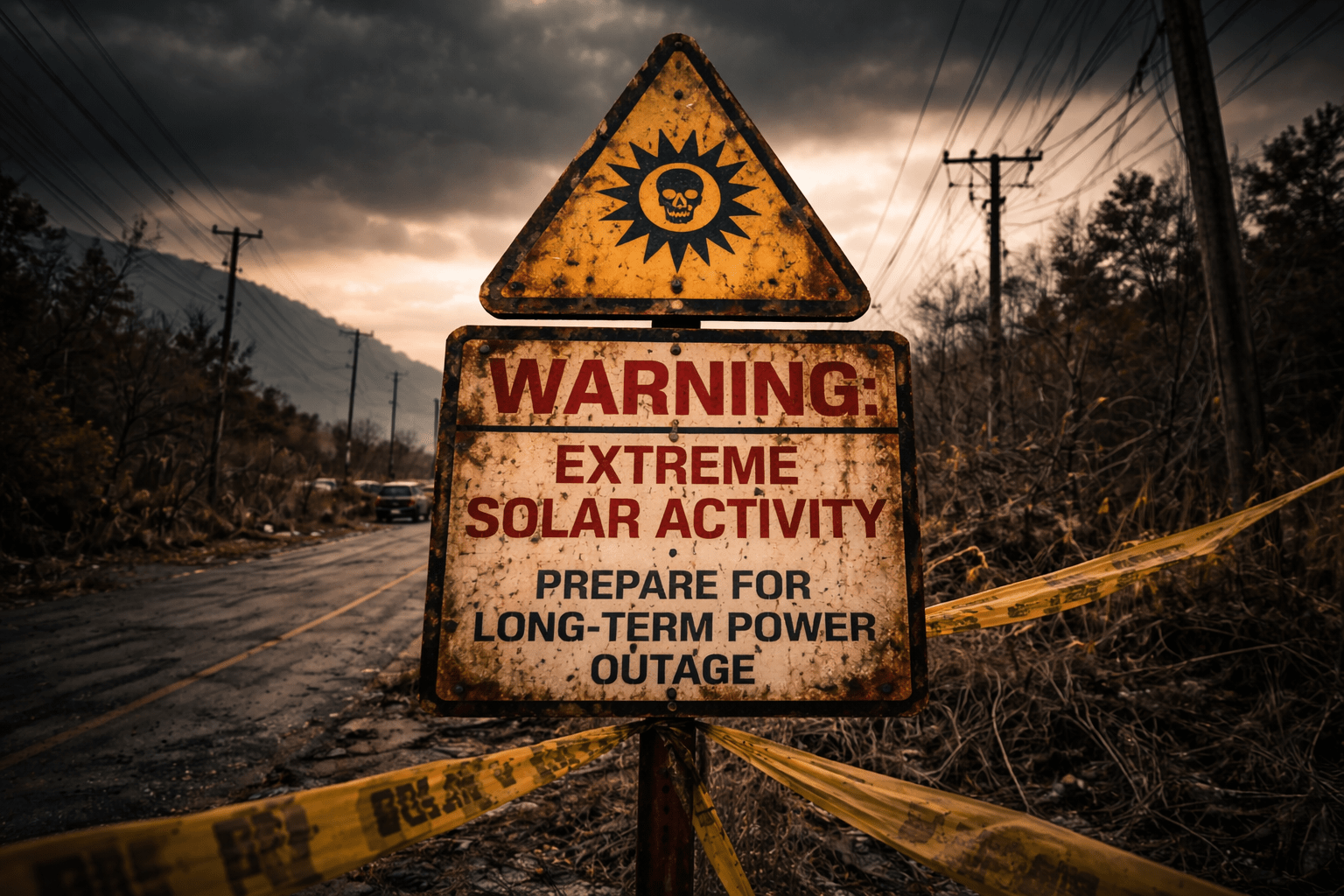
Beyond Catastrophe — Understanding Managed Silence

The following article is not intended as a prediction, nor as an alarmist reconstruction of an inevitable future. Rather, it represents an analytical synthesis of documented scientific knowledge, infrastructural assessment, and institutional modeling related to one of the least publicly discussed systemic risks: the impact of extreme solar activity on modern technological civilization. While certain elements of the narrative may appear speculative, they are grounded in historically verified phenomena, existing engineering constraints, and internal governmental analyses that have, over time, remained largely outside mainstream discourse.
The objective is twofold. First, to examine the material and systemic implications of a Carrington-scale geomagnetic event within the context of contemporary infrastructure. Second, to explore the informational asymmetry that surrounds such risks—specifically, the gap between institutional awareness and public engagement, a phenomenon described here as managed silence.
To ensure conceptual clarity and structural continuity, the analysis is organized into a sequence of ten interconnected thematic sections, each addressing a distinct but interdependent dimension of the scenario. These sections do not function as isolated observations; rather, they form a cumulative framework through which the broader implications of long-duration systemic disruption can be understood.
Introduction: Beyond Catastrophe
In contemporary discourse, large-scale disasters are typically framed as exceptions—events that interrupt, but do not fundamentally challenge, the continuity of modern systems. This framing is not merely descriptive; it is also reassuring. It implies that disruption, no matter how severe, remains temporary, manageable, and ultimately reversible.
However, this interpretive model begins to break down when applied to certain categories of risk—particularly those that operate at the intersection of natural phenomena and technological dependence. Among these, extreme solar activity occupies a uniquely complex position. Unlike many other threats, it is neither hypothetical nor unprecedented. It is historically documented, scientifically modeled, and institutionally analyzed. Yet despite this convergence of evidence, it remains largely absent from public consciousness.
This absence is not necessarily the result of deliberate concealment. Rather, it reflects a more nuanced dynamic in which certain forms of knowledge—especially those that imply systemic vulnerability on a civilizational scale—are difficult to translate into actionable public discourse. The result is a form of informational imbalance: a situation in which awareness exists within specialized domains, while broader societal understanding remains limited.
A particularly revealing example of this dynamic emerges from a document attributed to FEMA, dated December 2010. The report, titled Mitigation Strategies for FEMA Command, Control, and Communications During and After a Solar Superstorm, does not approach the subject as a distant possibility. Instead, it constructs a detailed operational scenario, grounded in known physical processes and current infrastructural realities.
Its conclusions extend beyond conventional disaster modeling. Among them is the projection that, under specific conditions, large portions of the electrical grid could remain nonfunctional for a period ranging from four to ten years.
Such a timeframe does not simply describe a prolonged outage. It implies a transition from disruption to transformation—a shift from temporary crisis to structural reconfiguration.
To understand how such a scenario becomes plausible, it is necessary to examine its components in sequence.
1. Historical Precedent and Scientific Certainty: Reconstructing the Carrington Paradigm

Any rigorous assessment of solar-induced systemic risk must begin with the Carrington Event of 1859, not as a historical curiosity, but as a foundational reference point. Observed by astronomer Richard Carrington, the event was characterized by an exceptionally powerful coronal mass ejection that reached Earth with unusual سرعة and intensity, compressing the magnetosphere and inducing widespread geomagnetic disturbances.
What makes this event particularly significant is not only its magnitude, but the clarity with which its effects were documented. Although technological infrastructure at the time was limited, the telegraph system provided a measurable interface between solar activity and human-built systems. Reports from the period describe electrical discharges along telegraph lines, spontaneous ignition of equipment, and instances in which messages continued to transmit even after power sources had been disconnected. These observations, while occurring within a relatively simple technological environment, established a critical principle: solar phenomena are capable of directly interacting with—and disrupting—electrical systems on a global scale.

Subsequent geomagnetic events, including the storm of 1921, reinforced this understanding, though under similarly constrained conditions. What distinguishes the present context is not the nature of the solar activity itself, but the degree to which modern civilization has become dependent on complex, interconnected electrical and electronic infrastructures. The transition from localized mechanical systems to globally integrated digital networks has fundamentally altered the scale of potential impact.
Within this framework, the recurrence of a Carrington-scale event is not treated as a speculative anomaly, but as a statistically plausible occurrence within known solar cycles. The central question, therefore, is not whether such an event can happen, but how its effects would propagate through contemporary systems.
2. Infrastructure as Latent Fragility: The Electrical Grid Under Stress

The modern electrical grid is often perceived as a symbol of resilience—an engineered system designed to withstand fluctuations, redistribute load, and maintain continuous operation under varying conditions. However, this perception obscures a structural reality: the very complexity that enables efficiency also introduces points of systemic vulnerability.
At the center of this vulnerability lies the network of high-voltage transformers, which function as critical nodes within the processes of transmission and distribution. These components are uniquely susceptible to geomagnetically induced currents, which arise when solar disturbances interact with Earth’s magnetic field and generate low-frequency electrical flows through conductive materials, including power lines.
When such currents enter transformer systems, they can induce core saturation, leading to excessive heat generation, insulation degradation, and, in extreme cases, irreversible structural damage. Unlike smaller electrical components, these transformers are not standardized units that can be easily replaced. They are custom-engineered devices, often requiring extended manufacturing periods—typically between twelve and twenty-four months—under normal conditions.

This lack of standardization is compounded by several additional factors: limited global manufacturing capacity, logistical challenges associated with transportation and installation, and the absence of comprehensive strategic reserves. As a result, the simultaneous failure of a significant number of transformers would create a bottleneck in recovery efforts, independent of other systemic disruptions.
Within the FEMA scenario, these constraints converge into a critical outcome. The immediate effect of a severe geomagnetic storm is not merely a widespread outage, but a structural impairment of the grid’s core components. The longer-term implication is a prolonged inability to restore functionality, not due to a lack of intent or coordination, but due to the physical and logistical limitations inherent in the system itself.
It is within this context that the projected recovery timeline—extending from four to ten years—begins to acquire analytical credibility.
3. Cascading Failures and Systemic Interdependence

The failure of the electrical grid cannot be understood as an isolated event. In contemporary societies, energy functions as a foundational layer upon which multiple critical systems depend. As such, its disruption initiates a cascade of secondary failures that extend far beyond the energy sector itself.
Telecommunications infrastructure, for instance, relies on continuous power to sustain network operations, data processing, and signal transmission. While backup systems exist, they are typically designed for short-duration outages and are constrained by fuel availability and maintenance requirements. As these systems degrade, the capacity for coordination and information dissemination becomes increasingly limited.
Similarly, transportation networks depend on electrically powered systems for fuel distribution, traffic management, and logistical coordination. The interruption of these systems impedes both civilian mobility and emergency response capabilities. Food supply chains, which operate on highly optimized, just-in-time delivery models, begin to fracture as refrigeration fails, transportation slows, and inventory systems become inaccessible.

Healthcare systems, often considered among the most resilient, face their own limitations. Backup generators provide temporary continuity, but their operation is contingent upon fuel supply chains that are themselves vulnerable to disruption. Water treatment and distribution systems, dependent on continuous energy input, introduce additional layers of risk when they fail, particularly in terms of public health.
What emerges from this interconnected structure is a pattern of systemic amplification. The initial disruption does not remain confined; it propagates through networks of dependency, accelerating the degradation of the overall system. Each failure reduces the capacity to manage subsequent failures, creating a feedback loop that complicates recovery efforts and extends the duration of instability.
In this sense, the scenario outlined in the FEMA report is not defined solely by the triggering event, but by the architecture of the system it affects. The vulnerability is not located in a single component, but in the relationships between components.
4. Institutional Awareness and Strategic Containment of Information

The existence of detailed internal analyses concerning solar-induced systemic risk introduces a dimension that extends beyond technical vulnerability and into the domain of informational governance. The FEMA report, as previously discussed, does not emerge from speculative reasoning, but from structured institutional assessment. Its findings, therefore, are not anomalous; they are representative of a broader body of expert knowledge that circulates within specialized governmental and scientific environments.
What distinguishes this knowledge is not its content alone, but the manner in which it is distributed.
Despite addressing a risk with potentially transformative implications for modern society, the report did not become part of mainstream public discourse. It was neither actively disseminated nor integrated into widely accessible policy frameworks. Instead, it remained situated within a limited informational ecosystem—available in principle, yet effectively absent in practice.
This pattern suggests the presence of what may be described as strategic containment. Such containment does not necessarily imply intentional suppression. Rather, it reflects a structural condition in which certain categories of information—particularly those that challenge foundational assumptions about stability and continuity—are difficult to operationalize at the public level.

Several interrelated factors contribute to this dynamic. The scale of intervention required to meaningfully mitigate the identified risks is substantial, involving long-term infrastructure investment, regulatory coordination across multiple sectors, and, in many cases, international collaboration. Communicating the full extent of vulnerability without the simultaneous capacity to address it may produce uncertainty without resolution.
In addition, there are economic considerations. Public acknowledgment of systemic fragility at this scale has the potential to influence financial markets, insurance systems, and long-term investment strategies. The perception of stability, which underpins much of modern economic activity, becomes more difficult to sustain when confronted with scenarios that imply prolonged disruption.
Behavioral responses also play a role. Widespread awareness of a low-frequency but high-impact risk could lead to unpredictable forms of adaptation at the individual and collective levels—ranging from precautionary measures to more disruptive forms of reaction. In such contexts, the management of information becomes inseparable from the management of social stability.
The result is not a complete absence of knowledge, but a form of asymmetrical awareness. Within institutional frameworks, the risk is recognized, analyzed, and, to some extent, prepared for. Outside these frameworks, it remains peripheral—acknowledged in fragments, but rarely engaged with in its full systemic dimension.
5. The First Phase of Disruption: Temporal Misperception and the Illusion of Reversibility

In the immediate aftermath of a large-scale grid failure, the defining characteristic would not necessarily be chaos, but misinterpretation. Modern societies are conditioned by experience to understand disruptions as temporary deviations from a stable baseline. Power outages, even when widespread, are typically resolved within predictable timeframes. This historical pattern informs both individual expectations and institutional responses.
As a result, the early phase of a prolonged systemic disruption would likely be shaped by what can be described as temporal misperception—a divergence between the expected duration of the event and its actual persistence.
In practical terms, this misperception would manifest through a series of behaviors that appear rational within a short-term framework. Individuals would conserve resources under the assumption that supply systems will soon be restored. Institutions would activate contingency plans designed for limited-duration outages. Governments, operating with incomplete situational awareness, might issue reassurances based on standard recovery models.

During this phase, the absence of immediate clarity becomes a critical factor. Communication networks, already degraded by power loss, would limit the dissemination of accurate and comprehensive information. What remains is localized, fragmented knowledge—insufficient to convey the scale of the disruption or the constraints affecting recovery.
This temporal disconnect delays adaptation. Decisions that would be appropriate under conditions of long-term instability—such as resource redistribution, infrastructural reconfiguration, or behavioral adjustment—are postponed. The system continues to operate under assumptions that no longer apply.
By the time the persistence of the outage becomes evident, the situation has already evolved. Resources have been depleted under incorrect expectations. Opportunities for early intervention have narrowed. The system, in effect, transitions from disruption to degradation without a clear moment of recognition.
This phase is therefore not defined by visible collapse, but by a lag in perception—a period during which reality changes faster than the frameworks used to interpret it.
6. Social Reorganization Under Constraint: From Centralization to Locality

As disruption extends beyond initial expectations, the structural organization of society begins to shift in response to changing constraints. In highly interconnected systems, coordination is typically mediated through centralized infrastructures—digital communication networks, institutional hierarchies, and large-scale logistical frameworks. When these systems lose functionality, coordination does not disappear; it transforms.
The most immediate transformation is a shift toward locality.
Without reliable long-distance communication, decision-making becomes geographically bounded. Communities begin to operate within narrower spatial and informational limits, relying on direct interaction rather than mediated exchange. This localization introduces both adaptive capacity and structural fragmentation.
On one hand, localized systems can exhibit a form of resilience that centralized systems lack. Smaller groups are often capable of rapid adaptation, resource sharing, and informal governance. Social cohesion at the community level may facilitate cooperation, particularly in the early stages of adjustment. In such contexts, survival strategies emerge organically, shaped by immediate conditions rather than abstract planning.

On the other hand, the absence of broader coordination introduces significant disparities. Resource availability varies across regions, and without efficient distribution mechanisms, these differences become amplified. Communities with initial advantages—whether in terms of geography, infrastructure, or social organization—are better positioned to stabilize. Others may experience accelerated decline.
Over time, this divergence leads to the emergence of asymmetrical stability. Instead of a uniform national condition, a heterogeneous landscape develops, characterized by varying levels of functionality, security, and resource access. The concept of a unified system becomes increasingly abstract, replaced by a network of semi-autonomous local realities.
This process does not necessarily result in immediate conflict or disorder. Rather, it reflects a gradual reconfiguration of social structure under constraint. The mechanisms of coordination change, the scale of interaction contracts, and the balance between cooperation and competition evolves in response to material conditions.
In this sense, the disruption of infrastructure becomes a catalyst for the redefinition of social organization—not through deliberate design, but through adaptive necessity.
7. Psychological Adaptation and the Internalization of Crisis

While infrastructural collapse and social reorganization are externally observable processes, the most profound transformations occur at the level of individual cognition. A prolonged disruption of systemic stability does not merely alter behavior; it gradually reshapes perception, expectation, and the underlying frameworks through which reality is interpreted.
In the initial stages of crisis, psychological responses are typically characterized by heightened alertness and a search for information. Individuals attempt to interpret unfolding events using pre-existing cognitive models, drawing upon past experiences in which disruptions were temporary and ultimately resolved. However, as the duration of instability extends and reliable information becomes increasingly scarce, these models begin to lose relevance.
A gradual shift takes place.
The temporal horizon contracts. Long-term planning—dependent on predictability and continuity—becomes increasingly difficult to sustain. Attention reorients toward immediate concerns: access to food, water, shelter, and basic security. This shift is not simply pragmatic; it reflects a deeper restructuring of cognitive priorities.
Over time, several patterns emerge. Conditions that would previously have been perceived as unacceptable begin to normalize, not through conscious acceptance, but through repeated exposure. Expectations adjust downward, redefining what constitutes adequacy or stability. Simultaneously, prolonged uncertainty generates a form of emotional fatigue, reducing the capacity for sustained engagement with complex or abstract concerns.
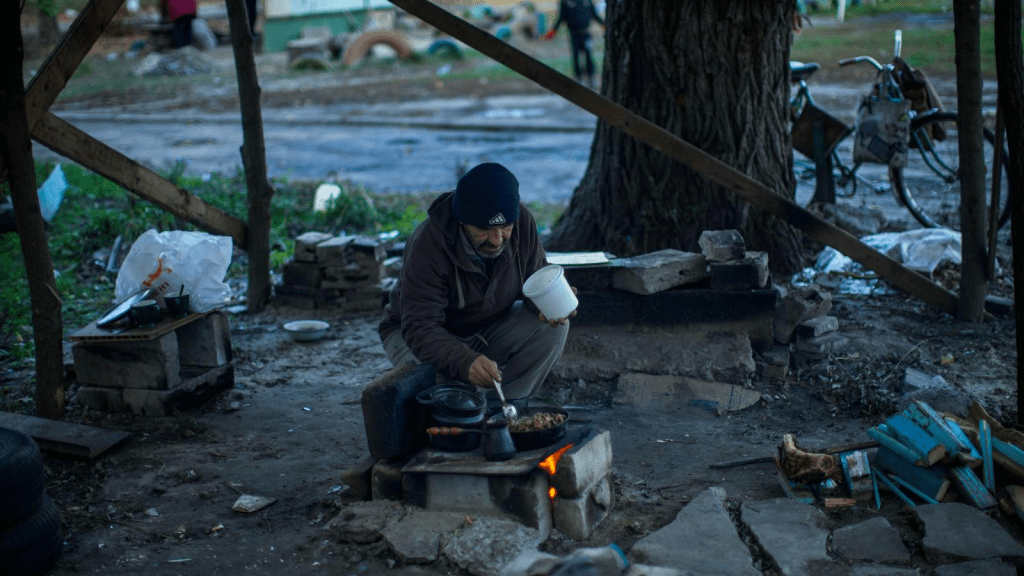
This process can be understood as the internalization of crisis. It does not require explicit acknowledgment or ideological alignment. Rather, it unfolds incrementally, as individuals adapt to constraints that persist beyond their initial expectations. The distinction between crisis and normality becomes increasingly ambiguous, not because conditions improve, but because perception adapts.
In this sense, the long-term impact of systemic disruption extends beyond material conditions. It reshapes the cognitive environment within which decisions are made, potentially influencing social dynamics, political behavior, and collective priorities in ways that are difficult to anticipate.
8. Geopolitical Implications: Asymmetry and Strategic Reordering

Although the FEMA scenario is primarily framed within a national context, the underlying phenomenon—extreme solar activity—is inherently global. A sufficiently intense geomagnetic event would affect multiple regions simultaneously, though not uniformly. The distribution of impact would be shaped by variations in infrastructure, technological dependence, and resource autonomy.
This uneven distribution introduces a set of geopolitical dynamics that extend beyond the immediate technical consequences.
Highly industrialized societies, characterized by dense and complex electrical networks, may experience the most severe disruptions. Their efficiency, built upon tightly integrated systems, becomes a source of vulnerability when those systems fail. In contrast, regions with lower levels of technological dependence may exhibit a degree of resilience, not because they are unaffected, but because their baseline functionality is less reliant on continuous electrical input.
The result is a form of asymmetrical impact, in which existing global hierarchies are temporarily destabilized.

International supply chains, already dependent on precise coordination and real-time communication, would fragment. Trade networks could reorganize along regional lines, reflecting the practical limitations of transportation and information exchange under constrained conditions. In the absence of reliable global coordination, governance structures may shift toward more inward-focused strategies, emphasizing domestic stability over international engagement.
This process does not necessarily lead to immediate conflict, but it does introduce a period of strategic uncertainty. Traditional measures of power—economic output, technological sophistication, military capability—may be redefined, at least temporarily, by a more fundamental criterion: the ability to maintain basic societal functions under conditions of systemic stress.
In this context, resilience becomes a form of influence.
The long-term implications of such a reordering depend on the duration of disruption and the capacity of different regions to adapt. However, even a temporary shift has the potential to alter perceptions, alliances, and strategic priorities in ways that persist beyond the immediate crisis.
9. The Limits of Preparedness: Structural Constraints and Strategic Trade-Offs

The existence of detailed risk assessments naturally leads to a fundamental question: if the vulnerabilities are known, why have they not been fully addressed?
The answer lies not in a lack of awareness, but in the structural constraints associated with large-scale mitigation. Preparing for a scenario involving multi-year grid failure requires interventions that are technically complex, economically demanding, and politically challenging.
One of the primary obstacles is cost. Hardening electrical infrastructure against geomagnetic disturbances involves extensive modifications, including the installation of protective devices, redesign of transformer systems, and the development of alternative operational protocols. These measures require substantial investment, often without immediate or visible returns, given the low frequency of extreme solar events.
Technological limitations also play a role. While protective strategies exist, they are not universally applicable, and their integration into existing systems is not straightforward. Retrofitting infrastructure at scale introduces logistical challenges that extend beyond engineering considerations.

Political feasibility further complicates the issue. Infrastructure projects of this magnitude require long-term commitment, often spanning multiple administrative cycles. Maintaining continuity of policy and funding across such periods is inherently difficult, particularly when competing priorities demand attention.
As a result, mitigation efforts tend to be incremental rather than comprehensive. Improvements are made, vulnerabilities are reduced, but the underlying risk is not entirely eliminated. From an institutional perspective, this approach reflects a balancing of probabilities, costs, and strategic priorities.
However, it also implies the persistence of residual risk—a level of vulnerability that remains embedded within the system, not because it is unknown, but because it is difficult to fully resolve.
10. Narrative Reconstruction: When Awareness Precedes Experience

At the intersection of analysis and uncertainty lies the role of narrative. Documents such as the FEMA report represent an attempt to translate abstract scientific understanding into concrete operational scenarios. They bridge the gap between what is known in theory and what might unfold in practice.
Yet this translation has inherent limitations.
No model, regardless of its sophistication, can fully capture the lived experience of systemic disruption. The human, social, and psychological dimensions extend beyond quantifiable variables, introducing layers of complexity that resist precise prediction.

This gap creates a space in which narrative becomes essential—not as a substitute for analysis, but as a complementary framework. The way a scenario is described influences how it is perceived, and perception, in turn, shapes response.
If a risk is framed as distant or improbable, it is likely to be deprioritized. If it is framed as immediate and unavoidable, it may generate urgency but also resistance. The challenge lies in articulating scenarios that are both credible and actionable, without collapsing into either abstraction or alarmism.
The relative absence of detailed narratives concerning long-duration systemic failure is therefore significant. It suggests not only a gap in communication, but a broader hesitation to engage with possibilities that challenge deeply embedded assumptions about continuity, recovery, and control.
In this sense, the act of reconstruction—of thinking through the implications of such a scenario—is not merely analytical. It is also interpretive, shaping the boundaries of what is considered conceivable.
Conclusion: The Quiet Threshold Between Awareness and Transformation

The analysis developed across these sections converges toward a central tension: the coexistence of knowledge and inaction within systems that are otherwise defined by complexity and adaptability. The threat posed by extreme solar activity is neither unknown nor entirely unexamined. It exists within a framework of scientific understanding and institutional awareness that acknowledges both its plausibility and its potential severity.
Yet this awareness does not translate into comprehensive mitigation.
Instead, it is distributed unevenly—concentrated within specialized domains, while remaining peripheral in broader societal consciousness. This distribution reflects not only practical constraints, but also deeper structural dynamics related to how complex societies process risks that challenge their foundational assumptions.
A solar superstorm, in this context, is not merely a natural event. It functions as a systemic stress test. It exposes the degree to which modern civilization depends on continuous, invisible infrastructures, and it reveals the limitations of frameworks that assume rapid recovery as a default condition.
The projected timeline of recovery—measured in years rather than days—marks a threshold beyond conventional disaster models. It suggests a transition from disruption to transformation, from temporary instability to structural reconfiguration.
What makes this scenario particularly significant is not its inevitability, but its position within the spectrum of possibility. It is neither certain nor implausible, neither immediate nor irrelevant. It occupies a conceptual space that is difficult to engage with precisely because it resists simplification.
The most important question, therefore, is not whether such an event will occur, but how societies relate to its possibility.
Whether the current balance between awareness and preparedness reflects a strategic equilibrium—or a reliance on continuity as an unexamined assumption.
In the absence of a definitive answer, what remains is a form of quiet uncertainty.
Not an urgent alarm, but a persistent undercurrent.
And perhaps that is the most unsettling aspect of all: not the prospect of collapse itself, but the recognition that its outlines may already be understood—while its implications remain only partially acknowledged.

 Ultimate-Survival
While a Carrington event could certainly be disastrous and long term, my Dad taught me that there is a phenomenon far worse that is already here and it would exacerbate the effects of a solar flare many times over if it ever happened. That phenomenon is none other than a population of people all around us each and every day who refuse to think or question what they are told and who act upon the lies and deception fed to them by media, clergy and politicians without questioning their motives. The most dangerous people on earth are not the Adolf Hitlers, Joseph Stalins or Jeffrey Dahmers of the world. The most dangerous people on earth are the hoards and masses who believe exactly what they are told and go along with the group think of the crowds. We need look no further than Easter approximately 2026 years ago when Jesus rode into town on a donkey and the crowds were saying Hosanna and glory to God in the Highest only to change their tune a week later saying “crucify Him.” AI YouTubes make it much worse because thousands of made up lies can be made to look like real news to capture the minds of even those who are intelligent.
LikeLike