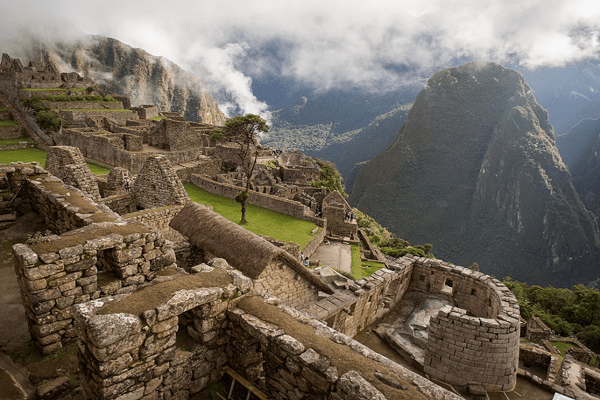
Archaeological evidence points to Monte Alban around 500 BC as home to roughly 115,000 residents at its peak. The hilltop metropolis sprawled across terraced mountainsides in what is now Oaxaca, Mexico. Yet most people today recognize names like Aztec and Maya while the Zapotec remain largely unknown.
This oversight reflects colonial perspectives more than historical reality. Spanish conquistadors encountered the Aztec and Maya empires at their zenith, giving these civilizations outsized recognition. The Zapotec, by contrast, had already experienced their golden age and decline centuries before European contact. Their story challenges assumptions about Mesoamerican urban development.
Archaeological surveys across the Valley of Oaxaca reveal settlements dating back 2,500 years. The Zapotec called themselves Be’ena’a, meaning “the people.” Later cultures dubbed them “Cloud People,” perhaps referencing their mountain homeland or creation myths linking them to sky deities.
Mountain Cities and Strategic Location
Monte Alban wasn’t built by accident. The site occupies neutral territory atop a 6,400-foot peak, offering commanding views across three converging valleys. No major river runs nearby. No natural resources demanded settlement there. The location served purely strategic and ceremonial purposes.
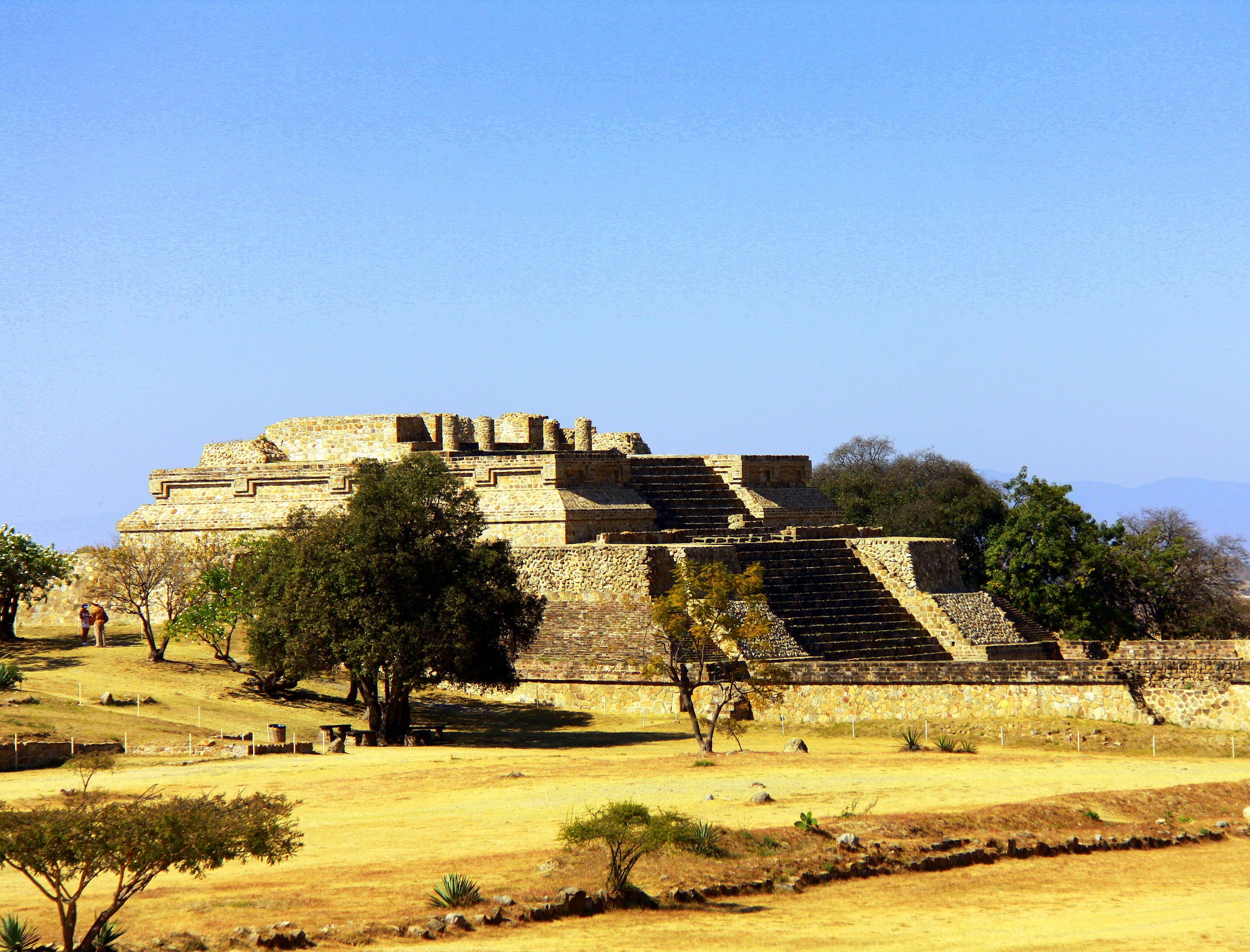
Early Zapotec communities scattered throughout the valley floor practiced agriculture and small-scale trade. Around 500 BC, something changed. People began constructing massive terraces, plazas, and pyramidal structures on the previously uninhabited mountaintop.
Construction required moving tons of earth and stone up steep slopes. Workers carved platforms directly from bedrock, then built upon these foundations. The Great Plaza alone measures 300 by 200 meters, larger than four football fields. Ball courts, residential complexes, and ceremonial buildings surrounded this central space.
Archaeological deposits show continuous occupation for over a millennium. Population estimates suggest 17,000 people lived at Monte Alban during its early period, growing to 115,000 by 700 AD before gradual abandonment.
Earliest Writing in the Americas
The Zapotec developed Mesoamerica’s first known writing system. Monument 3 from San José Mogote, dating between 600-500 BC, contains the oldest confirmed Zapotec glyphs. The carved stone shows a captive with his heart removed, accompanied by hieroglyphic text.
Joyce Marcus discovered this monument in 1975 during excavations near San José Mogote’s main temple. The stone lay horizontally in a corridor where people walked over the defeated enemy image. This suggests early Zapotec warfare and ritual practices alongside developing literacy.
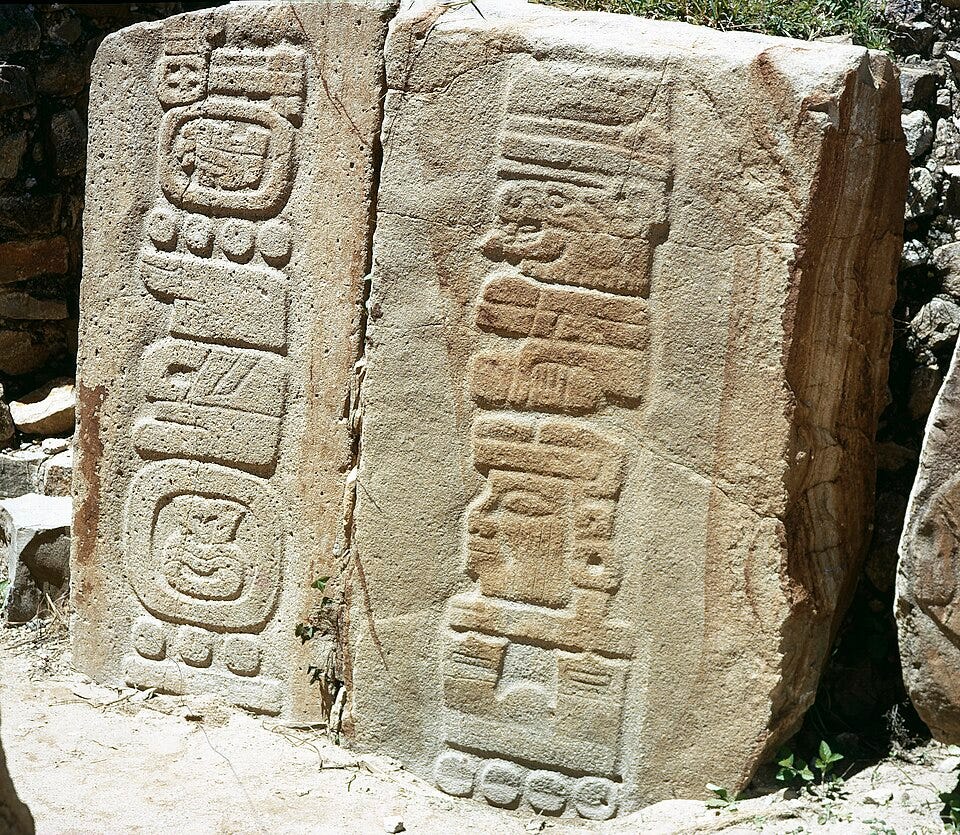
During the Early Classic period (250-450 CE), Monte Alban writing became largely limited to calendrical sequences, proper names and toponyms, with iconography used for other purposes. The script combined logographic and syllabic elements, representing both whole words and individual sounds.
Despite decades of study, the Zapotec writing system remains undeciphered. Scholars can identify calendar dates and some personal names, but longer texts resist translation. Extended glyphic inscriptions appear throughout Monte Alban’s plaza on carved stone monuments, though the script as such remains undeciphered.
Religious Innovation and Cultural Legacy
Zapotec religion centered on agricultural deities reflecting their farming origins. Cocijo, the rain god, appears frequently in art and architecture. Lightning bolts and cloud symbols mark his representations. Pitao Cozobi governed maize cultivation, while Coquihani controlled light and solar cycles.
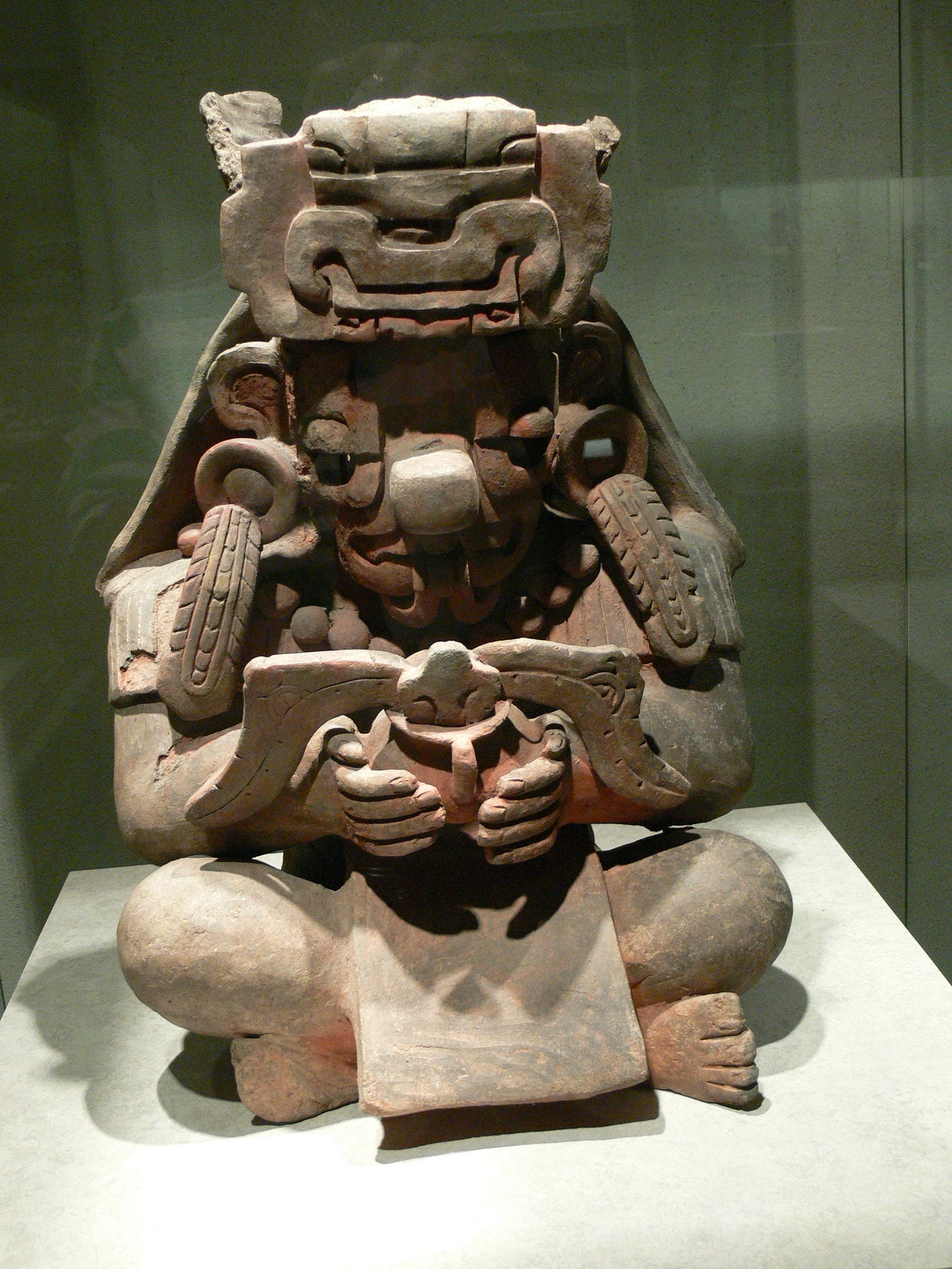
The Bat God held particular significance, representing fertility and corn production. Elaborate jade masks depicting this deity have been recovered from elite tombs. One spectacular example from Monte Alban shows intricate craftsmanship in precious green stone.
Dedication rituals sanctified new construction projects. Excavations at the Cuilapan Temple revealed a cache containing jade earspools, obsidian blades, pearls, shells, and bird bones dating to 700 AD. Each material carried symbolic meaning. Jade represented water and fertility. Obsidian connected to sacrifice and bloodletting. Ocean shells symbolized the underworld, while bird bones evoked the sky realm.
These religious practices influenced later Mesoamerican cultures. Maya, Aztec, and other groups adopted similar deities, architectural forms, and ritual behaviors. Even after Monte Alban’s decline, Zapotec artisans continued producing jewelry for Aztec rulers in Tenochtitlan.
Urban Planning and Engineering
The Zapotec engineered sophisticated water management systems. Terraced hillsides captured rainfall for agricultural use. Canals directed water flow throughout urban areas. Underground tombs featured drainage to prevent flooding.
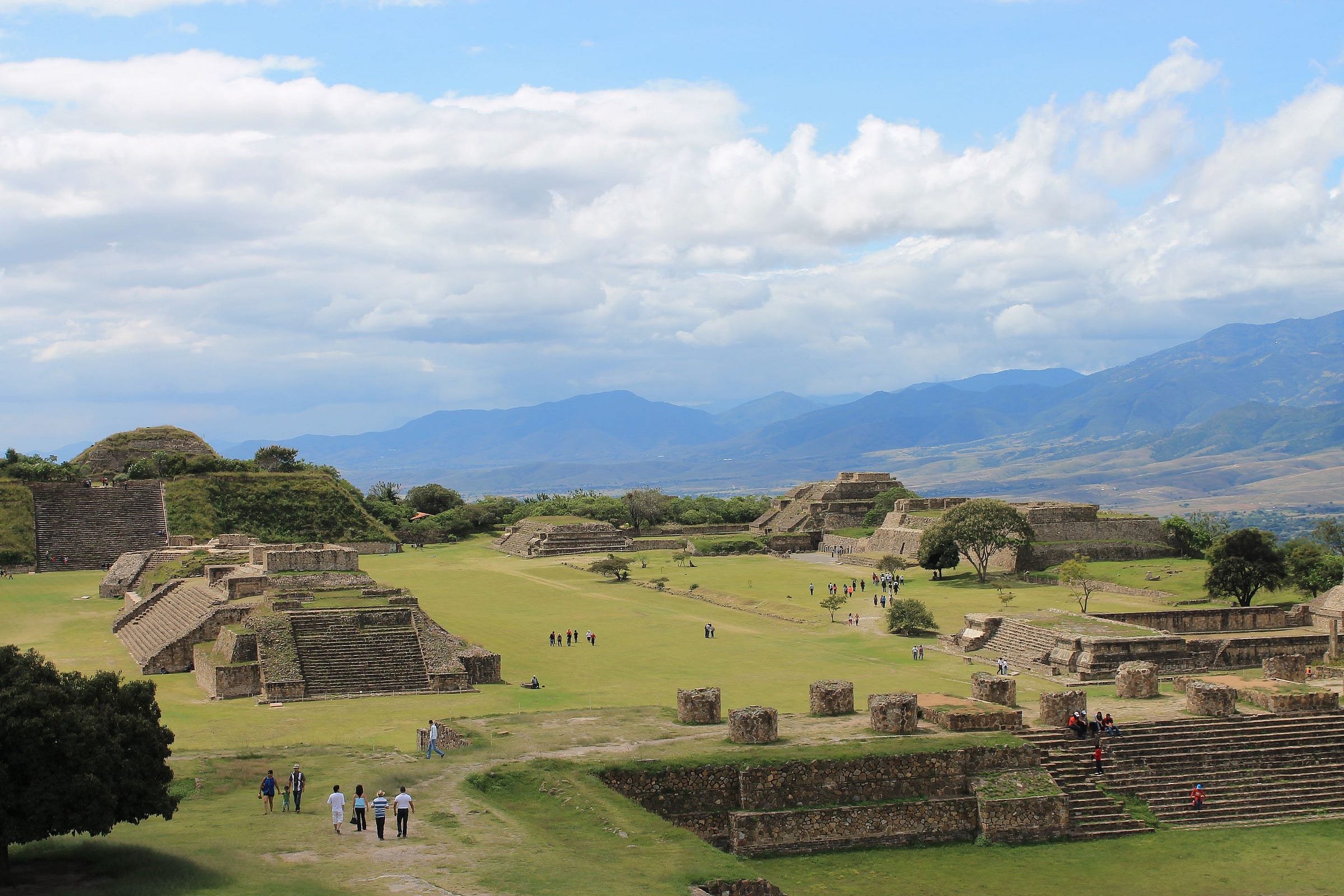
Residential architecture varied by social class. Elite families occupied stone palaces with multiple rooms and interior courtyards. Common people lived in simpler structures, though still built with stone and mortar rather than perishable materials. This construction durability explains why so much Zapotec architecture survives today.
The terraces, dams, canals, pyramids and artificial mounds of Monte Albán were literally carved out of the mountain over centuries of continuous construction. The engineering challenges required coordinated labor and central planning on a scale rarely seen in early Mesoamerica.
Building projects also served ideological purposes. Massive construction demonstrated ruler power while creating shared spaces for religious ceremonies. The Great Plaza could accommodate thousands of participants during major festivals.
Trade Networks and Economic Power
Early Zapotec prosperity depended on agriculture, but trade networks expanded their influence across Mesoamerica. Connections with Gulf Coast Olmec civilizations brought exotic goods and new technologies to Oaxaca.
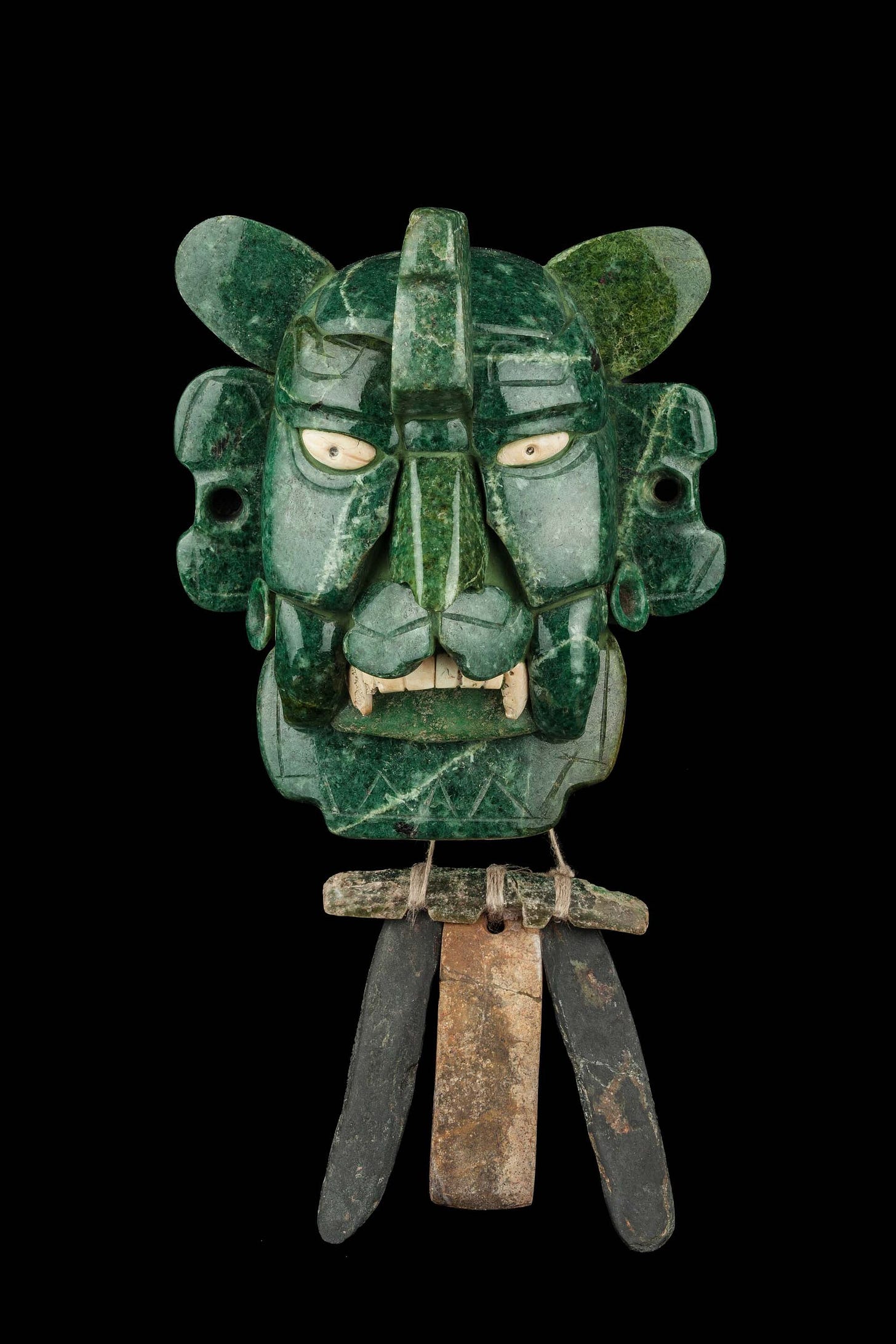
Archaeological evidence shows Zapotec merchants traveled hundreds of miles to acquire materials unavailable locally. Obsidian came from central Mexican sources. Jade originated in Guatemala. Marine shells traveled from both Pacific and Atlantic coasts.
This long-distance exchange required sophisticated organization. Merchants needed safe passage through foreign territories, standardized weights and measures, and reliable trading partnerships. The Zapotec developed these commercial institutions centuries before later Mesoamerican civilizations.
Monte Alban’s strategic location facilitated trade control. Goods moving between highland and lowland regions passed through Zapotec territory. Rulers could tax commerce while merchants provided exotic items for elite consumption and religious ceremonies.
Legacy and Decline
Monte Alban lost its political pre-eminence by the end of the Late Classic period (c. AD 500–750), and soon thereafter was largely abandoned. The reasons for decline remain unclear. Climate change, warfare, internal conflict, or economic disruption may have contributed.
The city wasn’t entirely deserted. Small populations continued living there, reusing earlier structures and maintaining ritual activities. Mixtec people later occupied the city after the displacement of the Zapotec people, as evidenced by discoveries in Tomb 7 during Alfonso Caso’s excavations in the early 20th century.
Zapotec communities persisted throughout the Oaxaca valleys even after Monte Alban’s abandonment. They maintained their language, agricultural practices, and cultural traditions. Spanish colonization beginning in the 1520s finally disrupted this continuity, though Zapotec descendants still live in the region today.
The Zapotec achievement in creating Mesoamerica’s first major urban center established patterns followed by later civilizations. Their innovations in writing, architecture, religion, and trade provided foundations for Mexican cultural development spanning over two millennia. Without the Cloud People, the famous civilizations that followed might never have reached such heights.
References
Blanton, R. E., Kowalewski, S. A., Feinman, G. M., & Finsten, L. M. (1993). Ancient Mesoamerica: A Comparison of Change in Three Regions. Cambridge University Press.
Cartwright, M, 2013. Zapotec Civilization. Available at: https://www.worldhistory.org/Zapotec_Civilization/
Discover Oaxaca, 2022. Monte Alban: Capital of Zapotec Civilization. Available at: https://discover-oaxaca.com/culture/monte-alban/
Flannery, K. V., & Marcus, J. (1983). The Cloud People: Divergent Evolution of the Zapotec and Mixtec Civilizations. Academic Press.
Marcus, J. (1992). Mesoamerican Writing Systems: Propaganda, Myth, and History in Four Ancient Civilizations. Princeton University Press.
Marcus, J., & Flannery, K. V. (1996). Zapotec Civilization: How Urban Society Evolved in Mexico’s Oaxaca Valley. Thames and Hudson.
Oudijk, M. R. (2000). Historiography of the Bènizàa: The Postclassic and Early Colonial Periods (1000-1600 A.D.). CNWS Publications.
The Editors of Encyclopaedia Britannica. 2022. Zapotec. Available at: https://www.britannica.com/topic/Zapotec
Winter, M. (1989). Oaxaca: The Archaeological Record. Minutiae Mexicana.

 Ultimate-Survival


